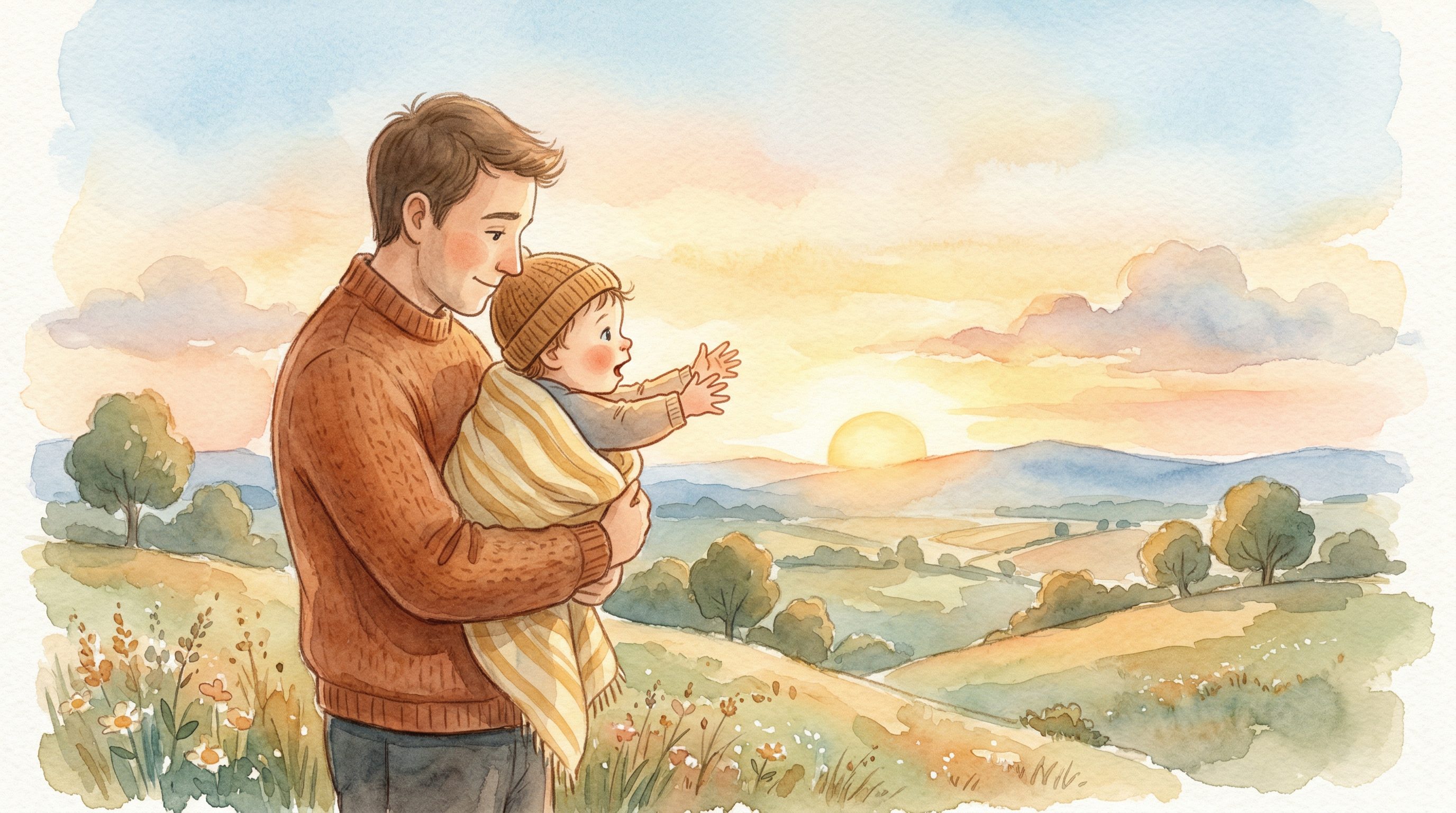
Nobody Handed Me a Script for This
The first time I tried to explain God to my oldest son, he was about four. We were driving somewhere — I don't even remember where — and out of nowhere he asked: "Dad, who made the sky?"
I said, "God made the sky."
He thought about it for a second and said, "Where is God?"
And I realized I didn't have a good answer. Not because I don't believe it — I do — but because nobody had ever walked me through how to explain it to a four-year-old in a car. I fumbled through something. He seemed satisfied. But I went home thinking: I need to do better than fumbling.
If you're in that same place — wanting to introduce your child to God but not sure where to start, what to say, or how to make it land — this is the article for you.

Before You Start: What You're Actually Trying to Do
The goal when you introduce your child to God isn't to deliver a theology lecture or produce a child who can recite doctrine. The goal is much simpler: you want your kid to know that God exists, that God is good, and that God knows them and loves them personally.
Everything else — the complexity, the nuance, the hard questions — comes later. Kids who grow up with a strong, simple foundation of "God is real, God is good, and God is close" have something to anchor to when life gets complicated. You're not trying to download a complete belief system into a five-year-old. You're planting a seed.
That framing matters because it takes the pressure off. You don't have to explain the Trinity. You don't have to have answers to every hard question. You just have to start the conversation and keep it going.
The Right Age to Start
Earlier than you think. Kids as young as two and three can begin forming concepts of God — especially through the lens of love, safety, and wonder. They don't need sophisticated language. They need consistent exposure to the idea.
By ages four to six, children can understand simple truths: God made everything, God loves them, God is always there. They can begin to understand prayer as talking to God. They can start hearing Bible stories not as myths but as real things that happened.
The window before age seven is often described by developmental researchers as the most formative for spiritual identity. Kids in this window are naturally inclined toward awe, wonder, and trust. Those are exactly the qualities that make faith accessible. Don't wait until they're "old enough to understand." They're already ready.
How to Bring It Up Naturally
You don't need a formal sit-down moment. In fact, formal introductions often backfire — kids tune out when they sense a lesson coming. The most effective introductions happen in the flow of normal life.
Use the world around you
Nature is one of the easiest on-ramps. The sky. A thunderstorm. A new baby. A dog. "Who do you think made all that?" is a question that opens a door without forcing anything. Let your kid's curiosity do the work. Follow their questions rather than leading with a lecture.
Connect God to things they already love
If your kid loves feeling safe at home, you can say: "You know how safe you feel here? God loves you even more than Mom and Dad do, and He's always with you wherever you go." You're not starting from scratch — you're connecting to something they already understand and layering meaning onto it.
Make prayer the first introduction
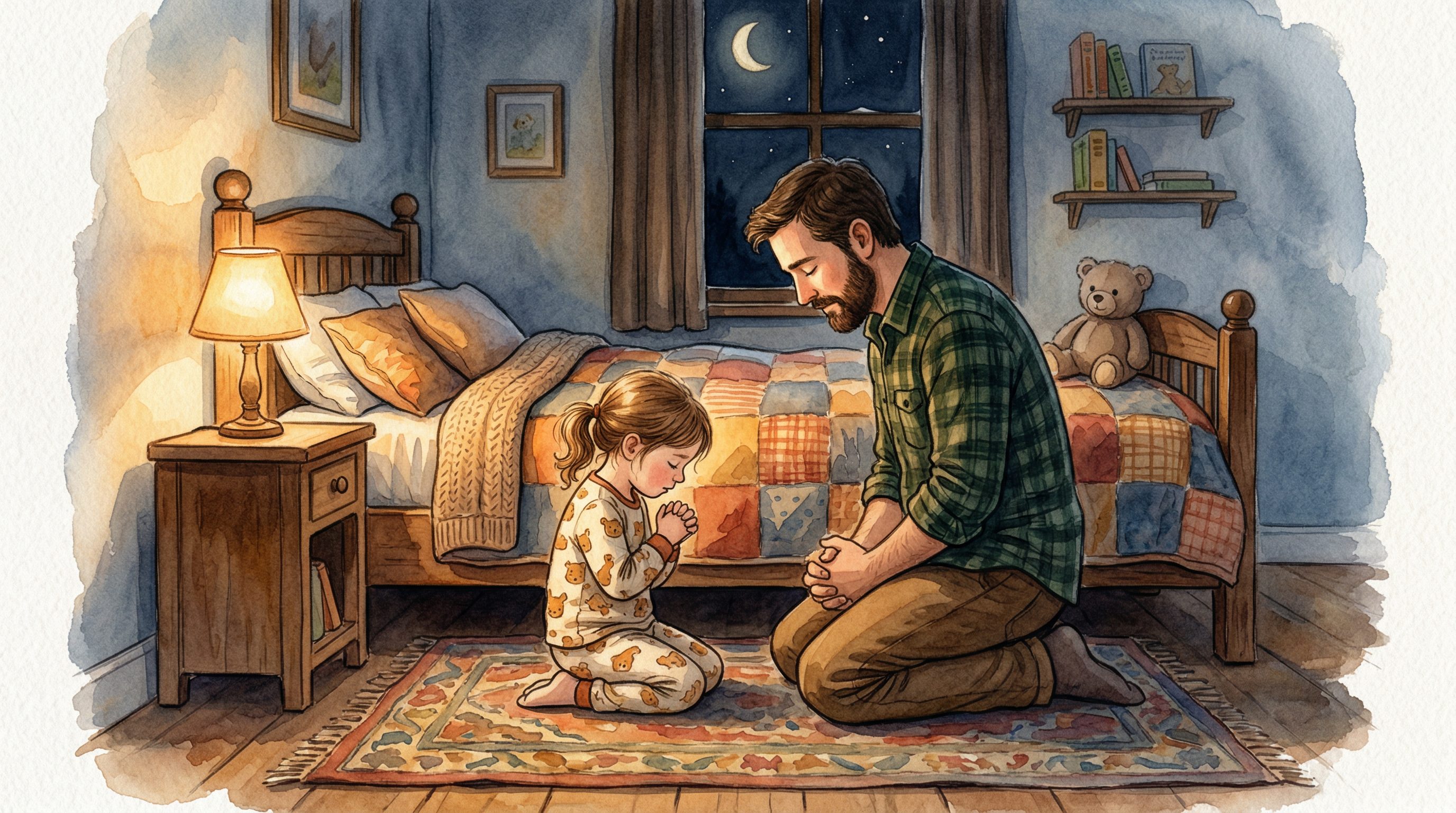
One of the most effective ways to introduce a child to God is through prayer — specifically by letting them watch you pray honestly. Before you've explained much theology at all, your kid can see that you talk to God, that it's normal, and that God is someone you trust. That observation shapes them powerfully.
For more on using prayer as the entry point, the full guide on how to teach kids to pray is worth reading alongside this one.
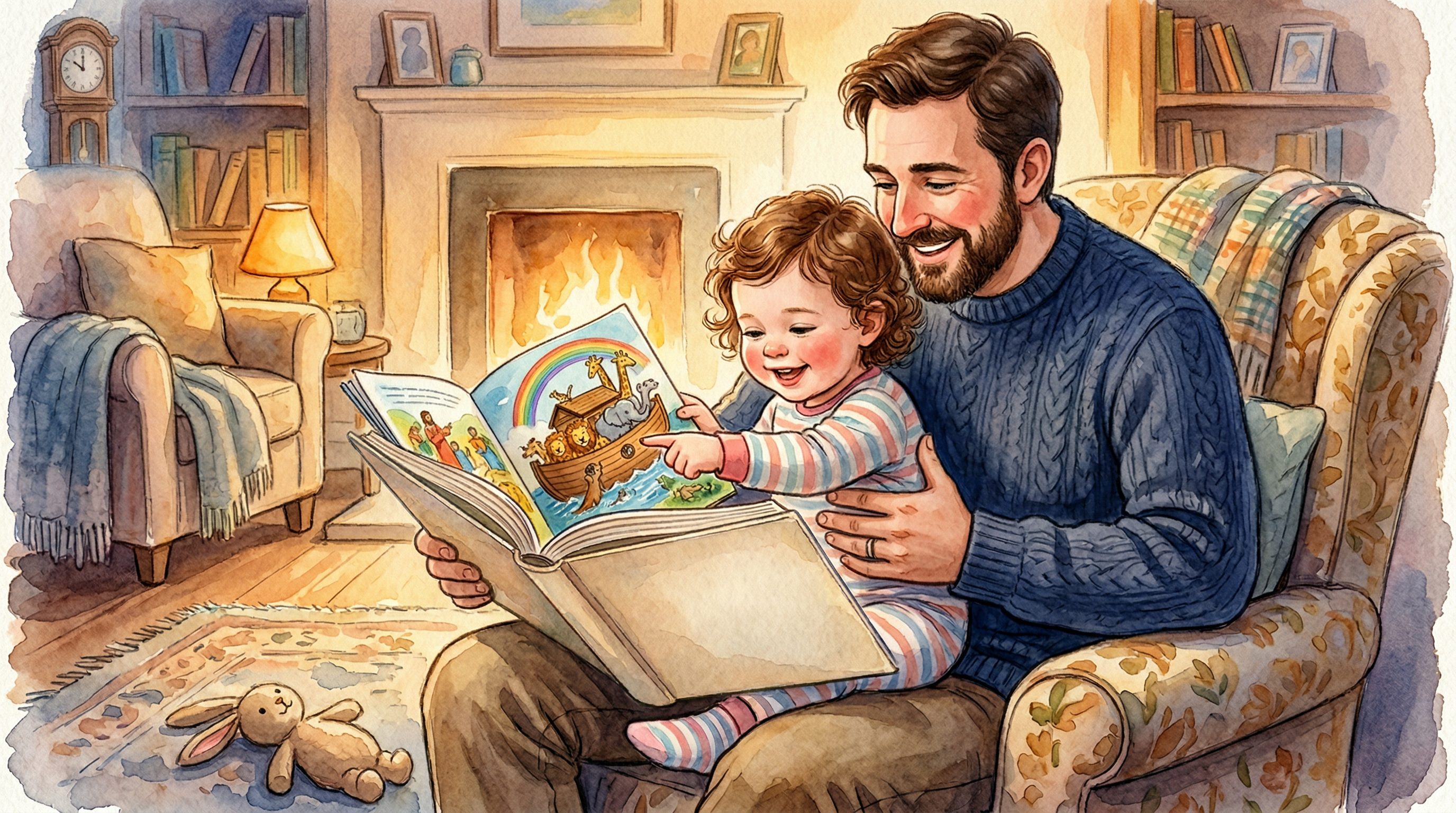
What to Actually Say
Here are some starter phrases that work well with young kids. These aren't scripts — they're launching points you adjust to your own voice.
- On who God is: "God is the one who made everything — you, me, the whole world. And He loves us more than we can even imagine."
- On where God is: "God is everywhere, but especially close to the people He loves. He's with you right now."
- On prayer: "When we pray, we're just talking to God. He listens. You can tell Him anything."
- On hard days: "When things feel scary or sad, that's actually a really good time to talk to God. He already knows how you feel, but He likes to hear it from you."
- On being known by God: "Before you were even born, God knew who you were. He made you exactly the way you are on purpose."
Simple. Direct. Age-appropriate. These phrases land because they're personal, not abstract. Kids don't connect with "God is omniscient and omnipresent." They connect with "God knows your name and He's right here."
What to Do When They Ask Hard Questions
You will get hard questions. "If God made everything, who made God?" "Why does God let bad things happen?" "Can God see me in the bathroom?"
Don't panic. Don't dodge. Don't give a theological treatise.
The most honest and effective response to a question you don't have a full answer for is: "That's a really good question. I don't know the complete answer, but here's what I believe..." That models intellectual honesty about faith — which is exactly what you want your kid to see. Faith doesn't require certainty. It requires trust.
For the specific hard questions kids ask about God, this article on what to say when kids ask about God gives you more detailed language for the toughest ones.
Using a Devotional to Guide the Introduction
One of the most practical things you can do — especially if you're not sure where to start — is use a structured devotional that's designed to introduce kids to God in age-appropriate language. This takes the burden of knowing what to say off your plate. The content is already there. Your job is just to read it and be present.
The Let Me Tell You About God series on Hosted Devotions was built exactly for this moment. It walks through who God is, how He relates to your child, and why that matters — in language a kid can actually understand and a dad can feel good reading. It's what I'd use if I were starting from scratch tonight.
Once you've made that first introduction and your kid starts asking more questions, this guide on what to tell kids about who God is gives you a deeper framework for the conversations that follow.
Common Mistakes Dads Make When Introducing God
A few patterns come up consistently that are worth knowing about before you start:
Waiting for a "perfect moment"
A lot of dads put this off because they're waiting to feel ready — to have the right words, the right setting, the right mood. That moment doesn't come. The best introduction to God is the one that happens in the minivan, or at the kitchen table, or before lights-out tonight. Don't wait for a cathedral. Use what's in front of you.
Making it feel like a formal lesson
Kids shut down when they sense a lecture coming. Keep conversations short, follow their curiosity, and leave space for their questions. The introduction to God should feel more like a window opening than a door being pushed on them. You're inviting them in, not enrolling them in a class.
Overcorrecting their questions
When a kid asks something unexpected about God — "Does God like pizza?" "Can God see through walls?" — the instinct is to immediately correct it. Resist that. Engage the curiosity first. "What do you think?" buys you a second to think and shows them their questions are worth taking seriously. You can get to the theology after you've honored the wondering.
Presenting faith as certainty you don't have
Kids are better at detecting dishonesty than we give them credit for. If you present faith as a settled, doubt-free zone when it hasn't always been that for you, they'll sense the gap. You don't have to have everything resolved to introduce your kid to God. "I believe this, and I'm still thinking about some parts of it" is a completely honest and effective thing to say.
The Introduction Is Never Just Once
Here's something worth knowing: introducing your child to God isn't a single conversation. It's hundreds of small ones, over years. The car ride question. The bedtime prayer. The moment after a hard day when you say "let's talk to God about that."
The "first time" isn't really one moment — it's a posture you adopt toward your kid's spiritual life. You keep bringing it up. You keep being honest. You keep being present. That's how a child comes to know God: not from a single perfect explanation, but from years of watching their dad treat faith as something real.
That's the long game. And it starts tonight, in the ordinary moment before your kid falls asleep.
📖 Read This Tonight
The Let Me Tell You About God series gives you the words to introduce your child to God in a way that's honest, warm, and built for bedtime. A great place to start if you haven't started yet.
Get Notified When New Series Drop
We add new devotional series regularly. Sign up to hear about them first.
Join the Community