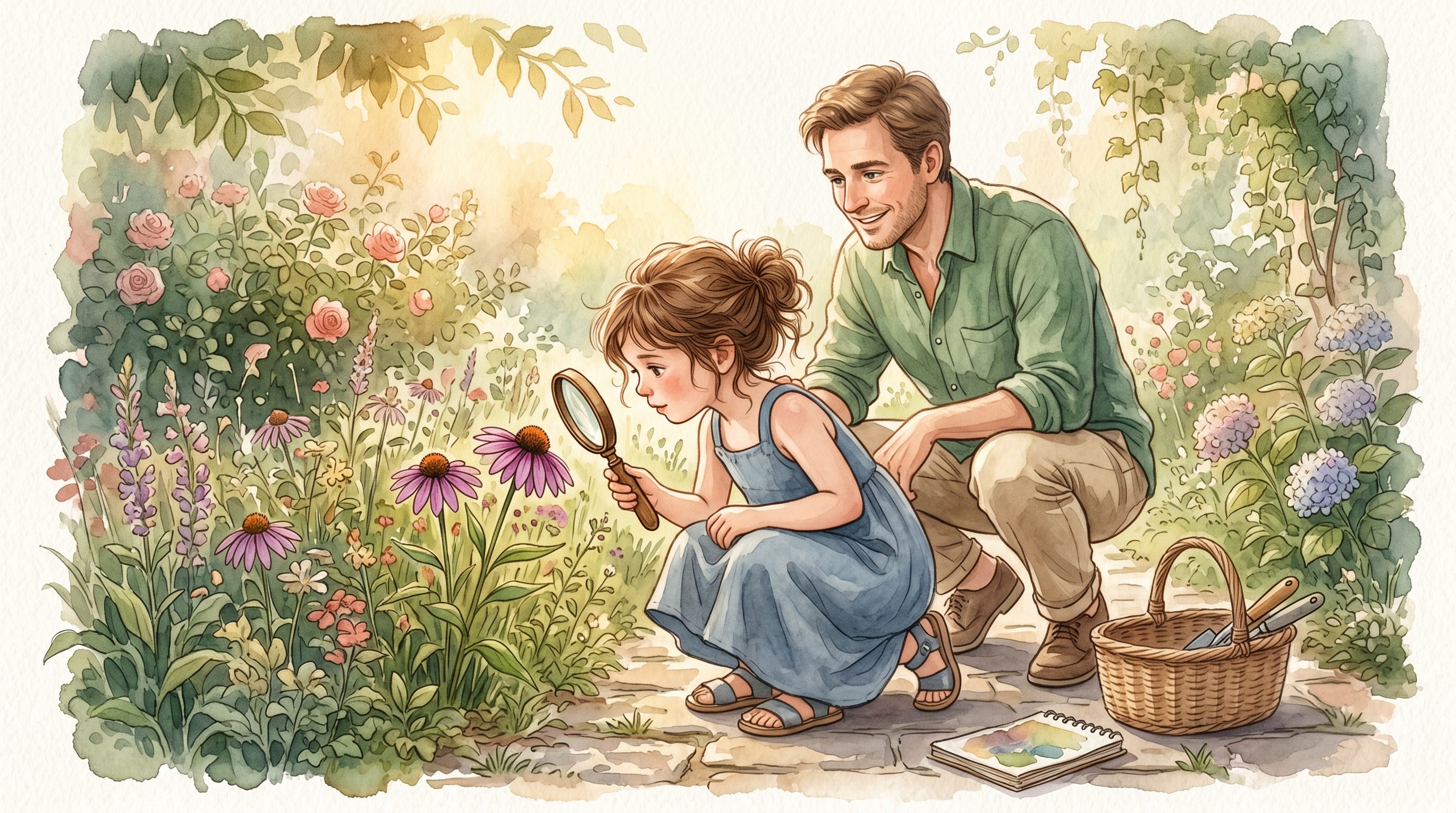
Six Is a Different Conversation Than Four
At four, your kid asked where God lives and you pointed at the sky and said "heaven" and that was enough.
At six, they come back with a follow-up. "But how do you know God is real?" Or: "Why can't I see him?" Or the one that really catches you off guard: "Tommy at school said God isn't real."
Six-year-olds are no longer just absorbing — they're questioning. That's not a problem. That's actually a sign their brain is developing the way it should. But it means your approach needs to shift. You can't just say "God loves you, go to sleep" and have it land the same way it did two years ago.
Here's how to meet them where they are.

What Changes Cognitively at Six
Around five and six, kids start thinking more logically. They're learning cause and effect in school. They understand that things have explanations. So when you tell them something they can't see or touch is real — they want a reason. That's healthy. That's their brain doing what brains are supposed to do.
At six, they can also hold more complex emotions. They understand fairness — and they'll notice when things don't seem fair. "If God loves me, why did Grandpa get sick?" These questions are coming. They might not be here yet, but they're coming.
The conversations at six aren't about simpler explanations — they're about honest ones. You don't need to have everything figured out. You just need to take the questions seriously and be willing to sit in them together.
Explaining Who God Is to a Six-Year-Old
Start with what they already know. At six, they understand relationships. They understand that some people love you no matter what. Build from there.
"God is the one who made everything — the whole world, the sky, animals, you. And he's not far away. He knows everything about you, and he loves you more than anyone else ever could. Even more than me."
That last part lands. Kids at this age understand that parents love them — and telling them God's love is bigger than that gives them a real frame of reference.
Then add: "And God is always with you. Even when you're at school without me. Even when you're scared in your room at night. He's there."
Don't rush past the comfort angle. Six-year-olds still wrestle with fears — about school, about being alone, about the dark. God's presence is a real, practical thing you can anchor to those fears. Not in a dismissive way — but as genuine truth.
When They Ask "How Do You Know God Is Real?"
This is the one that separates the conversations. A four-year-old doesn't ask this. A six-year-old does.
Don't dodge it. Answer it like an honest dad, not a nervous one.
"I know because I've seen him working in my life. I can't see him with my eyes, but I can see what he does. Kind of like you can't see the wind, but you can see leaves move."
Then get personal. Share one specific time you felt like God showed up — kept you safe, gave you peace in a hard moment, answered a prayer. Kids this age respond to real stories. Your story carries weight that an abstract argument doesn't.
If you're still building your own vocabulary for talking about faith with your kids, the guide on what to say when kids ask about God has some language that might help.
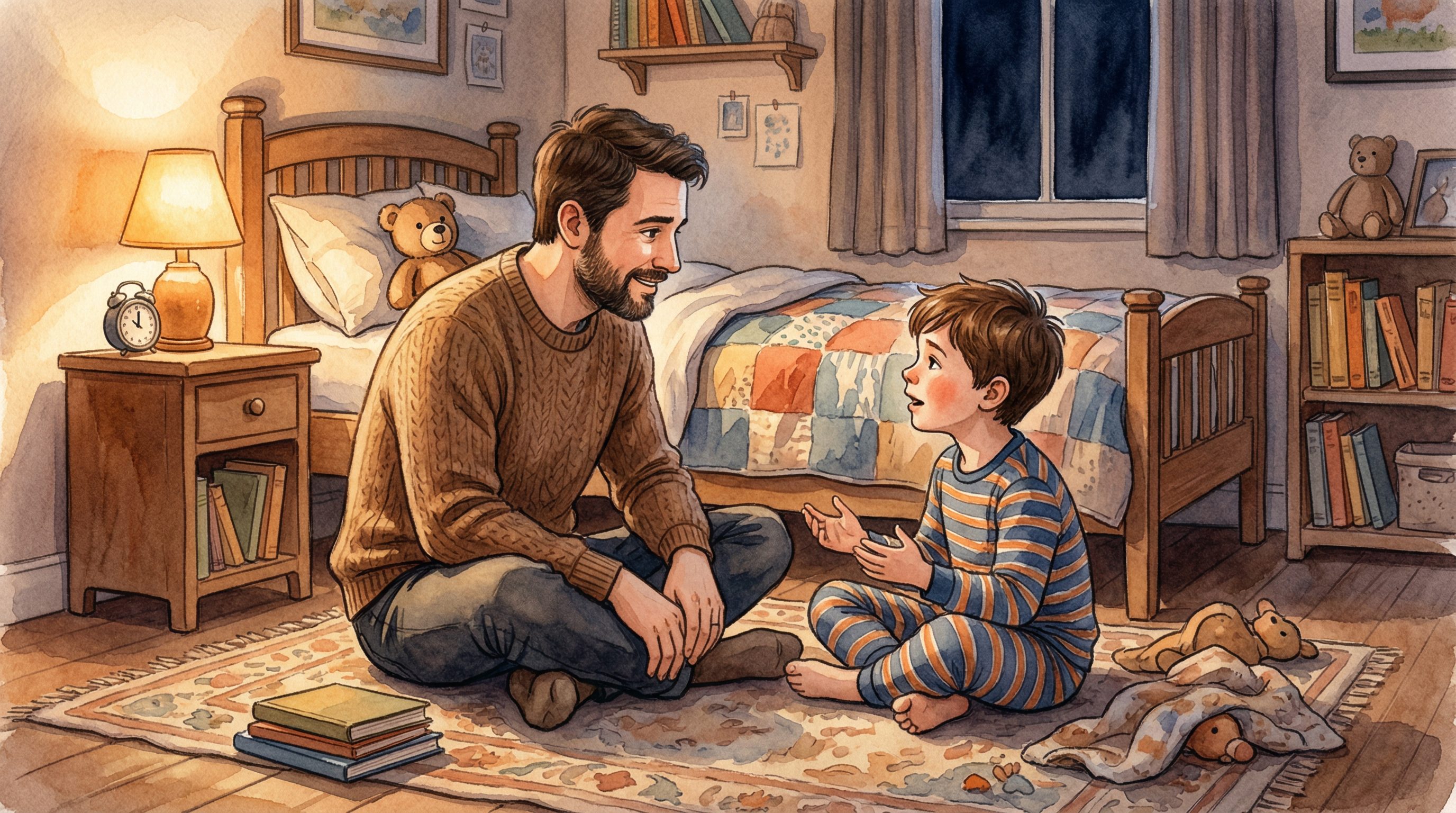
When Another Kid Says God Isn't Real
Expect this. It's happening earlier and earlier. Here's what to say when your six-year-old brings it home:
First — don't panic. Don't react like something has gone wrong. Stay calm and curious.
"What did you think when Tommy said that?"
Let them tell you. You might be surprised — sometimes kids this age already have their own sense that God is real and they just wanted to talk about it. Other times they're genuinely confused. Either way, listen before you respond.
Then say something like: "Lots of people have questions about God. That's okay. In our family, we believe he's real. And here's why I believe that..." Then tell them. Don't just assert it — show them your own conviction.
You can also say: "You don't have to argue with Tommy. You just keep thinking about it yourself. It's your own question to answer, and we can talk about it whenever you want." That respects their developing mind while keeping the door open.
Explaining Prayer at Six
Six-year-olds can understand prayer more concretely than they could at four. They understand that conversations go two ways. They understand waiting for an answer.
"Prayer is just talking to God. Like talking to me, but you can do it in your head or out loud, anywhere, anytime. You don't need special words. You just tell him what's on your mind."
Then model it. Pray with them in simple words. Let them hear you be honest in prayer — not just recite a formula. "God, I'm worried about work tomorrow" or "God, thank you for a good day" — that's real. That's what you want them to absorb.
If you want a structured way to build that habit at bedtime, check out the Let Me Tell You About God series — it's built for this exact age, short conversations that lead naturally into prayer together.
Related: you might also find the piece on how to introduce your child to God useful as a framework for the overall conversation across these years. And for the foundational truth that ties all of these conversations together, the post on teaching kids about God's love at bedtime is one worth returning to often — especially on the nights when your six-year-old is wrestling with the harder questions.
When They Ask Hard Questions You Can't Answer
Six-year-olds will ask:
- "Why did God let my dog die?"
- "If God is good, why is there war?"
- "Does God ever make mistakes?"
Here's your response: "That's one of the hardest questions there is. I don't have a perfect answer. But I do know that God is good — and when things hurt, he hurts with us."
The willingness to say "I don't know" is not weakness. It's honesty. And six-year-olds can tell the difference between a dad who's leveling with them and a dad who's giving them the runaround. Trust the honesty. It builds more faith than tidy answers do.
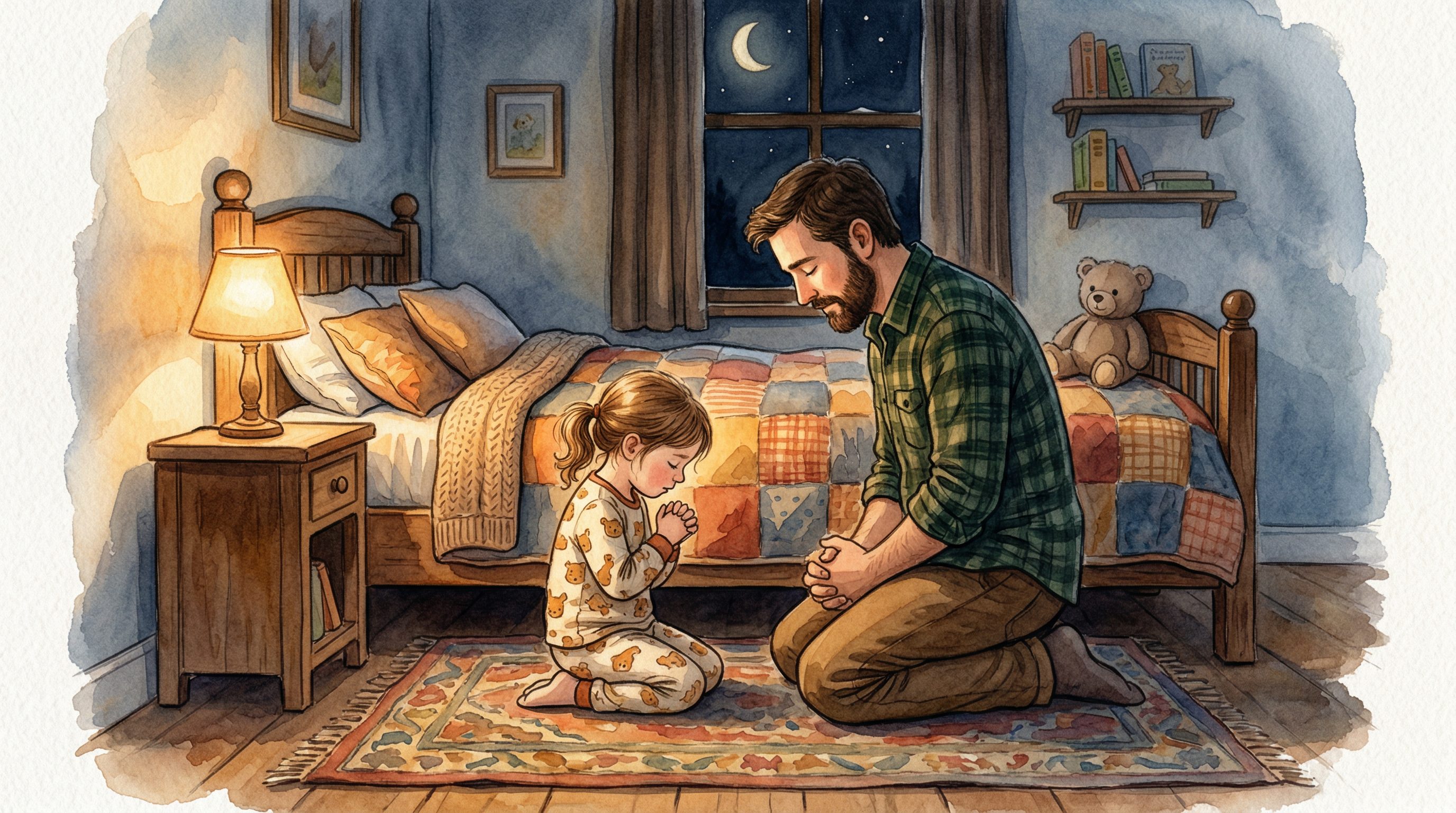
Keep It a Conversation, Not a Lecture
At six, the worst thing you can do is turn into a pastor. You'll lose them in about ninety seconds. Keep it back-and-forth. Ask them what they think. Ask them what they feel. "What do you believe?" is a powerful question — even for a six-year-old. It gives them ownership of their faith rather than making it feel like something handed down from above.
The goal isn't to convince them of a set of propositions. The goal is to show them that faith is something you live, something you think about, something you return to — and that they can do the same thing.
These conversations are the foundation. Everything else gets built on top of them.
📖 Read This Tonight
The "Let Me Tell You About God" series gives you a guided framework for exactly these conversations — short nightly readings that open up the big questions about who God is, in language a six-year-old can actually hold onto.
Get Notified When New Series Drop
We add new devotional series regularly. Sign up to hear about them first.
Join the Community