It Usually Hits at 8:45
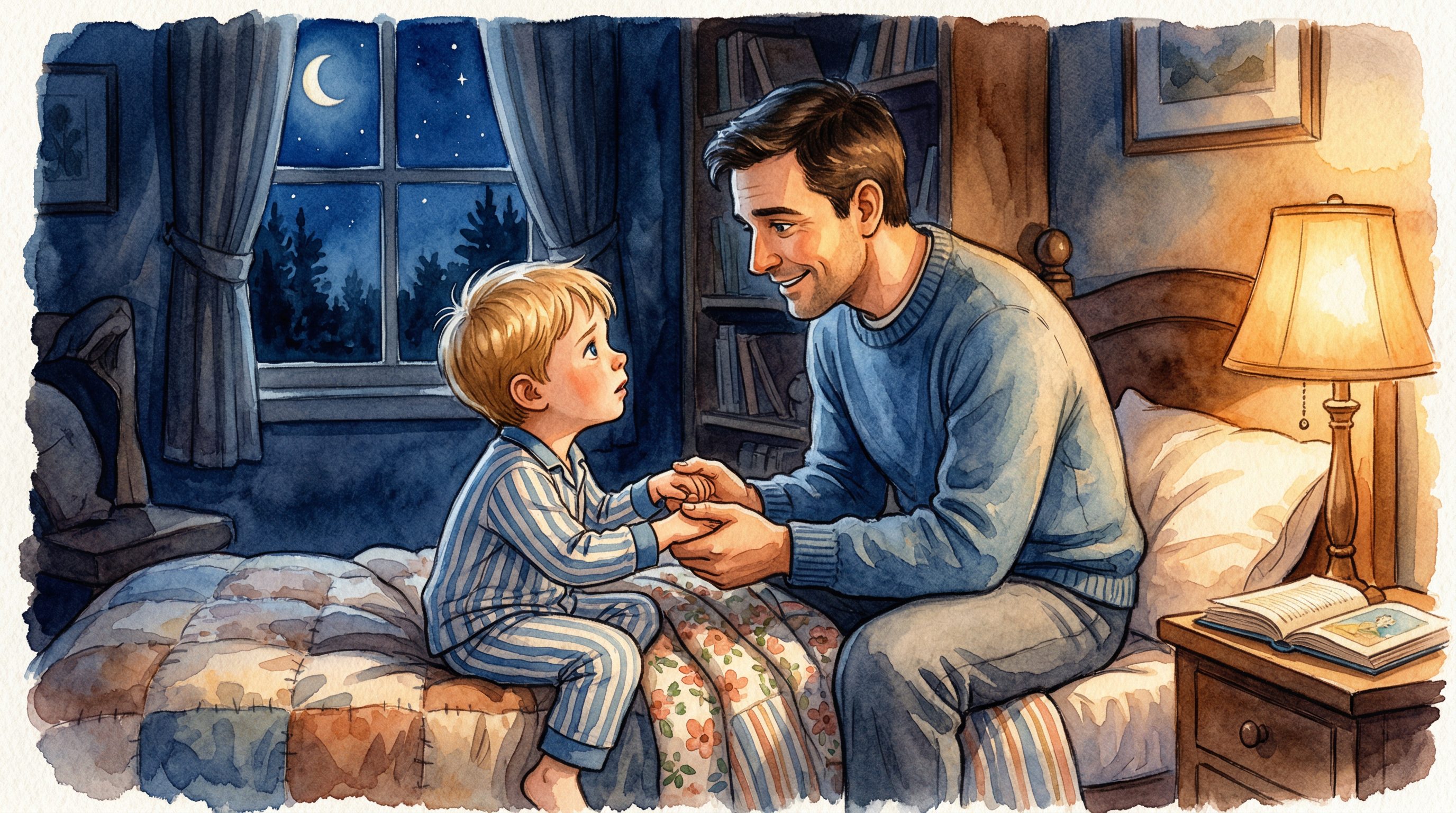
You're wrapping up. Lights are low, you've done the routine, you're about 45 seconds from walking out the door — and then it comes. "Dad, what if something bad happens to you?" Or: "I'm scared but I don't know why." Or just a kid who can't explain it, staring at the ceiling with something heavy on his chest.
I know that moment. My older boy started doing this around age six. The question would land right at the edge of bedtime, quiet and sincere, and I'd be standing there half out the door trying to figure out what to actually say. Not the Sunday school answer. Something real. Something that would actually help him sleep instead of spinning.
If your kid is showing signs of anxiety — at bedtime, at school drop-off, before sports games, just... in general — you're not imagining it, and you're not overreacting by taking it seriously. Childhood anxiety is real, it's common, and ignoring it doesn't make it smaller. But there's a practical, faith-grounded approach that actually helps. Let's talk through it.

First: Don't Dismiss It and Don't Over-Spiritualize It
These are the two ditches most dads fall into.
Ditch one is the brush-off: "You're fine, nothing's going to happen, go to sleep." This is well-intentioned but it teaches your kid that what they're feeling isn't worth talking about. Over time, that shuts the door — and then when something actually is wrong, they don't come to you.
Ditch two is the opposite. Over-spiritualizing it: immediately jumping to "Just pray about it" or "God is in control, so you don't need to worry." Again — true, but incomplete. A seven-year-old's nervous system doesn't calm down because you quoted Philippians 4:6 at it. Faith is the foundation, not the bypass.
The middle ground is acknowledging that what your kid feels is real, giving it a name, sitting with it for a second, and then bringing in what you actually believe about God's presence and care. That sequence matters. You can't skip the acknowledgment.
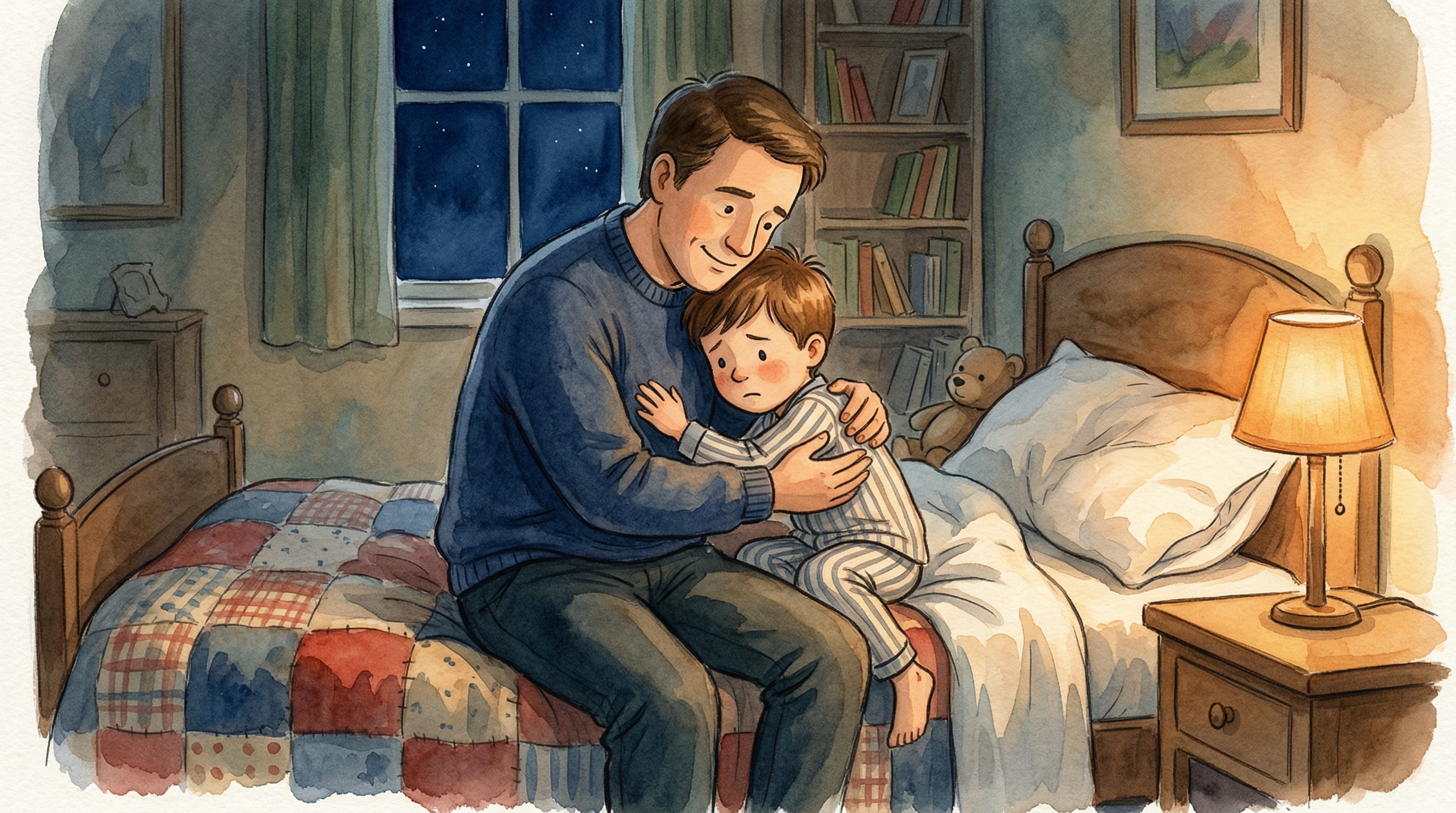
Try something like: "Yeah, that's a hard feeling. I've felt that too. You know what I've learned? That feeling doesn't mean something bad is about to happen — it's just your brain being protective. And here's something else I know: you're not facing that by yourself." That's not a dismissal and it's not a sermon. It's just a dad telling his kid the truth.
Why Routine Is One of the Best Anxiety Tools You Have
Anxious kids are almost always helped by structure. Not rigidity — structure. Knowing what comes next. Knowing the day has a shape. Knowing that after dinner there's a routine, and that routine ends with dad, and dad is steady.
Bedtime devotions are one of the most underrated anxiety tools a father has. Not because you're going to recite the perfect verse every night. Because you're building a consistent, predictable, calm moment that your kid can count on. Night after night. The repetition itself is the point.
Kids with anxiety often feel like the world is unpredictable and unsafe. When you show up at bedtime — same time, same routine, same presence — you're communicating something that goes deeper than words: this is stable, you are held, I am not going anywhere.
That's not a small thing. That's foundational. And if you're not sure how to structure that routine, this guide on bedtime devotionals for anxious kids walks through exactly how to set it up so it actually sticks.
What Faith-Based Actually Looks Like in Practice
"Faith-based approach" can sound like a category on a pamphlet. Here's what it actually looks like with real kids at a real bedtime.
Name the emotion without shame. The Bible is full of people who were afraid — Elijah hiding under a broom tree, David writing psalms about enemies on every side, Jesus in Gethsemane asking if there was another way. Your kid doesn't need to be ashamed of being scared. That's the starting point.
Read something short and concrete. Long passages don't land at 8 p.m. with an anxious kid. A single verse with a sentence or two of real-dad commentary is enough. The goal is one idea that sticks — not a lesson plan.
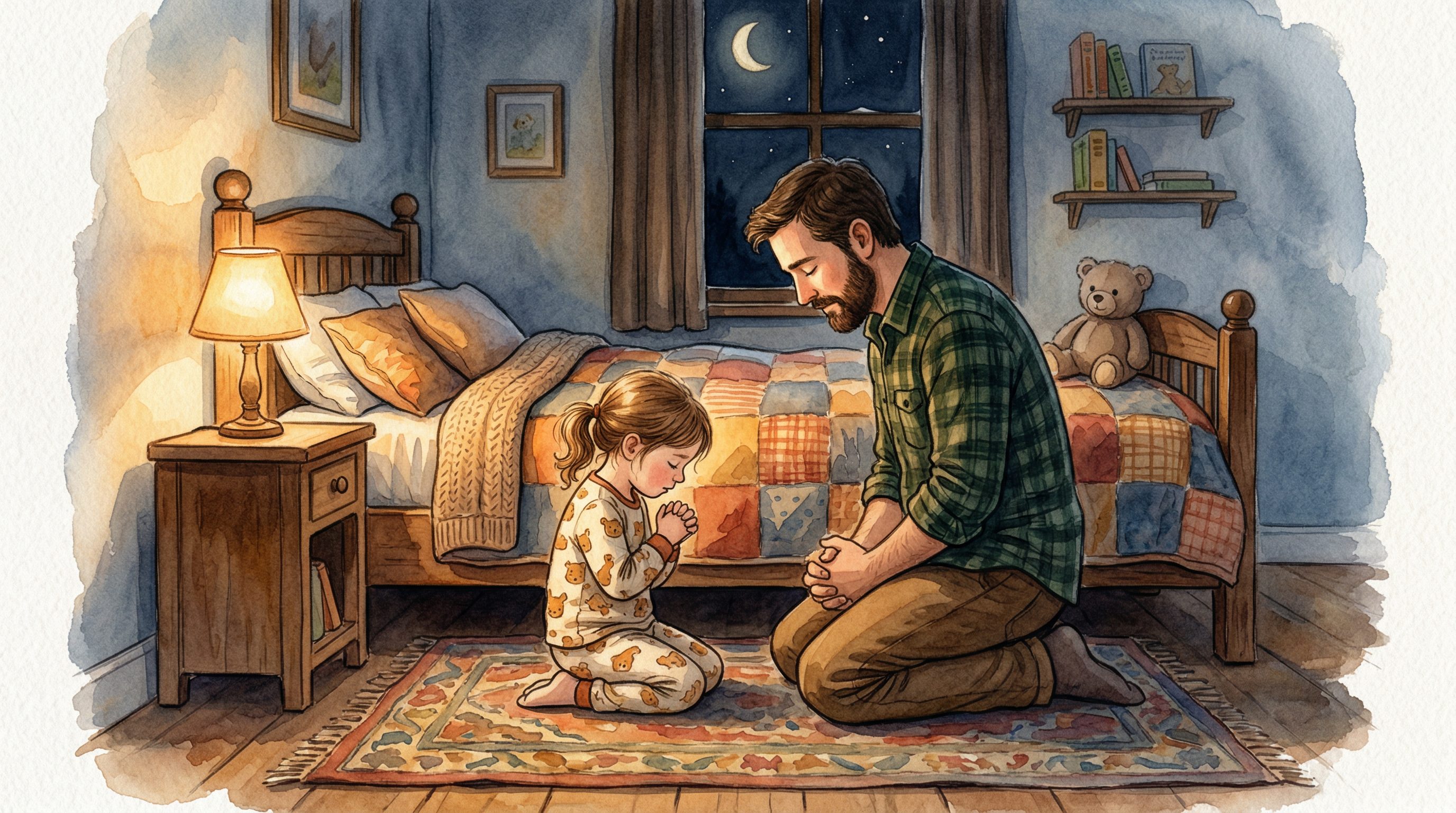
Pray together, out loud, simply. Not performance. Just honest words. "God, my boy is feeling worried tonight. We don't fully understand why. We're asking you to be close. Amen." Hearing his dad talk to God about his specific feelings — not generic prayer, but this worry, tonight — is something a kid remembers.
Let there be silence. You don't need to fix everything. Sometimes the most faith-filled thing you can do is sit in the quiet for a minute after the prayer. Let him feel like there's room for this. Like it doesn't have to be solved or rushed away.
We have a full article on devotionals for kids about worry if you want to go deeper on specific content you can read together.
The Worry Warriors Series: Built for This Exact Moment
When I was building Hosted Devotions, anxiety and worry were at the top of the list of things dads told me they didn't know how to handle with their kids. They wanted something that would give their kid language for what they were feeling, point them toward something real, and not sound like a children's therapy workbook.
The Worry Warriors series is exactly that. It's a 7-day devotional built specifically for kids who worry — nights when the brain won't quiet down, when the fears are vague or specific or both. Each day's reading is short, honest, and gives your kid something to hold onto. There's a thread running through the whole week: being brave doesn't mean you're not scared, it means you know you're not alone.
You can also pair it with Big Feelings, which covers the broader territory of big emotions — anxiety often travels with other feelings, and that series helps kids learn to name and process all of them. For more on helping kids understand their feelings through faith, this article on what to say when kids ask about God has some useful framing for those harder bedtime conversations.
When to Get More Help
This article is about practical, faith-grounded parenting — not clinical advice. But it would be incomplete not to say: if your child's anxiety is significantly affecting their daily life, professional support is worth pursuing. Therapy and faith aren't in competition. A good therapist gives your kid tools; what you're doing at bedtime gives them a foundation. Both can be true at the same time.
The signs worth paying attention to: refusing school consistently, not being able to sleep alone for months at a time, physical symptoms like stomachaches or headaches that have no medical cause, panic attacks, or social withdrawal that's getting worse rather than better. If those are present, talk to your pediatrician and get a referral. The devotional routine still matters — it just works alongside that support, not instead of it.
You Showing Up Is the Point
Here's the honest truth about helping a child with anxiety: there isn't a formula that makes it disappear. But there is something that consistently helps — and it's a present, steady, unhurried father who creates space for hard feelings and brings faith into the room without making it weird.
You don't have to have all the answers at 8:45 p.m. You just have to be there. Willing to sit down, open a short devotional, say an honest prayer, and let your kid know: this is a safe place to bring whatever you're carrying.
That's not a small thing. That's a dad doing the work.
📖 Read This Tonight
If your kid is carrying worry to bed tonight, Worry Warriors is a 7-day series built exactly for that. Short, honest, and gives your child something real to hold onto.
Get Notified When New Series Drop
We add new devotional series regularly. Sign up to hear about them first.
Join the Community