The 8:45 p.m. Confession Nobody Warned Me About
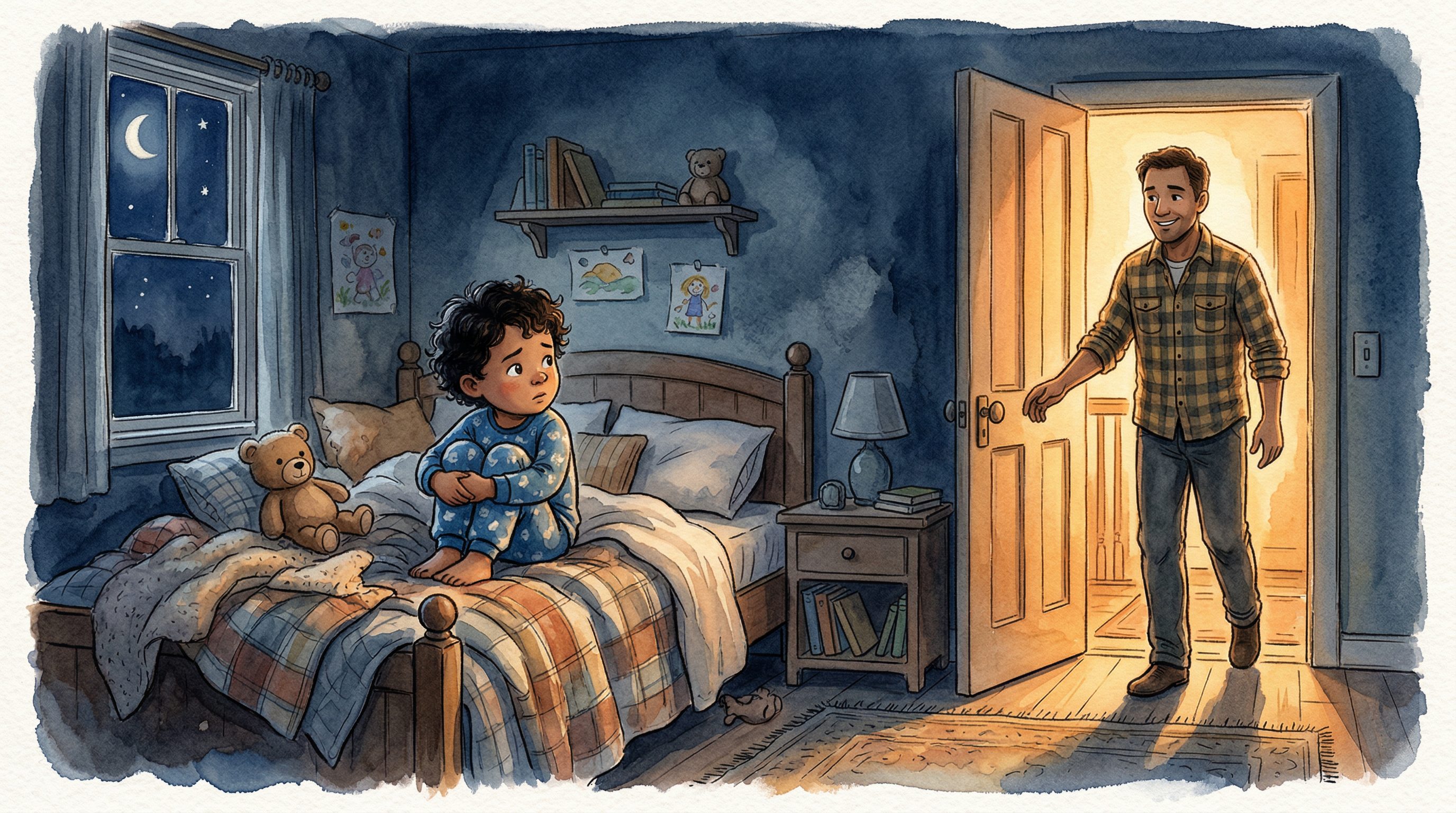
My older son was seven — same as he is now — and we'd just finished a devotional. Lights were low, he was supposed to be winding down. Then, just as I was about to say goodnight, he said something that stopped me cold. He told me he'd been worrying about what would happen to me and his mom if we got sick. Not a passing thought. Something he'd been carrying around for weeks.
8:45 p.m. I had no idea.
That's the thing about kids and worry. It doesn't usually come out at the dinner table or in the car on the way to school. It shows up at bedtime, in the dark, when they finally stop moving long enough to feel it. And if you're not there — really there, with something to do besides say "you'll be fine" — you miss it. Or worse, you say the wrong thing and the door closes again.
A devotional for kids about worry isn't just a nice extra. For some kids, it's the thing that changes bedtime from a scared hour to a grounded one. This guide walks you through what worry actually looks like in kids, why bedtime is when it peaks, and how to use a structured 7-day devotional to help your kid build a habit of giving that anxiety somewhere to go.

What Worry Actually Looks Like in Kids (It's Not Always Obvious)
Adult anxiety is usually recognizable. Kids' anxiety often doesn't look like anxiety at all. It looks like stalling at bedtime. It looks like stomach aches before school. It looks like suddenly not wanting to go to a friend's house they've been to a hundred times. It looks like anger, because fear and frustration use the same emotional circuitry in a developing brain.
Common signs of anxiety in school-age kids include:
- Repeated "what if" questions at night
- Trouble falling asleep even when they're clearly tired
- Wanting to sleep in your room more than usual
- Asking for reassurance about the same thing over and over
- Physical complaints — headaches, stomach aches — with no clear cause
- Avoidance of things they used to enjoy
If any of those hit close to home, you're not alone. Childhood anxiety is common — estimates suggest around 1 in 3 children will experience significant anxiety at some point before age 18. And the research is clear that it doesn't go away on its own without tools. Kids need to be taught — not just told — how to handle it.
That's where a structured devotional comes in. Not as a replacement for professional support when that's needed, but as a daily habit that gives your kid language for what they're feeling and somewhere to put it.
Why Bedtime Is the Worry Danger Zone
During the day, kids have school, friends, screens, movement. The brain stays occupied. Worry exists, but it's easier to outrun.
Then the day ends. The distractions disappear. The lights go down. And suddenly there's nothing between your kid and whatever they've been quietly carrying all day. Bedtime is when the noise stops — and for an anxious kid, that's when the volume on their fears goes all the way up.
This isn't a parenting failure. It's neuroscience. The brain's threat-detection system — the amygdala — stays active during the transition to sleep. For kids who are already prone to anxiety, this is the window when fears feel most real, most urgent, and most impossible to dismiss.
The good news: that same window is also when your kid is most emotionally open. Most likely to talk. Most receptive to what you say. A devotional at bedtime doesn't just distract from the worry — it intercepts it. Gives it a structure. Replaces a spinning, uncontrolled fear with a conversation, a verse, and a prayer that names the thing out loud.
If you want to go deeper on why bedtime works so well for this kind of connection, I wrote more about it in this guide specifically for anxious kids at bedtime.
How a Devotional Helps (What You're Actually Doing)
A lot of dads hear "devotional for kids about worry" and picture a Bible verse and a prayer. That's part of it — but what you're really doing is something more specific.
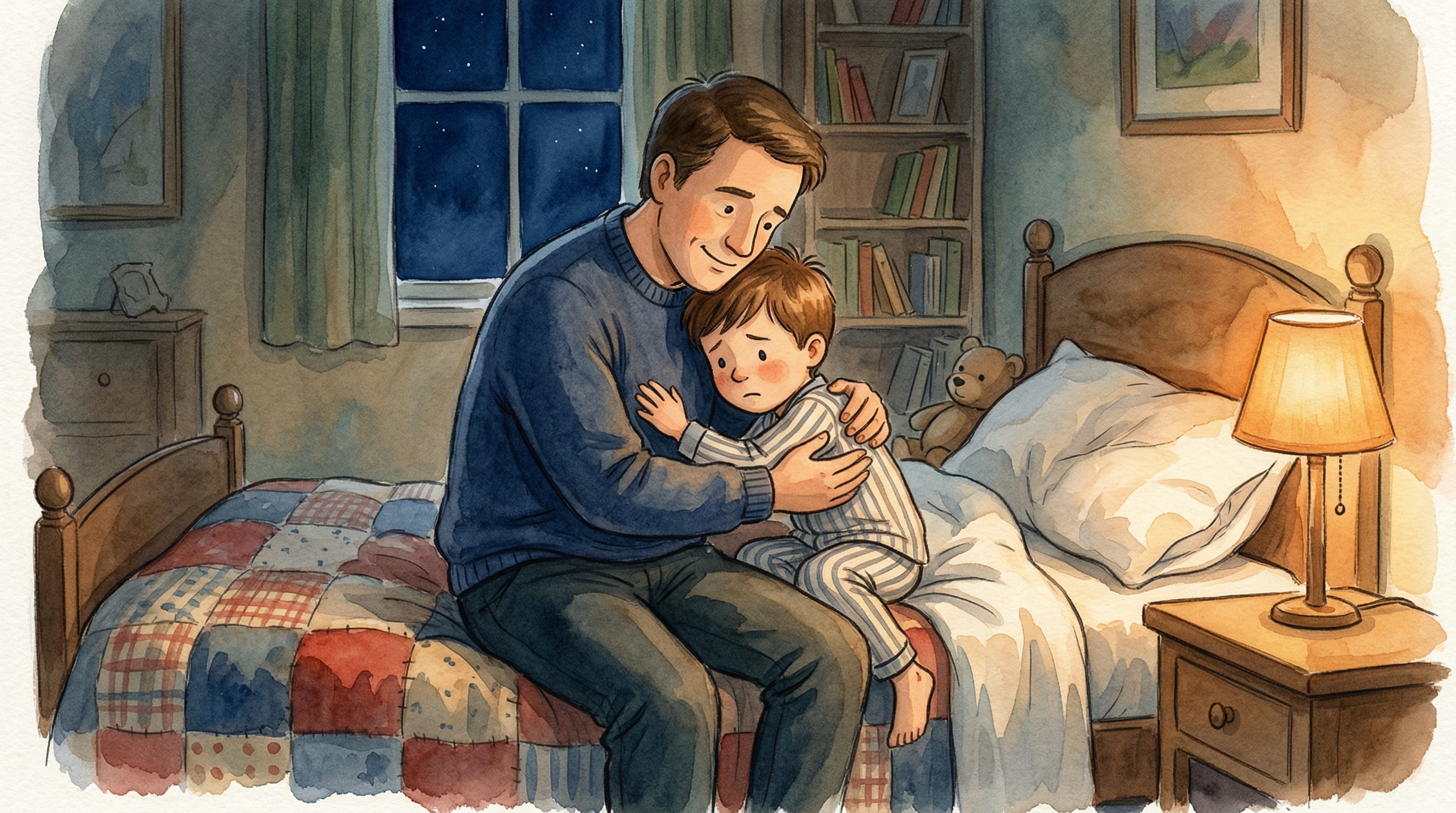
You're teaching your kid a skill. The skill is: when I feel scared, I can name it, I can bring it to God, and I don't have to carry it alone.
That sounds simple. For a seven-year-old whose nervous system is in overdrive, it's not. It takes repetition. It takes a dad sitting in the dark next to them, doing it with them, night after night, until it becomes the thing they reach for automatically.
A good devotional for anxiety does three things:
- Names the worry out loud. Anxiety thrives in vague, unnamed fear. Giving it a specific name — "I'm scared something bad will happen to you" — shrinks it. It becomes a thing rather than a cloud.
- Connects it to Scripture that speaks directly to fear. Not generic comfort, but verses that actually address what they're feeling. Philippians 4:6-7, Psalm 56:3, Isaiah 41:10 — these land differently when a kid hears them in the context of their actual worry.
- Prays about it specifically. Not "help me sleep good." But "God, I'm worried about my test tomorrow and I'm scared of getting it wrong. Help me remember that you're with me even when things are hard."
That specificity matters. Vague prayers feel empty to kids. Named, honest prayers feel real.
The Worry Warriors Series: What Each Day Actually Covers
The Worry Warriors series in Hosted Devotions was built specifically for this. It's a 7-day series written for kids who are dealing with real anxiety — not the sanitized "don't worry, be happy" version, but the kind that shows up at 9 p.m. when your kid can't turn their brain off.
Here's what the series does across seven nights:
Days 1–2: Naming the Worry. The first two nights are about getting the anxiety out of the kid's head and into the open. The devotionals use age-appropriate prompts to help your child identify what they're actually scared of — specifically, not vaguely. You're not solving it yet. You're naming it. That alone reduces its power.
Days 3–4: Understanding Who's in Charge. This is where the Scripture does its work. Verses like Psalm 46:1 and Matthew 6:25-27 aren't just read — they're connected to the specific fear your kid named in the first two nights. The framework shifts from "I'm scared" to "I'm scared, and here's what God says about this kind of fear."
Days 5–6: Praying It Out. By now your kid has a name for the worry and a verse that speaks to it. These nights practice the prayer habit — specific, honest, not performative. The mission system plays a role here too: your kid gets a small, doable "mission" connected to the day's theme. Something like noticing one moment tomorrow where they feel peace instead of panic. It's small. It's concrete. It works.
Day 7: The Warrior Identity. The final night lands on identity. Your kid isn't just a kid who worries — they're someone who knows how to bring their fear to God and keep going anyway. That reframe matters more than any single verse. You're not raising a kid who never feels scared. You're raising a kid who doesn't let scared be the final word.
How to Lead This as a Dad (Even If You're Not a "Devotional Guy")
You don't need to be a theologian. You don't need to have all the answers. You don't even need to have your own anxiety totally figured out — if anything, honesty about your own worry makes these conversations more real.
What you do need is to show up consistently for seven nights. That's it. The series guides the conversation. You read it, your kid listens, you pause for the question, you pray together. Ten minutes, maybe twelve on a talkative night.
A few things that help:
- Let the quiet happen. When you ask the question at the end of a reading, don't rush to fill the silence. Anxious kids often need a beat before they'll say the real thing.
- Don't correct the worry. If your kid says they're scared about something that seems irrational to you, don't explain why it's not a big deal. Just receive it. The devotional will do the reframing. Your job in that moment is to create safety for the worry to exist out loud.
- Do the mission together when you can. The missions in Worry Warriors are small, but doing them alongside your kid — or asking about them the next day — multiplies the effect.
I call my older son before school some mornings just to remind him of his mission. "Hey buddy, remember your mission today." It takes twelve seconds. He lights up every time. The mission system makes the devotional matter beyond bedtime — it gives the content somewhere to land in real life.
If you're just getting started with bedtime devotions in general and want a broader foundation, this guide on how to start bedtime devotions with your kids covers everything from setup to what to do when your kid won't engage.
After the 7 Days: What Comes Next
Seven nights isn't a cure. It's a foundation. After your kid finishes Worry Warriors, they'll have a vocabulary for what they're feeling, a prayer habit for when it comes up, and the lived experience that the scared feeling doesn't have to be the boss of the night.
If anxiety is a consistent struggle for your kid, consider looping back to the series after a few weeks — especially during high-stress seasons like the start of school, a family change, or any time you notice the old patterns coming back. The series works differently the second time through, because your kid brings more to the conversation.
You can also layer in the Big Feelings series after you finish Worry Warriors. It covers the broader emotional landscape — not just anxiety but the full range of hard feelings kids don't know what to do with. Together, the two series give your kid a genuinely solid emotional and spiritual toolkit.
The goal isn't a kid who never worries. The goal is a kid who knows that when worry shows up at 8:45 p.m., they have somewhere to take it. And that there's a dad in the dark room who's not going anywhere.
📖 Read This Tonight
If your kid is carrying worry around and you want to give it somewhere to go, start the Worry Warriors series tonight. It's 7 nights, it's free, and it's written for exactly this.
Get Notified When New Series Drop
We add new devotional series regularly. Sign up to hear about them first.
Join the Community