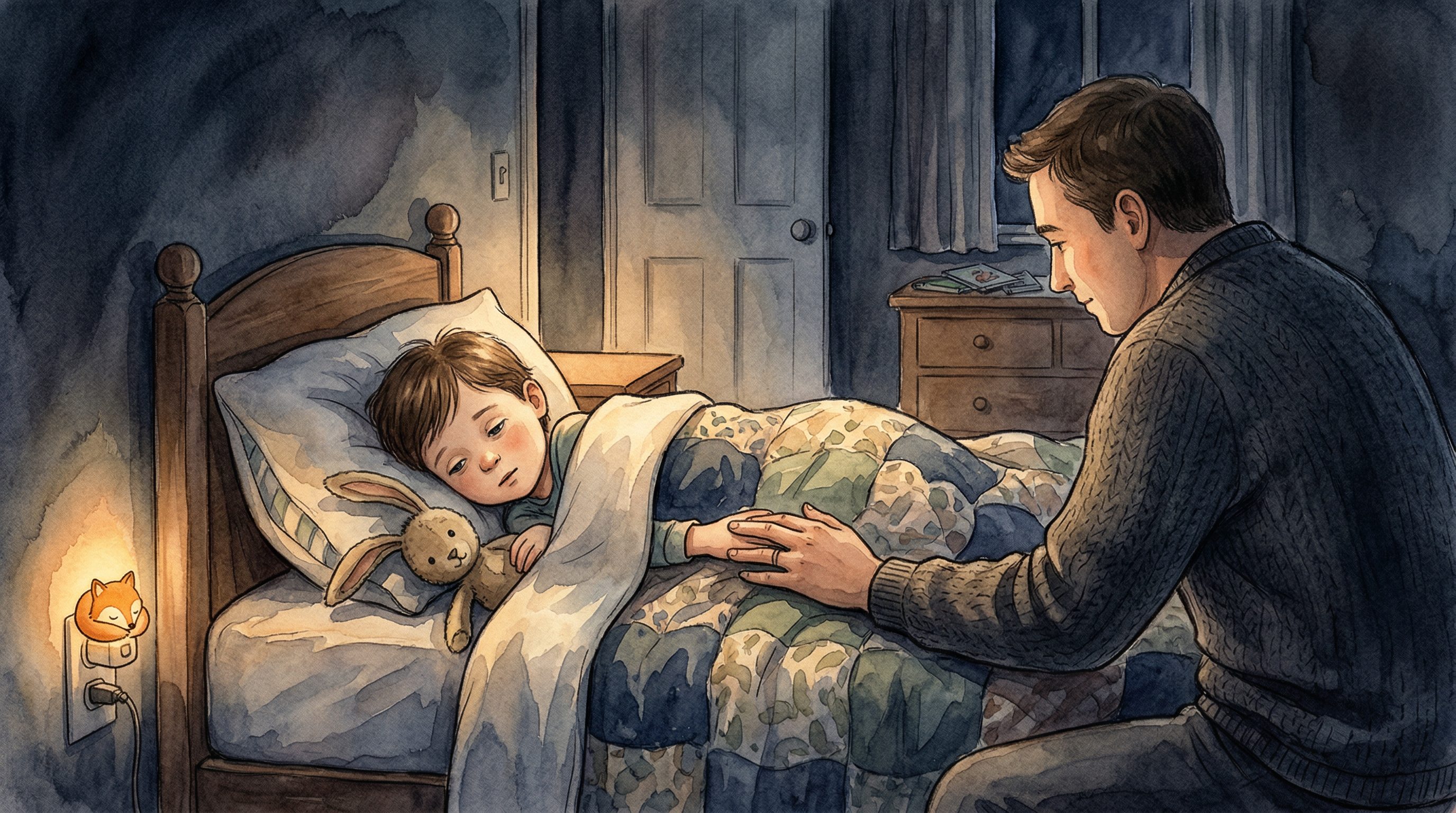
The Cruel Irony of Bedtime Anxiety
Bedtime is supposed to be peaceful. You've done the hard part — the day is over, dinner is done, the house is quiet. You walk into your kid's room expecting wind-down mode. Instead, you find a brain running at full speed and a kid who can't stop thinking about something they heard at school, or something that might happen tomorrow, or something completely invisible to you that somehow feels enormous to them.
I've been there. Sitting in a dark room at 9 p.m., kid supposed to be asleep, and instead they're hitting me with something heavy — completely out of nowhere, completely sincere, and completely impossible to answer with "it'll be okay, buddy" and have it actually land. That moment either becomes a missed connection or it becomes something real. The difference, in my experience, is whether you have a framework for it.
A bedtime devotional for anxious kids isn't just a nice bedtime routine addition. It's a structured way to turn the scariest part of your kid's day into the most connected part. This guide covers why bedtime anxiety spikes in kids, what the research actually says, and how a consistent devotional practice addresses it in ways a simple reassurance conversation can't.
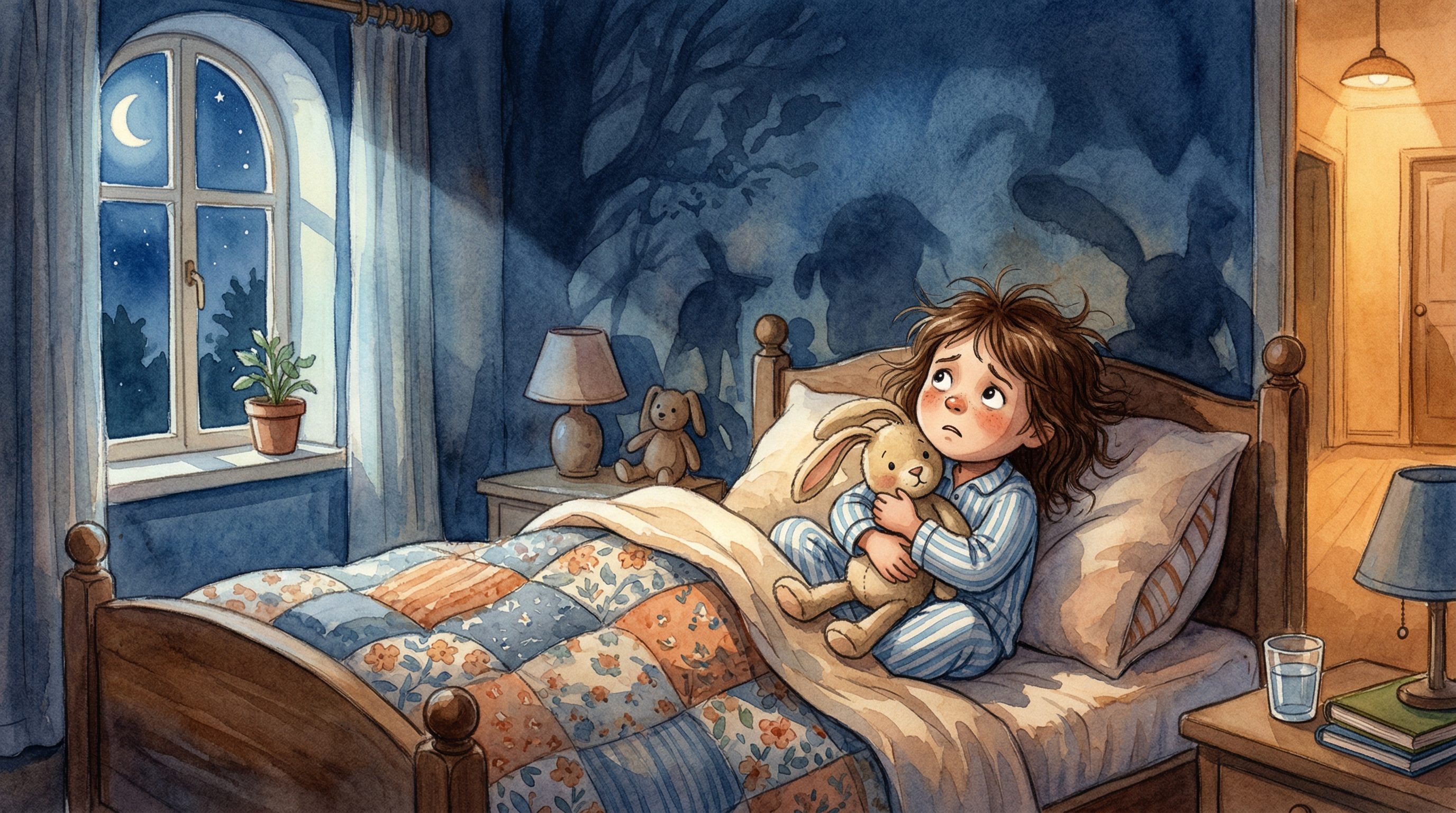
Why Anxiety Peaks at Bedtime (The Science Actually Explains It)
Here's what's happening in your kid's brain when the lights go off. During the day, the prefrontal cortex — the rational, problem-solving part of the brain — is in the driver's seat. School, social dynamics, activity: all of it keeps the brain forward-focused. Anxiety still exists, but the brain has other places to be.
When stimulation drops — screens off, movement stopped, room dark — the amygdala takes over. That's the brain's threat-detection center. For kids with anxiety, it's been working overtime all day with the volume turned down. At bedtime, the volume goes all the way up. Every "what if" thought your kid pushed aside during the day floods back at once.
Research in pediatric sleep and anxiety confirms this pattern consistently. A 2019 review in Sleep Medicine Reviews found that anxiety disorders are one of the strongest predictors of pediatric sleep problems — and the relationship runs both directions. Anxiety disrupts sleep, and poor sleep amplifies anxiety. It's a cycle that worsens without intervention.
The other thing happening at bedtime: your kid is alone with their thoughts in a way they almost never are during the day. Kids who are anxious tend to be wired toward threat-scanning — they notice danger, real and imagined, more readily than other kids. In the dark and quiet, there's nothing to scan except the inside of their own head. That's a rough place to be if the inside of your head is running worst-case scenarios.
What "Reassurance" Actually Does (And Why It Doesn't Fix It)
The instinct when your kid is scared is to reassure them. "You're going to be fine. Nothing bad is going to happen. I'm right here." That instinct is loving, and it makes sense. But if your kid has genuine anxiety, reassurance alone is a short-term fix that makes the long-term problem worse.
Here's why: reassurance tells the anxiety that it's valid enough to require an answer. When your kid says "what if something bad happens?" and you say "nothing bad will happen," you've answered the question — but you've also confirmed that the question was worth asking. Anxious brains learn to generate more questions because questions get answered. It becomes a loop.
What actually works is something different: teaching your kid to tolerate the uncertainty rather than eliminate it. To hold the scary feeling, bring it somewhere specific, and keep going. That's not something a single conversation accomplishes. It's something you build, night by night, with a practice that gives the anxiety a structured place to go rather than an open-ended "tell me why you shouldn't be scared."
This is exactly what a good devotional for anxious kids does. It's not a reassurance loop. It's a framework for naming the fear, connecting it to what God actually says about it, and praying about it with enough specificity that the prayer feels like it's about something real.
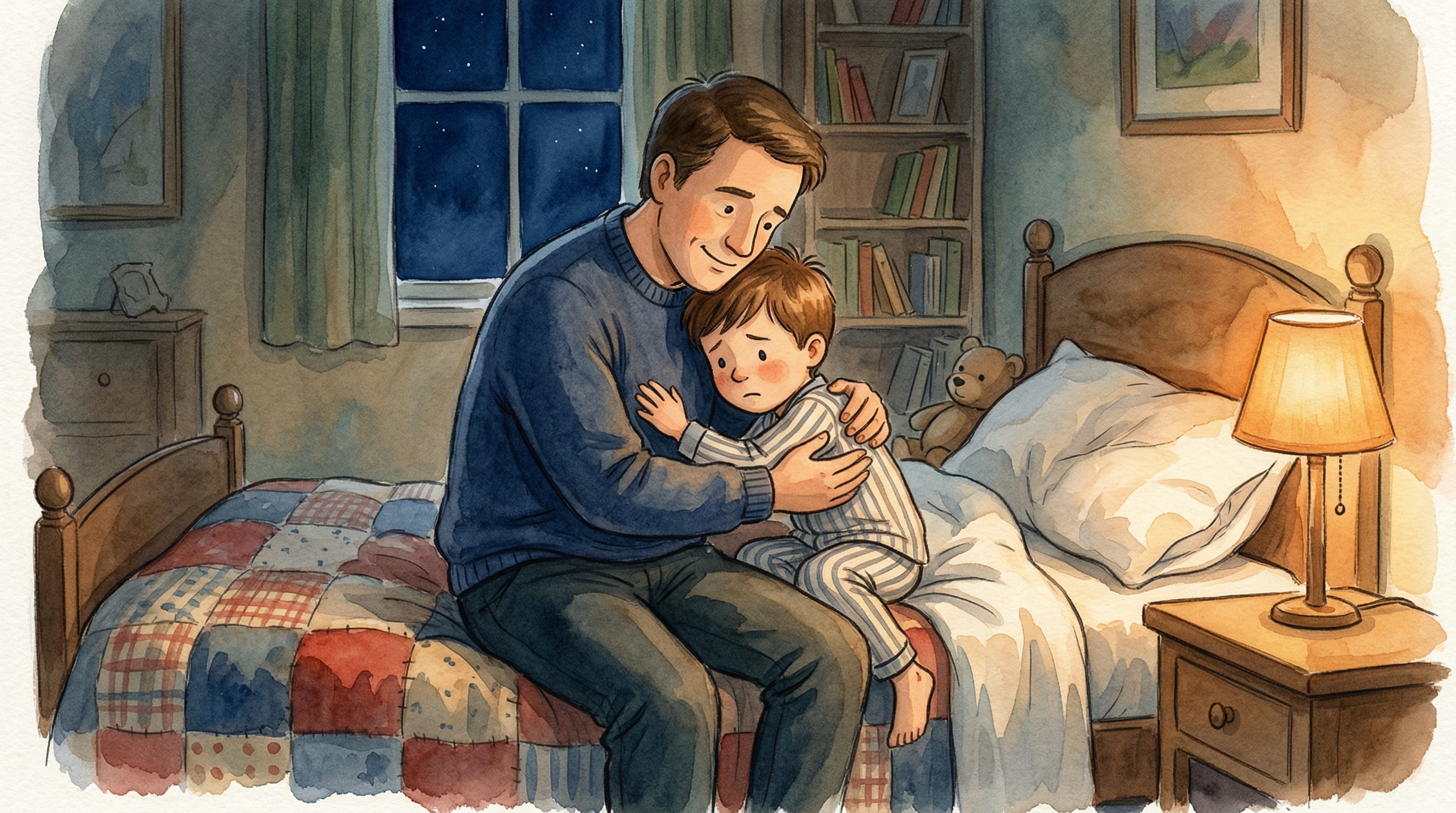
What a Bedtime Devotional Routine Actually Looks Like
A lot of dads picture "devotional" and imagine something formal — a thick Bible, a lengthy reading, a structured lesson. That's not what this is. A bedtime devotional for anxious kids is ten minutes, ideally at the same time every night, built around three simple movements:
1. Open the space. A simple question or prompt that invites your kid to say what's on their mind. "What's one thing that felt hard today?" Or just: "What's in your head right now?" The goal isn't to therapize them. It's to make it normal to say the scary thing out loud before it stays locked in their chest all night.
2. Read and receive. A short, age-appropriate devotional that connects to big feelings — ideally something that names fear specifically and points to what God says about it. This is the part that makes the devotional different from a normal conversation. The Word does work that a dad's words can't always do.
3. Pray specifically. Not a rote prayer, not "help me sleep good." A prayer that names the actual worry. "God, my kid is worried about the test tomorrow. They're scared of getting it wrong. Remind them that you're with them even when things are hard." Specific prayers land. Vague ones slide off.
That's it. Ten minutes. Same time every night. The consistency is the point — your kid's nervous system learns that this window is coming, that there's a safe place for the scary stuff, and that the night ends with prayer rather than with a spinning brain.
For a broader look at how to build this routine from scratch, this article on why bedtime is the best time for family devotions walks through the science and the structure in more detail.
The Worry Warriors Series: Built for This Exact Problem
The Worry Warriors series in Hosted Devotions is a 7-day devotional written specifically for kids who struggle with anxiety. It was built around the pattern I described above — naming the worry, connecting it to Scripture, praying specifically — and it takes the work of figuring out what to say completely off your plate.
What makes it different from generic devotionals is that it treats your kid's anxiety as real and specific rather than something to be dismissed. The readings don't tell kids "don't worry." They tell kids here's what to do with the worry. That's a meaningful difference for an anxious brain.
The series also uses a mission system — each day includes a small, concrete action for your kid to try the next day. Something like: notice one moment when you feel calm and thank God for it. Or: tell one person about something you're grateful for. The missions are small enough to actually do and specific enough to matter. And when you check in with your kid the next day — even just a quick question at dinner — it signals that what you did at bedtime was real, not just a routine you went through.
For anxious kids specifically, that follow-through matters. It says: this isn't just a bedtime thing. This is how we handle fear in our family.
If you want a full walkthrough of how the Worry Warriors series works day by day, this guide breaks down each day's focus and explains how to lead it even if you're new to devotionals.
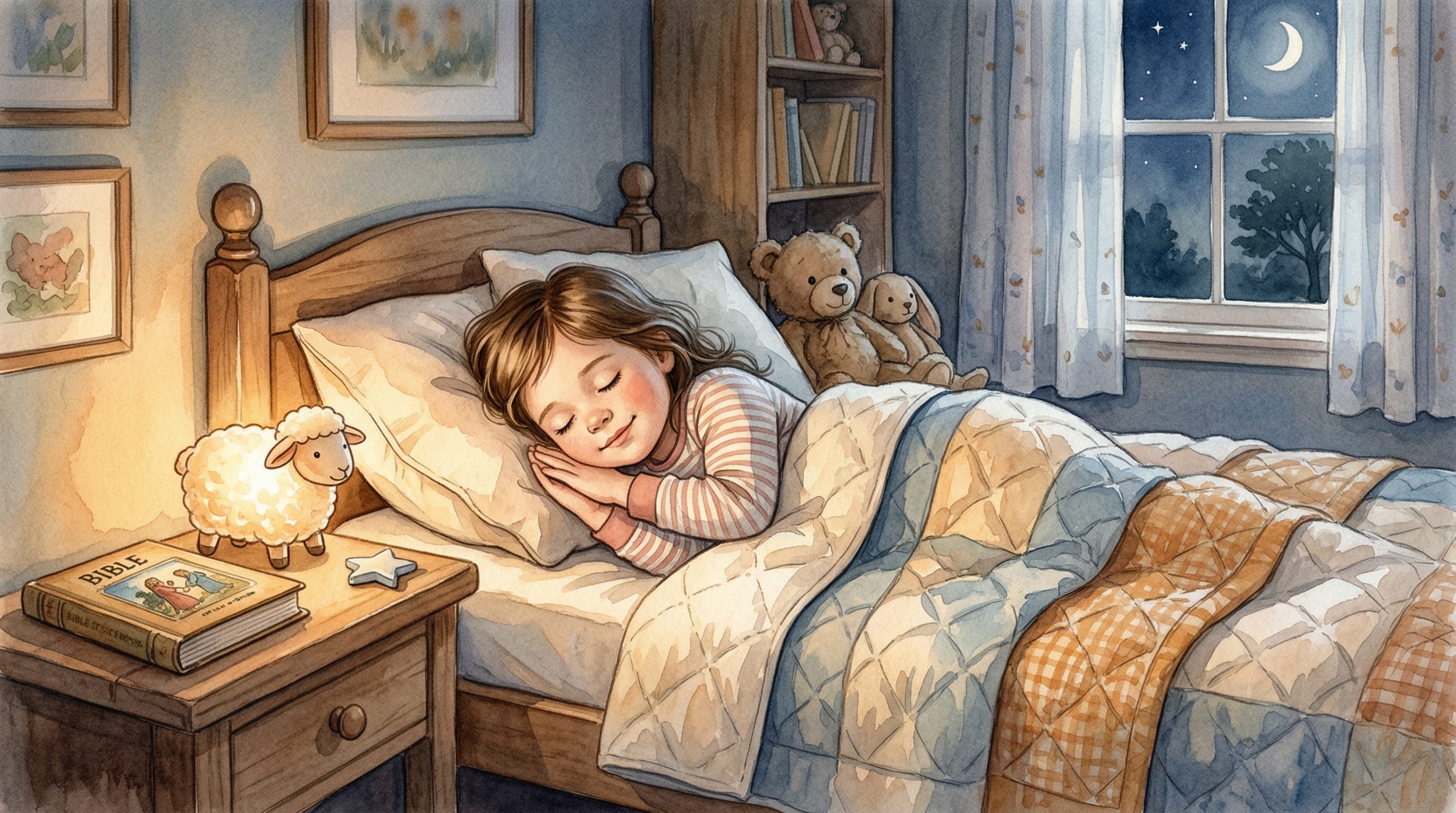
Practical Tips for the Dad Watching His Kid Struggle to Fall Asleep
Knowing the framework is one thing. Sitting next to a kid who's been lying awake for an hour at 9:30 p.m. is another. A few things I've found actually help:
Start before they're in crisis mode. The devotional works best when it's part of the routine before the anxiety peaks — not after they've been awake for an hour. Build it into the bedtime sequence before lights go off, not as an emergency measure when they're already spinning.
Keep the tone low-key. You don't need to address their anxiety directly every night. Some nights you just read, pray, and go. The consistency of the routine does more work than any single conversation. The safety comes from the structure, not from hitting the anxiety topic head-on every time.
Let them hold the worry during prayer instead of releasing it. This sounds counterintuitive, but for anxious kids, the goal of prayer isn't to make the fear disappear. It's to have a safe place to put it. "We're going to give this to God, and then we're going to trust Him to hold it while you sleep" — that frames prayer as a real handoff rather than a magic fix.
Use the Big Feelings series in tandem. If your kid's anxiety is part of a broader pattern of big emotions they struggle to manage, this companion series covers the full emotional toolkit — anger, sadness, fear, overwhelm. Worry Warriors handles anxiety specifically; Big Feelings handles the wider landscape. Together, they give your kid real tools.
Be honest about your own nights. If you've ever had a night where your own brain wouldn't stop, say so. Not in a way that adds to their worry, but in a way that normalizes the experience. "I have nights like that too. Here's what I do." Kids take cues from dads more than we realize — and watching you bring your own anxiety to God instead of suppressing it is one of the most powerful things they can see.
The Goal Isn't Zero Anxiety
Let me be direct about something: the goal of a bedtime devotional for anxious kids isn't to raise a kid who never gets scared. That's not the target. That's not even a realistic thing to aim for.
The goal is a kid who knows what to do when scared shows up. Who has a dad in the room they can say the real thing to. Who has a prayer they know how to pray. Who has a God they've been taught — night after night, in the dark, in specific and honest terms — actually cares about what they're going through.
That's the kid who grows up resilient. Not fearless — resilient. There's a huge difference, and the devotional is where you build it.
Ten minutes. Same time every night. A kid who knows their dad shows up for the scary parts, not just the easy ones. That's not a small thing. That's the whole thing.
📖 Read This Tonight
If your kid is lying awake at night because their brain won't stop, start the Worry Warriors series tonight. It's 7 nights, written for exactly this, and it gives bedtime anxiety somewhere real to go.
Get Notified When New Series Drop
We add new devotional series regularly. Sign up to hear about them first.
Join the Community