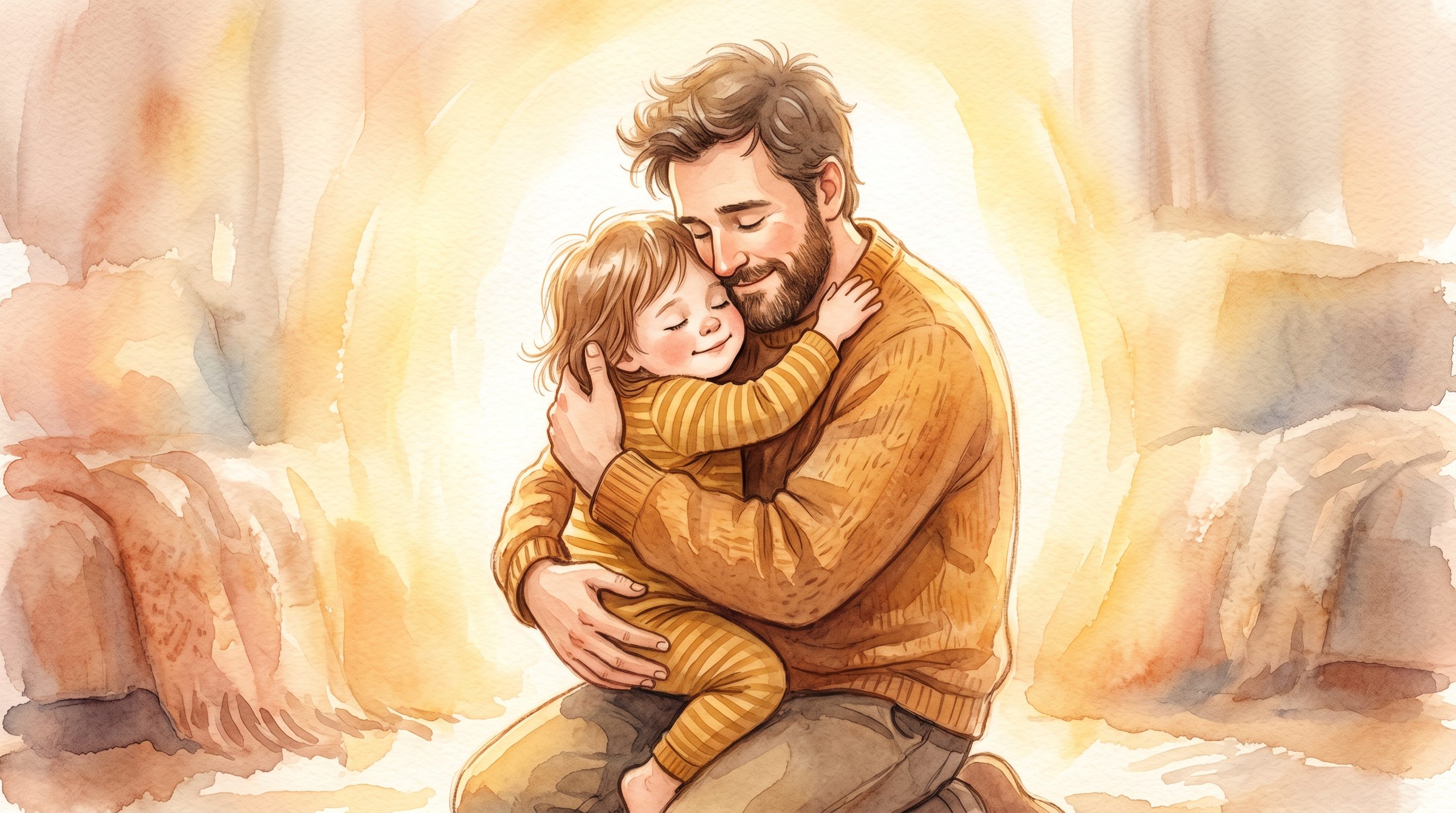
"I Love You" Gets Said a Lot. Rarely Gets Explained.
Kids hear the word "love" more than almost any other word. They hear it from parents, grandparents, teachers, songs, movies. By the time they're five, they've heard it thousands of times. And they almost never get a clear picture of what it actually means — what love looks like when it's working, what it looks like when it costs something, what it looks like when it doesn't feel like a feeling at all.
The world's picture of love is mostly sentimental. It's warm feelings, it's getting along, it's "I love you too" before hanging up the phone. The Bible's picture of love is much harder and much more beautiful than that.
Teaching your kid the real thing isn't just a nice devotional topic. It's one of the most important things you can do for the relationships they'll have for the rest of their life.
What the Bible Says Love Actually Is
Start with 1 Corinthians 13. Not the wedding version that gets read in a nice voice and everyone nods along — actually read it slow, and stop on each line. "Love is patient, love is kind. It does not envy, it does not boast, it is not proud. It does not dishonor others, it is not self-seeking." Ask your kid after each one: "Is that easy or hard?"
This is the part most devotionals skip: love, in the biblical sense, is primarily an action and a choice — not a feeling. The feeling is real, but feelings come and go. Love that's only a feeling stops when the feeling stops. Love that's a commitment keeps going when the feeling is gone.
John 15:13 says: "Greater love has no one than this: to lay down one's life for one's friends." Even a young child can grasp the shape of this: real love gives up something for the person you love. It costs you. And you do it anyway.
<
God's Love as the Starting Point
Before your kid can understand how to love others well, they need to receive it. That starts with understanding — at whatever level their age allows — what God's love actually is.
God's love isn't performance-based. It doesn't go up when they're good and down when they're bad. Romans 8:38-39 says nothing can separate us from it — not mistakes, not bad days, not the embarrassing thing that happened at school. This is the foundation that changes how your kid moves through the world: they are loved before they do anything to earn it.
For kids who struggle with feeling like they need to perform to be accepted, this lands differently than any other message you can give them. The You Are Loved series was built around this exact idea — walking kids through what it means to be unconditionally loved by God, in language they can actually hold onto.
Love in Action: What It Looks Like in Their Day
Make it concrete. Abstract love is easy to agree with and impossible to live. Concrete love has a shape your kid can actually try on.
- Love is patient when your little brother takes forever to put his shoes on and you wait without complaining.
- Love is kind when you say something encouraging to the kid at school who never gets picked.
- Love is not self-seeking when you let your friend pick the game even though you really wanted to pick.
These are small. But they're real. And they're practice reps for something much bigger later on. The habit of choosing love over self — built slowly, in small moments — is one of the most valuable things you can give your kid before they leave your house.
<
The Dad as the First Picture of Love
Here's the uncomfortable part: your kid's first picture of God's love is you. That's not meant to paralyze you — it's meant to focus you. You don't have to be perfect. But you do have to keep showing up. Consistent, present, willing to say "I was wrong" and "I love you" in the same week.
One thing I've learned doing this with my boys: the moments that stick aren't the perfect devotional nights. They're the imperfect ones — the night one of my kids was really upset and I stayed in the room longer than I planned, just being there. That's love. They feel it even when no verse gets read.
The structure matters. The content matters. And so does the fact that you showed up at all, every night, even when you were tired. That is a sermon they remember.
Pairing Love With Kindness
Love and kindness aren't the same thing, but they're the closest neighbors. Kindness is usually how love shows up in the moment — the visible expression of something that runs deeper. If you want to extend this conversation over multiple nights, the devotional on kindness takes the day-to-day practice side and makes it very concrete for kids.
And for the foundation underneath all of this — helping your kid understand who God is before asking them to love like God loves — this guide on introducing your child to God is a great starting point. You can't love someone you don't know. Getting to know who God is changes everything about how your kid understands love.
<
Teaching Love Through How You Handle Conflict
Your kid will remember how you loved when it was hard more than how you loved when it was easy. Easy love is warm feelings at Christmas dinner. Real love shows up when your kid has a meltdown at 8:30 p.m. and you don't yell, when they do something that genuinely frustrates you and you still stay in the room, when you come back after you did yell and you say "I shouldn't have done that. I'm sorry."
That's the curriculum they remember. Not the verse you read perfectly that one night — the pattern of how you showed up over years. Biblical love is not self-seeking. It doesn't keep a record. It bears all things. Those phrases from 1 Corinthians 13 aren't just words to read to your kid at bedtime — they're a description of what you're trying to be as a father, imperfectly and persistently. When your kid sees you attempting that, they're learning what love looks like at its most real.
What to Say at the End of the Night
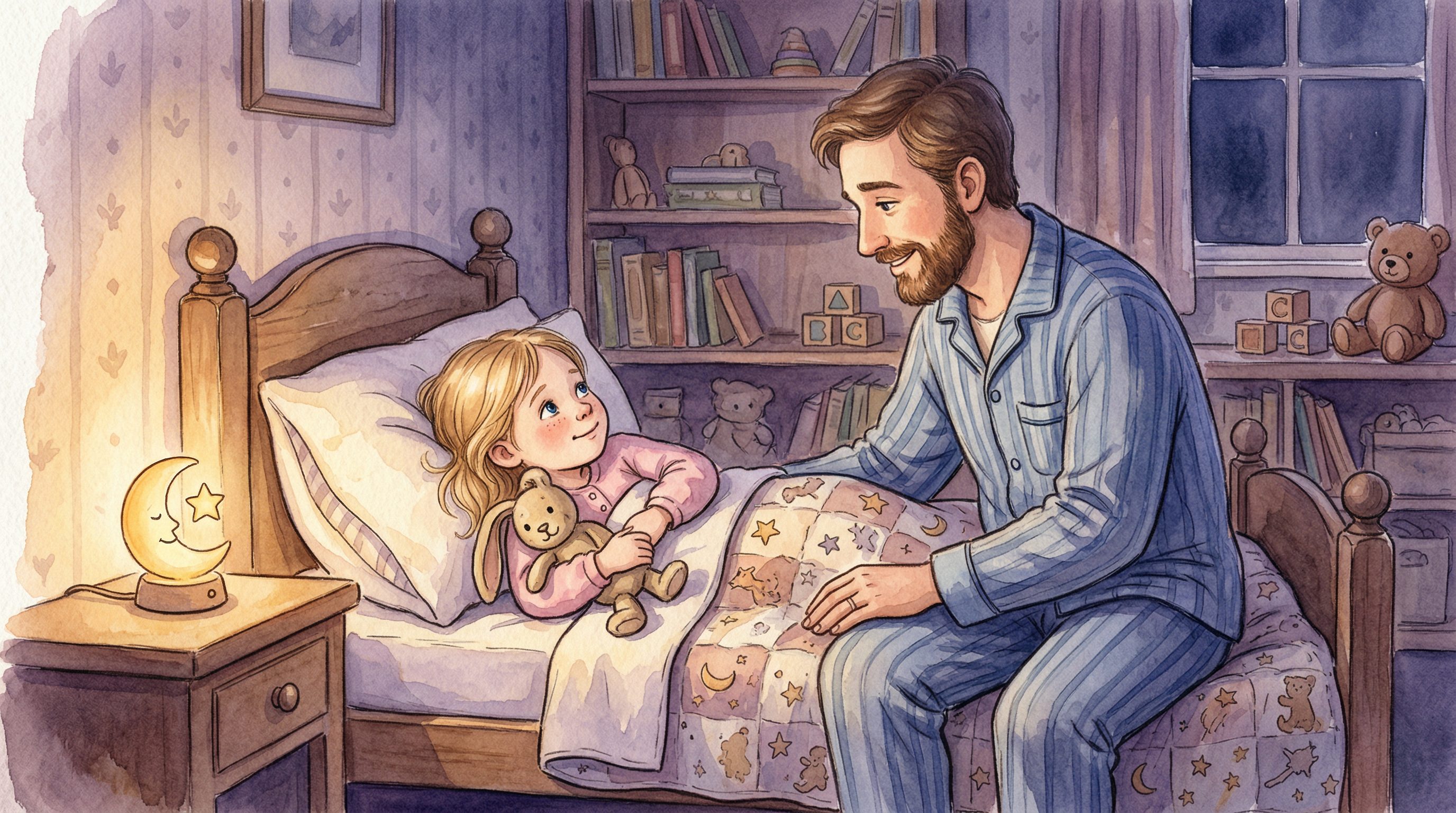
You don't need a closing sermon. You need a closing moment. After the devotional, when the lights are off and you're about to leave the room, say something true and specific. Not "I love you" by rote — though that's still worth saying. Say something like: "I want you to know that I'm glad you're mine. Not because of anything you did today. Just because you're you."
That's what God's love sounds like. And hearing it from you is how they start to believe it from Him.
For a deeper look at building this around bedtime specifically, this bedtime devotional on God's love gives you a full framework — including how to close the night in a way your kid will carry into their sleep.
📖 Read This Tonight
The You Are Loved series walks your kid through what it means to be fully known and fully loved by God — a foundation that changes everything else.
Get Notified When New Series Drop
We add new devotional series regularly. Sign up to hear about them first.
Join the Community