The Hurt Doesn't Go Away on Its Own
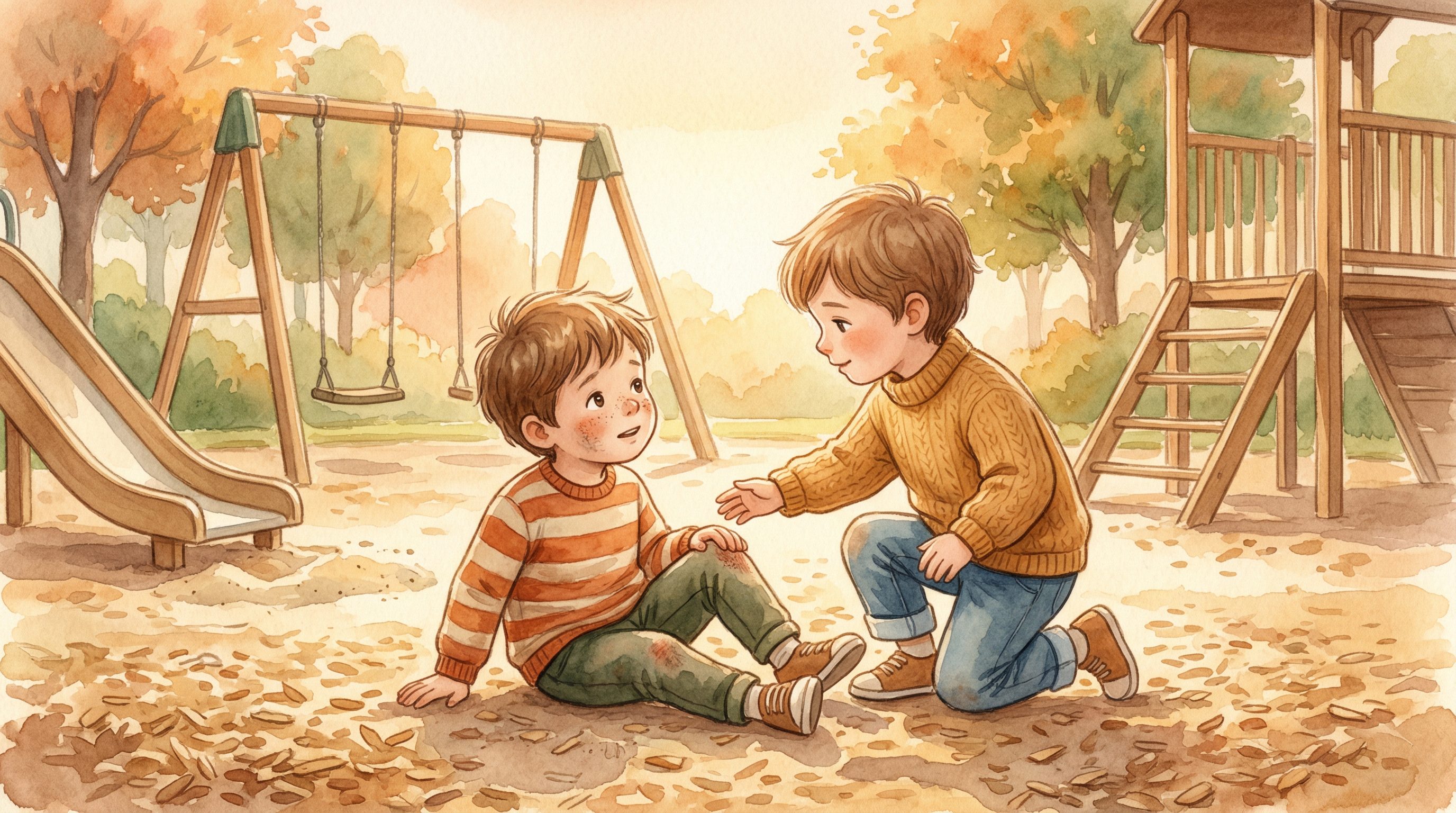
Every parent has watched it happen. Something goes wrong between friends — a mean comment, a broken promise, a moment that felt like betrayal even at age seven. And your kid comes home carrying it. Not dramatically. Just quietly. You can see it in how they talk about that friend, how they tighten up when the name comes up.
Forgiveness doesn't come naturally to anyone, including kids. Especially kids, honestly — because they haven't yet developed the emotional distance that helps adults let things go, and they haven't lived long enough to see what holding a grudge costs them over time.
A devotional for kids about forgiveness isn't about telling them to feel something they don't feel. It's about giving them a framework — a story, a truth, a conversation — that plants something they can grow into.
<
What Forgiveness Is (And What It Isn't)
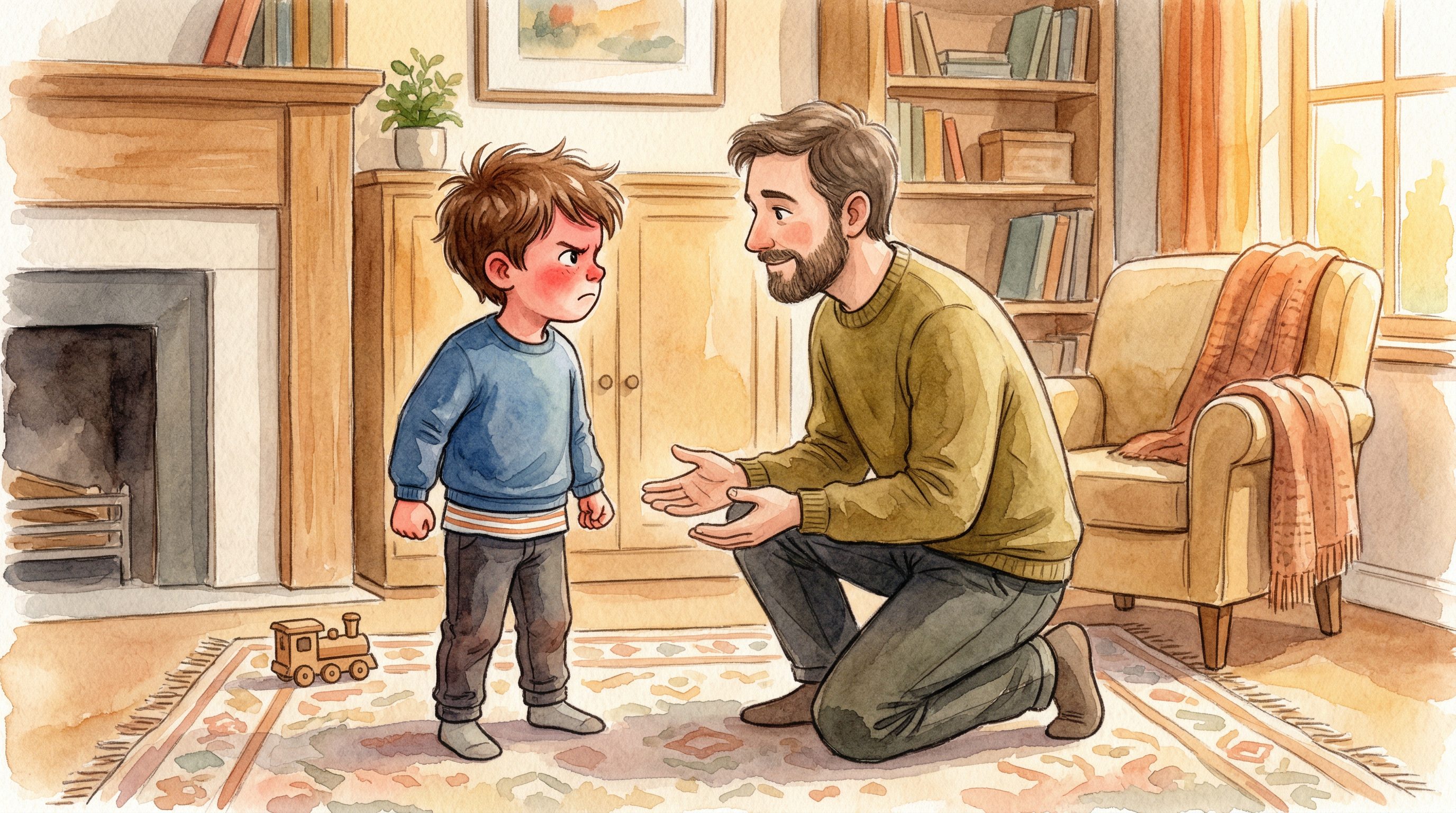
Before you can do a devotional on forgiveness with your kid, you need to get a few things straight — because kids are listening carefully, and they'll reject anything that sounds like you're telling them their hurt doesn't matter.
Forgiveness is not saying what happened was okay. This is the one that trips kids up most. If you start with "you need to forgive him," your kid hears "it was fine that he did that." That's not what forgiveness is. You can forgive someone and still know they were wrong.
Forgiveness is also not the same as forgetting. It's not pretending the hurt didn't happen. It's not automatically trusting someone again. It's making a choice — usually more than once — to let go of the right to stay angry. That's a hard thing. It's worth naming honestly with your kid.
What forgiveness actually does is release the person holding the grudge. This is the part that makes sense to kids when you explain it right: the anger they're carrying? It's mostly hurting them, not the person who hurt them. Forgiveness isn't a gift to the other person. It's a gift to yourself.
What the Bible Actually Says
The most direct teaching on forgiveness in the New Testament is probably Jesus answering Peter in Matthew 18:21-22. Peter asks if he has to forgive someone seven times. Jesus says seventy times seven — which is not a literal number. It means: stop keeping score altogether.
For kids, the parable that follows (Matthew 18:23-35) is even better. A servant owes a king an impossible debt — millions in today's terms. The king forgives the whole thing. Then that same servant turns around and throws a fellow servant in prison over a tiny debt. When the king hears about it, he's furious.
The application is simple and it lands with kids: God has already forgiven us for way more than anyone has ever done to us. That's where our ability to forgive comes from. We're not generating forgiveness from willpower — we're passing on what we've already received.
Colossians 3:13 puts it plainly: "Bear with each other and forgive one another if any of you has a grievance against someone. Forgive as the Lord forgave you."
<
A Simple Devotional Structure for Bedtime
This works for kids ages 5-10. Adjust the language for your kid's age — younger kids need simpler words, older kids can handle more nuance.
Open With a Question, Not a Lesson
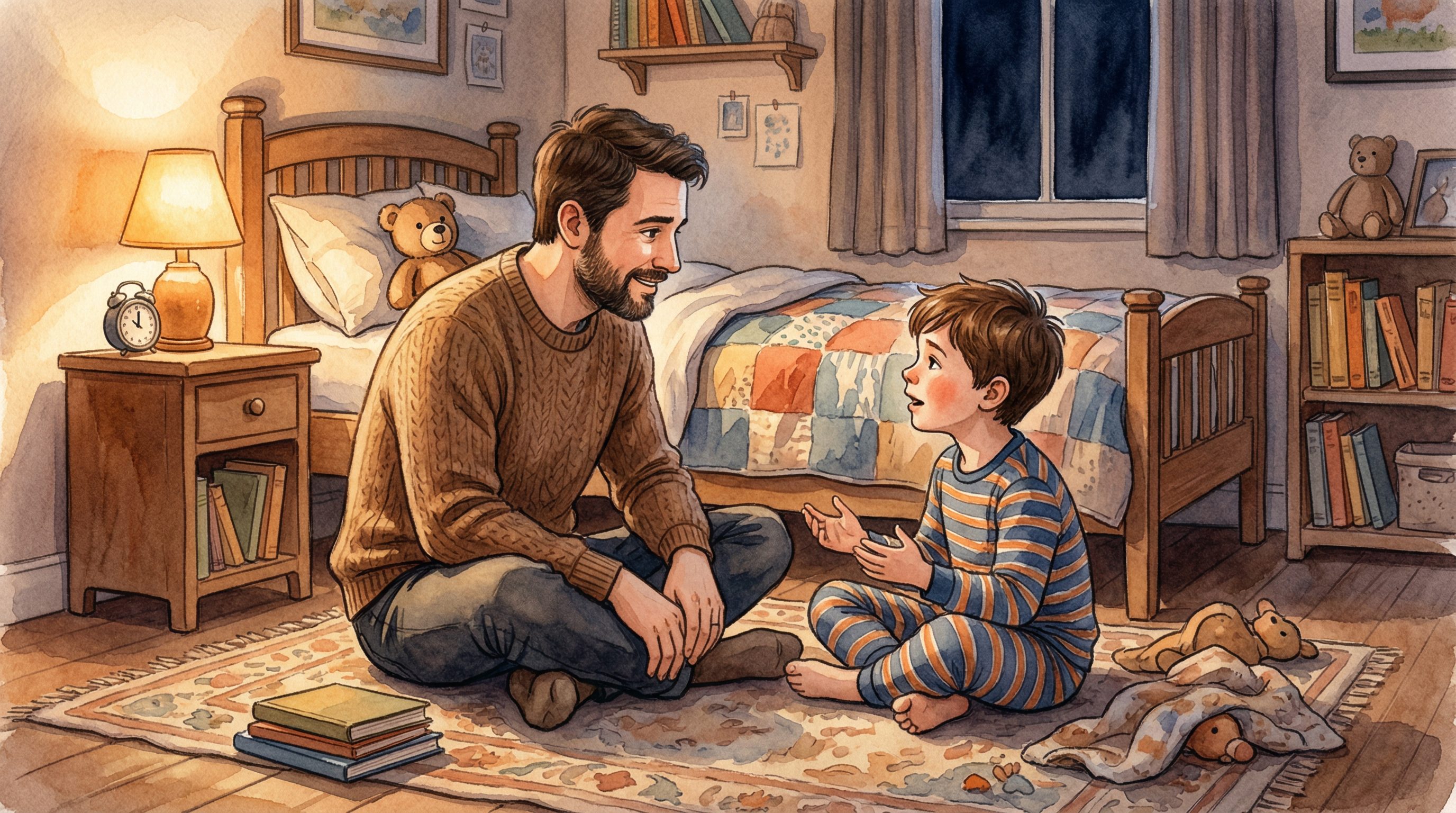
Don't start by telling them about forgiveness. Start by asking: "Has anything happened lately that bothered you? Something a friend did, or something that felt unfair?" Let them talk. If nothing comes up, you can share something small from your own day — something you had to let go of. Kids respond better when you go first.
Read the Passage Together
Keep it short. Matthew 18:21-22 is just two verses — you can read them and ask: "What do you think 'seventy times seven' actually means? Why wouldn't Jesus just say 'seven'?" That question usually gets a response. Let them sit with it.
Name the Hard Part
Don't skip over the difficulty. Forgiveness is genuinely hard. Say that. "You know what's hard about this? It's not just saying the words. It's actually meaning it, even when the hurt is still there." Your kid needs to know you understand that this isn't easy — because if you make it sound simple, they'll feel like something's wrong with them when it doesn't feel simple.
Pray It
One sentence is enough: "God, help us forgive the way you've forgiven us — even when it's hard." If your kid is dealing with something specific, let them pray it in their own words if they want to. Don't force it. But leave the door open.
When Your Kid Is the One Who Needs to Ask for Forgiveness
Sometimes the situation is reversed. Your kid did the hurting. Maybe they know it, maybe they don't fully see it yet. A forgiveness devotional still applies — because learning to ask for forgiveness is the other side of the same coin.
The same passage helps here: the servant in the parable had received forgiveness. The moment he turned around and refused to pass it on, he'd missed the whole point of what he'd been given.
Teaching your kid to ask for forgiveness — genuinely, not just saying "sorry" to end the conflict — is one of the most valuable things you can give them. The ability to own a mistake without defensiveness, to say "I was wrong and I'm asking you to let me back in" — that's a skill that follows them into every relationship they'll ever have.
The piece on teaching kids to forgive gets into the practical side of this in more depth — particularly what to do when your kid says "I already said sorry" but hasn't really meant it. Worth reading alongside this one.
<
The Role You Play as the Dad
Your kid's ability to forgive is shaped partly by watching you forgive. That's worth sitting with. When you get cut off in traffic and comment on it, when you talk about a coworker with resentment, when an old conflict comes up and you still have heat in your voice — your kid is filing all of that away. Not consciously, but it's going in.
The flip side is equally true: when your kid sees you say "I was wrong, I'm sorry" without minimizing it, when they see you let something go that you clearly had a right to be upset about, when you pray out loud about forgiving someone who hurt you — that goes in too. And it goes in deeper than any lesson.
I'll be honest: this is an area I've had to work on. There are things I've been slow to let go of, and my boys have probably seen more of that than I'd like. But the conversations we have about forgiveness at bedtime aren't just for them. They're for me too. Every time I sit down and read something about what God says about forgiveness, I'm being reminded of what I need to keep working on. That's not a failure. That's the point.
When Forgiveness Feels Impossible
Some hurts are big. Not a friend who said something unkind — but something that actually damaged trust, or caused real pain over time. In those cases, the timeline for forgiveness is longer, and pretending otherwise is dishonest.
With kids, you'll occasionally encounter situations where they've been hurt in a way that isn't resolved quickly. A friendship that ended badly. A family situation that left them confused and angry. These situations don't get wrapped up in a devotional night.
What you can do in those moments is stay in the conversation. Check in regularly. Pray about it with them. Don't force a resolution. And be honest: "Sometimes forgiveness takes a long time. And that's okay. We're going to keep working on it."
The goal isn't a single moment of forgiveness — it's a direction of travel. As long as they're moving toward releasing it, they're making progress. That can look slow and uneven, and that's normal. Forgiveness is often like that, even for adults.
What to Do When They're Not Ready
Some nights you'll do a forgiveness devotional and your kid will shrug and say they don't want to forgive. Respect that. Don't push them to perform a feeling they don't have. What you can do is acknowledge the hurt: "Yeah. What happened was wrong. You're allowed to feel that."
And then: "Forgiveness isn't something you do all at once. It's something you decide, and then keep deciding. You don't have to be there tonight. But we're going to keep working on it."
That's honest. That's how forgiveness actually works. The devotional on anger is useful here too — because often what looks like unforgiveness is really unprocessed anger sitting underneath. If your kid is still hot about something, that's the place to start.
And if things feel bigger than one conversation — if your kid is holding something heavy that involves grief or real loss — the devotional for kids about grief covers those harder situations where forgiveness and loss intersect.
The Long Game
You're not going to resolve unforgiveness in one bedtime devotional. That's not the goal. The goal is to give your kid a vocabulary for what they're feeling, a story that gives them a picture of what forgiveness actually looks like, and a moment of connection with you that says: we talk about this stuff in our family.
The Big Feelings series on Hosted Devotions is specifically built around this kind of emotional and spiritual ground — anger, hurt, forgiveness, letting go. If you want a multi-night framework that builds on itself, that's where to start.
The conversations you're having now — imperfect, interrupted, sometimes met with a shrug — are laying groundwork your kid will use for the rest of their life. Start tonight. Even if it's just one question and one verse. That's enough.
📖 Read This Tonight
The Big Feelings series walks kids through emotions like hurt, anger, and forgiveness — night by night, in a format that actually gets them talking. Start tonight.
Get Notified When New Series Drop
We add new devotional series regularly. Sign up to hear about them first.
Join the Community