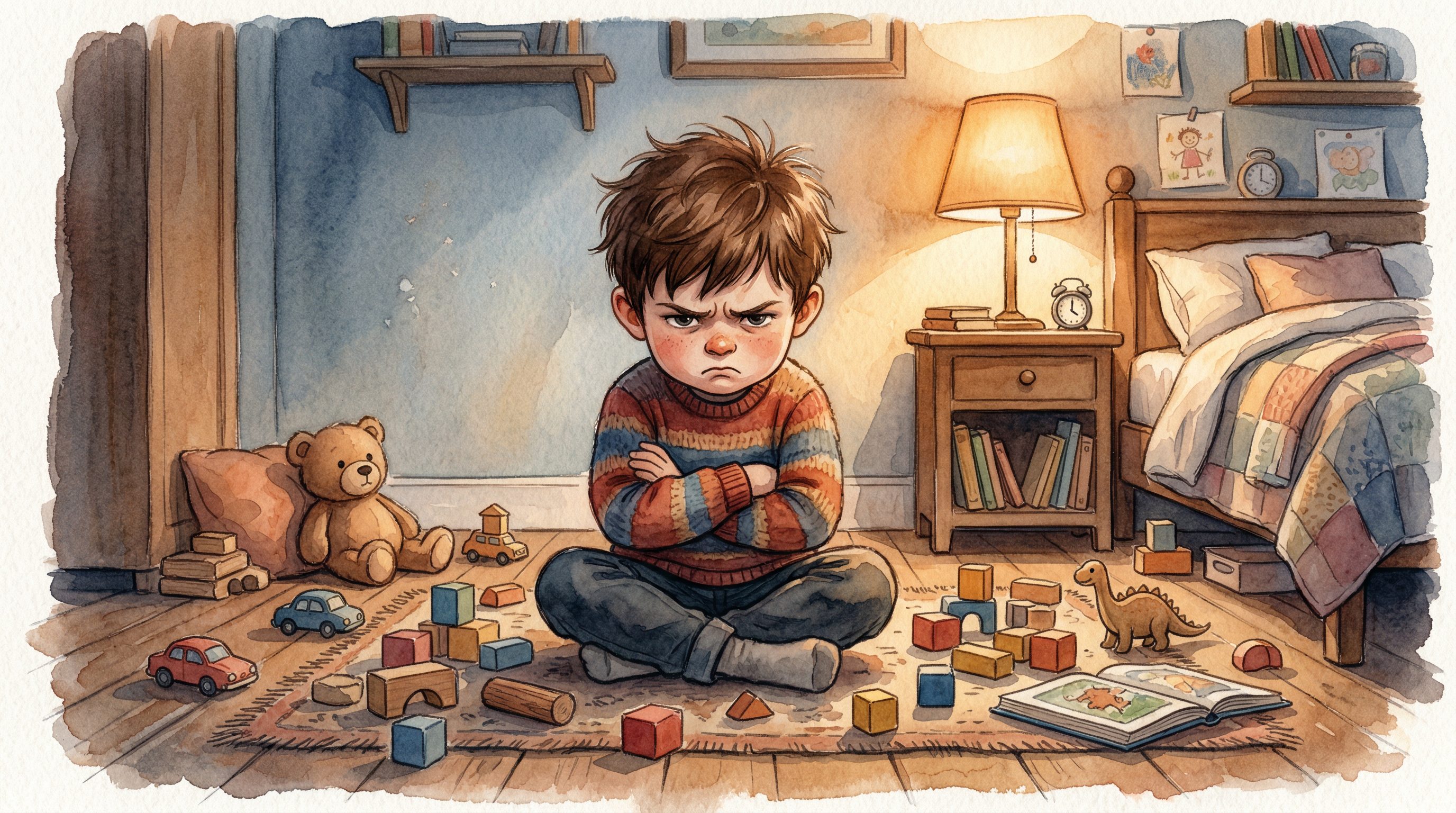
The Meltdown Nobody Planned For
It was a Tuesday. My younger son didn't want to stop playing. That's it. That was the whole story. We said dinner was ready, he was mid-game, and the world ended. Full shutdown — crying, yelling, flopping on the floor. My older son looked at me like, is he going to be okay? And honestly, in that moment, I wasn't sure.
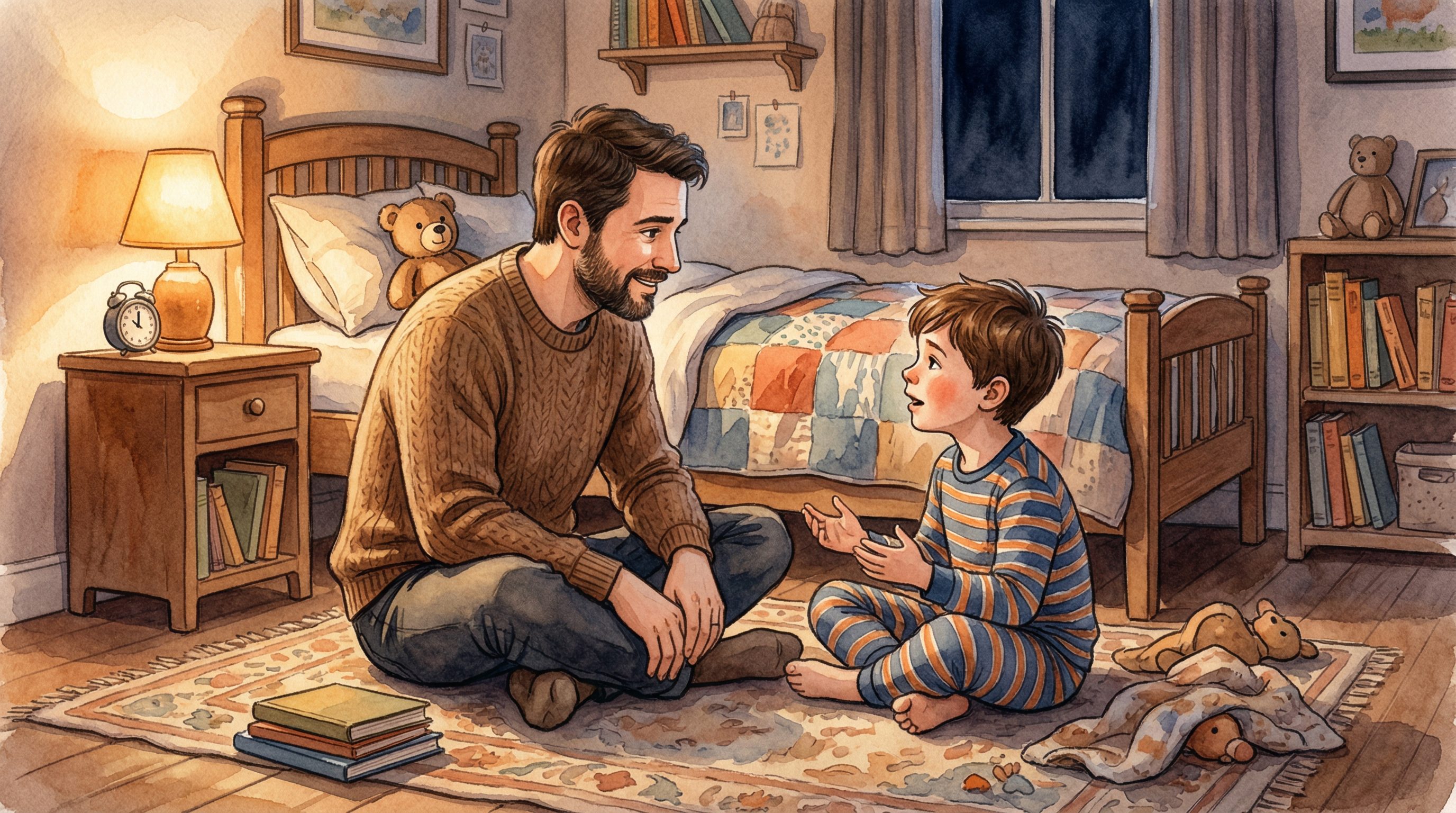
After things calmed down — after dinner, after the dust settled — we sat together at bedtime and had one of the most honest conversations we've had as a family about anger. What it feels like inside. Why it comes out so loud. Whether it means something is wrong with you. My five-year-old asked, with complete sincerity: "Dad, is it bad that I get so mad?"
That question deserves a real answer. Not a timeout, not a lecture — a real answer. And the answer is no. Anger isn't bad. It's what you do with it that matters. That's the whole thread we've been pulling on at bedtime ever since, and it's what this article is about.
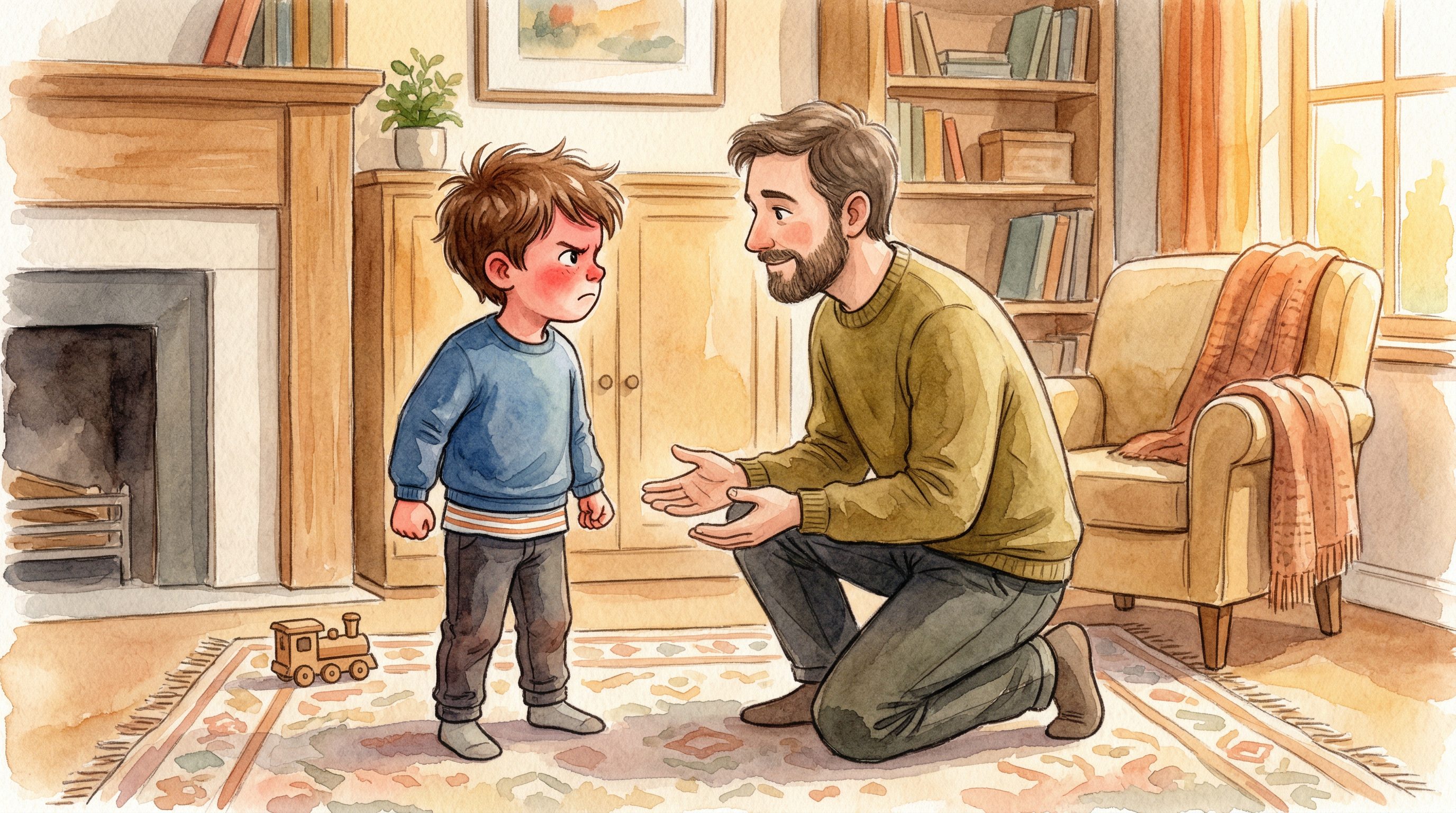
Why We Get Anger Wrong With Kids
The instinct most parents have — and I had it too — is to treat anger as the problem. Kid gets angry, kid gets corrected, behavior stops. Case closed. But that approach has a gap in it: it doesn't teach the child anything about the feeling itself. It just teaches them to suppress it or hide it better.
Here's what actually happens when a kid has no framework for anger: it leaks out sideways. It comes out as meanness toward a sibling. It shows up as anxiety — because unexpressed anger and chronic anxiety look a lot alike in elementary-age kids. It gets internalized, sits there, and comes out as a teenager in ways you really don't want to deal with then.
Anger is in the Bible everywhere. Jesus flipped tables in the temple — that's not a metaphor, that's a man with a real emotion expressing it. The Psalms are full of raw, loud, even angry prayer. David doesn't clean up his feelings before bringing them to God. He just brings them. The Biblical picture of emotional life isn't quiet, tidy composure — it's honesty with accountability.
That's what we're trying to build in our kids. Not kids who don't get angry. Kids who know what to do with it when it comes.
What a Devotional for Kids About Anger Actually Needs to Do
A lot of content for kids on anger misses the mark in one of two ways. Either it's all about behavior management — cool-down strategies, breathing exercises, count to ten — or it's purely theological with no practical traction for a six-year-old at 8 p.m. Both have their place. But a devotional should do something specific: give your kid language for the feeling and connect that feeling to something bigger than themselves.
That means a few things in practice:
- Naming the emotion without shame — being angry is not the same as being bad
- Showing that God knows about this feeling and isn't scared of it
- Giving one concrete, kid-appropriate idea for what to do with the feeling
- Ending with something that helps them feel settled, not worked up
That's the rhythm. Short enough to hold a kid's attention. Real enough to mean something.
What the 7-Day Big Feelings Series Covers
The Big Feelings series is seven days that walk kids through the full landscape of big emotions — anger very much included. Here's roughly what that week looks like:
Days 1–2: It's Okay to Have Big Feelings. The first two days do the foundational work of normalizing big emotions. Your kid learns that having strong feelings — including anger — doesn't mean something is broken. It means they're human. The readings pull from scripture examples of real people who felt real things.
Days 3–4: What to Do When You're About to Explode. This is the practical middle of the series. Not generic strategies — but things a kid can actually remember and use when their nervous system is lit up. Paired with honest parent-to-child framing that doesn't feel like a script.
Days 5–6: Saying Sorry and Starting Over. Anger has consequences. Sometimes we do things we regret. These days help kids understand that repair is possible — and that saying sorry isn't weakness, it's maturity. This is also where the concept of grace gets introduced in a way that actually sticks for young kids.
Day 7: You're Still You. The week ends with an anchor: a hard feeling doesn't define you. Your kid walks away from the week with a clearer sense of who they are — a kid who has big feelings sometimes, and who is loved through all of them.
Seven nights. You can do a week of anything. And at the end of it, your kid has a different relationship with one of the hardest emotions they'll ever have to manage.
How to Talk About Anger Before You Open the Devotional
The devotional works better if it's not dropped cold on a kid who has no frame for the conversation. A sentence or two of setup goes a long way. You don't need to prepare remarks — just be honest.
Try something like: "Hey, we're going to read something this week about big feelings. You know how sometimes you get really, really mad and you're not sure what to do with it? Me too, honestly. This is going to help both of us."
That last part matters. When you include yourself in the learning, your kid doesn't feel targeted. They feel like they're doing something with their dad, not receiving a correction program.
If there's been a specific recent incident — a meltdown, a fight with a sibling, a moment that clearly came from anger — you can reference it lightly. Not as evidence they need to fix something. Just as context: "Remember the other night when things got really hard? This is kind of about that." Kids respond well to being seen. Naming the moment shows you noticed and you're not holding it over them.
We also have an article specifically on helping boys handle big emotions if you want to go deeper on the parenting side of this — especially for dads raising sons who've been given the message (explicitly or not) that they shouldn't show strong feelings.
What This Looks Like in Practice: A Real Bedtime
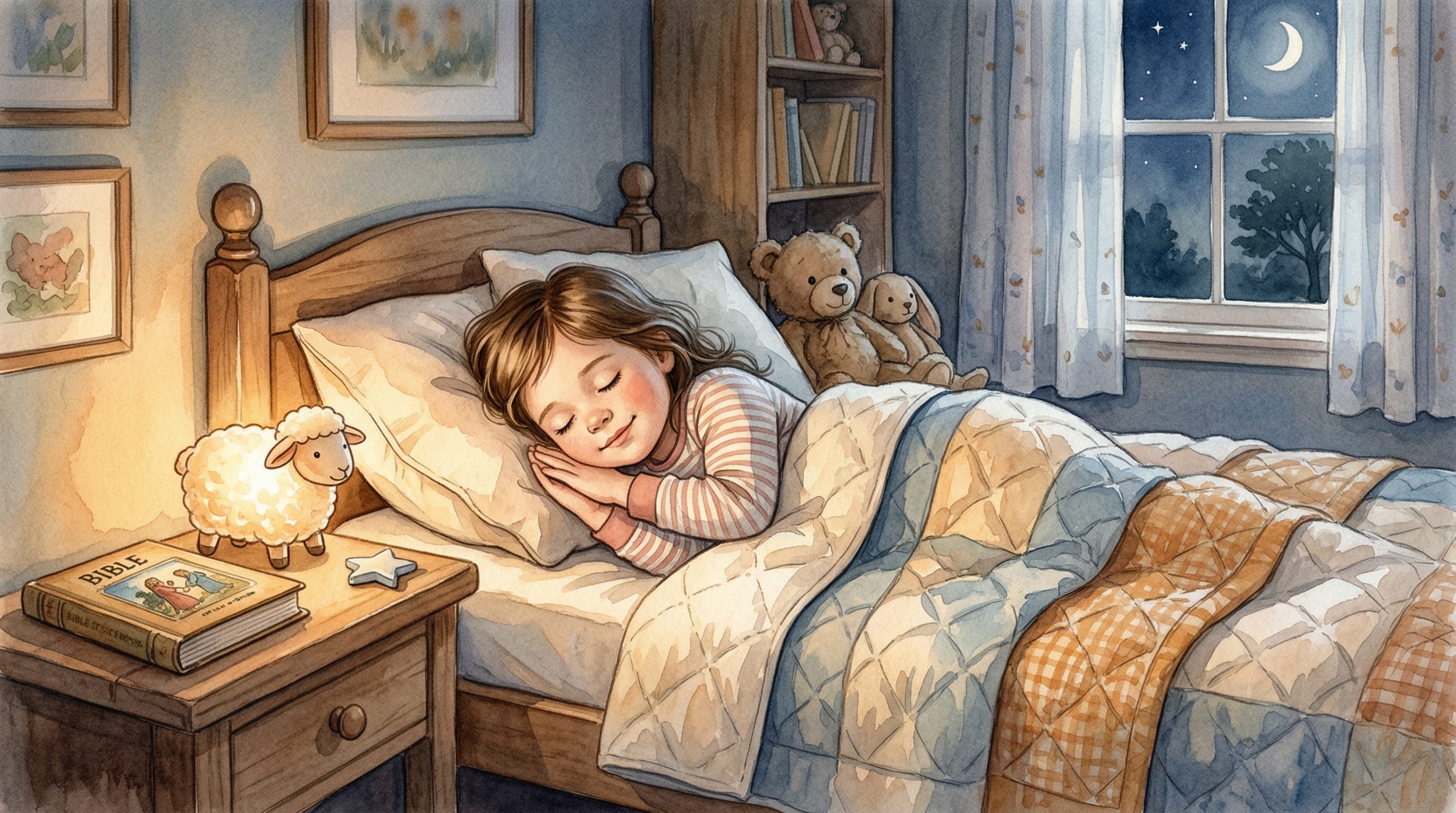
Here's what a night with the Big Feelings series actually looks like in my house. We're in the routine — both boys in the room, lights dimmed. I open the app, read the day's entry out loud. It takes maybe four or five minutes. There's a question at the end, and I ask it.
Sometimes my five-year-old answers immediately with something that blows me away. Sometimes he doesn't say anything and just nods. Sometimes my seven-year-old, who was pretending not to pay attention, suddenly has an opinion. You don't know which night it's going to be until it's happening.
After the reading I ask if they want to pray, or I pray for both of them — something short and specific: "God, we want to be the kind of people who feel things deeply and handle them well. We're going to need your help with that. Amen." Done. Lights out.
That's it. But over seven nights, something shifts. The vocabulary changes. My boys started using words like "frustrated" and "overwhelmed" more accurately. My younger one, a few weeks after we finished the series, came to me instead of exploding and said, "Dad, I'm feeling really mad and I don't want to blow up." He's five. That's not nothing.
The Core Message Your Kid Needs to Hear
More than any strategy or seven-step process, there's one thing that needs to land — and you may need to say it out loud, more than once, over more than one bedtime:
Anger is not bad. It's what you do with it that matters.
That framing does a few things. It removes the shame, which is important because shame makes kids hide their feelings instead of processing them. It introduces accountability without condemnation — yes, what you do with the feeling matters, and yes, we're going to work on that together. And it opens the door for real conversation, because your kid doesn't feel like they have to defend themselves for having the feeling in the first place.
If you want to pair this with conversations about worry, the devotional for kids about worry covers the other end of the emotional spectrum — and anger and anxiety often travel together in kids. Both are worth addressing.
Your kid is going to feel angry hundreds of times before they graduate high school. What you're building at bedtime right now is the foundation for how they handle that for the rest of their life. That's not dramatic — it's just true. And a seven-day devotional at the right moment is a real start.
📖 Read This Tonight
The Big Feelings series gives your kid a whole week of language and perspective for the emotions that feel too big — anger included. Seven nights, four minutes each.
Get Notified When New Series Drop
We add new devotional series regularly. Sign up to hear about them first.
Join the Community