The Moment I Told My Son It Was Okay to Fall Apart
My older son is 7. He's at the age where he's starting to figure out what boys are supposed to look like — and somewhere along the way, he picked up the memo that falling apart isn't part of the job description.
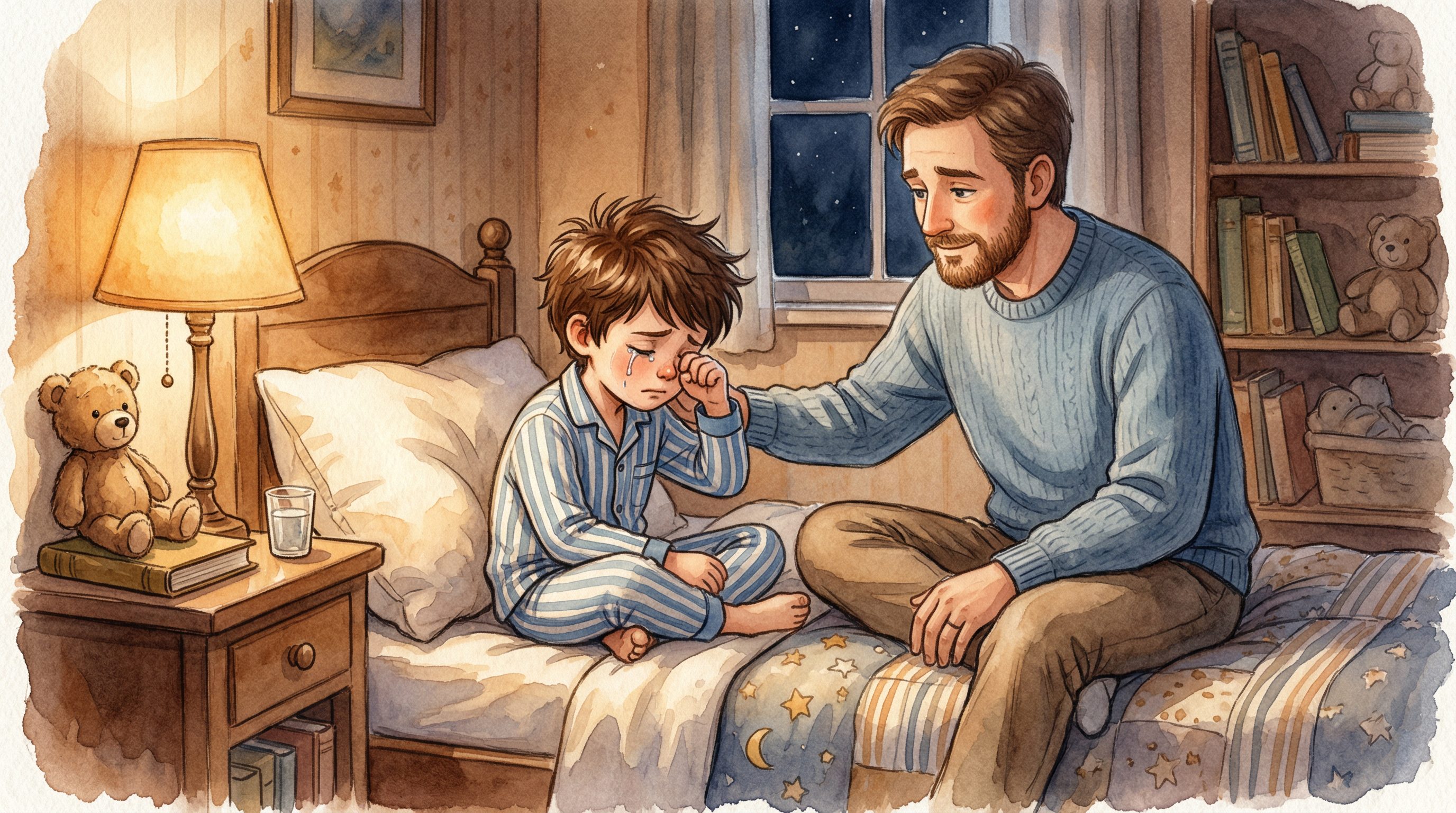
A few months ago he had one of those days. Something happened at school — I don't even remember what now, but it was big to him. I could see it in his shoulders when he walked in. He was doing everything he could to hold it together, jaw tight, blinking fast. And he almost made it. Then something small happened at dinner — he dropped his fork or his little brother said the wrong thing — and I watched him catch himself mid-cry and just… lock it down.
I pulled him aside after dinner. I told him: "Hey. It's okay to feel that." And I watched something in his face change — like he'd been waiting for permission.
That's the moment I realized helping boys handle big emotions isn't about making them softer. It's about making them more honest. And that's exactly what I wanted a devotional to help me do at bedtime.
Why the "Toughen Up" Instinct Is Working Against You
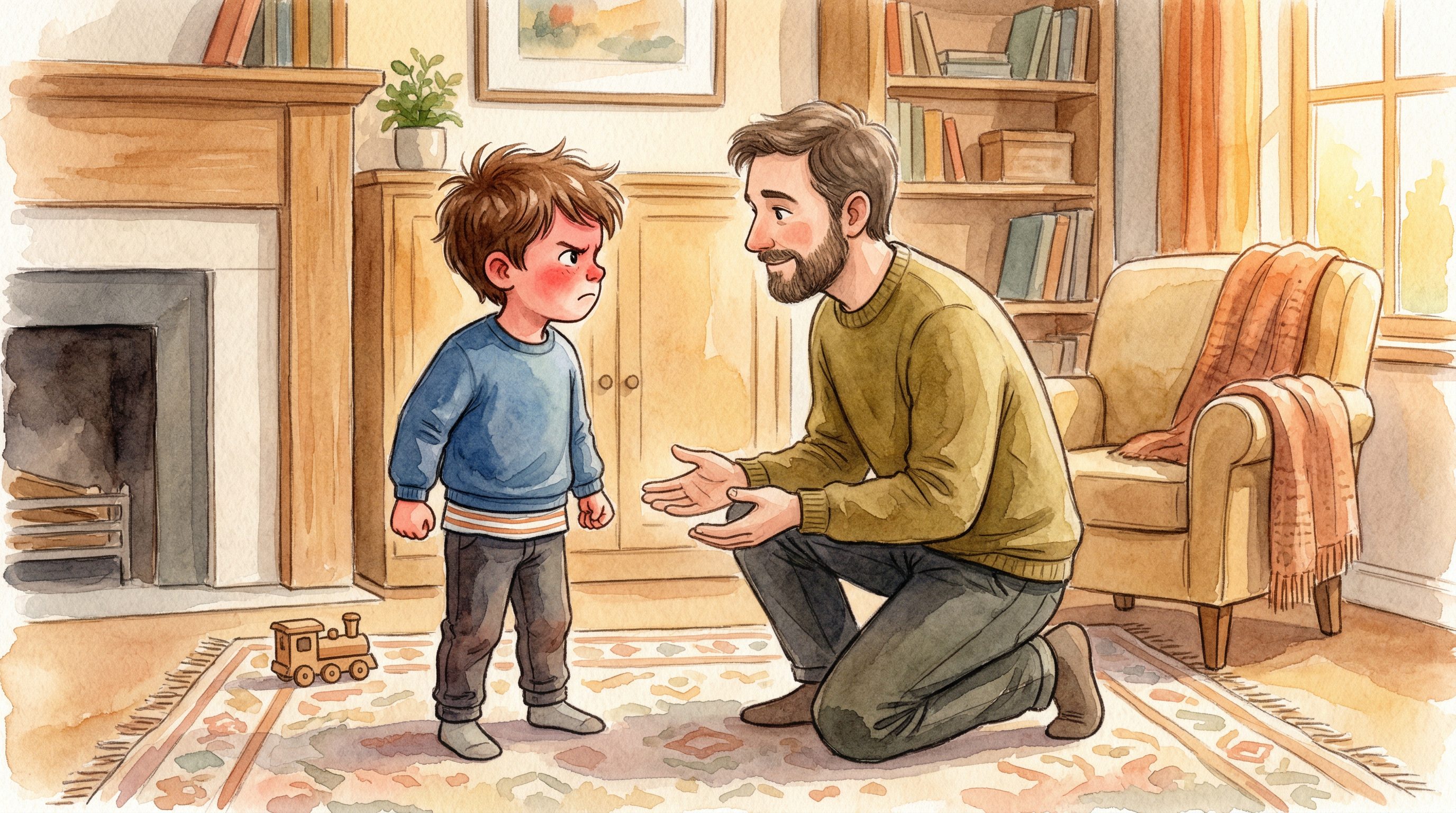
Let's be honest. Most of us grew up hearing some version of "boys don't cry" — maybe not in those exact words, but the message was there. Walk it off. Be tough. Don't be soft.
And look, there's something real in wanting your son to be resilient. Nobody wants a kid who crumbles at the first hard thing. But there's a difference between resilience and suppression, and a lot of us were taught the second one and called it the first.
What suppression actually produces is a kid who learns that his inner life is a problem to be managed rather than a reality to be understood. He doesn't stop feeling things. He just stops telling you about them. And then he turns 15 and you wonder why he won't talk to you anymore.
The research is pretty clear: boys who are taught emotional vocabulary and given permission to express hard feelings actually handle adversity better, not worse. They're more self-aware, more socially capable, and less likely to explode or shut down under pressure. What looks like toughness — stuffing it down — tends to show up later as rage, anxiety, or just distance.
Teaching your son to handle his emotions isn't raising a soft kid. It's raising a man who knows himself. That's a completely different thing.
What Scripture Actually Says About Men and Emotions
Here's something I started pointing out to my son: Jesus wept. That's literally in the Bible. Not "Jesus felt a little sad." He wept. In public. In front of people who were watching.
David — the warrior king, the guy who killed Goliath, the man God called a man after His own heart — wrote an entire book of poetry about his feelings. He was terrified. He was angry. He was crushed. He said so, over and over, directly to God.
Paul wrote about contentment in suffering, but he also wrote about anguish over the churches he loved. Peter wept bitterly after he denied Jesus. These weren't weak men. They were some of the most formidable people in the entire Bible. And they were emotionally present in a way most modern men aren't taught to be.
When you teach your son to be honest about what he feels — and to bring those feelings to God — you're not softening him. You're teaching him to live like the men we read about in Scripture. That's the model. Not the stoic, silent, never-let-them-see-you-sweat version. The real one.
What Big Emotions Actually Look Like in Young Boys
Anger is the easy one to spot. That's the one that comes with yelling or hitting or slamming doors. But there are a handful of emotions that boys — especially young boys — often don't have names for yet:
- Shame — feeling like they did something wrong AND that there's something wrong with them
- Embarrassment — more intense than shame in the moment, but shorter-lived; hard for boys to admit because it feels like weakness
- Jealousy — especially around siblings, and especially around achievement
- Fear — not just monsters-under-the-bed fear, but the kind that comes from big life events, friendships falling apart, not making the team
- Grief — even small losses hit kids hard: a pet, a moved friend, a season ending
When a boy doesn't have a name for what he's feeling, he defaults to what he knows — usually anger, because that's the one that gets a reaction. The emotional vocabulary problem isn't just a soft-skills issue. It's a practical one. Kids act out what they can't say out loud.
A good devotional — one that builds slowly, a few minutes a night, over weeks — can do something that a single conversation can't. It builds the language over time. It gives your son a framework before he needs it, so when something hard happens, he's not starting from zero.
How a Devotional Becomes the Container for Hard Conversations
Here's the thing about bedtime that I keep coming back to: it's already the most emotionally open time of day for your kid. The day is done. The defenses are down. They're tired, warm, and — if you've created the right environment — more willing to be honest than they were at 3 p.m. when their guard was up.
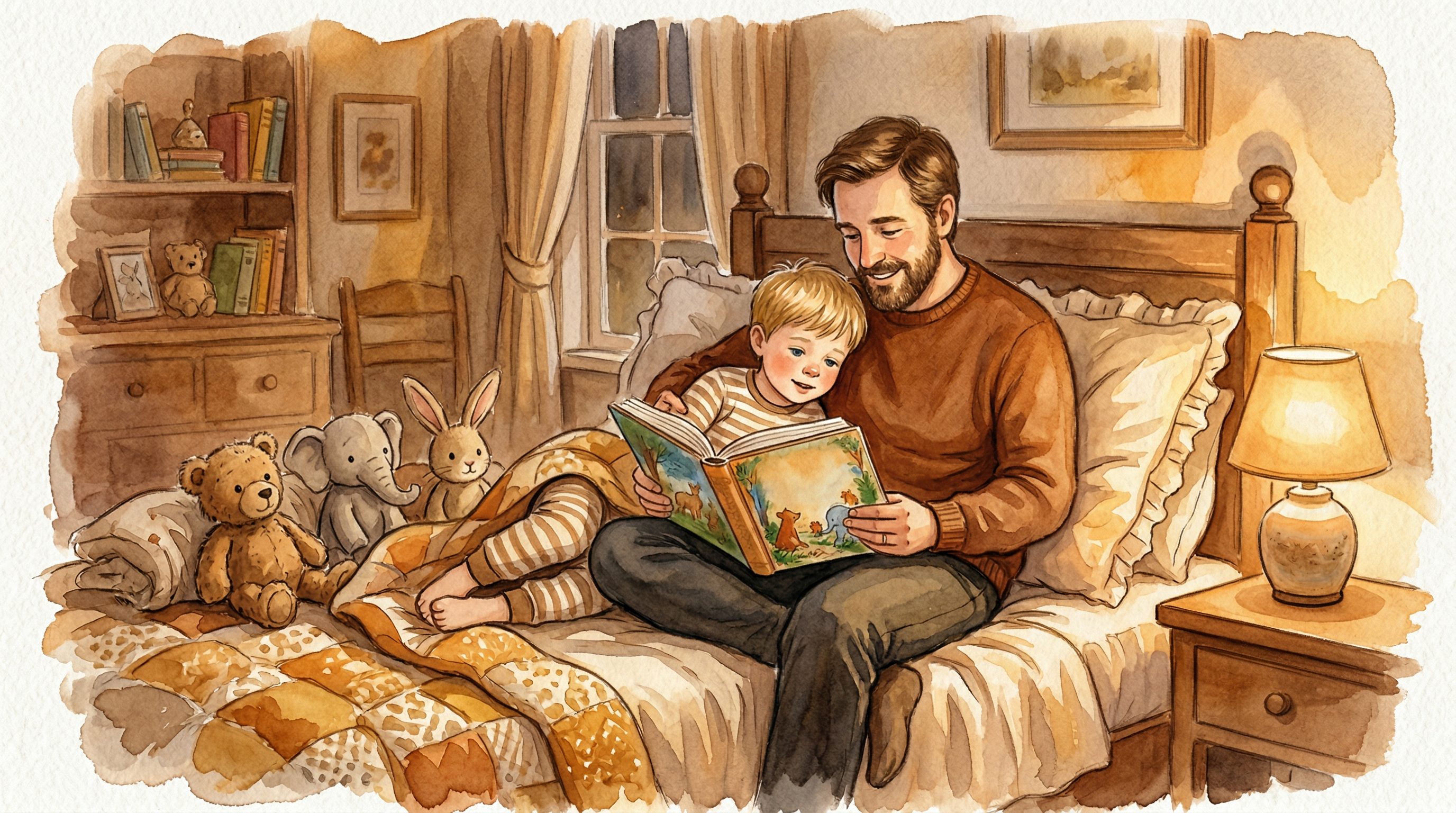
A devotional gives the conversation structure. Instead of you walking into the room and saying, "Hey, let's talk about feelings" (watch them immediately not want to do that), you have something to read together first. The story or the verse or the question in the devotional opens a door. It normalizes the topic. It says, this is just something we talk about — me and you, together, at bedtime.
The Big Feelings series was built exactly for this. It walks boys through specific emotions — what they are, why they happen, and what God says about them — in short nightly readings that don't feel like a therapy session. They feel like dad reading to his kid. That's the whole point.
If you're looking for more ideas on how to structure the overall bedtime routine, the father-son devotional ideas for bedtime article has a good framework for how to build the habit around moments like these.
Practical Ways to Help Your Son Name What He's Feeling
You don't need a psychology degree for this. You just need to slow down and ask better questions. Here are a few things that actually work:
Name it out loud yourself first
When you're frustrated, say so. "I'm frustrated right now — I'm going to take a minute." When you're sad, say it. Boys learn emotional vocabulary by watching the men around them use it. If you never say you're scared or sad or overwhelmed, your son learns those words don't belong to him either.
Ask curiosity questions, not assessment questions
"How was your day?" gets a one-word answer. Try: "What was the hardest part of your day?" or "Was there anything today that felt unfair?" or "Did anything make you feel left out?" Open questions invite honesty. Closed questions invite compliance.
Don't rush to fix it
This is the hardest one for dads. When your son says something's wrong, the instinct is to problem-solve. But most of the time, he doesn't need a solution. He needs to feel like he was heard. Sit with it for a minute before you try to fix anything. Ask: "Do you want me to help fix it, or do you just need to say it out loud?" Most kids, once they know they have the option, will tell you.
Use the devotional reading as a bridge
After you read, say: "Hey, does any of that feel like your week?" or "That feeling the story talked about — have you ever felt that?" The reading gives your son permission to bring something up without it being about him directly — at least not at first. That small layer of distance is often all a kid needs to start being honest.
When He Shuts Down: What to Do
Some nights your son is not going to want to talk. He's going to give you one-word answers or roll over or just stare at the ceiling. Don't take it personally. Don't force it.
Read the devotional anyway. Say the prayer anyway. Tell him you love him anyway. The consistency matters more than the conversation on any given night. You're not trying to have a breakthrough every evening. You're building a pattern — a relationship where he knows that this time exists, that you show up, and that the door is always open.
The nights where nothing seems to happen are doing more work than you think. He's listening. He's filing it away. The conversation you have tonight might not come back out until he's 14 and he needs it.
For more on how to handle the tough emotional topics at bedtime — including anger specifically — take a look at the devotional for kids about anger. And if bullying is part of the emotional picture for your son right now, the devotional for kids about bullying addresses the feelings tied to that specifically.
The Goal Is a Man Who Knows Himself
You're not doing this so your son becomes someone who cries at commercials. You're doing this so that when something truly hard hits him — a real loss, a real failure, a real heartbreak — he has the tools to process it instead of bury it.
Men who know themselves are better husbands. Better fathers. Better friends. They're the ones who can sit with someone in pain without needing to fix it immediately. They're the ones who know when to ask for help. They're the ones whose kids actually talk to them.
You are building that right now. At bedtime. With five minutes and a short devotional. Don't underestimate what you're doing.
The You Are My Son series pairs beautifully alongside the emotions work — it speaks identity directly over your boy, which matters just as much as the emotional vocabulary. When a kid knows who he is, the big feelings are easier to carry.
📖 Read This Tonight
The Big Feelings series walks your son through specific emotions — anger, fear, sadness — with short nightly readings that open the door for real conversations. Start tonight.
Get Notified When New Series Drop
We add new devotional series regularly. Sign up to hear about them first.
Join the Community