
The Worst Thing About Bullying Isn't the Cruelty. It's What Your Kid Starts to Believe.
A kid can shake off a shove. He can walk away from a mean comment and forget it by lunch. But when the cruelty is consistent — when some kid keeps finding your son in the hallway, keeps leaving him out, keeps making him feel like he's less — something else starts to happen. He stops fighting back against the external source. He starts agreeing with it internally.
That's the real damage. Not the moment of cruelty. The slow, quiet adoption of a false identity: Maybe they're right. Maybe I'm not worth much. Maybe something about me deserves this.
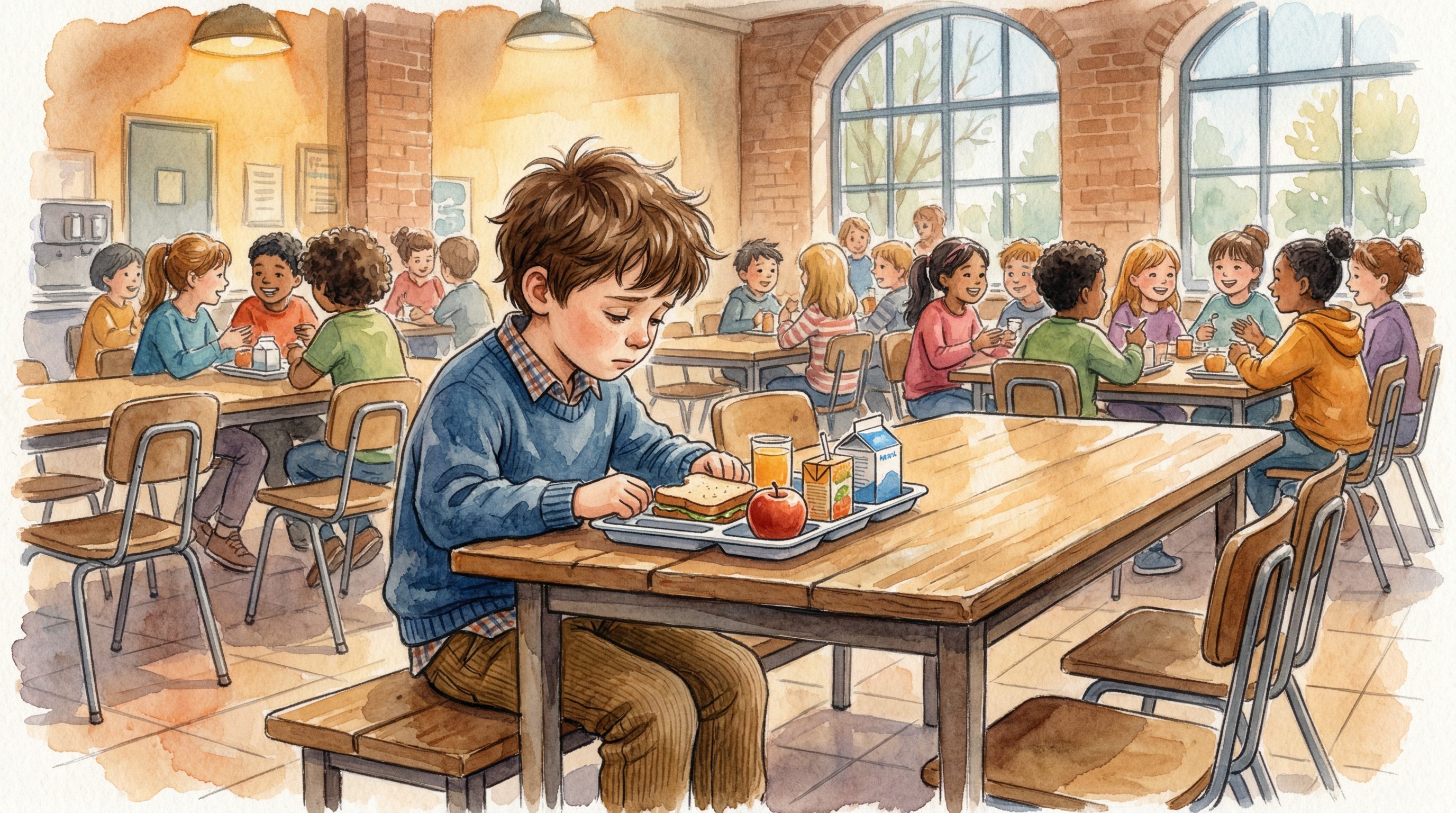
My son came home one afternoon and mentioned a kid at school who'd been giving him a hard time at lunch. Nothing dramatic — no punches, no showdowns. Just a kid who had decided my son was a good target for low-level meanness. I watched my boy try to brush it off, and I could see the math happening in his head: Why me? What did I do? Am I the problem?
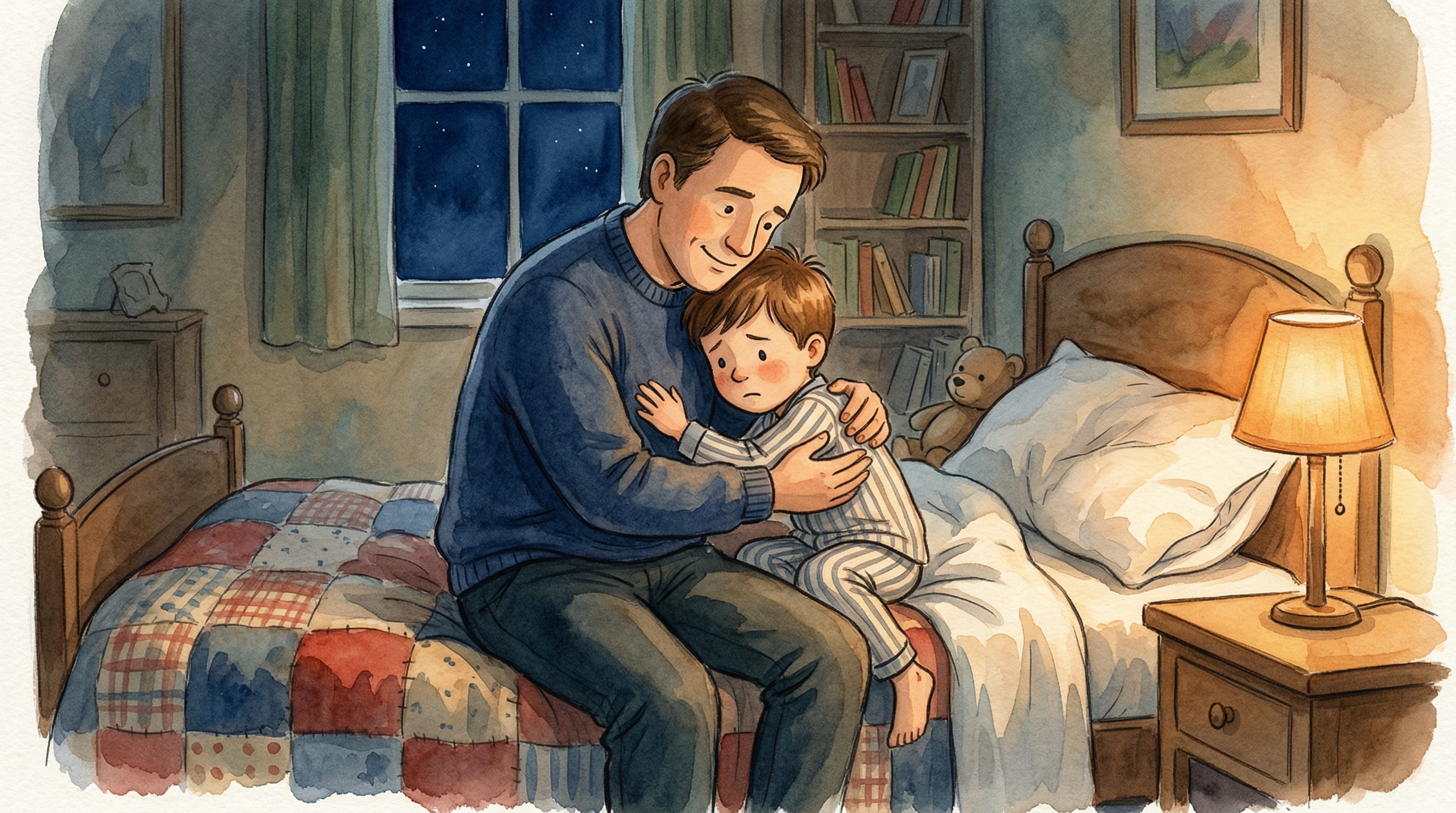
That night, I didn't give him a pep talk about ignoring it. I didn't tell him to stand up for himself either — not yet. I sat next to him at bedtime and started reading something that could reach the part of him the cruelty was already touching.
"Just Ignore Them" Doesn't Work. Here's Why.
Every parent has said it. I've said it. "Just ignore them." It sounds reasonable. It's also almost completely useless advice for a kid who's in the middle of it.
Here's the problem: ignoring a bully doesn't address the identity wound the bullying creates. Your kid can successfully ignore the bully at school, then lie in bed at night replaying the moment, wondering if the cruelty was earned. Ignoring the external behavior doesn't stop the internal processing. And that internal processing — unchallenged — is where the real damage happens.
What actually helps isn't a strategy. It's a foundation. A kid who knows with certainty what he's worth doesn't need to fight back because he isn't shaken in the first place. He can walk away from cruelty with his identity intact because his identity isn't built on what other people say about him. It's built on something older and deeper than that.
That foundation doesn't come from a single conversation. It's built gradually, night after night, through the consistent drip of truth from a trusted voice. That's what a devotional for kids about bullying can actually do — not coach a defensive strategy, but rebuild what the day tore down.
What Bullying Actually Does to a Kid's Identity
Researchers who study peer victimization have documented something that should concern every parent: chronic bullying doesn't just cause distress in the moment — it reshapes how kids think about themselves. Children who are bullied consistently over time are more likely to internalize negative attributions, meaning they start to believe the bullying reflects something true about who they are.
In plain terms: your kid is vulnerable to believing what the bully is implying. Not because he's weak. Because he's a kid, and kids are still forming their understanding of who they are, and the voices around them — including cruel ones — get absorbed into that formation whether he wants them to or not.
This is why the response to bullying can't just live at the tactical level. Yes, teach your kid practical skills. Yes, involve teachers and administrators when needed. But don't skip the identity layer. Don't assume that because he seems fine at breakfast, he isn't quietly wrestling with what that kid said at recess.
Bedtime is when kids process. That's the window you have. A devotional that speaks directly to identity — to worth, to what defines him, to what no one can actually take away — does something a pep talk never can, because it's not a one-time event. It's seven consecutive nights of the same truth from the person whose voice matters most to him.
How the Bully-Proof Devotional Approaches This
The Bully-Proof Devotional is seven days, and it was built around one central premise: your kid's worth isn't defined by anyone's cruelty. Here's how that premise unfolds across the week:
Day 1: You Were Built for This. Not built to be bullied — built to handle hard things. The first day establishes that difficulty isn't a sign that something's wrong with him. It's part of being human.
Day 2: What People Say Isn't Who You Are. This one hits the identity distortion directly. Words land. Mean words land harder. This day helps your kid separate what someone says from what's actually true.
Day 3: You Don't Have to Earn Your Place. A lot of bullying works by making kids feel like they need to prove they belong — to a group, to a table, to a friend circle. This day dismantles that. He doesn't need to earn his place. He already has one.
Day 4: Strength Isn't Loud. This one addresses the trap kids fall into of thinking the right response to cruelty is louder cruelty. Real strength isn't reactionary. Walking away with your dignity intact is actually harder — and actually stronger — than fighting back.
Day 5: You're Not Alone in This. Isolation is one of the worst parts of being bullied — the feeling that no one really gets it, that you're navigating this by yourself. This day names that feeling and speaks directly to it.
Day 6: Kindness Isn't Weakness. This might be the most counterintuitive day in the series. It addresses the question every bullied kid eventually asks: if I'm kind and he's cruel, why does he seem to win? This day holds the tension honestly without giving a tidy answer — but it gives your kid something to hold onto.
Day 7: Standing Tall. The final day is a send-off. It names what your kid has internalized across the week and gives him language for what he now knows about himself. He's not the same kid he was on Day 1 — and this day marks that.
Each entry is short enough to read at bedtime without losing your kid's attention — but substantive enough that there's something real to land on. After you read, you can ask a question or two if the moment is right. But there's no pressure. Sometimes the most powerful thing you can do is read it, say goodnight, and let it work on him while he sleeps.
The Identity Foundation Goes Deeper Than Bullying
Here's something worth knowing about the Bully-Proof Devotional: it isn't just for kids who are actively being bullied right now. It's for any kid who's starting to absorb false messages about his worth — from peers, from social dynamics, from the general noise of growing up.
Almost every kid hits a season where the social environment starts getting harder. Where friendship groups shift, where hierarchies form, where someone decides to be unkind. The Bully-Proof series functions as both a response to what's already happening and preventive groundwork for what's coming.
If you've been working on identity with your son already, the You Are My Son series pairs well as a foundation or follow-up — it speaks directly to who your son is, independent of any external pressure. The identity content in that series reinforces everything the Bully-Proof week builds.
And if you want to go deeper on the identity layer specifically — the question of who your kid is and where that worth comes from — check out our devotional for kids about identity. That's the root system everything else grows from.
What to Say When You Start
You don't need a speech. You don't need to make it a big deal. In fact, making it a big deal can backfire — your kid may not want to talk about the bullying directly, and that's fine.
You can start simply: "Hey, I found this series I want to read with you. Just seven nights. I think you're going to like it." That's it. No announcement about why. No heavy conversation required before you begin.
The content does the work. You just have to show up and read it.
What you'll probably find — and what dads who've been through it describe — is that the conversations happen organically, usually not during the devotional itself but after. In the car the next morning. At dinner three days later. Your kid processes on a delay sometimes, and the devotional gives him language and a framework that surfaces when he needs it.
You don't have to have the perfect answer to what's happening at school. You just have to be the consistent voice that says: what that kid is doing has nothing to do with your worth. You were made for more than this. You are loved, you are seen, and no one gets to define you except the One who made you.
Say that seven nights in a row, in different ways, with your kid next to you at bedtime. Watch what it does.
📖 Read This Tonight
The Bully-Proof Devotional is seven nights of truth that rebuilds what the day tears down. If your kid is going through a hard season socially, this is worth starting tonight.
Get Notified When New Series Drop
We add new devotional series regularly. Sign up to hear about them first.
Join the Community