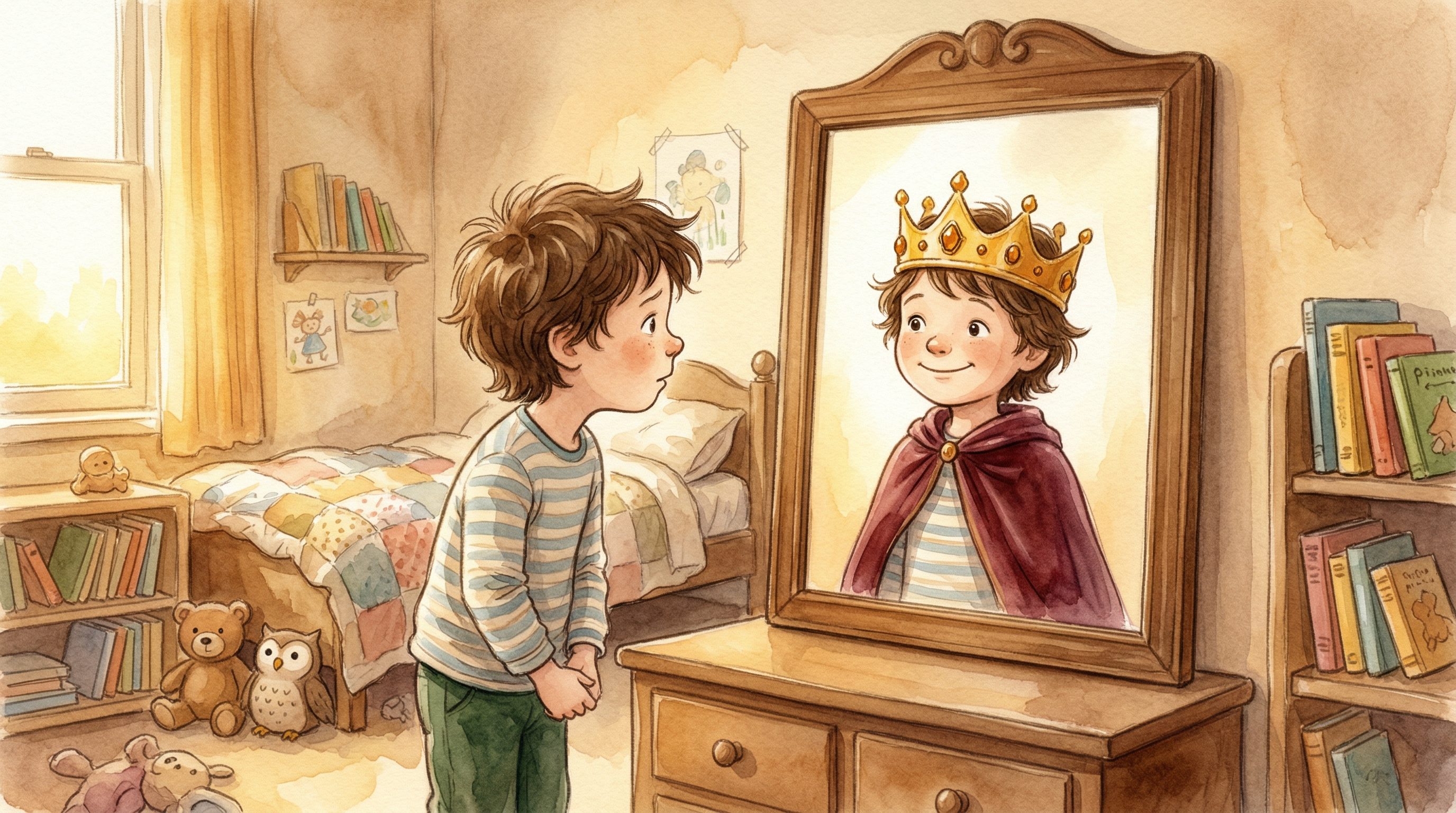
"He's Better Than Me at Everything"
My son came home from school one afternoon and said something that stopped me cold. He was talking about a kid in his class — a friend, actually — and without any drama or self-pity, he just said: "He's better than me at everything."
Not angrily. Not fishing for reassurance. Just as a statement of fact, the way a 7-year-old reports something he's been quietly sitting with for a while.
I knew I could say the right dad thing — "You're great at so many things" — and he'd nod and move on. But I also knew that wasn't going to land. Because what he was really saying wasn't tell me I'm good at stuff. He was saying something more like: I'm trying to figure out where I fit. And right now I feel small.
That's an identity question. And it starts younger than most of us think.

Identity Isn't a Teenager Problem
We tend to treat identity as an adolescent issue — something that kicks in around 13 or 14 when kids start questioning everything. And yes, it intensifies then. But the groundwork is being laid right now, in the elementary years, through a thousand tiny comparisons your kid is already making every single day.
Who's faster? Who got the better grade? Who has more friends? Who got picked first? Kids are comparison machines by default — not because they're insecure, but because comparison is one of the primary ways children make sense of the social world. The question isn't whether your kid will compare themselves to others. It's what framework they'll use to interpret what they find.
If the framework is purely performance-based — I am what I can do, what I score, what others think of me — then your kid is building their identity on sand. It shifts every time someone runs faster or gets a better part in the play or gets more Instagram likes in five years when that world opens up to them.
A devotional for kids about identity doesn't eliminate comparison. It gives your child a different answer to the deeper question underneath it: Who am I, really?
What It Means to Build Identity at Bedtime
There's something powerful about the last thing your child hears before they fall asleep. Bedtime isn't just a logistical winding-down. It's a window. Their guards are down. Their hearts are open. The day's noise is fading and they're left alone with whatever's actually in their heads.
For a lot of kids, that space fills up with the residue of the day — the embarrassing thing they said at lunch, the kid who didn't pick them, the test they bombed. Left alone, that's what they fall asleep with. That's what their brain files under who I am.
But if you show up at bedtime with truth — spoken directly, warmly, consistently — you become the last voice they hear. And over time, that voice starts to win.
That's what the Who Made Me series is built around. Short nightly readings that bring your kid back to the foundation: God made them on purpose, with intention, with love. Not because of what they accomplished today. Not compared to the kid in their class. Just because of who they are.
Night after night, that starts to stick.
The Three Lies Kids Start Believing Early
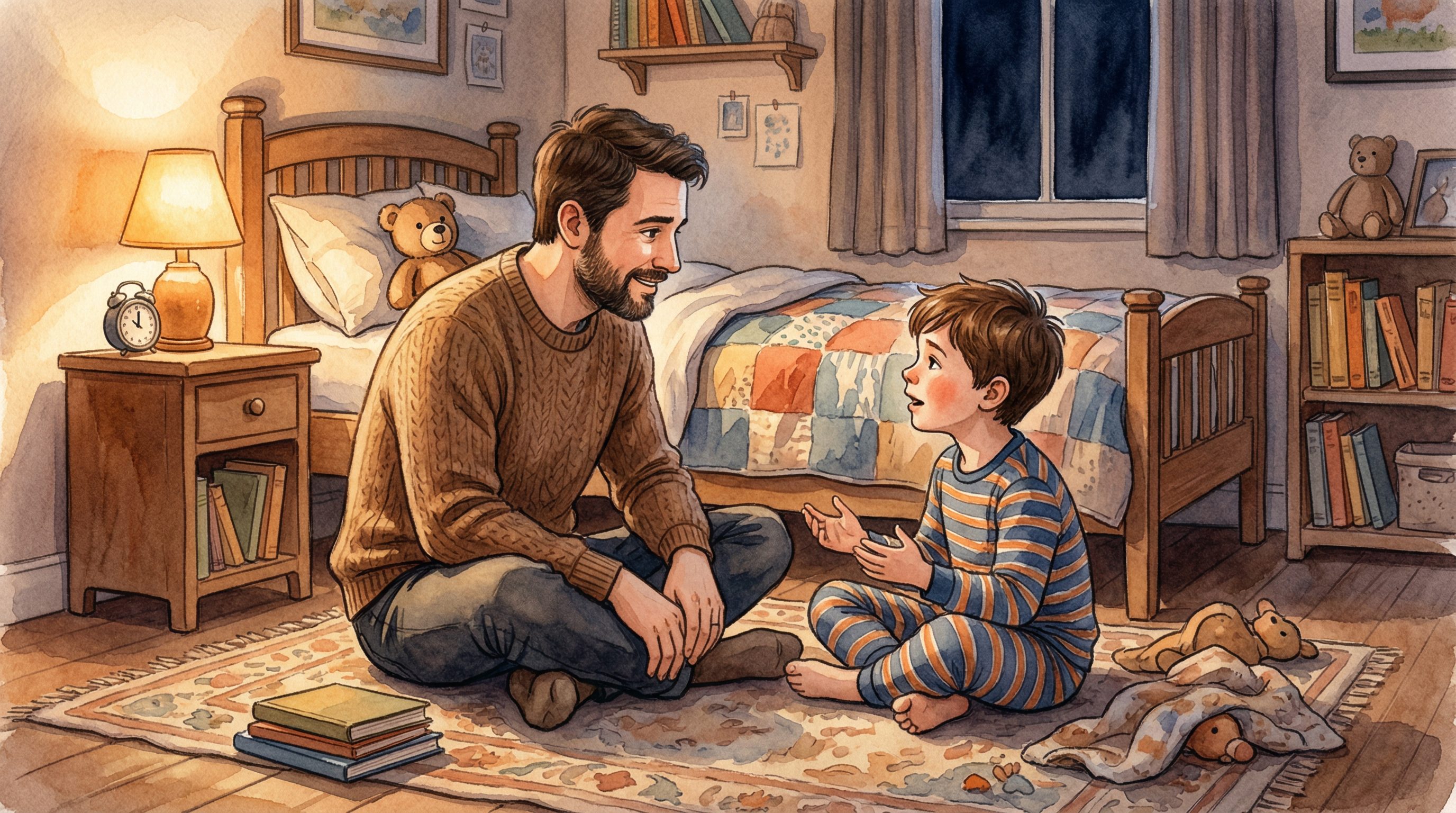
Identity problems don't usually show up as a kid saying "I have an identity crisis." They show up as patterns — behaviors and beliefs that seem small but compound over time. Here are three of the most common ones I've seen in my own sons and heard from other dads:
"I am what I'm good at"
This one is tricky because it's partly encouraged by the adults around them. We celebrate achievement, and we should. But when a kid can only feel okay about themselves on the days they perform well, you've got a problem. The kid who is "the smart one" falls apart when she gets a bad grade. The kid who is "the athlete" quits the sport when he stops making the starting lineup. Their identity was built on the performance, not on who they actually are.
"I am what others think of me"
Social currency matters enormously to kids — even young ones. Being liked, being included, being seen as cool or funny or worthy — these feel like survival. And honestly, that's not entirely wrong. Belonging is a real human need. But when a child's sense of self rises and falls entirely based on the social temperature of a given week at school, they're not living from identity. They're living from approval-seeking. It's exhausting, and it doesn't get better without a foundation to stand on.
"I am my mistakes"
This one shows up as shame — the belief that a bad thing they did makes them a bad person. Kids who believe this often either act out (if shame turns to rage) or shut down (if shame turns inward). Either way, they need someone to draw the line clearly between you did something wrong and you are not a mistake. That distinction is at the heart of what Scripture teaches about identity, and it's one of the most freeing things you can hand a child.
What Scripture Says About Identity — in Language Kids Can Hold
You don't need to turn this into a theology lecture. In fact, please don't. Here are the core truths — and how to say them in a way a kid can actually grab onto:
"You were made on purpose." Psalm 139 says God knit your child together in the womb. Every part of them — including the parts they wish were different — was intentional. This isn't greeting-card Christianity. It's a concrete truth that pushes back against the "I'm an accident" or "I'm a mistake" thinking that creeps in early.
"You belong to God before you belong to anyone else." Your child is not primarily a student, a teammate, a sibling, or even your kid. Those are real roles. But the deepest thing about them is that they are God's. That's a foundation that doesn't shift when the social stuff does.
"You are loved because of who you are, not what you do." This one is the hardest to internalize because almost everything in their world teaches the opposite. But this is the whole gospel in miniature. Grace is not earned. Love is not conditional. The kid who bombed the test and the kid who aced it are equally loved — by God, and by you. Say it out loud, regularly. Don't assume they know.
How the Series Help You Say This Every Night Without Repeating Yourself
One of the hardest parts of doing identity work with your kid is that it can't just be one conversation. It has to be repeated — over and over, in different ways, at different moments — for it to actually take root. That's exhausting to do from scratch every night.
That's exactly why the series format works. Each devotional in Who Made Me approaches the same core truth from a slightly different angle — a different story, a different question, a different verse. Your kid hears the same message night after night, but in enough varied form that it doesn't feel repetitive. It feels like a conversation that keeps going.
For your son specifically, the You Are My Son series speaks directly to boyhood identity — what it means to be a son, to be loved by your dad, to be claimed. For your daughter, You Are My Daughter does the same work from a girl's perspective. You can find more on that in the identity devotional for girls piece.
If you're doing bedtime devotions with a daughter and want more ideas on building the routine around her, the father-daughter devotional ideas for bedtime article is worth reading alongside this one.
Practical Moves for Dads Starting This Tonight
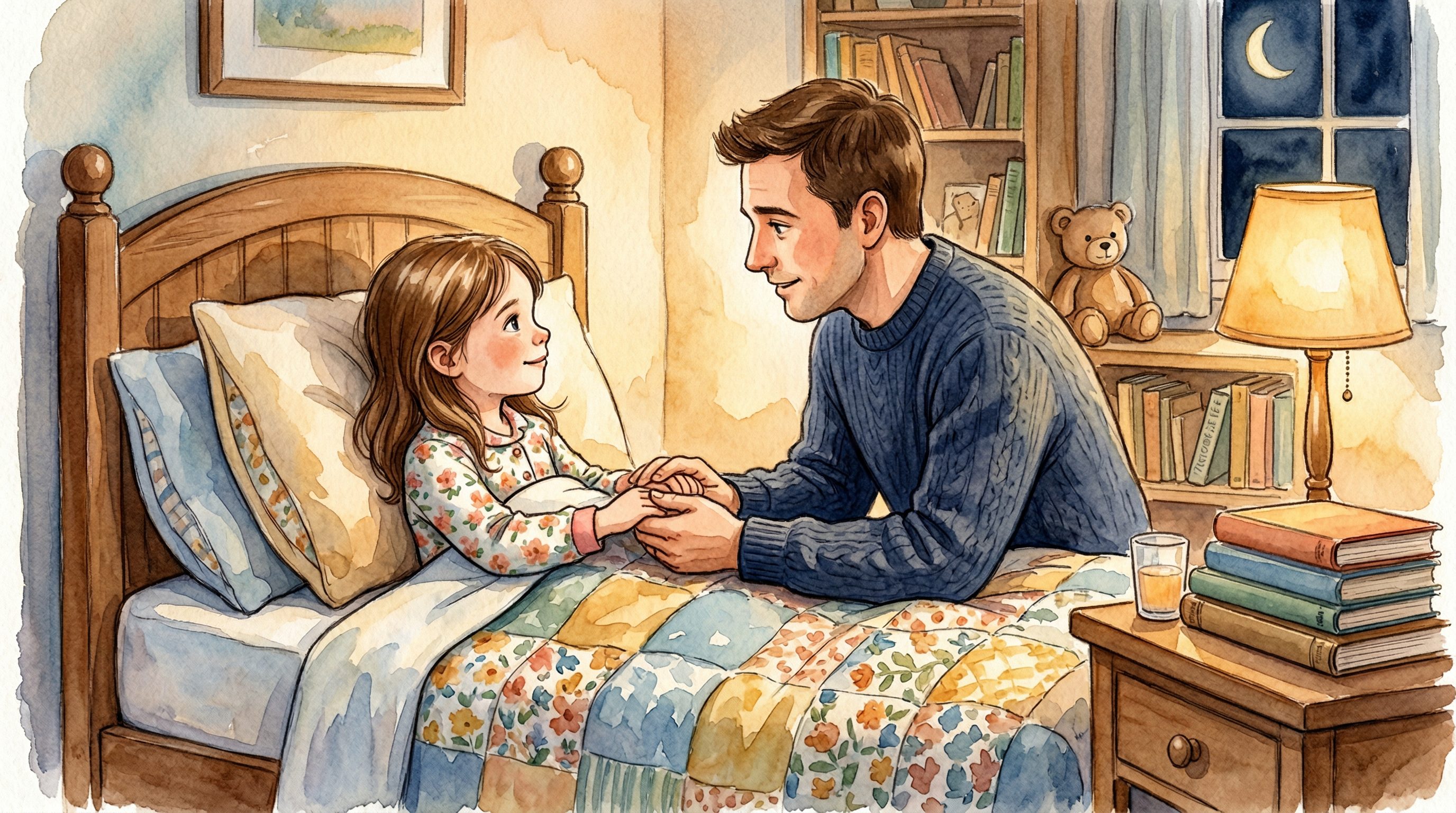
You don't need to overhaul bedtime. You don't need to have a prepared speech. Here's what actually works:
Speak identity before the prayer
Get into the habit of saying something specific and true about your child before you pray. Not a generic "you're great." Something like: "I noticed today that you were patient with your brother, even when he was being annoying. That's real kindness." Or: "God made you curious. I love watching you figure things out." Specific, concrete, tied to what you actually saw. Kids know the difference between real and performed.
Ask the right question after the devotional
After reading, try: "Is there anything you felt today that felt different from what we just read?" or "If God really thinks that about you, what changes?" You're not looking for a perfect theological answer. You're looking for your kid to connect the truth to their actual day. Even a shrug tells you something.
Counter the comparisons out loud
When your child says something like "she's better at art than me" or "I'm the slowest in my class," don't just brush it off. Acknowledge it first: "Yeah, people are good at different things." Then shift: "But here's what I know about you..." You're not disputing their observation. You're giving them a bigger frame to put it in.
Pray identity specifically
Don't just pray for your kid's safety and good sleep. Pray over who they are. "God, thank you for making [name] exactly the way you did. Help him know tonight that he is loved — not because of what he did today, but because of who he is." Children who hear their parents pray identity over them don't forget it. It goes somewhere deep.
The Voice They Fall Asleep to Matters
The comparison culture your kid lives in isn't going away. Social media will make it worse. Academic pressure will make it worse. The social dynamics of the lunch table will make it worse. You cannot eliminate the noise.
But you can be louder than it — at least once a day, at bedtime, in the quiet.
What you speak over your child in those five minutes is building something. You're not just reading a devotional. You're constructing the internal voice they'll reach for when the world tells them they're not enough. That voice can sound like comparison and shame, or it can sound like the truth you've been speaking over them since they were small.
Start tonight. It doesn't have to be perfect. It just has to be consistent.
📖 Read This Tonight
The Who Made Me series helps your child build a real foundation for their identity — short nightly readings that speak truth over them before they fall asleep. Start tonight and let it do the work over time.
Get Notified When New Series Drop
We add new devotional series regularly. Sign up to hear about them first.
Join the Community