I Have Two Sons. I Built This for You Anyway.
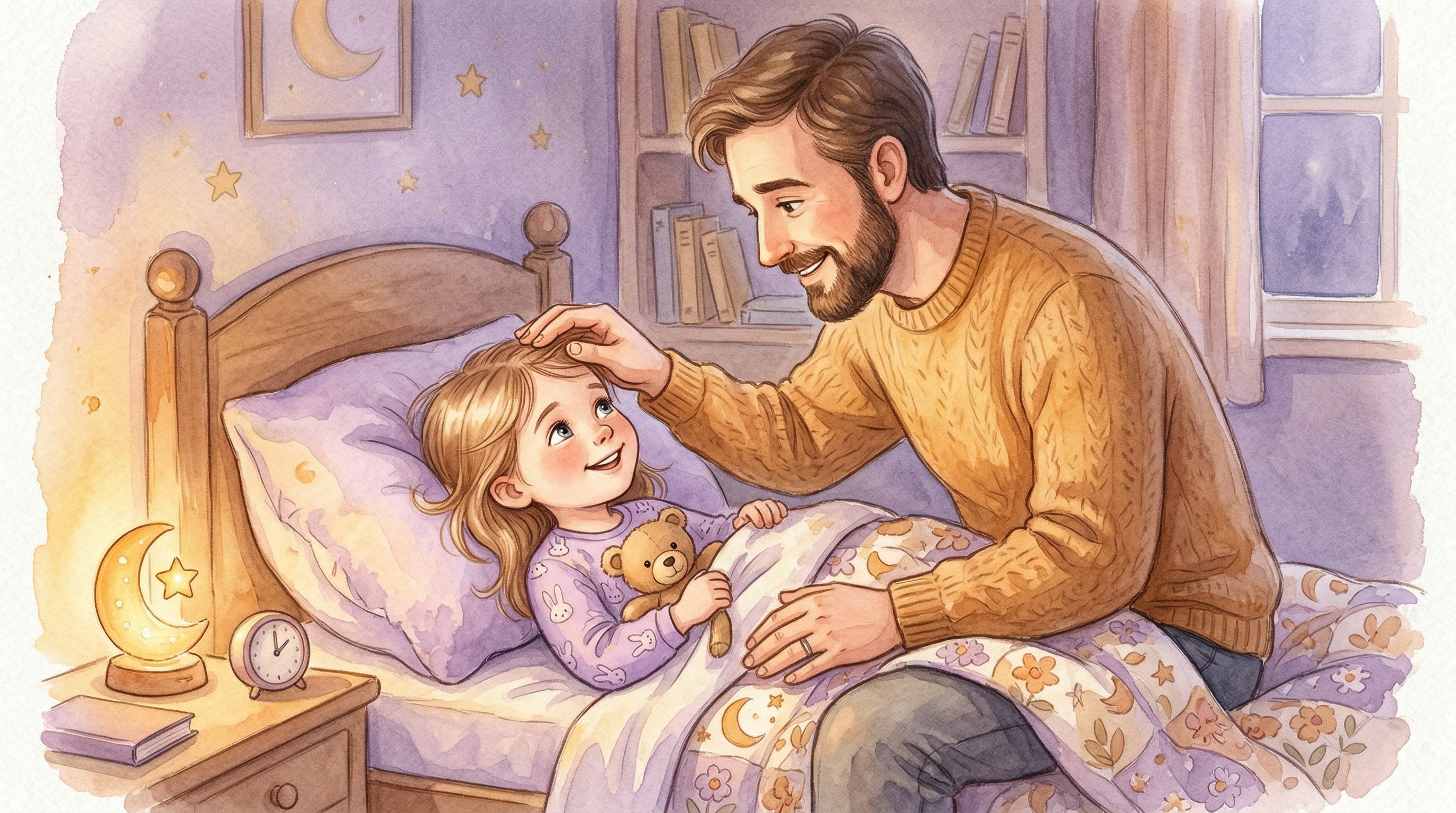
I want to be upfront about something: I don't have a daughter. I have two boys, ages 7 and 5. So when I sat down to write this article, I had a choice — fake it, or be honest about why I built a father-daughter devotional series in the first place.
Here's the truth: dads of daughters kept showing up. I'd share something about bedtime devotions and within minutes I'd hear from a dad asking where the version was for his girl. They weren't looking for a rebranded boys' series with the pronouns swapped. They were looking for something that actually spoke to a daughter's specific experience — her identity, her worth, her place in the world as God sees her.
I built You Are My Daughter because the need was undeniable. Not because I lived it, but because enough dads told me they needed it that I couldn't ignore the gap. What you'll find in this article is built on what those dads told me, what I know about the father-daughter relationship from the outside, and what the research consistently shows about what girls need from their dads most.
Why a Dad's Voice Matters More Than You Think
There's a mountain of research on this. A daughter's relationship with her father shapes how she sees herself, how she handles relationships, how she processes her own worth. Not eventually. Now. The conversations you're having at bedtime tonight are doing more than you realize.
Specifically, girls who feel affirmed by their fathers — who hear their dad call them strong, capable, and loved — tend to show more confidence and resilience. Girls who don't get that affirmation often look for it elsewhere, often in ways and places that don't end well.
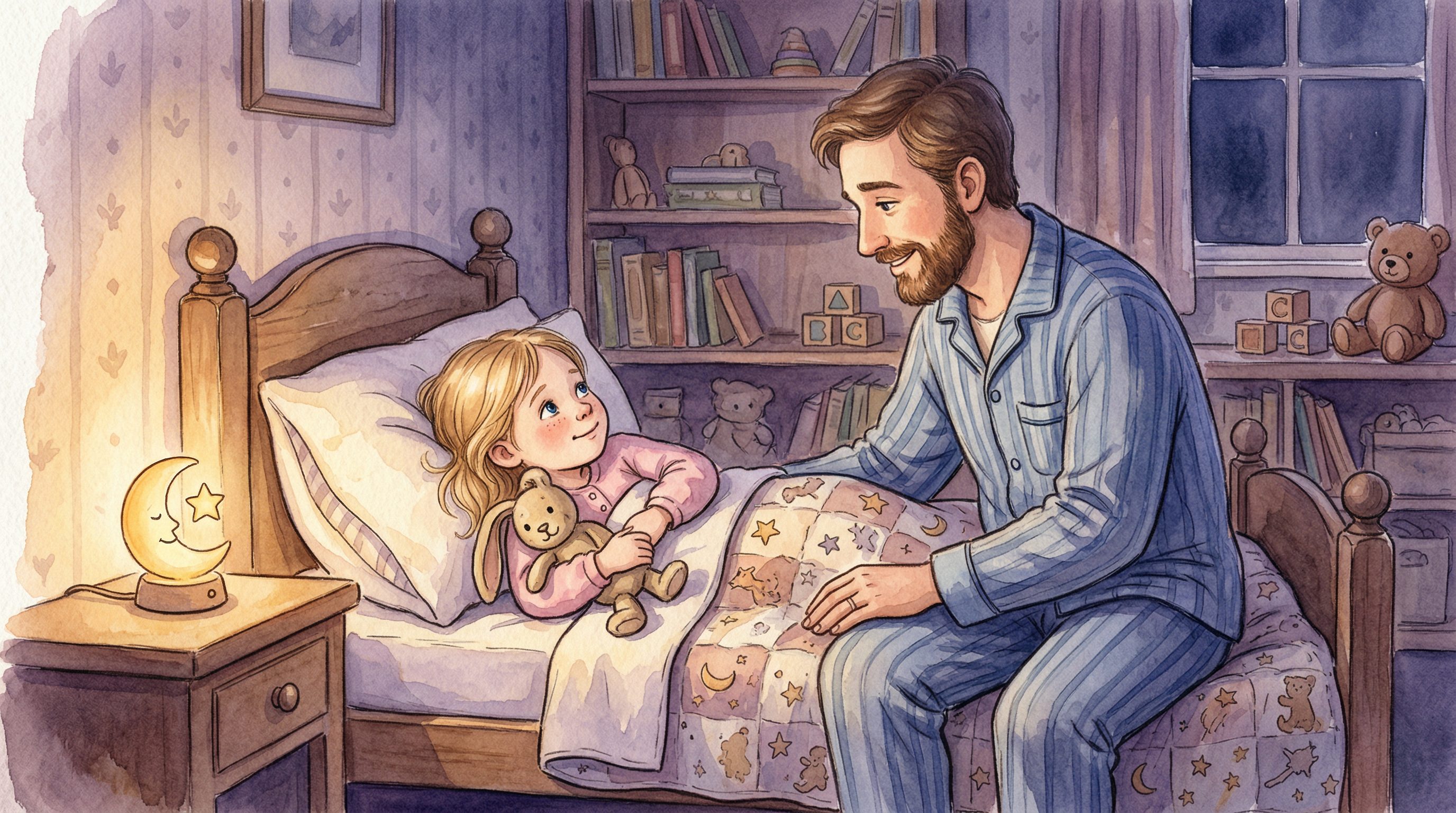
This is not about pressure. It's about opportunity. You have a window — especially right now, when she's young enough to still want to be in the room with you at bedtime — to speak directly into how she sees herself. A devotional is one of the best formats for doing that because it gives the conversation a container. You're not cold-calling a deep talk. You're reading together, and the deep talk follows naturally.
For more on why bedtime is the right moment for this kind of connection, this guide to bedtime devotions breaks down the whole format from scratch.
What a Father-Daughter Devotional Should Actually Do
Not all devotionals are created equal, and a generic children's devotional isn't the same as one built specifically for a dad reading to his daughter. Here's what to look for:
It should speak to her identity, not just her behavior
A lot of kids' devotionals are essentially behavior management in religious clothing: be kind, share your things, don't lie. Those aren't bad lessons. But a daughter — especially between ages 4 and 12 — needs more than behavioral coaching. She needs to hear that she was made on purpose, that she matters, that God's view of her isn't contingent on how well she behaved today.
Devotionals that speak to identity go deeper than devotionals that just teach lessons. They build something in her that sticks when she's 16 and someone at school is trying to tell her a different story about who she is.
It should invite her voice, not just her compliance
The best bedtime devotionals for girls open up questions. "What do you think made you the way you are?" "What's one thing you love about yourself?" "When did you feel really brave this week?" These questions aren't just warm-ups — they're the point. You're helping her practice the language of self-knowledge and faith at the same time.
It should include your voice, not just read to her
Don't just read the devotional and say goodnight. The most powerful thing you can add is your affirmation in your words. After the reading, add one thing you actually noticed about her that day. "I saw you help your friend today and that was really cool." "I noticed how hard you worked at practice." It takes fifteen seconds and it lands differently than anything in the text.

Devotional Ideas for Different Ages
The structure of a good father-daughter devotional changes as your daughter grows. Here's what tends to work at each stage:
Ages 3–6: Short, Physical, and Full of Wonder
At this age, she doesn't need a lot of words. She needs your presence and your delight. Read something short — one to three minutes — and then ask one simple question. Let her answer any way she wants, including by pointing at the pictures or making something up.
This age is also when physical affirmation matters most. End the devotional with a hug and say something specific and true: "God made you, and I love you, and I'm glad you're mine." Say it every night. Don't worry about it being repetitive. Repetition is how it becomes part of how she understands herself.
Ages 7–10: Stories and Questions
This is the sweet spot for the father-daughter devotional. She's old enough to track a narrative, hold a question in her head, and give you a real answer. She's also still young enough to think you're the most important man in the world — which, for a few more years, you are.
At this age, lead with story and follow with open questions. Avoid questions where she knows you already have the answer. "What do you think God meant by that?" works better than "What should we do when we feel scared?" One invites her thinking; the other tests her catechism.
The You Are My Daughter series is built for this window. It's written for a dad reading to his daughter — not to a generic child — and it covers her identity, her courage, and how God sees her in language that feels real, not churchy.
Ages 11–14: Conversation Over Content
The shift here is significant. By middle school, a girl who feels lectured at will tune out — not because she doesn't care, but because being talked at doesn't feel like relationship. The content of the devotional matters less than what it gives you permission to talk about.
Use the devotional as a starting point, not the whole thing. Read it together, then ask a real question and actually listen to her answer. Don't fix it or redirect it. Just listen. At this age, your job is less "teacher" and more "the adult in her life who actually wants to know what she thinks."
If she's showing signs of anxiety or worry — which is extremely common for girls in this age range — the Worry Warriors series can open conversations about fear and faith in a format that doesn't feel clinical. We've also written more on devotionals for kids dealing with anxiety if that's where you are right now.
The Conversation No One Tells Dads to Have
There's a specific kind of conversation that dads of daughters often skip because it feels awkward or outside their lane. It goes something like this:
You are not defined by what you look like, how popular you are, or whether boys think you're pretty. You are defined by who you are. And who you are is someone God made on purpose, with intention, with love.
Most dads mean this. Most dads never say it explicitly. The culture will say the opposite to your daughter thousands of times before she turns 13. Your voice — specific, consistent, and at bedtime when she's actually listening — is one of the few counterweights you have.
You don't have to be eloquent. You just have to say it. And the devotional gives you a place to say it without it feeling like a lecture, because it fits inside a conversation you're already having.

Practical Tips to Make Bedtime Devotions Stick
A few things that make father-daughter devotional time go better in practice:
- Read in her room, in the dark with a lamp. The intimacy of the setting matters. It signals that this time is different from the rest of the day.
- Let her hold the device or book. Giving her a physical role keeps her engaged and signals that she's part of this, not just an audience.
- Don't skip it when things are hard. The nights when you've had a rough day and she's been difficult — those are the nights that matter most. Showing up anyway is the message.
- Keep it short enough to actually happen. Ten minutes done consistently beats a thirty-minute session that only happens when everything lines up perfectly.
- End with something true about her. Every single night. One specific thing you noticed. It doesn't have to be profound. It just has to be real.
For more on the mechanics of a devotional routine that actually holds, the father-son devotional guide has a lot of overlapping structure — and a lot of the same principles apply across genders.
The Gap I Couldn't Ignore
I'll come back to where I started. I built the You Are My Daughter series because when I looked at what was available for dads who wanted to do this specific thing — sit with their daughter at bedtime and say something meaningful — the gap was obvious. The content that existed was either written for kids in general with no specific voice, or it was so overtly religious that it felt like homework.
What dads of daughters kept telling me they wanted was something that sounded like a dad. Not a children's ministry curriculum. Not a devotional book with a flower on the cover. A real conversation, with room for their daughter to respond, built specifically for the father-daughter relationship.
That's what I tried to build. It's for your daughter, through you. And the fact that you're here, reading this and thinking about how to make this time meaningful — that already says something about the kind of dad you're choosing to be.
📖 Read This Tonight
You Are My Daughter is written specifically for a dad reading to his girl — her identity, her worth, how God sees her. Start it tonight and let the conversation follow.
Get Notified When New Series Drop
We add new devotional series regularly. Sign up to hear about them first.
Join the Community