Your Kid Has Already Figured Out That "Sorry" Is a Shortcut
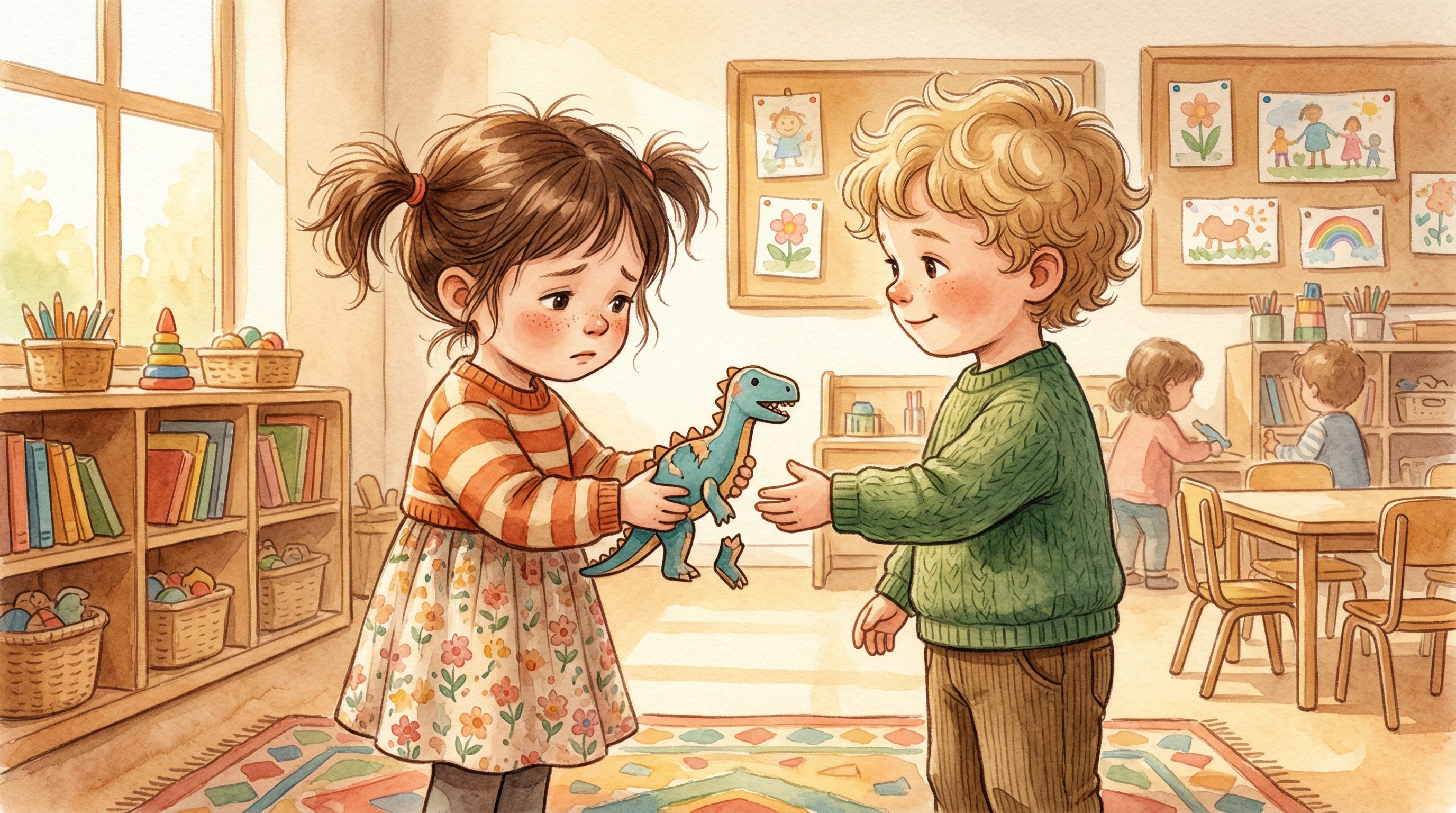
Here's what actually happens. Something goes wrong. You tell your kid to apologize. They say "sorry" in the flattest possible voice, already thinking about something else. The other kid shrugs. You declare it resolved. And within forty-eight hours it's happening again.
The word was said. Nothing changed. Because the word isn't the point — and your kid, even at six, has already figured that out, even if they can't articulate it. They know when someone means it and when they're just saying it to make the adult feel better.
Teaching kids to forgive — really forgive — means going past the script and into the actual thing. That's harder. It's worth doing.
<
Why "Say Sorry" Doesn't Work
The "say sorry" reflex makes sense. It's fast. It ends the conflict. It signals that we have standards in this household. But it teaches kids a bad model: forgiveness is a social transaction, not an internal process. You say the word, the other person accepts it, status quo restored.
Real forgiveness doesn't work like that. Real forgiveness involves acknowledging what happened, feeling the weight of it, and making a decision — sometimes many times — to release the right to stay angry or withhold trust indefinitely. A four-word apology doesn't accomplish any of that.
The other problem: forcing apologies that aren't real teaches kids to perform emotion rather than feel it. You want your kid to eventually be someone who genuinely owns their mistakes — not someone who has learned to mouth the right sounds to end uncomfortable situations. Those are two very different people.
What Genuine Forgiveness Actually Looks Like
For kids, the practical components of real forgiveness are:
- Naming what happened — "You said something that hurt my feelings when you told everyone I was bad at soccer."
- Acknowledging the impact — not just "it made me feel bad" but being able to say it out loud to another person.
- Making a choice — not waiting until they feel like forgiving, because that feeling may not come. Making a decision to move toward forgiveness even before the feelings catch up.
- Revisiting it — especially for bigger hurts, understanding that forgiveness is sometimes a process, not a single moment.
None of this requires your kid to pretend the hurt didn't happen. It doesn't mean the friendship automatically goes back to where it was. It means they're not letting the hurt run their emotional life going forward.
A Bible Story That Cuts Right to It
Joseph's story is the best illustration of this in the entire Bible, and it's in Genesis 45. Joseph's brothers — the same ones who threw him in a pit and sold him into slavery — are now standing in front of him, desperate for food during a famine. They don't even recognize him. He's the second most powerful person in Egypt.
He could have let them starve. He could have thrown them in prison. Instead, he reveals himself, tells them not to be afraid, and says something remarkable: "It was not you who sent me here, but God." He had reframed the whole story. Not minimized what they did. Not pretended it was fine. But found a way to see something larger at work.
That's a picture of forgiveness that took years. Joseph didn't forgive his brothers the day after they sold him. He had time in slavery, time in prison, time working his way through decades of consequences from what they did. By the time they stood in front of him, something had happened internally that made that response possible.
You can tell this to your kid and ask: "What do you think changed in Joseph? When do you think he started to let it go?"
<
How to Talk to Your Kid About This at Bedtime
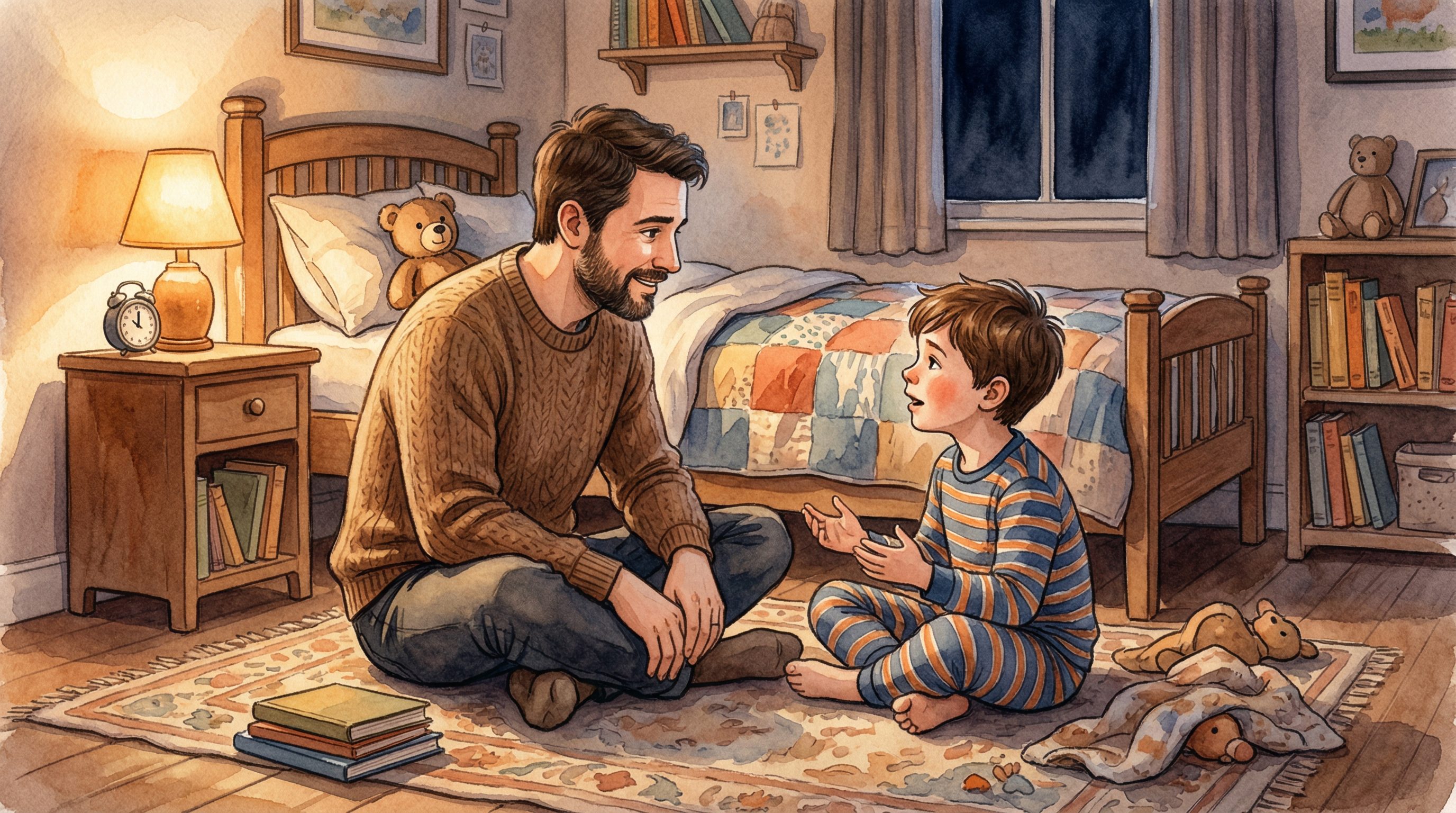
Pick a real situation — something from their life, not a hypothetical. Ask what happened. Ask how they felt about it. Then ask the harder question: "Do you think you've actually forgiven them, or are you still holding onto it?"
Don't be surprised if the answer is "still holding onto it." That's honest. Work with that. You're not trying to force a resolution. You're trying to open a door.
Here's a simple prayer framework if you want to end with something concrete: "God, this is hard. Help [name] know we're letting this go — not because it was okay, but because we don't want to carry it anymore." You can pray it yourself while your kid listens. They don't have to be ready to say it themselves.
If your kid is on the other side of this — they did something wrong and need to make it right — the same process applies in reverse. What would it look like to apologize in a way that shows you actually understand what you did? Not "sorry if you were upset" but "I understand why what I did hurt you, and I'm asking you to forgive me." That's a sentence worth helping your kid practice before they actually have to say it.
When the Other Person Won't Forgive Them
This one's hard. Your kid tries to make it right, and the other kid says no, or ignores them, or the friendship doesn't come back. What do you do with that?
First: acknowledge that it's painful. Don't minimize it. "You did the right thing and it didn't fix it. That's really hard."
Second: separate the two things. Your kid's responsibility is to ask. The other person's response is theirs. You can't control whether forgiveness is received. You can only control whether it's given and whether it's asked for. That's worth teaching clearly.
Third: remind them that doing the right thing still mattered — even if the outcome wasn't what they hoped. This is a genuinely hard concept, but you can plant it: "You did the right thing. How the other person responds is between them and God."
For more on walking kids through situations like this — where the hurt runs deep and the resolution isn't clean — check out the full devotional on forgiveness. It covers the emotional side of letting go in more depth.
<
What This Teaches Them Long-Term
The kids who learn to forgive genuinely — not just perform it — become adults who have healthier relationships, less bitterness, and more emotional freedom. That sounds like a big claim but it's well-supported: unforgiveness is one of the most reliable predictors of ongoing emotional difficulty in adults.
What you're doing at bedtime, talking through a hard friendship situation with your seven-year-old, is not just crisis management. You're laying neural and spiritual pathways that they'll use for the rest of their lives.
The friendship devotional is a natural complement to this — because forgiveness and friendship are tightly connected, and kids who are working through hurt with a friend often need both conversations. And if your kid ever asks you why God wants us to forgive people who hurt us, the guide on answering tough God questions gives you a framework for those conversations.
The Big Feelings series on Hosted Devotions was built for exactly this kind of ground — helping kids process the big emotions that are harder to talk about than they look. It's a good place to go multi-night with this topic.
📖 Read This Tonight
The Big Feelings series helps kids process hurt, anger, and forgiveness across multiple nights — building something real instead of just covering it once. Start tonight.
Get Notified When New Series Drop
We add new devotional series regularly. Sign up to hear about them first.
Join the Community