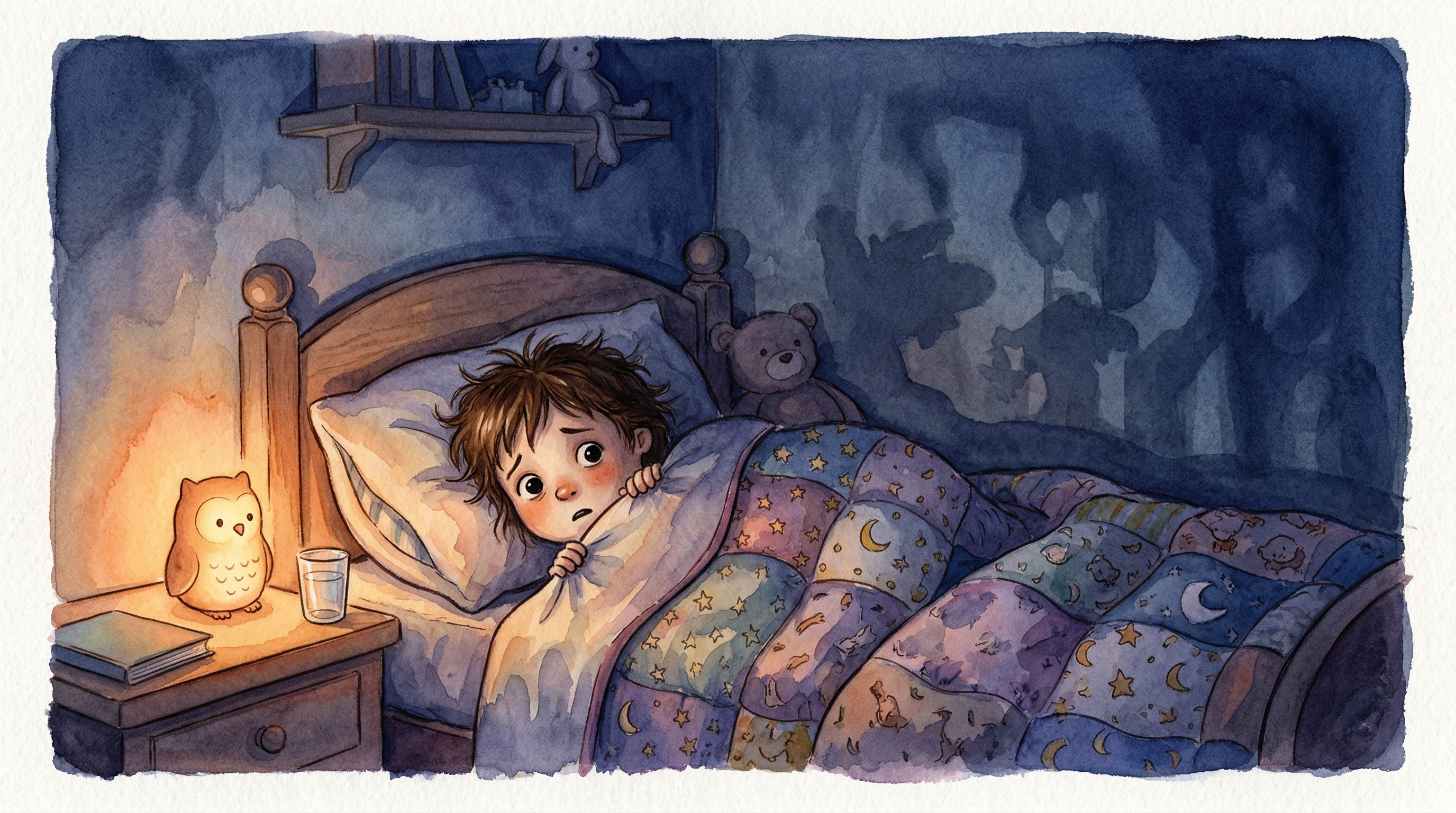
Fear Is Not a Character Flaw
Your kid is scared. Maybe it's something specific — the dark, dogs, thunderstorms, a kid at school who's been saying things. Maybe it's more diffuse than that — just a low hum of "what if" that you can hear in his voice at bedtime. Either way, your instinct as a dad is probably to fix it. Tell him there's nothing to worry about. Remind him he's safe.
That's not wrong. But it's also not the whole answer.
Because here's the thing: fear is not a character flaw, and it's not the opposite of faith. Fear is the most human emotion in the Bible — the phrase "do not be afraid" appears more than 300 times in scripture, which tells you everything about how often God's people needed to hear it. Joshua needed it. Mary needed it. The disciples, hiding behind locked doors after the crucifixion, needed it.
Your child is in good company. The goal isn't to eliminate fear — it's to teach your child what to do with it.
Understanding What Fear Actually Is
Worry, anxiety, phobias, dread — these all live under the same roof. Fear is the umbrella. It's worth helping your child understand the difference, not in a clinical way, but in a "this makes sense" kind of way.
Fear in the moment is the alarm that fires when something actually dangerous is near. Your kid runs into the street, a car honks — that spike of fear is your body doing its job. Thank God for it.
Worry is fear about things that might happen. It's the imagination running ahead to bad outcomes: What if I mess up the presentation? What if nobody wants to sit with me at lunch? What if something happens to Mom? Worry lives in the future. If worry is the primary thing you're seeing in your child — more than acute fear — the kids devotional on worry goes deeper on that specific thread.
Anxiety is when worry becomes a physical experience — stomach aches, trouble sleeping, heart racing — even when there's no immediate threat. The alarm is going off, but there's no fire.
Phobias are specific fears that feel outsized. Heights, spiders, loud noises, doctors. They make sense to no one except the person having them — and they feel completely real.
All of these are real. All of them deserve to be taken seriously. And all of them have the same root: a deep need for safety and certainty that only God can actually provide.
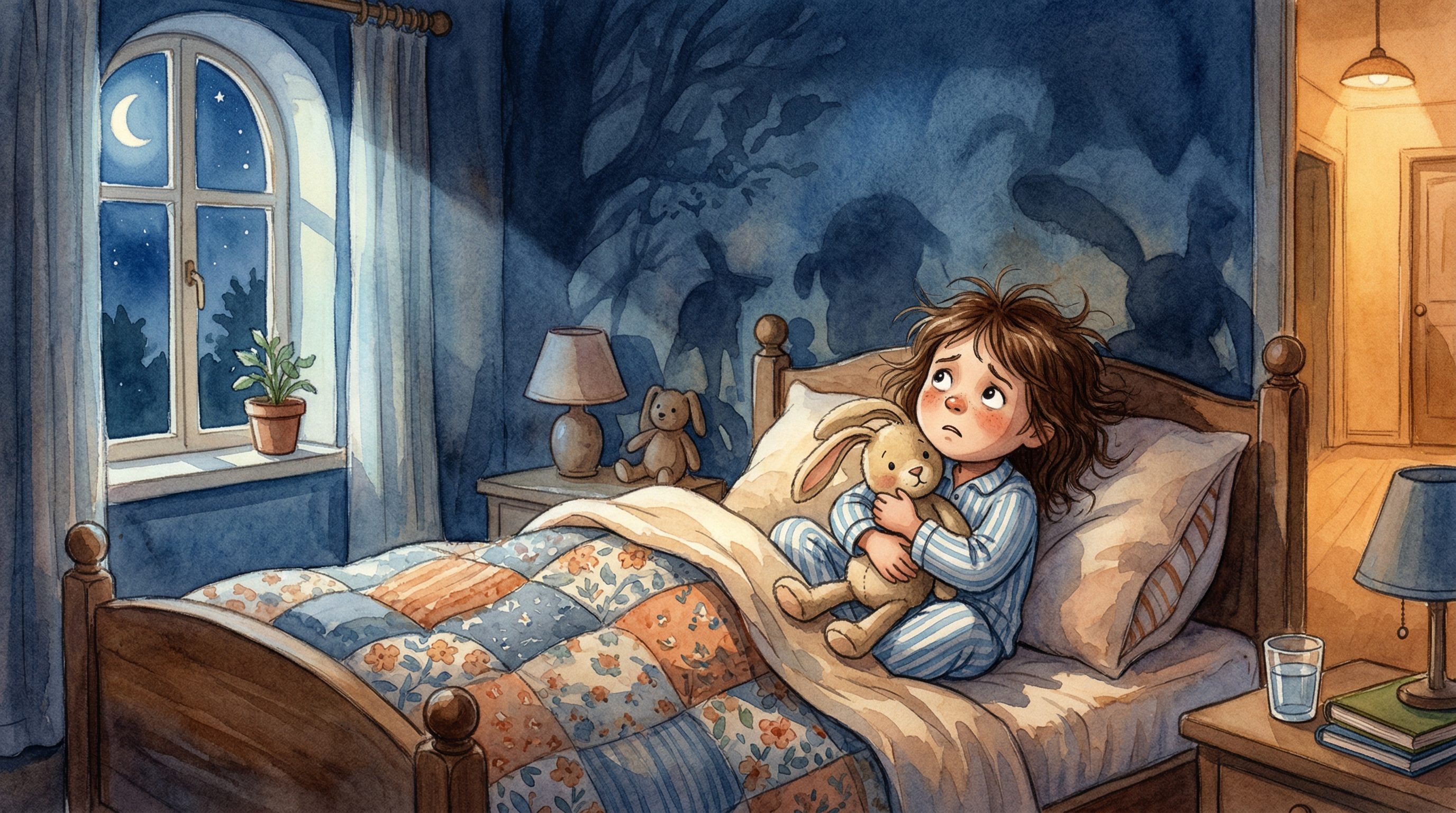
What the Bible Says About Fear (That Actually Helps)
There are a lot of "fear not" verses. Some of them land, some of them feel like empty reassurance. Here are the ones that actually cut to the root for kids:
Isaiah 41:10 — "Do not fear, for I am with you; do not be dismayed, for I am your God. I will strengthen you and help you; I will uphold you with my righteous right hand."
This one works because it doesn't just say "stop being scared." It gives a reason. I am with you. That's the whole thing.
Psalm 56:3 — "When I am afraid, I put my trust in you."
This is worth memorizing with your child — not because it's easy, but because it's honest. David wasn't pretending he wasn't afraid. He was afraid and he trusted God. That's the model. Not the absence of fear, but the presence of faith alongside it.
2 Timothy 1:7 — "For God has not given us a spirit of fear, but of power, love, and a sound mind."
Older kids can really grab this one. When fear shows up, it's not from God. God's gifts are power, love, and a clear head. That framing helps kids identify the fear and separate it from their identity.
Having the Conversation
Most dads tackle fear like it's a logic problem. Here are the reasons you don't need to be scared. And kids nod and then lie there terrified anyway, because fear doesn't respond to logic. It responds to presence.
Before you say anything, do this: ask first. "What's the scariest part?" Let them tell you. Don't interrupt. Don't correct. Don't reassure yet. Just listen to the whole thing.
You will be surprised what comes out. Kids rarely say the real thing first. The dark isn't actually about the dark — it might be about being alone, or a dream they had three weeks ago, or something they overheard that they don't fully understand. Let the whole thing come out before you respond.
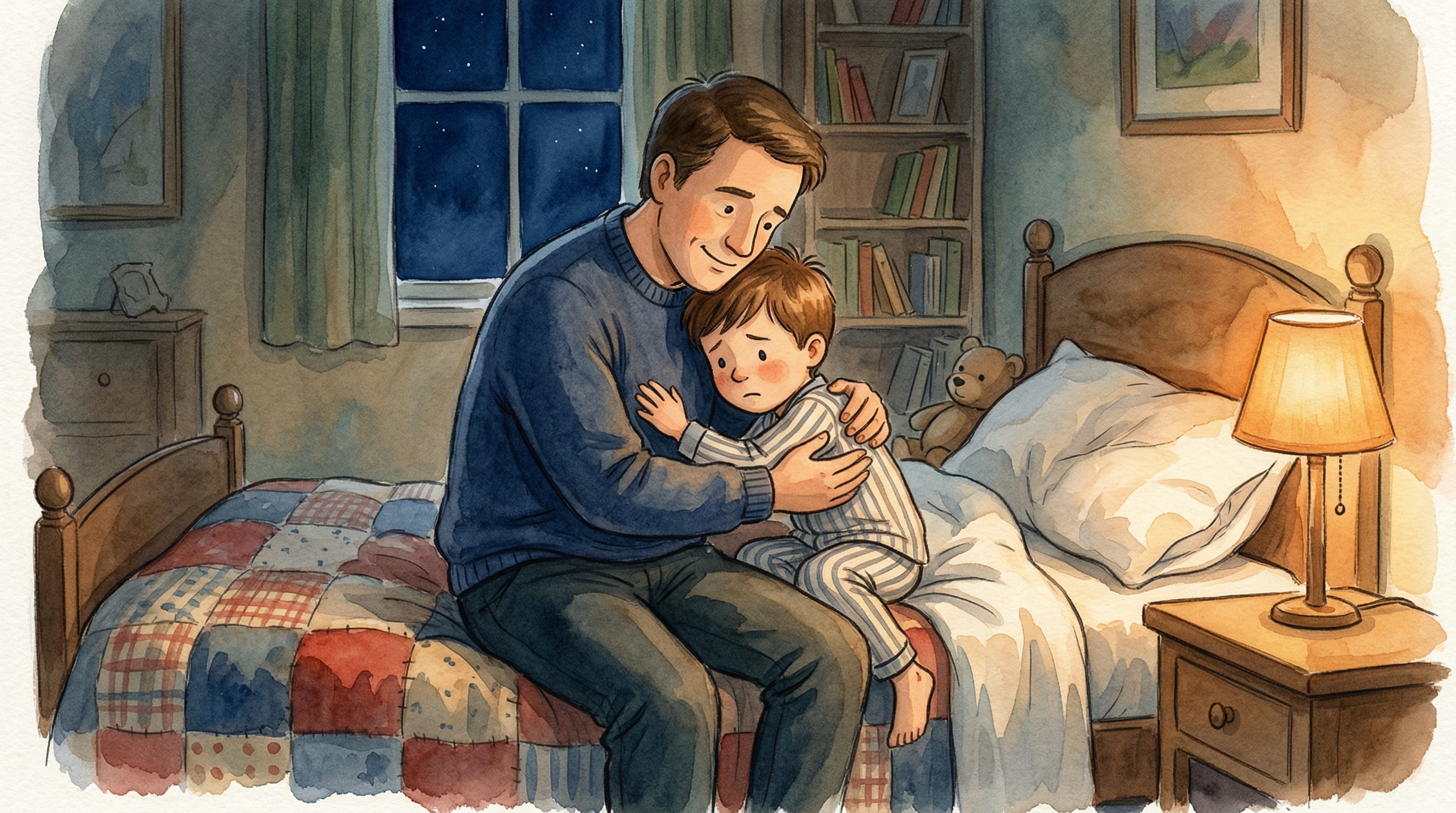
Then you can say: "That makes sense. That sounds really hard. Can I tell you something?" And you tell them what you know — about God, about his presence, about the fact that their fear is real and God already knows about it and hasn't left.
A Faith Practice for Fearful Kids
The research on anxiety in kids is clear: avoidance makes it worse, and gradual exposure paired with coping tools makes it better. Faith adds something to that: it gives kids a Person to turn toward when the fear spikes, not just a technique to try.
Here's a simple practice that works at any age:
Name it. Put the fear into words. "I'm scared that..." This alone reduces the power of fear — it moves it from the body into language, which gives your child agency over it.
Hand it over. Literally: have your child put their hands out flat, like they're holding something. "Put the fear in your hands. Now lift your hands up and give it to God." It sounds simple. It works. Physical actions anchor abstract truths for kids.
Replace it. You can't just remove fear — you have to put something in its place. A verse, a truth, a sentence your child can say back. "God is with me. I am not alone." Find the one that sticks for your kid and use it every time.
The Worry Warriors series on Hosted Devotions was built for exactly this — a devotional sequence for kids who are carrying fear and worry, designed to be read at bedtime when those feelings tend to peak. If your child is in a season of real anxiety, it's worth reading through together.
What Dads Can Model
Your kid is watching how you handle fear. Not just theirs — yours.
You don't have to pretend you're fearless. Honestly, pretending you're fearless is one of the least useful things you can do for a scared child. It tells them: the goal is to feel nothing. That's not faith. That's suppression.
What you can do is let them see what you do with your own fear. "I was nervous about that conversation at work. So I prayed about it on the way in." That sentence does more than a hundred devotionals. It shows your child that faith isn't for when everything is fine — it's for when it isn't.
When Fear Becomes Something Bigger
Some fear is normal. Some fear is a signal that something deeper is going on. If your child's fear is interfering with sleep, school, friendships, or daily life — if it's escalating instead of passing — it's worth talking to your pediatrician. There's no spiritual failure in getting support.
Faith and professional help are not in competition. God made doctors and therapists too.
For most kids, though, what they need is a dad who takes their fear seriously without amplifying it — who prays with them instead of just telling them to calm down — who shows them that being scared and being loved by God are not mutually exclusive.
If you want to dig deeper into specific fears, nighttime fears specifically get their own guide — bedtime is when fear peaks for most kids, and there are practical tools there. And if fear is bleeding into their sense of self — "I'm just a scared person" — the identity devotional is worth reading alongside this one.
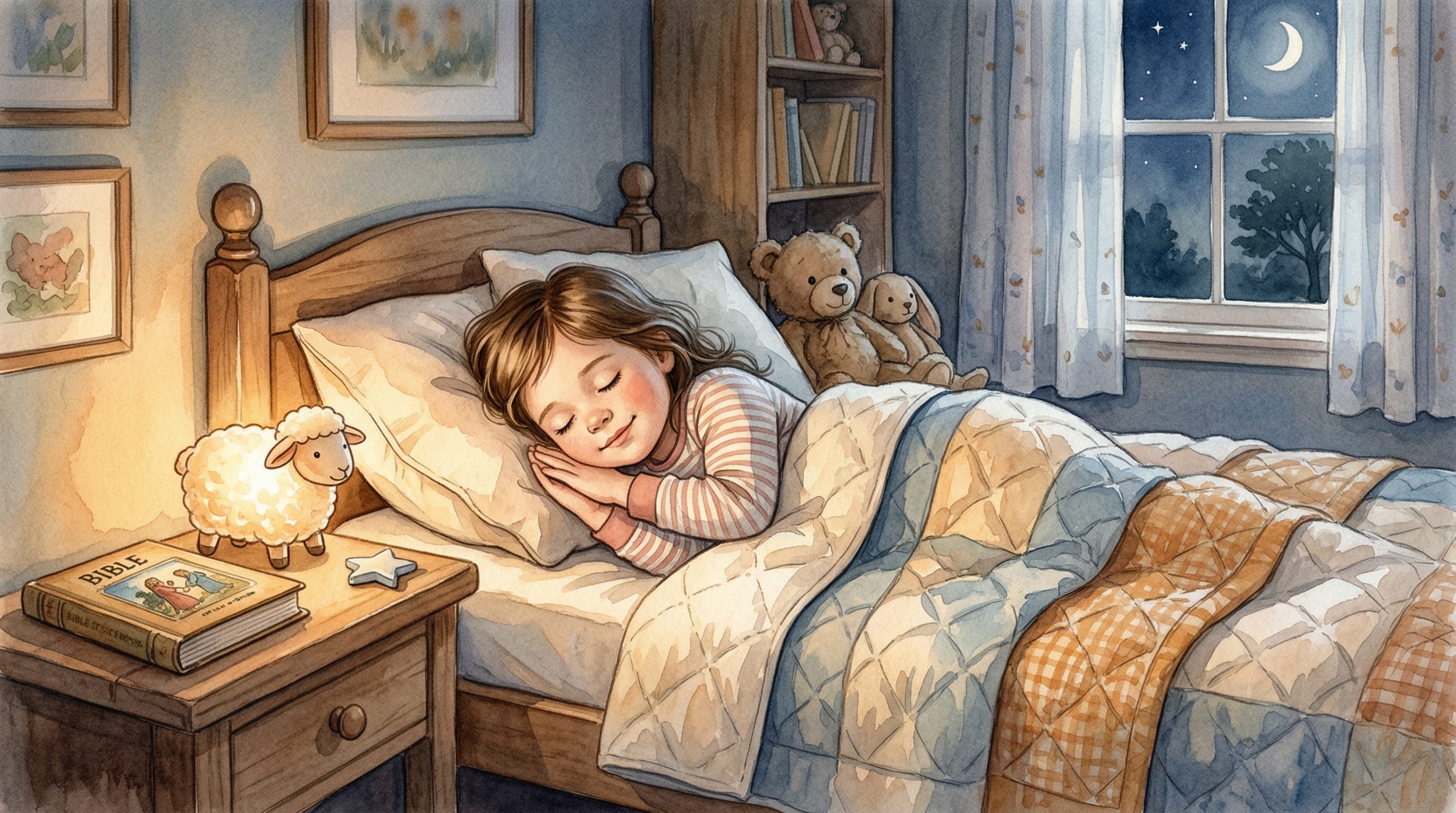
Teaching Kids to Recognize Fear vs. Wisdom
One thing worth teaching your child as they get older: not all fear is the enemy. Discernment fear is legitimate — that instinct that tells your child something is wrong in a situation, that this isn't safe, that this person isn't trustworthy. That kind of fear is worth listening to.
The difference is this: legitimate fear sharpens your thinking. Anxiety muddies it. When your child feels a spike of fear that helps them make a better decision, that's wisdom at work. When fear spins into "what if" loops that don't resolve — that's anxiety, and that's where faith steps in.
Teaching your child to ask "Is this fear helping me right now?" is a simple but powerful tool. If the answer is yes — listen to it. If the answer is no — bring it to God and let it go. That takes practice, but kids can learn it earlier than you'd think.
Fear Has Met Its Match
The message your child needs to hear isn't "stop being scared." It's: you're not alone in this, and the One who is with you is bigger than the thing you're afraid of.
That's not a platitude. That's the whole gospel.
Your kid being scared gives you an invitation — not a problem to solve, but a door to walk through together. The dad who walks through that door, who sits in the scared place with his child and points to God without flinching — that dad is building something that lasts.
📖 Read This Tonight
The Worry Warriors series was built for kids who are carrying fear and anxiety — short, honest bedtime devotionals that get to the root and point toward God's peace.
Get Notified When New Series Drop
We add new devotional series regularly. Sign up to hear about them first.
Join the Community