
The Tween Years Ask a Question Your Daughter Needs to Already Have an Answer For
I have sons, not daughters. So I want to be upfront about that before anything else. But I've heard from enough dads of tween girls — and looked closely enough at the research — to say this with confidence: the question that defines ages eleven through thirteen for girls is Who am I? And the answer they arrive at during those years tends to stick.
The world is offering answers to that question around the clock — social media, peer groups, performance metrics, appearance standards. Girls this age are absorbing signals about who they should be from dozens of sources simultaneously. A father's voice — speaking directly, consistently, from faith — is one of the few things that can compete with that noise. But only if it's actually in the room.
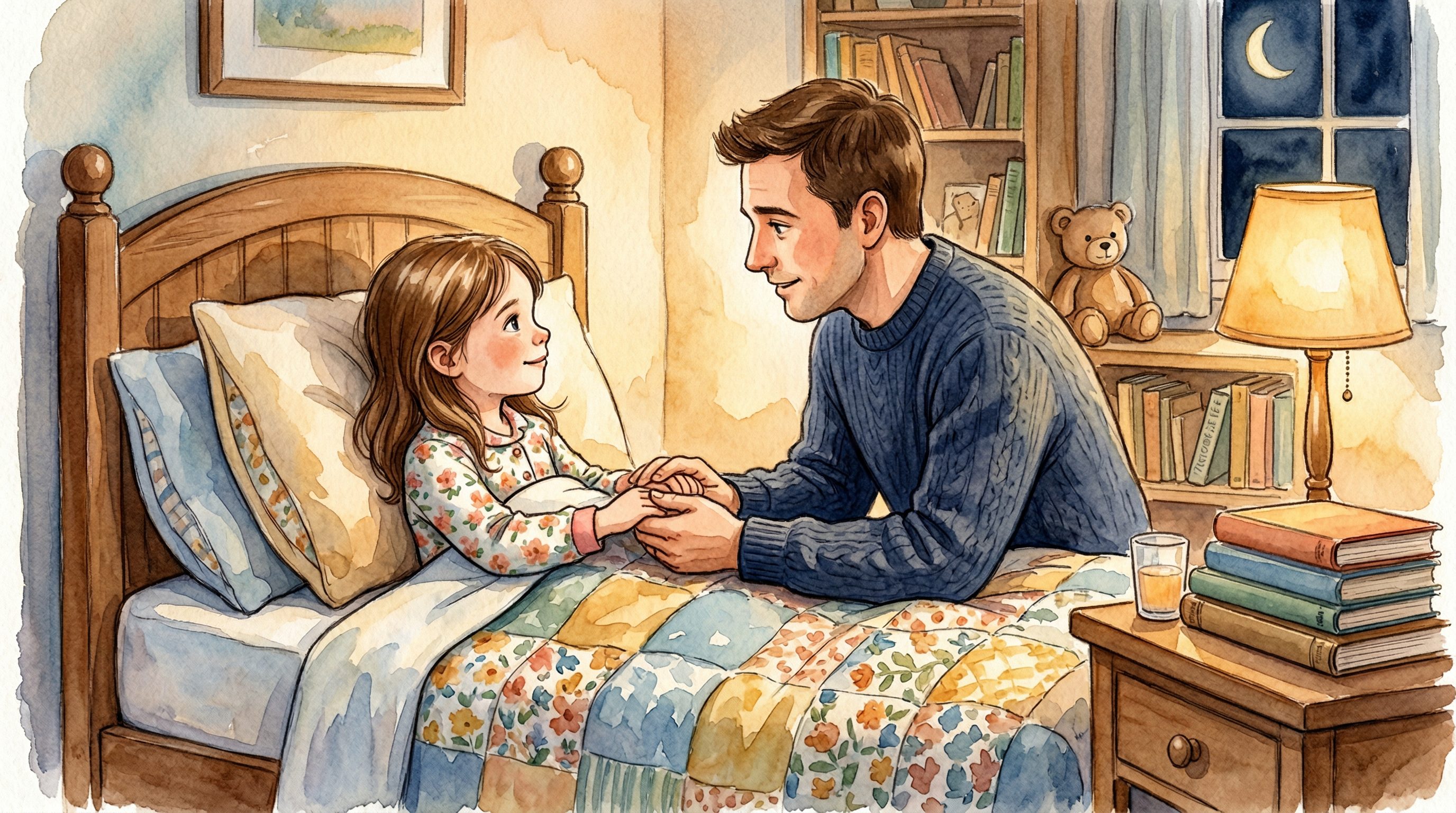
That's what devotional time does. It puts your voice in the room. Consistently, at the same moment every night, saying the same kinds of things: you are known, you are valued, you are my daughter and I see who you are becoming. Here's how to make it count.
What's Happening for Tween Girls Developmentally
The 11-13 range is one of the most turbulent developmental windows in a girl's life. Physically, emotionally, socially — everything is shifting at once. Researchers in adolescent development describe this period as a "second individuation" — girls are actively constructing a sense of self that's separate from their family, rooted more heavily in peer relationships and self-perception.
Studies have consistently found that girls' self-esteem drops more sharply than boys' during early adolescence — particularly around appearance, competence, and social belonging. This is the season when many girls begin to question whether they're enough, whether they fit, whether they matter. Those questions are going to get answered by something. The goal is to make sure faith — and your relationship — is part of the answer.
Fathers play a specific role here that the research makes clear. Girls who have engaged, present, affirming fathers during adolescence tend to have stronger self-esteem, more stable relationships, and better resistance to negative peer influence. The relationship itself is protective. Devotional time is one way to maintain that relationship even as the natural pull toward independence increases — and to do it in a way that feels natural rather than forced.
What Works for Tween Girls in a Devotional
Tween girls aren't looking for the same thing in devotional content that they needed at eight. Here's what actually lands:
- Honest engagement with hard emotions. Anxiety, loneliness, rejection, not knowing who you are — if the devotional doesn't name what's actually happening inside a tween girl, she'll tune out. Emotional honesty opens the door. Generic positivity closes it.
- Identity content that goes deeper than "you are loved." She needs to understand why she's worth something — grounded in her identity as a daughter of God and as your daughter — not just hear the statement. Thin affirmation doesn't hold up under sustained social pressure.
- Content about friendship and belonging. This is her world. Social dynamics at this age are intense and real. Devotionals that speak to what faith looks like in the context of friendship, conflict, exclusion, and loyalty connect directly to what she's living through every single day.
- Space for her to talk. Tween girls process through conversation. A devotional that leaves no room for her to respond is only doing half the work. Read something, then ask a real question — not a test question, a genuine one — and actually listen to the answer.

What a Dad's Voice Does That No One Else's Can
One of the most striking findings in research on fathers and daughters is how specifically a father's voice shapes a daughter's self-concept. Mothers matter enormously — but a father's assessment of his daughter tends to carry different weight, especially around worth and capability. Girls look to their fathers to understand whether they are valued, whether they are capable, whether they are enough.
When a dad shows up consistently for devotional time — reading something together, asking what she thinks, listening to what she feels, telling her what he sees in her — he's doing something the research says has lasting effects. You're not just doing a nice thing. You're shaping who she becomes.
The You Are My Daughter series on Hosted Devotions was built for exactly this kind of moment — content that gives a dad the words to speak directly to his daughter about her identity, her worth, and how known and loved she is. For dads who want to do this but aren't always sure what to say, it's a useful starting point that doesn't feel like a script.
For the identity topic specifically — which is the center of gravity for the tween years — the article on identity devotionals for girls goes into more depth on what content helps tween girls build a faith-rooted sense of self. And the article on father-daughter bedtime devotional ideas covers the practical setup if you're still working out the logistics of when and how to build the habit.
How to Keep the Habit Alive When She Pulls Back
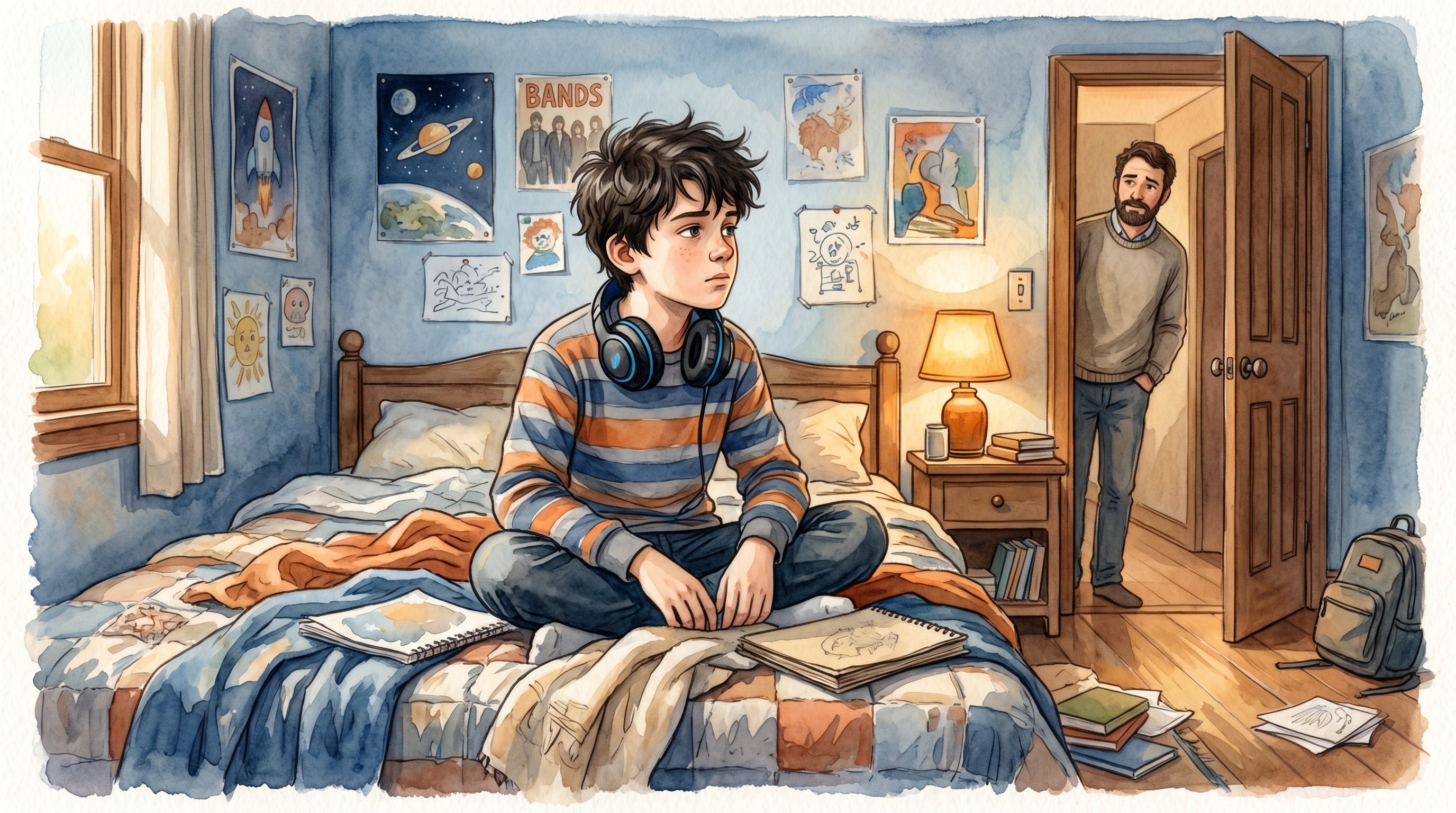
Some tween girls pull back from devotional time — not because they don't want connection with their dads, but because they're in a season of testing independence. If your daughter starts resisting, here's what tends to work:
Ask about her world, not just the reading. If she's not in the mood for the devotional content, ask about something she cares about. What happened with that friend situation? What's she thinking about lately? What's hard right now? Start with the relationship. The content can wait or come sideways through the conversation.
Let her choose sometimes. What does she want to read about? What questions is she sitting with? Giving her ownership of the content shifts the dynamic from something happening to her to something she's participating in — which is exactly the right dynamic for this age.
Be honest about your own limitations. I don't have daughters — and dads of daughters who are transparent about not always knowing exactly what to say tend to connect better with their girls than dads who project certainty they don't actually have. Tween girls respond to authenticity. If you're unsure about something, say so. If you don't know the answer, say that too. The honesty is part of the model.
What Consistent Devotional Time Actually Builds
It's worth being specific about what you're building during the tween years, because it's easy to get discouraged on the hard nights if you don't have a clear picture of the destination.
You're building a track record. Every night you show up — even when it's ten minutes and a short reading and she barely seemed to engage — you're adding to a record she holds of her father showing up consistently. That record is what she'll draw on at fifteen when something goes wrong and she has to decide who to call.
You're building vocabulary. The language you use in devotional time — about identity, about worth, about faith — becomes part of her internal vocabulary. When she faces a situation where someone diminishes her or she starts to doubt herself, she'll reach for language. Some of that language should come from your conversations together.
You're building a model of what it looks like for a man to take the inner life seriously. Tween girls are forming their picture of what men are, what they value, how they engage with hard things. A dad who shows up at bedtime, reads something meaningful, asks real questions, and listens to the answers — that's a model. One she'll carry into every relationship she has with men going forward.
None of this requires perfection. It requires showing up. The consistency is the thing. You don't have to say it perfectly. You just have to say it, and keep saying it, until it becomes part of who she knows herself to be.
Connecting to the Age-by-Age Picture
If you've been doing devotions since your daughter was in elementary school, the tween years are where that investment becomes most visible. The relationship is already there. The habit is already normal. You're not introducing something foreign — you're deepening something familiar.
For broader context on the 11-12 age range, the article on best devotionals for 11-12-year-olds covers the general landscape of what changes developmentally and how to navigate the common pushback. And the article on devotions for dads with tweens is a practical resource for the whole tween season — the habits, the hard nights, and how to stay in the room even when it's awkward.
The tween years are not the end of the conversation. They're actually one of the most important chapters in it — if you stay in the room. Your daughter needs you there. The devotional is one way to make sure you are, night after night, in a way that compounds into something she'll carry with her long after she leaves your house.
📖 Read This Tonight
The You Are My Daughter series gives dads the words to speak directly to their daughters about identity, worth, and belonging — in the context of faith and relationship. A natural fit for the tween years when those questions are loudest.
Get Notified When New Series Drop
We add new devotional series regularly. Sign up to hear about them first.
Join the Community