
Middle School Doesn't Kill the Habit — You Do (If You Stop)
There's a myth floating around in parenting circles that middle school is the end of meaningful conversations between dads and kids. The idea is that once they hit eleven or twelve, they shut down, close off, and all you can do is wait it out until they're seventeen and coherent again.
That's not true. But it does require adjusting your approach.
Eleven and twelve-year-olds are not too old for devotions. They're too old for devotions that treat them like they're eight. That's the actual problem. The content has to grow with them. The approach has to shift. And if you've been doing this consistently since they were younger, you have more runway than you think — the relationship you've already built is the most valuable asset in the room.
Here's how to navigate it.
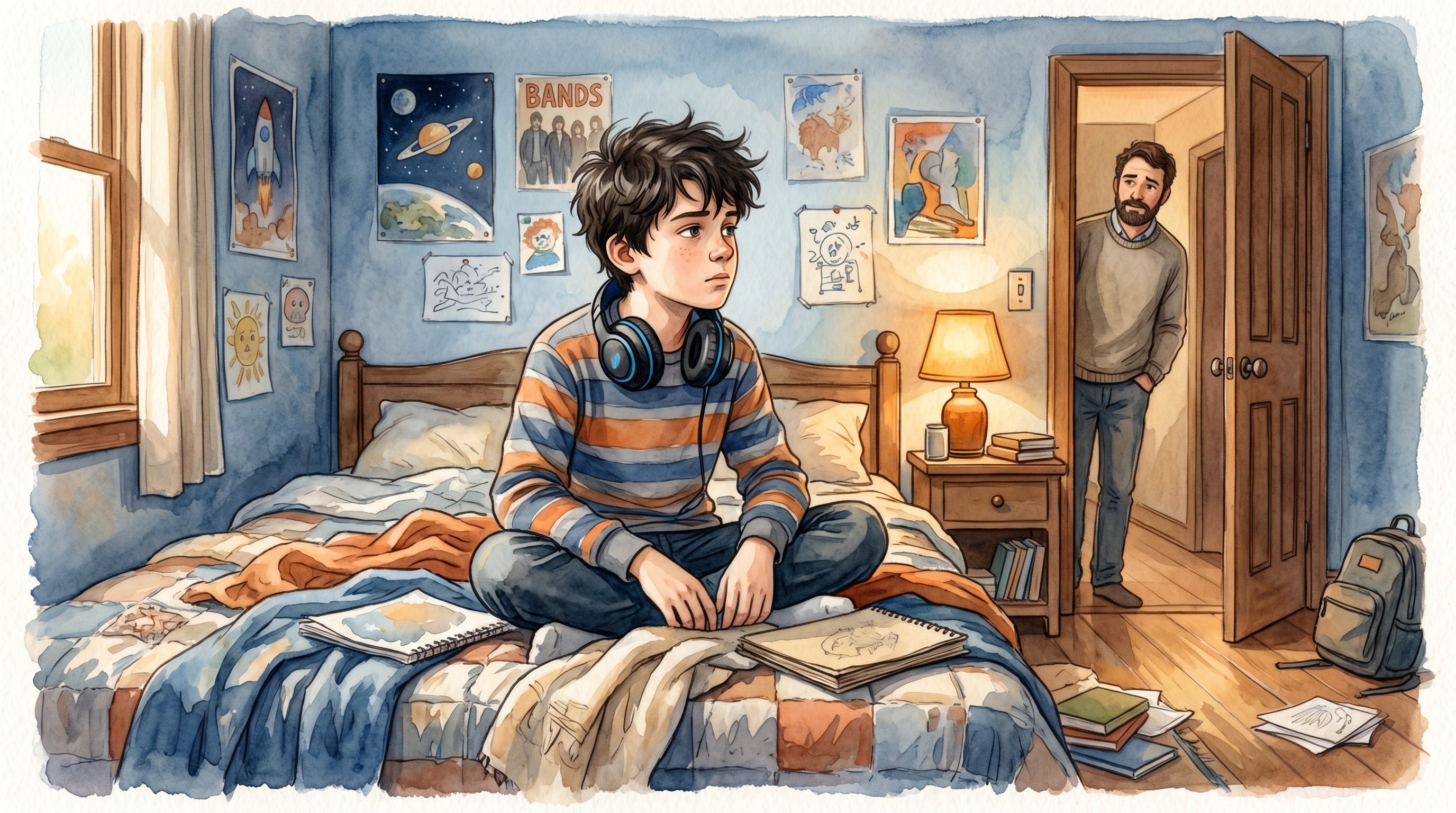
What's Actually Happening at 11 and 12
Early adolescence is one of the most dramatic developmental windows in a child's life. The brain is undergoing significant restructuring — the prefrontal cortex (decision-making, impulse control) is actively rewiring, while the limbic system (emotions, social sensitivity) is running hot. In simple terms: they feel everything intensely, and their ability to reason through those feelings is still catching up.
This is also when peer relationships become primary. Research from developmental psychology consistently shows that around age eleven, the peer group begins to compete with parents as the primary influence on values and behavior. That doesn't mean you're losing — it means you're in a competition for relevance. Dads who stay engaged at this age don't lose that influence. They just have to earn it differently.
In the faith context, this is often when doubt becomes more active. Not just hard questions, but actual wrestling. Some kids start to pull back from what they've been taught and test it against what they're experiencing. That's healthy — if there's a safe relationship to test it in. Your job is to be that relationship, not to stop the questioning.
The transition from ten to eleven is where many devotional habits stall out. The dad who successfully read with his nine-year-old doesn't adjust the approach, the content feels juvenile, the kid disengages, and the habit quietly dies. That's the pattern to avoid. It starts with understanding that what you're dealing with at eleven is genuinely different — not worse, just different.
What Works for This Age Group
After talking to a lot of dads navigating this season, a few patterns emerge for what actually keeps tweens engaged in devotions:
- Relevance over reverence. If the content doesn't connect to something happening in their actual life — friendships, school pressure, identity, social media — it's abstract noise. The best tween devotionals bridge scripture to real situations they can recognize.
- Their voice in the room. At this age, they need to feel like their opinions matter. Stop presenting devotions as content delivery and start presenting them as conversations. Ask what they think. Actually listen. Let them push back. The best sign a devotional is working at twelve is that they're arguing with you about it.
- Shorter is still better. Even though they can handle more complexity, the bedtime format still calls for brevity. Ten to twelve minutes maximum. Leave them wanting a little more rather than watching the clock.
- Consistent enough to feel normal. If devotions only happen when you're feeling spiritually motivated, tweens learn that faith is optional and situational. The habit — even when it's imperfect — signals that this is who we are as a family.
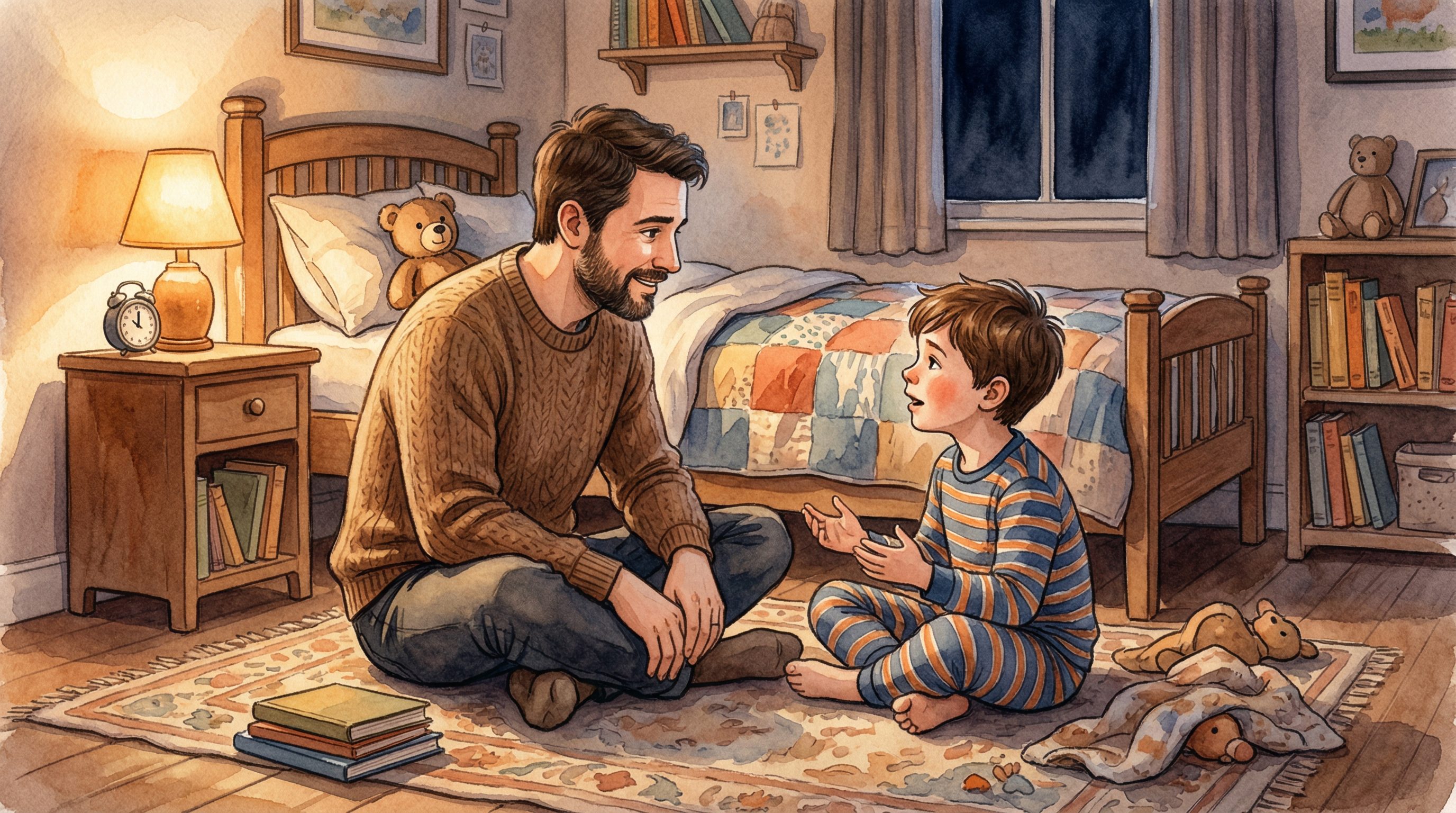
The Identity and Courage Conversation
Two topics dominate the tween years more than any others: identity and courage. Who am I? What do I stand for? What do I do when standing for it is hard? These questions live in the hallways of every middle school. The more clearly your kid has heard the answers from you — in the context of faith, in the context of relationship — the more stable they'll be when the pressure comes.
This is where the content really matters. A devotional that helps an eleven-year-old understand that their worth isn't tied to what their friend group thinks of them is worth more than a hundred feel-good readings about being kind. Practical, specific, faith-rooted content about real tween situations — that's what you're looking for.
The Legacy series on Hosted Devotions works especially well here because it's built around the father-child relationship as the core — not just as a setting but as the point. It's about what you pass down, and why it matters. For a twelve-year-old who's starting to figure out who they want to be, having a dad invest in that conversation is significant in a way that outside sources can't replicate.
If identity is the main thing your tween is navigating — which it almost always is — the article on devotionals for kids about identity covers that specific ground in more depth. And the article on devotions for dads with tweens is worth bookmarking as a practical reference for the whole season.
Connecting It Back to the Earlier Years
If you've been at this since your kid was younger, the content that worked then has built a foundation that makes eleven and twelve much more manageable. The habit is already normal. The trust is already there. Now you get to go deeper, not start over.
The best devotionals for 10-year-olds covers how to maximize that last pre-tween year — and if you're reading this with a kid who's just turned eleven, many of those principles still apply. The key insight is continuity. Kids who've had consistent devotional time with their dads don't suddenly become unreachable at eleven. The relationship is already there. The habit is already normal. The transition to tween content is just a gear shift, not a rebuild.
If you're starting at eleven or twelve — maybe the habit never quite got going — the approach is simpler than you might think: start with a conversation about something your kid actually cares about. What's hard right now? What are you thinking about? Then connect it to something. Don't lead with the devotional format if it feels foreign. Lead with the relationship, and introduce the content once you have traction.

When They Push Back
Some nights your eleven or twelve-year-old is going to be visibly done with this. They're tired, or they had a hard day at school, or they'd rather be on their phone, or they just don't feel like it. This is going to happen. Here's how to handle it without making it a standoff:
First, read the room. A kid who is emotionally wrecked from something social at school may not be able to engage with content. In that case, skip the reading and just be in the room. Ask what happened. Listen. That is the devotional for that night. Presence is the point.
Second, stay consistent without being rigid. If they push back on the content, ask what they'd rather talk about. What are they thinking about? What happened today that bothered them? Faith conversations don't have to follow a script. Some of the best ones happen sideways — through a question that leads somewhere unexpected.
Third, don't make it a power struggle. If you force a tween into a devotional, you will win the night and lose the relationship. Hold the habit loosely on hard nights. Keep the door open. They'll come back around — especially if you've been consistent enough that the habit feels like part of who you are together, not just something you make them do.
📖 Read This Tonight
The Legacy series was built for the long game — dads who want to pass something real to their kids before the teenage years take over. A strong fit for 11 and 12-year-olds who are ready for real conversations.
Get Notified When New Series Drop
We add new devotional series regularly. Sign up to hear about them first.
Join the Community