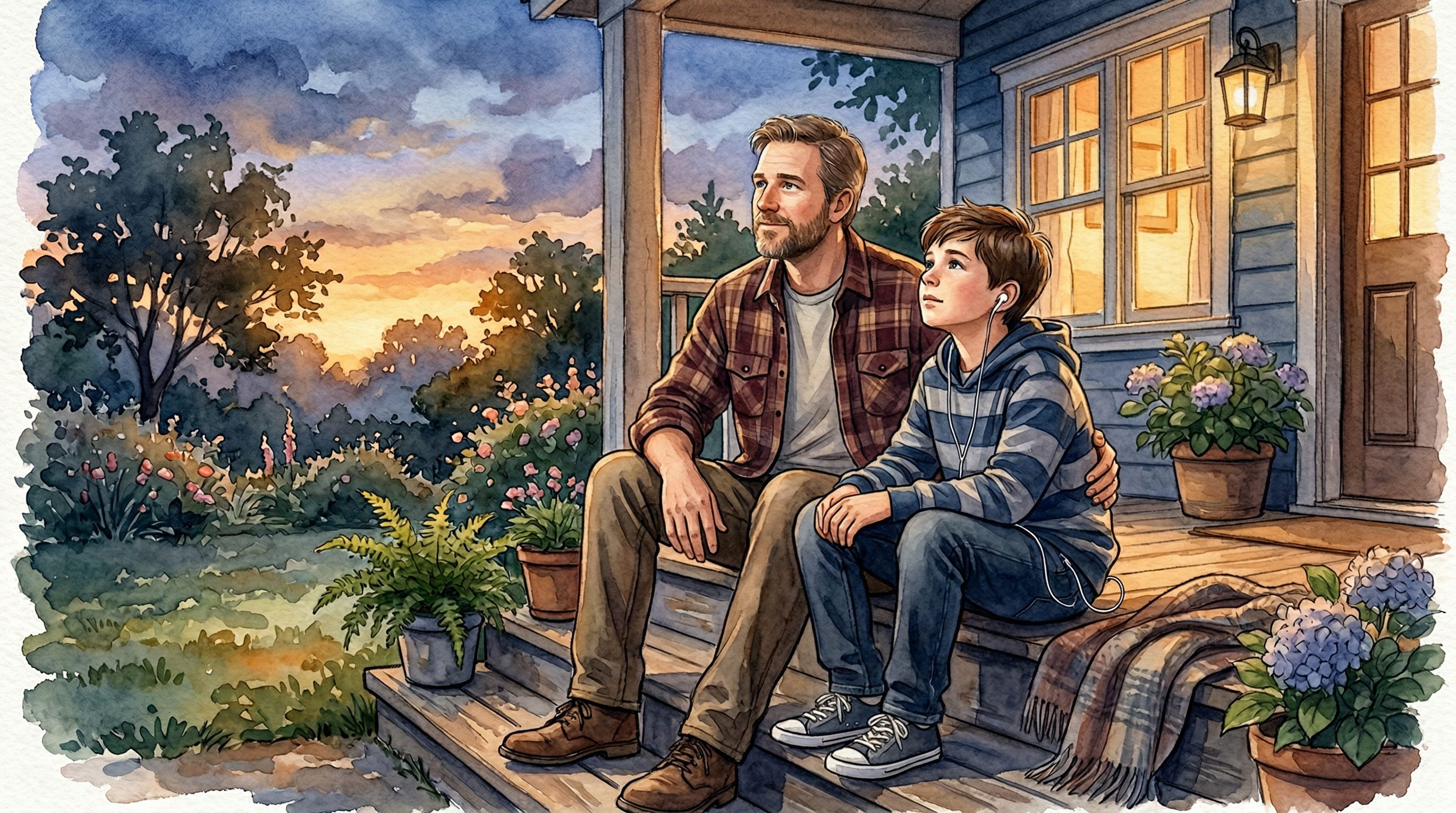
The Kid Who Used to Talk Your Ear Off Doesn't Want to Talk Anymore
When they were five or six, bedtime was easy. You could read anything — even the boring stuff — and they'd lie there with their eyes wide, hanging on every word. They'd ask twelve follow-up questions. They'd want to pray for the dog and the neighbor and the kid at school with the broken arm. It was almost too easy.
Then they turned ten.
Now it's one-word answers, distracted looks at the ceiling, and you're not even sure they're listening. You wonder if bedtime devotions are still doing anything. You wonder if you should bother.
This is exactly when you need to keep showing up. The window is smaller. The conversations are harder to start. But what you're doing at that bedside matters more now than it did when they were little — because the world is getting louder, the pressures are getting real, and you are the one voice that can still cut through.
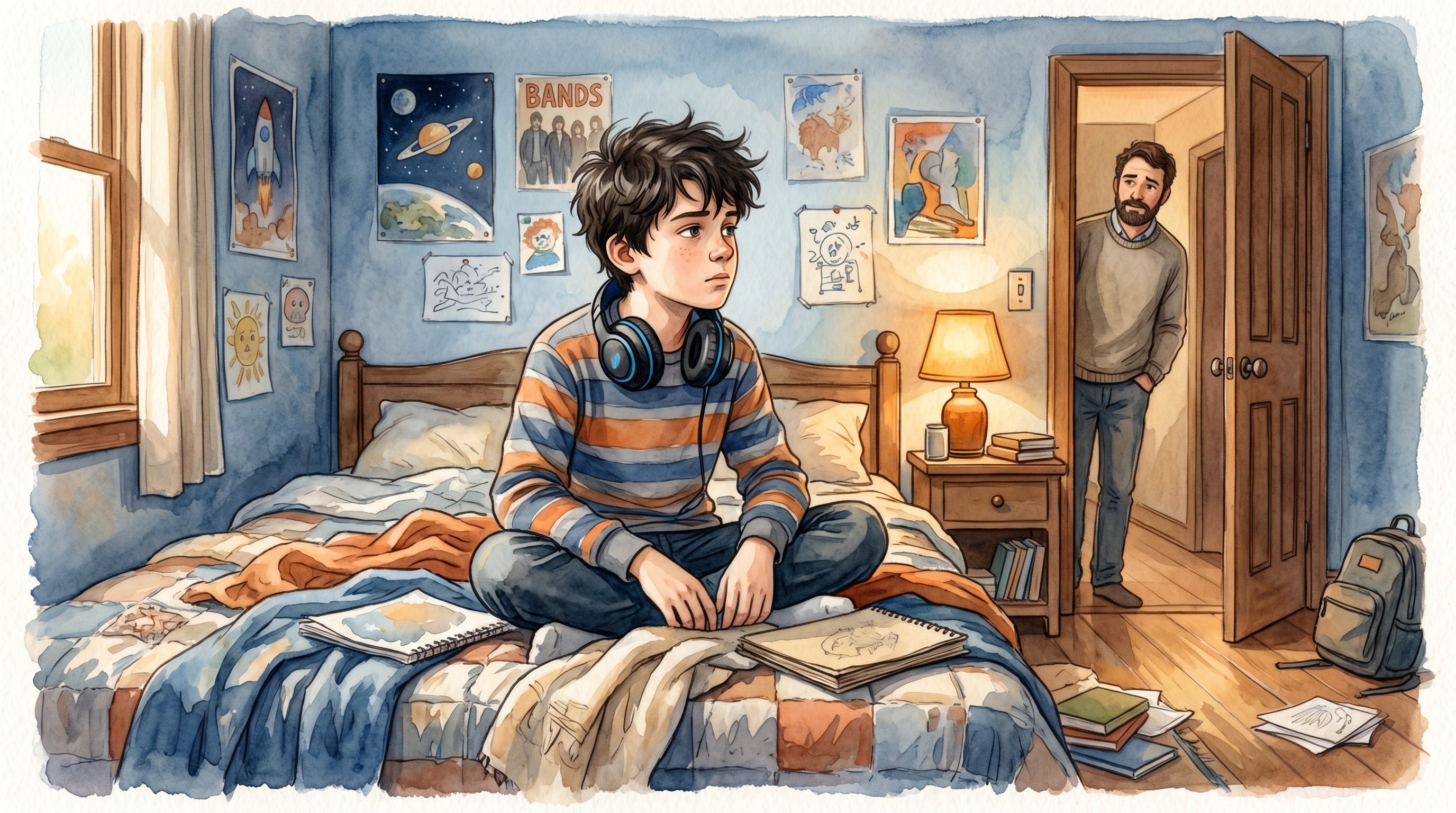
How Devotions Have to Change — And Why That's Good
With a little kid, you read to them. You're the guide, the interpreter, the one who explains what "grace" means and why God cares about sparrows. That's phase one, and it's a good phase.
With a tween, you shift. You're still leading — but now the best thing you can do is stop explaining so much and start asking. The reading becomes a starting point, not the whole thing. You finish a passage, you put it down, and you say: "What'd you think of that? Do you actually believe that?"
That second question is the important one. You're not quizzing them. You're inviting them to have a real opinion. And tweens — even the ones who seem checked out — have opinions. They just need to know the room is safe enough to say them out loud.
Here's the shift in three stages:
- Ages 4–7: You read to them. They absorb. They ask questions you may not have answers for.
- Ages 8–11: You read with them. They start to push back a little. You welcome it.
- Ages 11–14: They push back more. They might roll their eyes. Do not interpret the eye roll as disengagement. Keep going.
The eye roll is actually a sign they care enough to have a reaction. The kid who's truly checked out doesn't roll their eyes — they just disappear into their phone.
What to Read With a Tween (And What to Skip)
Most devotional content for this age group is one of two things: dumbed down or preachy. Neither works. Tweens have a finely tuned detector for being talked down to, and they have an equally sharp sense for when someone's trying to sell them something spiritually.
What actually works:
- Real stakes. Real characters who failed. David didn't just slay Goliath — he also made a mess of his life in ways worth talking about.
- Questions that don't have easy answers. "Why does God let bad things happen?" is a tween question. Don't dodge it.
- Content that respects their intelligence. They can handle depth. They just need it served without condescension.
- Short enough to actually finish. If a devotional takes 20 minutes to read, they've mentally checked out by minute four.
The Legacy 14-day series is built for this age range — it's about the kind of person they're becoming, the choices they're making now that will define them later. That's the exact conversation a tween actually needs, even if they'd never ask for it.
The Questions That Actually Open a Tween Up
Asking "what do you think?" after a devotional is fine, but it's vague enough that a tween can answer it with "I don't know" and shut the whole thing down. If you want real conversation, you need better questions.
Here are the kinds of questions that tend to actually land:
- "Do you think this is true, or does it sound like something adults just say?" — this gives them permission to be skeptical, and skepticism opens dialogue.
- "Has anything like this ever happened to you?" — connects the reading to their actual life instead of leaving it abstract.
- "What's the hardest part of this for you?" — not "is this hard" but "which part." It assumes some difficulty, which is honest, and it narrows the question enough to actually answer.
- "What do you think God would say to you right now if you could hear him?" — this one lands differently at 11 than it does at 6. At 11, there's real weight to it.
You're not fishing for the right answer. You're creating an environment where they feel safe having an answer at all. That's the whole job at this stage.
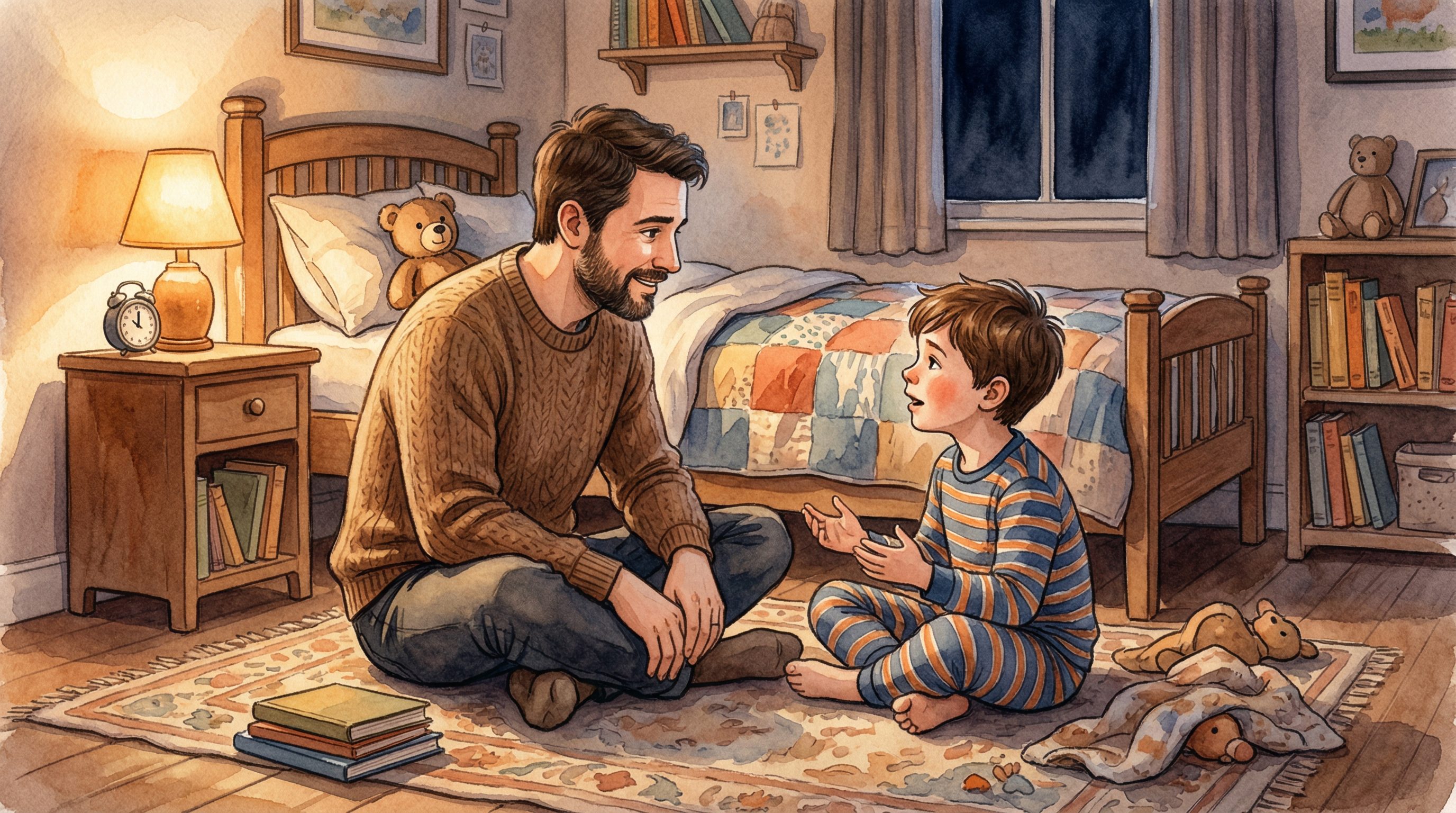
The Real Goal: Keeping the Conversation Going After the Book Closes
Here's something I've noticed: the best conversations don't happen during the devotional. They happen ten minutes after, when I'm about to leave the room. A kid will call me back. "Hey, wait. That thing we read — do you actually believe that?"
That question is the whole point. The devotional is the on-ramp. The conversation it opens — sometimes that night, sometimes at breakfast, sometimes three days later — is what you're actually building toward.
Tweens are processing more than they let on. They're forming real opinions about faith, identity, and what they believe. If you're in the room consistently, doing the devotional consistently, they learn that you are a safe place to bring those questions when they surface. That positioning — being the dad they come to with real questions — is worth every awkward night when they didn't seem to be listening.
If you've been doing devotions with a younger kid and you're nervous about how it'll evolve as they get older, check out this guide on starting bedtime devotions or this one on devotions with young kids — the foundations are the same, even as the approach changes.
What to Do When They Outright Refuse
It happens. One night they don't want to do it. Then another night. Then it's been two weeks and you're not sure how to restart without making it a big deal.
First: don't make it a big deal. A quiet "we're reading tonight" is better than a negotiation or an explanation of why it's important. They know why it's important. You've shown them. Now you're just being consistent.
Second: ask them what they want to read. Give them some say in the series. A tween who helped pick the devotional has a stake in it. One that was assigned a devotional has every reason to be checked out.
Third: be honest with them. If you've been inconsistent yourself — and most of us have — say so. "I know we've been off and on with this. I want to do better. I'm going to keep showing up even when it's awkward, and I'm asking you to hang in with me." That kind of honesty lands differently with a tween than a pep talk would. They're old enough to respect the vulnerability, and they're watching to see if your actions match your words.
Fourth: don't tie it to their behavior. "We're doing devotions because you've been struggling lately" is a fast way to make the devotional feel like punishment. Keep it separate. This is just what your family does.

The Long Game
You are not going to see the results of this in a week. Maybe not in a year. The dad who reads devotionals with his eleven-year-old is planting something that might not fully show itself until that kid is twenty-five, sitting in their own apartment, working through something hard, and thinking back to what their dad said in a dark room on a Tuesday night.
That's the long game. It's not measurable. It won't show up in any metric. But it's real, and it's worth doing, even when they roll their eyes and give you nothing back for weeks at a stretch.
The tween years feel like a wall. They're actually a door — one that doesn't open easily from the outside, but one that a consistent, present dad keeps available for them to open from their side when they're ready.
I think about the mission system a lot in this context. Every devotional ends with a mission — something your kid is supposed to actually do that day. At 11 or 12, the missions start landing differently. They're not just "tell someone you love them." They're about choices, character, how they treat people when no one's watching. That's the stuff that sticks. And when you call them out on it — "hey, how'd that mission go?" — you're not just following up on an assignment. You're telling them: I see you trying to become something. I'm paying attention.
That's a powerful thing for a tween to feel. Don't underestimate it.
Keep going. They need you there even when they act like they don't.
📖 Read This Tonight
The Legacy 14-day series is built for this exact moment — talking with your tween about the kind of person they're becoming and the choices that'll define them. Short, real, and no fluff.
Get Notified When New Series Drop
We add new devotional series regularly. Sign up to hear about them first.
Join the Community