
Something Changes at Eight
You'll feel it before you can name it. Your kid hits 8 and the conversations get heavier. Not harder — heavier. He's carrying more. He's aware of more. He's watching how you handle things, not just what you say about them.
Eight-year-olds are in third grade. They're navigating a social world that's gotten genuinely complicated — friendships with real stakes, classroom hierarchies, the first real awareness of who's "in" and who's not. They're old enough to feel the weight of that and young enough that they don't have the tools to process it without you.
This is the age where bedtime devotions either go deeper or lose the plot. The kid who tolerated a simple, feel-good devotional at 6 is going to call your bluff at 8 if the content isn't real. And honestly, that's not a problem — it's an invitation. An 8-year-old who pushes back on a devotional is an 8-year-old who's actually paying attention.
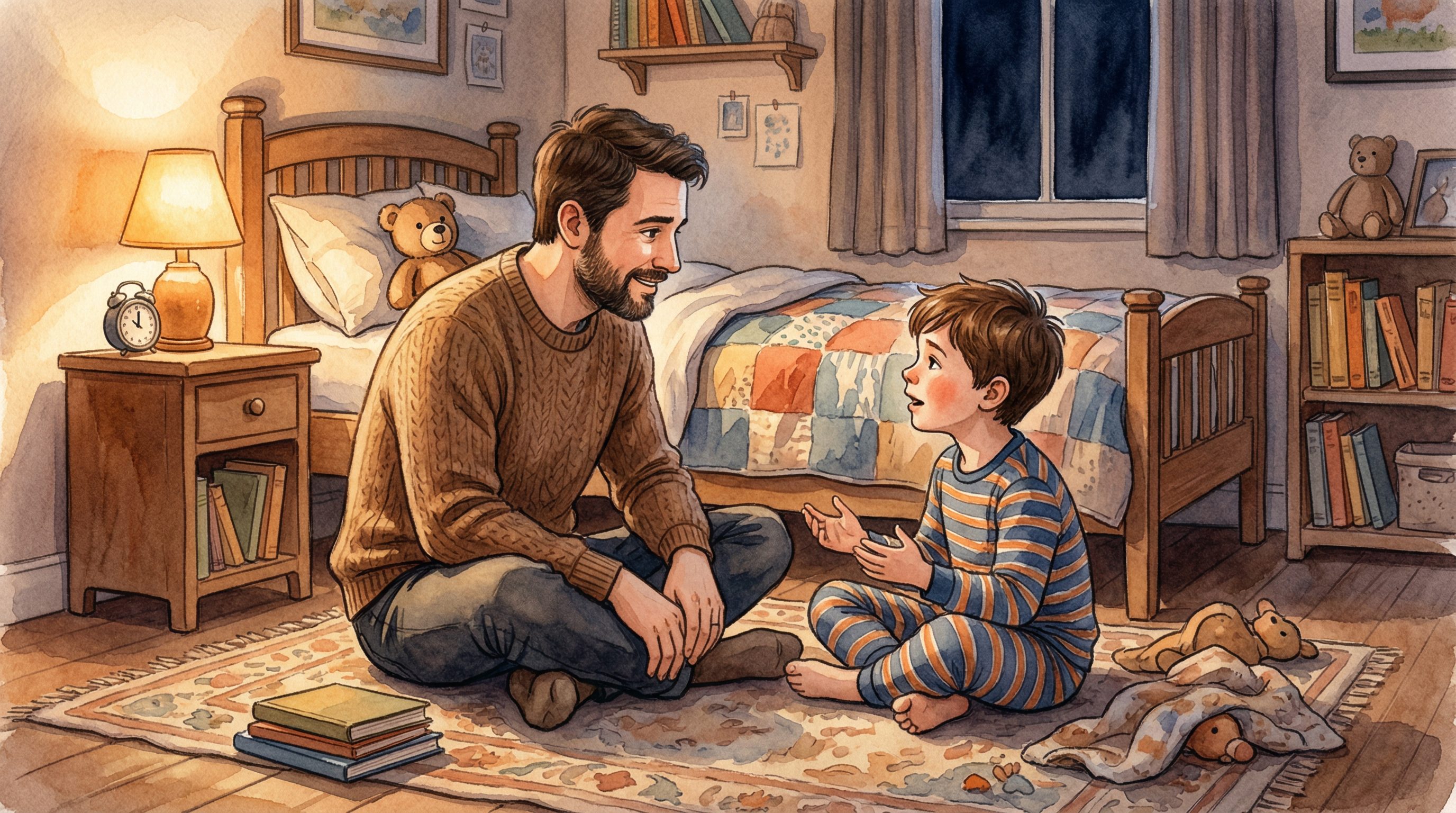
What's Different About 8-Year-Olds Developmentally
The shift at 8 isn't just social — it's cognitive. Kids this age are increasingly able to hold two ideas at once and compare them. They can think about their own thinking. They're starting to ask not just "what happened" but "why" and "was that fair" and "what would I have done?"
That changes what makes a good devotional. At 6 or 7, you're mostly telling stories and asking simple questions. At 8, you can start exploring tension. What if the right thing is also the hard thing? What does it mean to be brave when you're scared? These are questions an 8-year-old can actually sit with — and come back to the next day on his own.
Morally, 8-year-olds are developing a more nuanced sense of right and wrong. They're starting to see that intentions matter, not just outcomes. They're beginning to understand that the same action can mean different things depending on why someone did it. A devotional that respects that kind of reasoning — and builds on it — will hold their attention far longer than one that treats them like a younger child.
The key things to look for at this age:
- Content that respects their intelligence — no dumbed-down language, no oversimplified conclusions
- Topics tied to their actual world — friendship pressure, fairness, handling failure, what courage looks like in real life
- Space for pushback — 8-year-olds argue. A good devotional isn't threatened by that. It invites it.
- Something for the dad to chew on too — the best sessions at this age are dialogues, not lectures
- A question with no easy answer — not "what did you learn?" but "what would you have done in that situation?"
The Topics That Matter Most at 8
Based on what I've seen work — and what I know from dads using these devotionals — here's where 8-year-olds are actually hungry for depth:
Courage in the everyday. Not abstract bravery — specific, social courage. What do you do when you see a kid getting picked on and you're afraid to say something? What do you do when everyone else is going along with something you know is wrong? The Brave series was built specifically for moments like these. It doesn't treat courage as a superhero trait. It treats it as a daily choice — the kind of choice your son is facing right now, in real time.
Identity under pressure. Eight-year-olds are starting to be shaped by peers in ways they weren't before. Who they sit with at lunch. What they're good at compared to other kids. Whether they're picked first or last. The question of who they are — really are, not just what they're good at — becomes more urgent. A devotional that anchors identity in something that doesn't move does lasting work at this age.
What it means to be a good friend. Third-grade friendships are real. They're also messy. Loyalty, betrayal, inclusion, exclusion — your 8-year-old is living through all of it. A devotional that helps him think through friendship from a faith perspective gives him a framework he'll carry for years. Not "be nice to everyone" — but what it actually costs to be a loyal friend and why it's worth it.
Handling failure. Eight is the age when performance pressure starts to land harder. Sports, school, social — your kid is starting to measure himself. He's aware of his own mistakes in a way he wasn't at 6. A devotional that speaks honestly about failure, about how God uses it, and about what resilience actually looks like is exactly what an 8-year-old needs — not "you'll do better next time," but "here's what failure is actually for."
Honesty and trust. White lies, half-truths, covering for a friend — 8-year-olds are navigating the edges of honesty in ways that have real stakes. A devotional that takes that seriously, that doesn't just say "don't lie" but explores why truth matters and what it costs to protect it, is doing real moral formation.
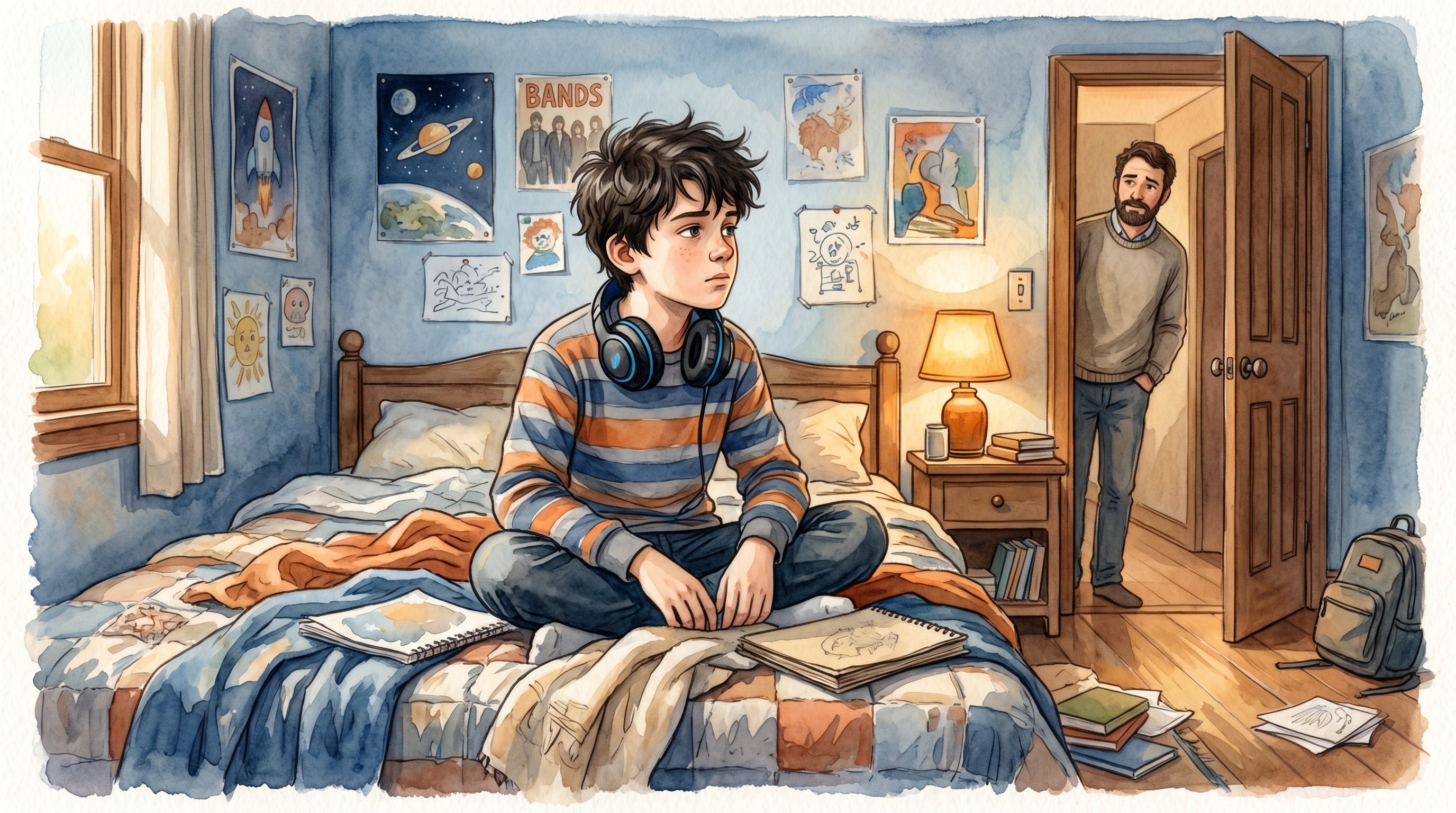
What to Avoid at This Age
At 8, some things will actively undermine your devotional time:
Content that's too young. This is the most common mistake. Parents find something that worked at 6 and keep going with it at 8. Your kid knows the difference. If he's rolling his eyes before you start, the content is probably not keeping up with him. Upgrade the material.
No real questions. A devotional that ends with "so remember to be kind!" is not a devotional — it's a reminder. Eight-year-olds need a real question that they can disagree with, push on, or come back to. The question is where the conversation happens. If you're skipping it because you're tired, you're leaving the most valuable part on the table.
No dad presence in the content. At this age more than any other, your kid is watching how you handle the same material you're putting in front of him. If you're just reading at him and then saying goodnight, he notices. The best devotionals for 8-year-olds give dads something to bring to the table too — a reflection, a question, a moment of honesty. "You know what, I've struggled with that too" is worth ten minutes of content.
Only positive content. Eight-year-olds don't need constant affirmation. They need truth — including hard truths that they can actually handle. A devotional that only tells a kid how great he is misses an opportunity to do the harder, more lasting work of character formation.
If you're just coming out of the 7-year-old season, this guide on 7-year-old devotionals is worth reading to understand what shifted — the progression matters. And for dads already thinking ahead to the tween years, this article on devotionals for tweens is the next chapter in the age sequence.
Building the Habit That Carries Through This Year
Eight is a tipping point. Either bedtime devotions become something real and rooted, or they drift into something you do occasionally and then stop doing entirely. I don't say that to add pressure — I say it because this age gives you an unusual opportunity.
Your 8-year-old still wants you in his room at night. He still wants to talk. He won't always. The habit you build this year is the one that's still standing at 10, 12, 14. That's what the consistency is actually for — not tonight's devotional, but the relationship underneath it.
A few things that make a real difference at this age:
Let the conversation go long sometimes. When your kid is talking — really talking — don't rush him toward sleep. The best nights are the ones that run a little over. He'll remember them. You will too.
Tell him about something you're working on. Eight-year-olds respect honesty. If the devotional topic hits something you're genuinely wrestling with — a hard conversation you need to have, a fear you're carrying, something you're trying to do better — say so. He'll take the material more seriously when he sees it's not just for him.
Don't skip the harder nights. The nights when your kid is upset, or sullen, or doesn't want to talk — those are often the most important ones. A short devotional and a quiet prayer says more than you think. Showing up when it's inconvenient is the message.
Connect it to the next morning. A quick check-in — even just a text if he's old enough, or a note in his backpack — that references something from the night before tells him the devotional wasn't just a bedtime ritual. It was a real conversation that you're still thinking about. That changes how he approaches the next one.
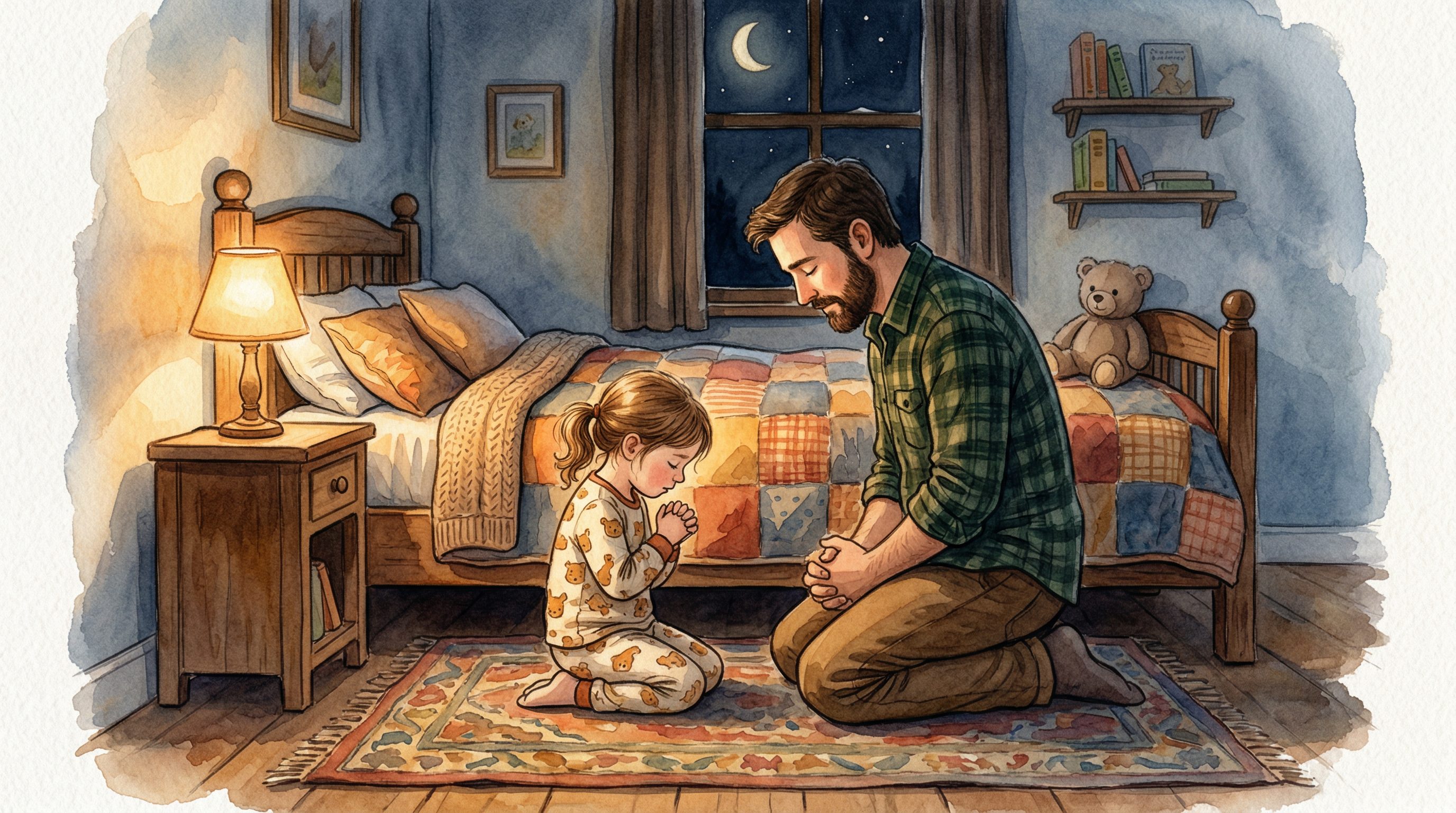
The Bottom Line on 8-Year-Old Devotionals
The best devotional for your 8-year-old is one that takes him seriously. That means real topics, real questions, and a dad who's actually in the conversation — not just facilitating it. It means content that has the same respect for his mind that you'd want him to have for yours.
For the next step in the age sequence, the best devotional for 9-year-olds covers what changes as kids approach double digits.
This age is a gift. Use it.
📖 Read This Tonight
The Brave series is built for 8-year-olds who are learning what courage actually looks like in everyday life — on the playground, in the classroom, with their friends. Real topics. Real questions. Start it tonight.
Get Notified When New Series Drop
We add new devotional series regularly. Sign up to hear about them first.
Join the Community