Seven Is Different — and You Can Feel It
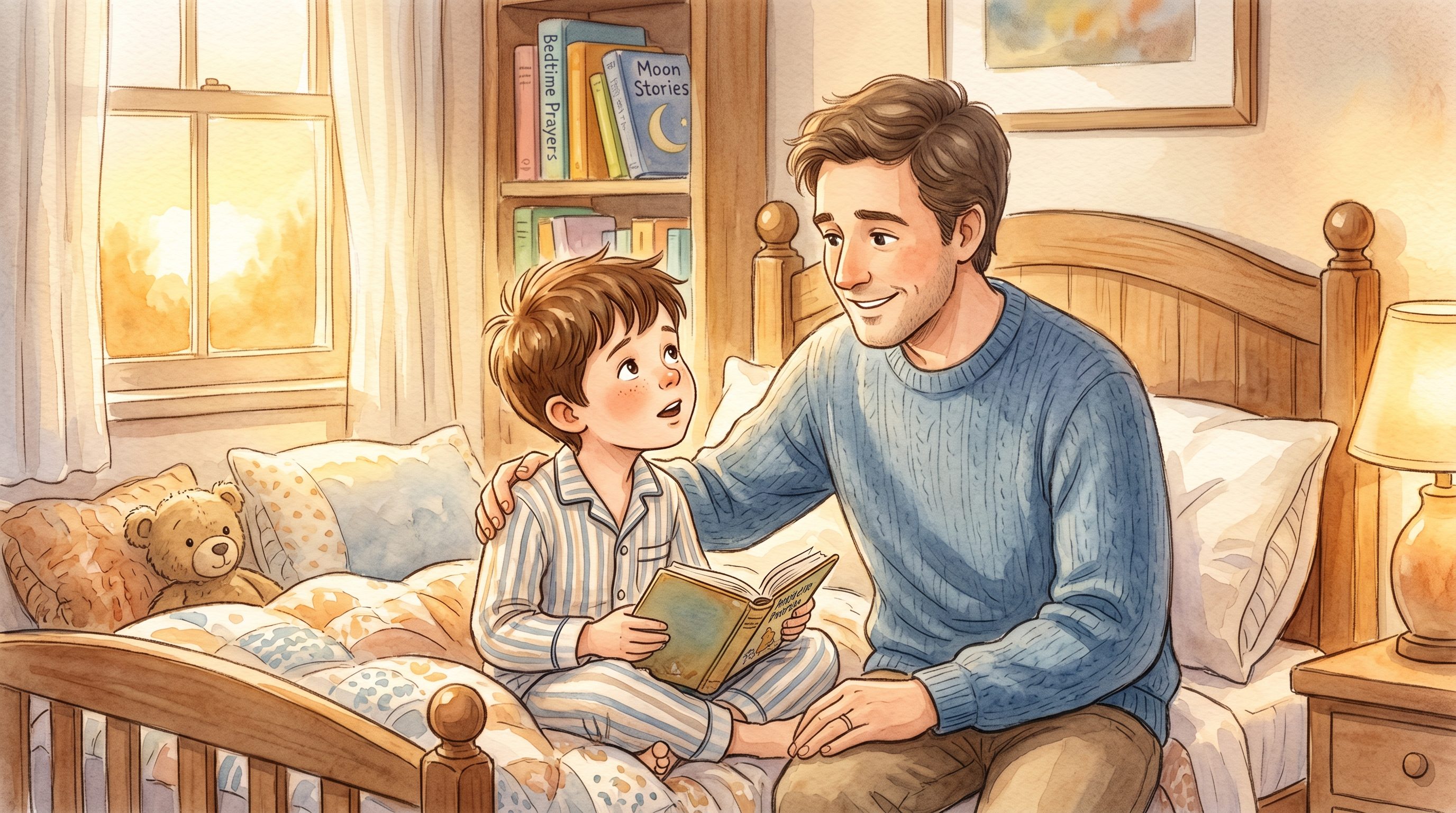
My older son turned 7 a few months back, and something shifted. Not dramatically — not overnight. But the bedtime conversations got longer. His questions got sharper. He started pushing back on things, not to be difficult, but because he actually wanted to understand them. Seven-year-olds are in the sweet spot.
He's old enough to track a real story. Old enough to ask "but why did God do that?" and actually want an answer. Still young enough that bedtime isn't something he's fighting — he still wants you there. That window doesn't stay open forever, and I'll be honest: I think about that sometimes.
If you're reading this because you want to start doing bedtime devotions with your 7-year-old, or because what you've been using isn't quite clicking anymore, you're in the right place. This is the age where it either becomes a real habit or quietly fades out. Let's make it stick.
What 7-Year-Olds Actually Need From a Devotional
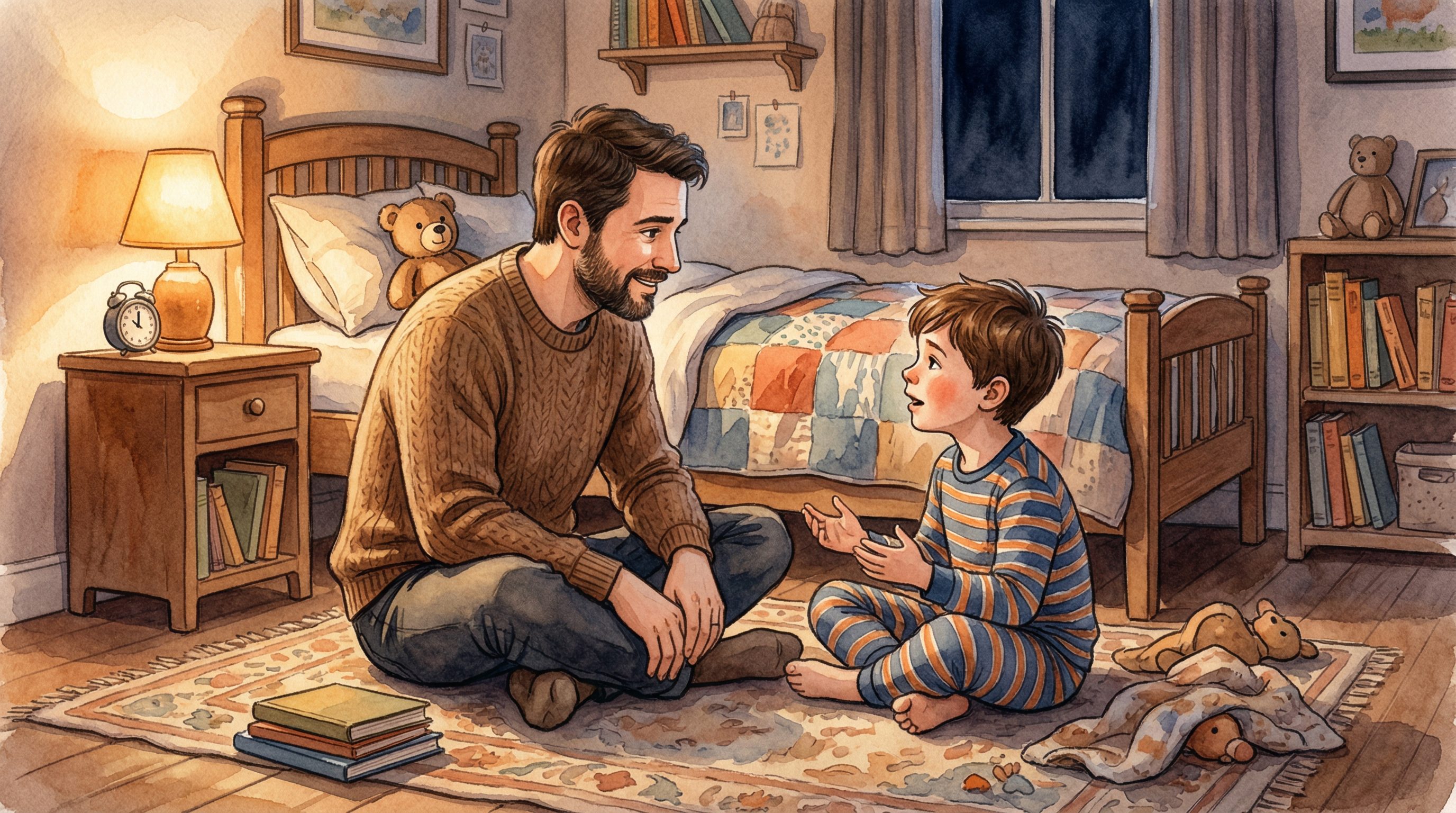
Before you grab any book or app, it helps to understand what's happening developmentally at this age. Seven-year-olds are in what educators call the concrete operational stage — they're building their ability to reason, but they still anchor understanding in real, specific examples. Abstract theology bounces right off them.
What lands? Stories. Clear cause-and-effect. Questions they can actually answer. A devotional that says "God's grace is boundless" and moves on is a waste of the moment. A devotional that tells a specific story, draws a clear connection, and then asks "so what do you think that means for you?" — that one works.
Seven-year-olds also have a growing sense of fairness and justice. They're constantly evaluating what's right and wrong, sometimes out loud at you during dinner. Good devotionals for this age tap into that instinct. They don't just say "be kind." They help a kid think through why kindness matters and what it costs.
Here's what I look for in a devotional at this age:
- Story-driven content — not bullet points or definitions. A narrative a kid can follow and remember.
- A real question at the end — not "what did you learn tonight?" but something specific that sparks actual conversation.
- Short enough to hold attention, long enough to matter — around 5 minutes is the sweet spot for most 7-year-olds.
- Language a kid can actually understand — no jargon, no church-speak
- A Dad's part — something for you to reflect on or pray through too, not just reading at them.
The Problem With Most Devotionals for This Age
Most devotionals on the shelf at your local Christian bookstore were written for Sunday school classrooms, not bedtime. They're designed for a teacher in front of 20 kids, with worksheets and discussion guides and craft projects. That's not what you're doing at 8:30 p.m. in your son's room.
The other problem: a lot of them are written at 10-year-old reading levels with 7-year-old pictures. The content assumes a vocabulary and an emotional maturity that most second-graders don't have yet. You end up either simplifying so much that the devotional becomes pointless, or losing your kid entirely by the second paragraph.
Then there's the voice problem. Most devotionals don't sound like a dad talking. They sound like a devotional. There's a certain tone — formal, lesson-giving, slightly preachy — that kids pick up on immediately and tune out. If the content feels like homework, it becomes homework in their minds.

What the Best Devotional for a 7-Year-Old Looks Like
The best devotional for a 7-year-old is the one that creates actual conversation. Not the one with the best reviews, or the most pages, or the prettiest cover. The one where your kid is still talking about it ten minutes after you've said goodnight.
That happens when a few things are true:
The topic is something they're actually dealing with. A 7-year-old who just had a fight with his best friend at recess doesn't need a devotional about Noah's ark tonight. He needs something about friendship, or forgiveness, or what to do when someone lets you down. Relevance is everything at this age.
The dad is doing his own work. This is something I'd overlooked for a while. When I started using the Dad's Companion alongside the kids' devotionals, the conversations changed. Because I was thinking about the same themes from my own angle, I had more to say. I wasn't just moderating — I was actually in it with him.
The format is repeatable. Seven-year-olds thrive on routine. When devotionals have a consistent structure — read, discuss, pray — kids know what's coming and they settle into it faster. The familiarity isn't boring. It's safe.
If you're looking for a starting point, the You Are My Son series was built for exactly this age window. It's written in dad-to-kid language, short enough for a school night, and it gives dads a companion track to work through alongside their kids.
Age-Specific Topics That Hit Home at 7
Here's what I've noticed works at this age — topics where 7-year-olds are actually ready to go deeper:
Identity. Who am I? Why did God make me like this? Seven is when kids start comparing themselves to other kids in a real way — athletic ability, academics, friendships. A devotional that grounds identity in something more stable than performance is exactly what they need.
Courage. Not superhero courage — small-moment courage. Speaking up when something's wrong. Being kind to the kid no one's including. Telling the truth when lying is easier. Seven-year-olds face these moments constantly and mostly face them alone. A devotional that takes those moments seriously matters.
Emotions. Boys especially are often taught (by default) to push feelings down. A devotional that names emotions, gives them a framework, and connects them to faith builds emotional vocabulary that lasts. Seven is the right time to start.
What God is actually like. At 7, a lot of kids have a mental image of God as a referee — watching for mistakes, ready to call fouls. Devotionals that correct this picture and replace it with something true do lasting work.
If you're working through the 6-year-old stage with another kid at the same time, the best devotional for 6-year-olds covers that ground — it's a different approach for a slightly different developmental window.
How to Actually Make It Work at Bedtime
A few practical things I've figured out after doing this consistently:
Do it before the last check. Not after "one more cup of water" and two bathroom trips. Get in there before the stalling starts, while your kid still has some real attention left. In our house that means right after brushing teeth — before the room is completely dark and everyone's half asleep.
Don't rush the question. The discussion question at the end of a devotional is where the real thing happens. Don't fire it off and then say goodnight. Ask it, then wait. Seven-year-olds sometimes need a full ten seconds before they start talking. That silence isn't awkward — it means they're thinking.
Let them ask back. If your kid asks you something after the devotional — a question about God, about the story, about something they're carrying — don't deflect. That's the conversation you were hoping for. It doesn't have to be long. But it has to be real.
For more on building the routine itself, this guide on bedtime devotions covers the setup step by step.
And once your son turns 8, the approach shifts a little — he's ready to go deeper. Here's what the best devotional for 8-year-olds looks like.
The Dad's Role in Making It Work
Here's something I'd push back on if someone told me earlier: the devotional itself is not the most important variable. You are.
Seven-year-olds are at an age where they're paying close attention to whether you're actually there or just present. They notice if you're checking your phone between questions. They notice if you skip the end-of-devotional conversation because you're tired. They notice if the whole thing feels like something you're doing at them rather than with them.
On the flip side — when you're genuinely in it, they feel that too. When you ask the discussion question and then actually wait for the answer. When you say "that's a good question, I'm not sure I know" instead of giving a pat answer. When you close the devotional and just sit with him for a minute in the dark before you say goodnight.
That's the part no devotional book can give you. But it's also the part that makes the book matter. The content is the vehicle. You're the destination.
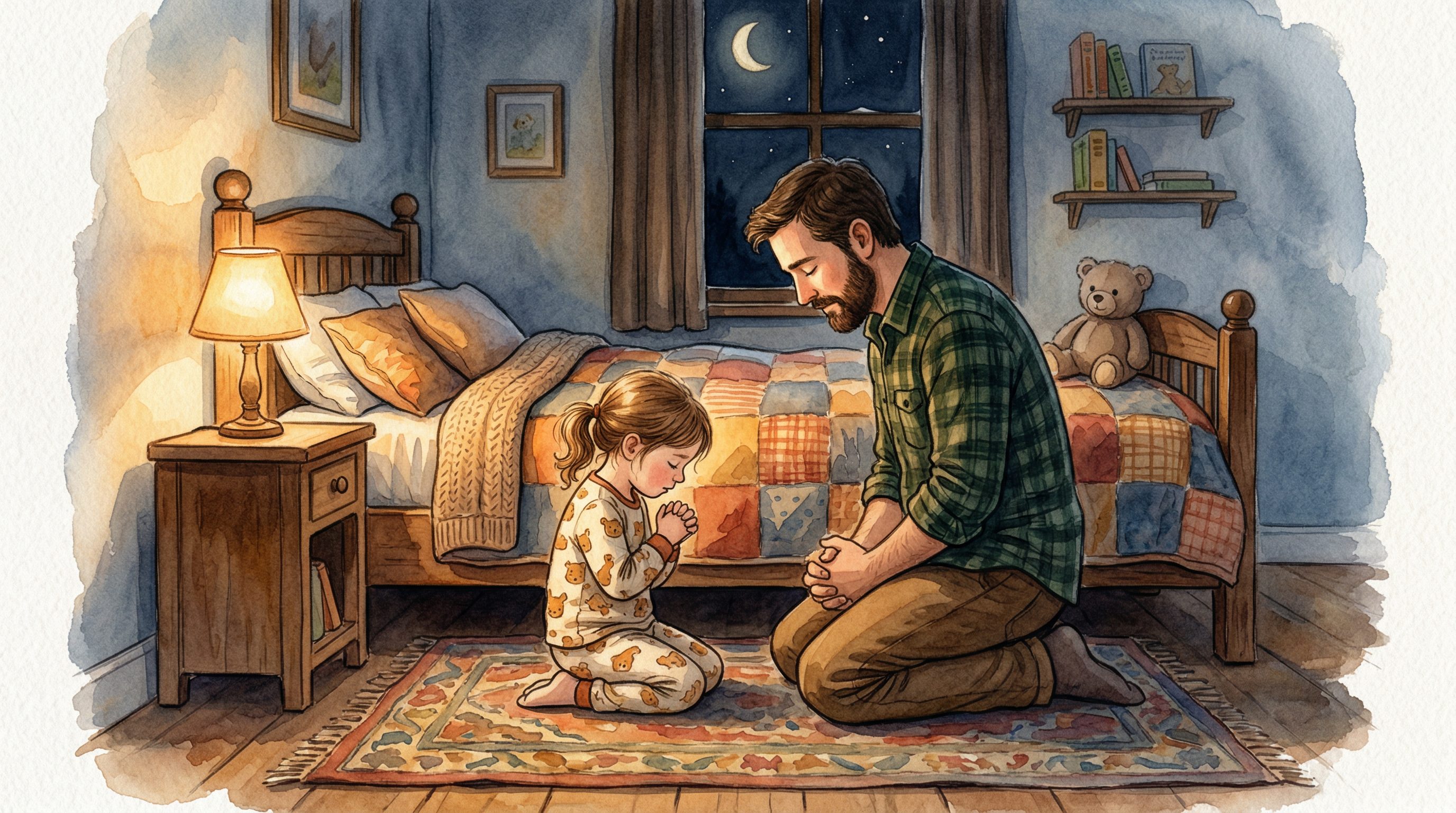
I'd also add: don't overthink the prayer. A lot of dads feel awkward about praying out loud with their kid. That's normal. But your 7-year-old doesn't need a polished prayer — he needs to hear his dad actually talking to God. Short, honest, specific. "God, help him be kind to that kid tomorrow. Help me be patient tonight. Thank you for this time." That's it. That's enough.
The Bottom Line
Seven is a gift. Your kid is curious, verbal, and still genuinely wants to spend time with you at night. That's not a given at every age. The devotional you pick matters less than the consistency you build and the conversations you actually have.
Start simple. Start tonight. The fact that you're reading this means you already know it's worth doing.
📖 Read This Tonight
The You Are My Son series was written specifically for dads and their boys — short enough for a school night, deep enough to matter. Browse the full library to find the right fit for your 7-year-old.
Get Notified When New Series Drop
We add new devotional series regularly. Sign up to hear about them first.
Join the Community