Nine Is When the Easy Answers Stop Working
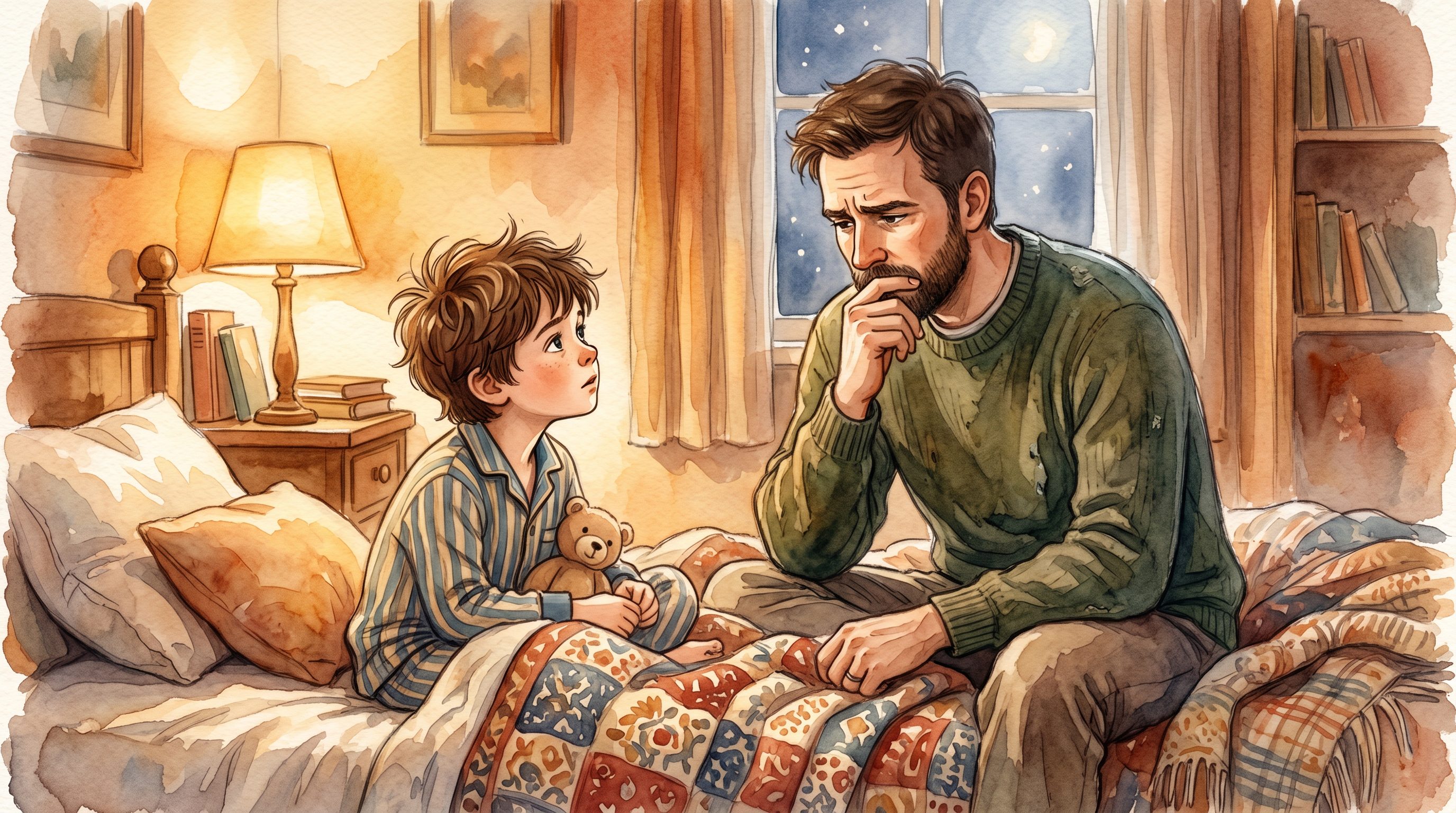
There's a shift that happens around age nine. Your kid starts asking questions that don't have tidy answers. Why did God let that happen? Does prayer actually work? How do we know the Bible is true? If you've been doing devotions for a few years, you've probably already felt it — the look on their face when a children's story Bible answer doesn't quite land the way it used to.
That's not a problem. That's actually a sign something is working. A nine-year-old who asks hard questions is a nine-year-old who's been paying attention. The mistake is trying to flatten those questions with easy answers instead of leaning in. The right devotional for a nine-year-old isn't one that avoids the hard stuff. It's one that walks right into it with you.
Finding that devotional is trickier than it sounds. Most kids' devotionals are written for the 6–8 age range — simple, illustrated, straightforward. The jump to something that actually engages a nine-year-old's growing mind takes some intention. Here's what to look for, and what's actually worked.
What's Actually Happening at Age Nine
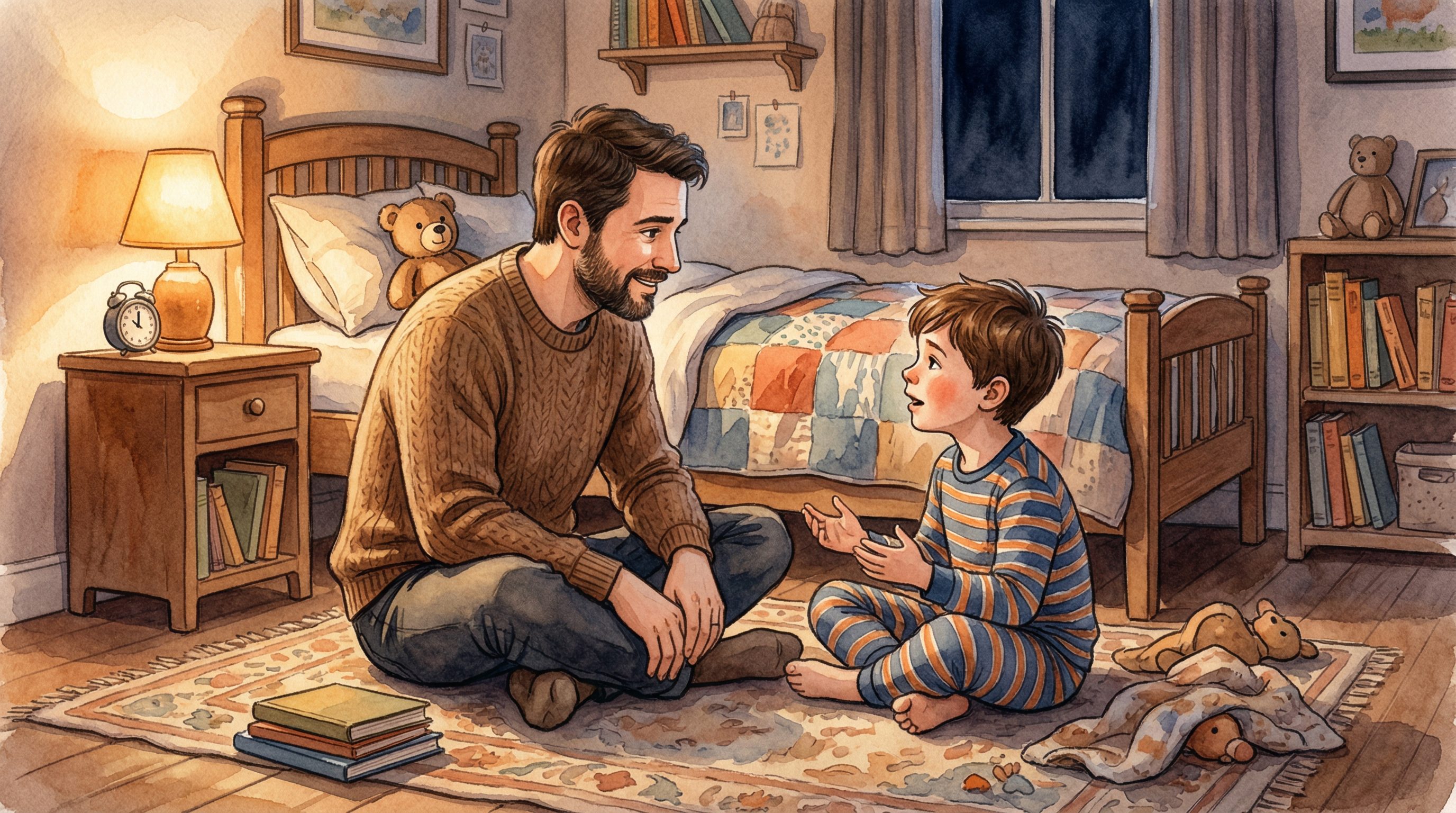
Around third grade, kids enter what developmental psychologists call the "age of reason." Their abstract thinking is developing. They can hold two ideas in tension — something good happened, but someone they love is still hurting. They're beginning to form their own moral framework, not just mirroring yours. And they're watching you closely to see if what you believe actually shows up in how you live.
This age is sometimes called a faith "window." Research from the Barna Group has found that a significant portion of people who maintain Christian faith as adults made key faith decisions before age thirteen. That doesn't mean you're racing a clock — it means this is a season where investment pays off. What a nine-year-old learns to do with doubt, with prayer, with hard questions — those patterns tend to stick.
So the devotional you choose should be doing more than delivering information. It should be modeling a way of engaging with faith — honestly, curiously, without pretending the hard questions don't exist. Nine is the age where you transition from reading to your kid to actually thinking with them. That shift matters, and the right devotional helps you make it.
What to Look for in a 9-Year-Old's Devotional
Here's what separates a devotional that actually works at this age from one that collects dust on the shelf:
- Honest about hard topics. Death, suffering, doubt, why bad things happen — if the devotional dances around these, your nine-year-old will notice. Look for content that names the hard stuff and engages it thoughtfully.
- Scripture with context. A verse by itself isn't enough at this age. Your kid needs to understand what was happening, who wrote it, why it matters. Brief context makes a big difference.
- Discussion questions that go deep. Not "what did you learn today?" but questions that prompt actual thinking. What do you think that means? Have you ever felt that way? What would you do?
- Appropriate length. Still short enough for a bedtime read — 5 to 10 minutes — but substantive enough that your kid doesn't feel talked down to. This is a trickier needle to thread than it sounds.
- Dad-friendly content. You're reading this too. If the devotional feels like homework, you won't keep doing it. Look for content that's actually interesting for both of you.
The Conversation That Changes Everything
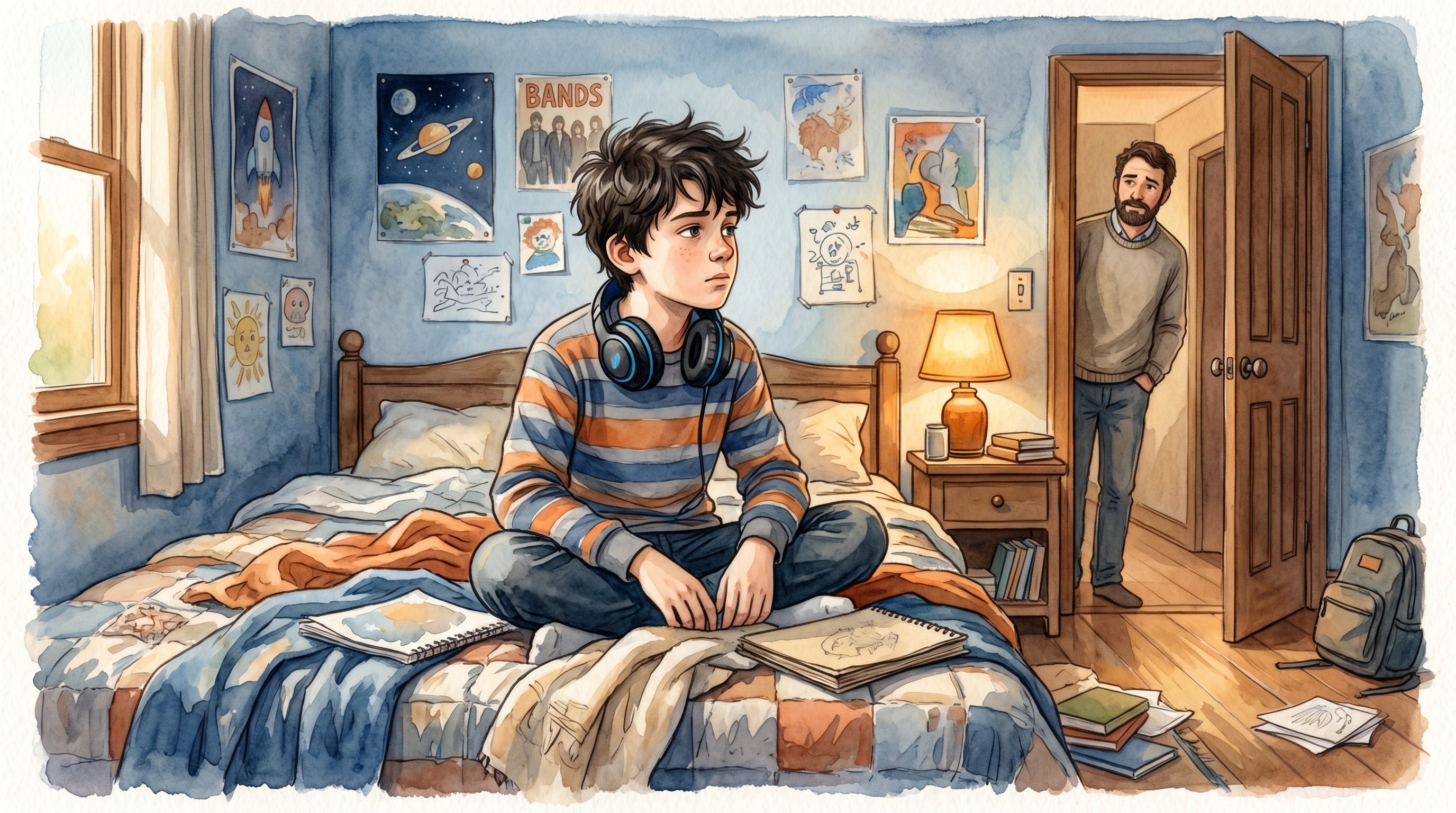
At nine, your kid is old enough to start understanding that you don't have all the answers either. That's actually a gift, if you use it right. Some of the best devotional moments happen when a dad says, "I've wondered about that too. I don't have a perfect answer. But here's what I've come to believe..."
That kind of honesty is worth more than a polished Sunday school response. It shows your kid that faith isn't about having everything figured out — it's about continuing to seek, to question, to trust. You're not teaching certainty. You're modeling a posture.
Nine-year-olds can also handle a slightly longer read than they could at six or seven. Eight to ten minutes is a realistic window — and if the content is engaging and they're asking questions, let it go longer. Don't cut a great conversation short because the clock says you should. Those extended bedtime moments are often the ones they remember longest.
If you want a starting point for deeper conversations, the Brave devotional series on Hosted Devotions was built for exactly this — helping kids (and their dads) learn to face hard things with faith instead of fear. It's written in a voice that sounds like a real conversation, not a lecture. And if your kid is specifically wrestling with questions about what they believe and why — which is very common at nine — the article on what to say when kids ask about God has a lot of practical language you can borrow in those bedtime moments.
Age-by-Age Context: Where Nine Fits
If you've been following this series, you know what works at six looks very different from what works at nine. The best devotionals for 8-year-olds still carry that concrete, story-based foundation. By nine, you're starting to bridge to something more relational — more dialogue, less delivery. The shift isn't dramatic, but it's real. Pay attention to when your kid starts asking questions mid-reading rather than waiting for permission. That's the signal.
And if you're already thinking ahead, the best devotionals for 10-year-olds takes this further into the pre-teen transition. Ten is when peer pressure starts to compete with what you've been building at home. Getting ahead of that curve matters. But for right now, nine is a genuinely good age. Your kid still wants to be with you. They still care what you think. The questions are getting harder, but the relationship is still wide open.
Making It Work at Bedtime
A few practical notes for the bedtime context, since that's when most of this actually happens:
At nine, kids can start taking turns reading. Let them read a passage out loud — it gives them ownership of the material and often prompts their own questions mid-read. Try it once and see what happens. Some kids light up when they realize they're not just listening, they're part of the reading.
Nine-year-olds are also old enough that silence doesn't have to be filled immediately. Ask a question. Sit with it. Don't rush to answer. Your kid is thinking — let them think. The pause is doing work.
If your kid resists some nights, don't fight it. Ask one question instead: What do you think God thinks about [whatever topic]? You don't need to read anything. Just plant the question and let the night do the rest. Nine-year-olds will often come back to those questions on their own — sometimes days later in the car, at the dinner table, or right before they fall asleep. The conversation continues after the light goes out.

A Final Note on Consistency
The biggest factor in whether devotions work at nine — or any age — isn't the quality of the content. It's consistency. Three nights a week for six months beats one perfect devotional time a week. The habit signals something: this matters to our family, this is who we are. That signal lands whether or not the conversation was particularly memorable that night.
If you haven't started yet, nine is a great age to begin. There's no catching up to do. Pick something, sit down tonight, and read it together. The questions will come.
📖 Read This Tonight
The Brave series is built for kids who are old enough to ask hard questions — and dads who want to face those questions together. A great fit for nine-year-olds stepping into deeper faith conversations.
Get Notified When New Series Drop
We add new devotional series regularly. Sign up to hear about them first.
Join the Community