
Even the Greatest Bible Heroes Had Meltdowns
Moses threw stone tablets. Jonah got so angry he told God he wanted to die. David wrote an entire book of psalms about feeling scared, abandoned, and overwhelmed. These aren't footnotes — they're the main story.
So when your seven-year-old loses it because his brother took his LEGO piece, or your daughter melts down because today was hard and she can't even explain why — they are not uniquely broken. They're in very good company.
Teaching kids emotional regulation through Bible stories isn't about slapping a scripture verse on a tantrum. It's about showing your kid that the Bible doesn't pretend emotions away — it shows people who felt things deeply and had to figure out what to do with that.
Why Most Emotional Regulation Advice Doesn't Stick
You've probably tried the usual stuff. Deep breaths. Count to ten. Use your words. And those aren't bad — but most kids hear those phrases in the moment when they're already flooded, already past the point where the advice is useful. You can't teach a kid to swim while they're drowning.
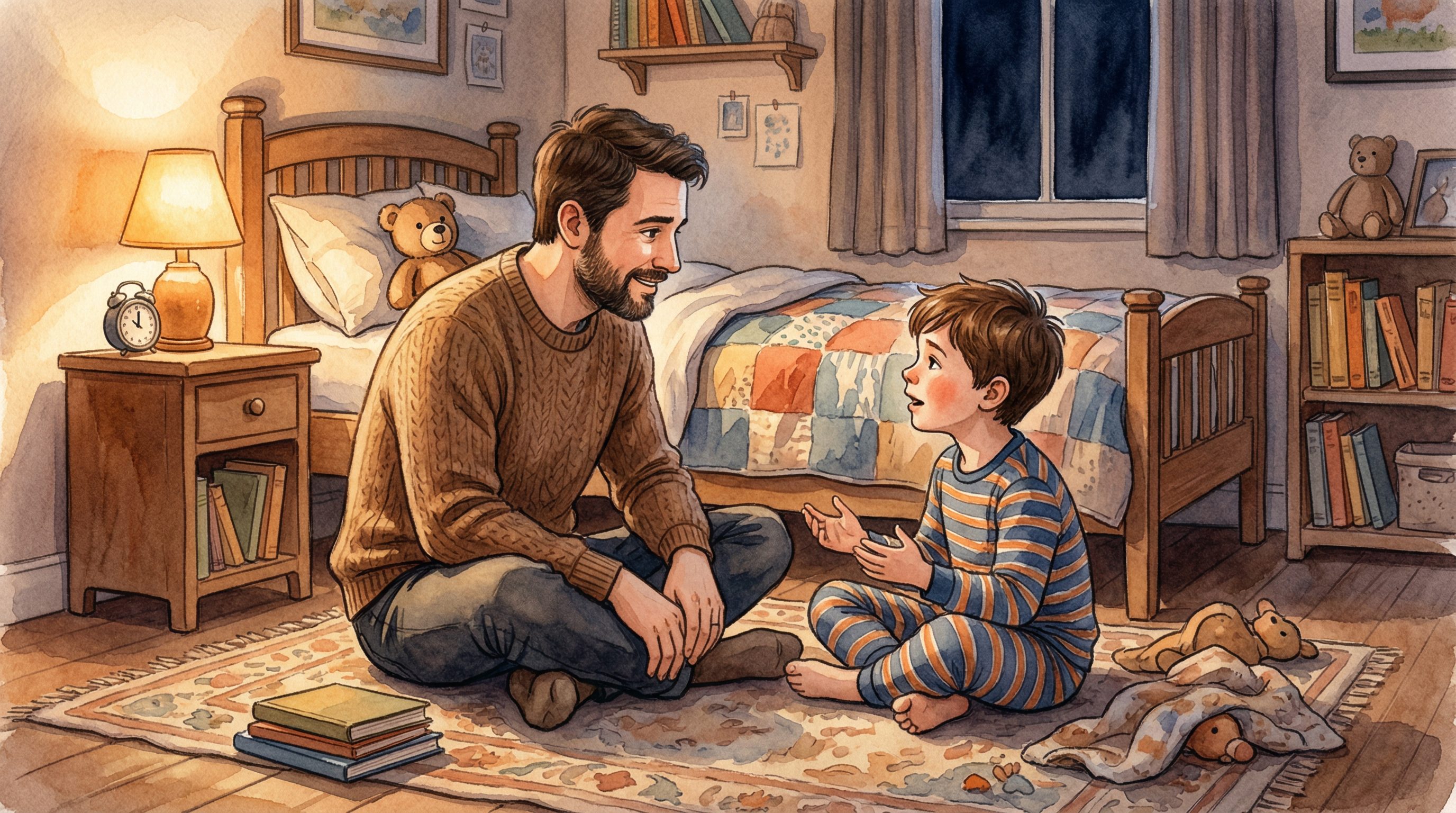
What actually works is building understanding before the moment arrives. That's what a bedtime devotional does — it creates a regular, low-stakes conversation window where you can talk about emotions honestly, using real Bible characters as the examples.
The Learning to Handle Big Feelings series was built exactly for this. It takes kids through the real emotional lives of Bible heroes — not to make them feel better about tantrums, but to give them a framework. God didn't reject Moses when he threw the tablets. God didn't abandon Jonah in his anger. What does that tell us about how God sees our big feelings?
That question, asked quietly in a dark room at the end of the day, lands differently than any classroom lesson.
David: The Man After God's Own Heart Who Was Also a Mess
If you want a Bible character to teach kids about emotional regulation, start with David. He's the most emotionally honest person in Scripture.
Read Psalm 22 with your kid sometime. It opens with: "My God, my God, why have you forsaken me?" That's not polished theology. That's a man in genuine despair, crying out because he feels completely alone. And then — in the same psalm — he cycles through fear, memory, hope, and worship. It's not linear. It's messy.
That's the lesson. David didn't stuff his feelings to look spiritual. He brought them to God raw. And God called him a man after His own heart — not in spite of that emotional honesty, but almost because of it.
For your kid, the takeaway is this: You don't have to fix your feelings before you talk to God. You don't have to clean yourself up first. You can show up angry, scared, sad — and God can handle it.
That's a different message than "calm down." It's a better one.
Moses: What Anger Without Control Looks Like
Moses is the honest counterexample — what happens when the emotion takes over completely.
He had a pattern. He killed an Egyptian in a rage (Exodus 2). He smashed the tablets when he came down from the mountain (Exodus 32). He struck the rock in anger when God told him to speak to it (Numbers 20) — and that moment cost him the Promised Land.
This isn't a story about God punishing Moses for feeling angry. Moses had every reason to be frustrated. The people were impossible. The issue wasn't the anger — it was what he did with it.
For older kids especially, this is a powerful conversation. Ask them: Do you think Moses was wrong to feel angry? Most kids will say no. Then ask: What about what he did? That distinction — between feeling an emotion and acting on it — is one of the most important things you can teach a child.
The anger wasn't the sin. The strike was. And even then, God didn't abandon Moses. He still talked to him. He just didn't erase the consequence.
Jonah: When You're Angry at God Himself
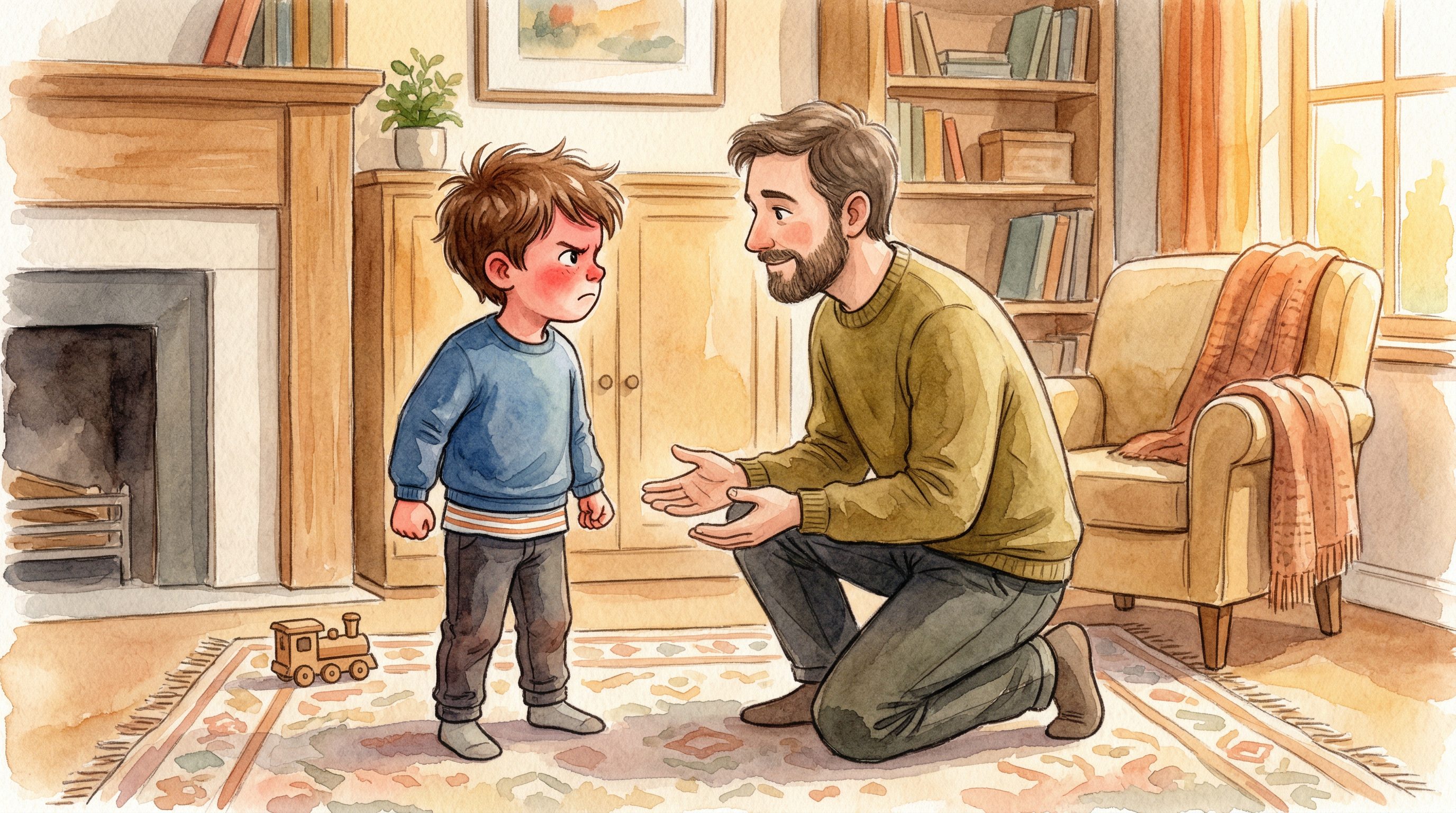
Jonah is the one kids find most relatable — because he's the most openly petty.
God spares Nineveh, and Jonah is furious. Not scared, not confused — angry. "I knew you'd do this," he tells God. "That's why I ran in the first place." And then he sits outside the city, sulking, hoping God changes His mind and destroys it anyway.
And what does God do? He grows a plant to give Jonah shade. He doesn't lecture him. He doesn't immediately correct him. He sits with him for a moment — and then He asks a question: "Is it right for you to be angry?"
That's the parenting move right there. God doesn't deny Jonah's emotion. He doesn't tell Jonah he shouldn't feel it. He asks a question that opens a bigger conversation about where the anger is actually coming from.
Your kid's meltdown about the LEGO piece — or the unfair call at recess, or the friend who said something cruel — usually isn't really about the surface thing. There's something underneath. Jonah wasn't angry about Nineveh. He was angry that God's compassion felt unfair to him. Once you find the real thing, you can actually talk about it.
If your kids are working through anger specifically, the article on helping kids understand anger through devotionals goes deeper on how to use these kinds of stories at bedtime. And if you have a son who shuts down or explodes with no middle ground, helping boys handle big emotions addresses the specific way boys tend to process (and not process) what they feel.
The Question That Changes Everything
Before we get to the bedtime framework, there's one question worth asking your kid that most parents never think to ask: "Do you think God ever gets frustrated?"
Let them answer. You'll hear theology they've absorbed from Sunday school, from family conversations, from whatever picture of God they've formed. And then you get to complicate that picture — in the best possible way — by reading them what actually happened between God and Moses, or God and Jonah. The God of the Bible is not a distant, emotionless being who expects perfect calm from his people. He's a God who engages, who asks questions, who grieved and was angry and had deep feelings about his people and their choices.
When your kid understands that God is not threatened by their big feelings, something unlocks. They're not performing calm for God. They're not pretending the anger isn't there. They can bring it — and they can learn to bring it to God rather than just letting it run the show.
How to Use These Stories at Bedtime
You don't need a curriculum or a lesson plan. Here's the simplest version:
- Read the story — Even a few verses is enough. Let your kid hear it.
- Name the emotion — "What do you think Moses was feeling right here?" This is not rhetorical. Wait for an actual answer.
- Connect it to today — "Did you feel anything like that today?" Some nights they'll say no. Some nights you'll get a ten-minute conversation you didn't expect.
- Land on what God did — Not always a happy ending, but always honest. God stayed. God asked questions. God didn't give up on them.
That last part matters more than the lesson. Your kid learning that God doesn't walk away from messy emotions is more valuable than knowing the right steps to manage their feelings. The regulation skills come with time. The security of knowing God's still there — that's the foundation everything else builds on.

You Don't Have to Have It Together First
Here's something I've had to sit with: I'm not always calm when I'm doing these devotionals. Sometimes I'm the one who had a hard day. Sometimes I'm reading about Moses and thinking about my own short fuse that morning.
That's not disqualifying. That makes it real. When I'm honest with my boys — "Dad had a moment today where he said something too sharp, and I know that's not right" — the devotional stops being a lesson I'm delivering and starts being something we're figuring out together. That version of it sticks a lot longer.
You don't have to be the finished product to guide your kid through this. You just have to be willing to show up and be honest about the journey.
That's what David did. That's what Moses did. That's what Jonah did — eventually. None of them had it perfectly together. All of them kept showing up. And the God who stayed with them is the same God who's in your kid's room at bedtime, ready for whatever they bring.
📖 Read This Tonight
The Big Feelings series walks kids through the emotional lives of real Bible characters — anger, fear, sadness — and shows them how God met people right in the middle of those moments. Start it tonight.
Get Notified When New Series Drop
We add new devotional series regularly. Sign up to hear about them first.
Join the Community