Bullying Doesn't Go Home Anymore
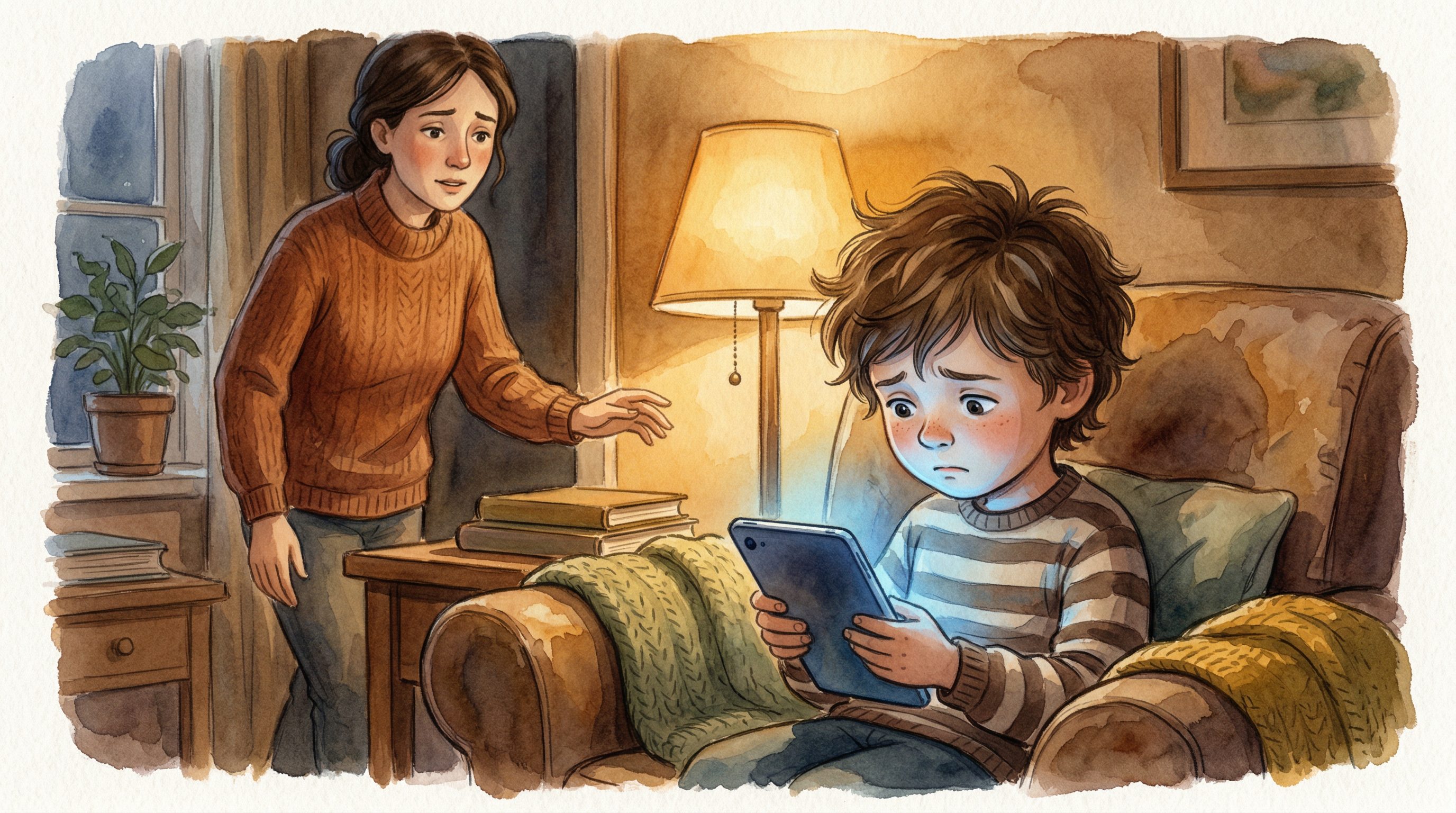
There used to be a break. A kid could have a rough day at school — someone was mean, something happened, the whole day felt like a bruise — and then they'd come home. Close the door. The problem stayed on school property.
That's over.
Now the phone is in the bedroom. The group chat doesn't sleep. Screenshots travel. A comment made at lunch gets screenshotted, shared, re-shared, and your kid can watch themselves be discussed while they're supposed to be winding down for bed. Cyberbullying isn't an extension of school drama — it's a separate 24/7 problem that follows your child into every room of your house.
If you're waiting until it happens to figure out what to say, you're already behind. The conversation needs to happen before the incident. Here's how to have it.
Why "Just Turn Off Your Phone" Isn't Enough
The instinct is right but the execution is incomplete. Yes, screens need limits. Yes, your kid should not be doom-scrolling a group chat at 11 p.m. Those are good parenting moves and you should make them.
But the phone is not the problem. The phone is the delivery method. The problem is that your child is being targeted — or watching someone else get targeted — and they don't know what to believe about themselves, about others, or about whether God sees any of it.
Telling a kid to "just log off" when they're in the middle of a social crisis is like telling someone whose house is on fire to stop thinking about it. It misses the point. What your kid actually needs is a framework for what's true — especially when the screen is telling them something else.
That framework is where faith comes in. Not as a distraction from the problem. As a way to hold onto something that doesn't move while everything else is shifting.
What Cyberbullying Actually Looks Like for Kids Today
This is worth understanding before you have the conversation, because it's changed a lot from what you might picture. It's not always obvious name-calling. It can be:
- Exclusion — The group chat your kid isn't in. The event they didn't know about until the photos showed up online.
- Subtweeting or vague-posting — Posting something that everyone in the friend group knows is about your kid, but that can't technically be proven.
- Screenshot sharing — Private messages taken out of context and sent around.
- Pile-ons — One person posts something negative about your kid, others add on, and it becomes a visible public moment.
- Impersonation — Someone creates a fake account using your kid's name or photo.
The reason this matters is that if you start the conversation only talking about "people being mean online," your kid might not connect it to what they're actually experiencing. Name the specific scenarios. Ask direct questions. "Has anyone ever excluded you from something on purpose online? Has anyone ever shared something about you that you didn't want shared?"
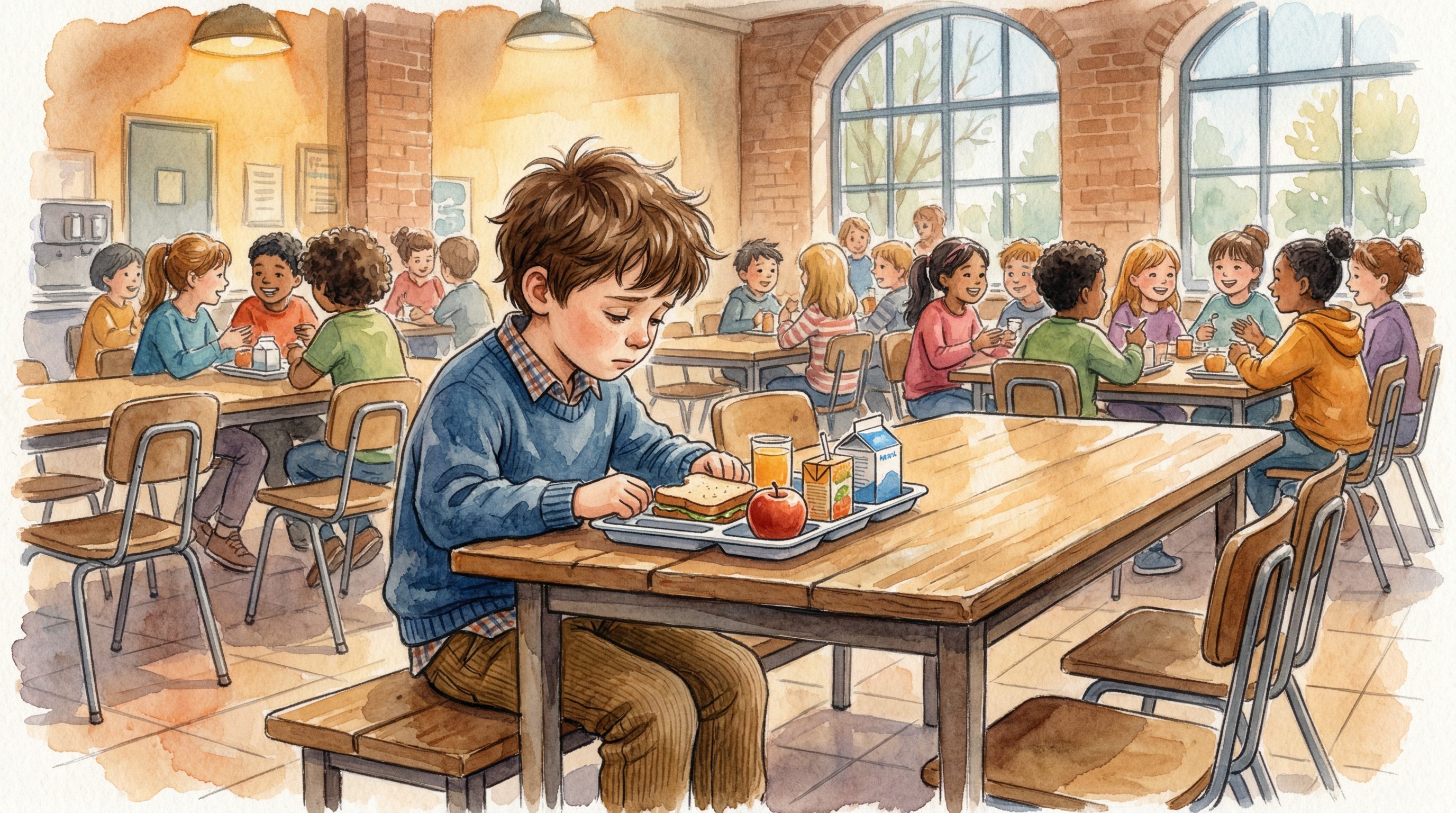
Kids will often not volunteer this information. They're embarrassed. They don't want to be seen as someone who can't handle it. And some of them genuinely don't know that what's happening to them qualifies as bullying.
How to Open the Conversation Without Making It a Lecture
The worst version of this talk is the one where Dad sits the kid down, turns off the TV, and says in a Serious Voice: "I want to talk to you about cyberbullying." The kid immediately shuts down. They've been warned, they're in trouble, this is a lecture.
The better version happens at the end of the day. Bedtime. Lights low, pressure off, no agenda other than being together. That's already the context for devotionals — and that context is also the best context for this conversation.
You can ease into it through a devotional topic. The Bully-Proof series on Hosted Devotions uses real situations kids face — including online ones — as the entry point for bigger conversations about identity, friendship, and what God says about how we treat each other.
Or you can just open it yourself: "Hey, I've been thinking about something. I know you're on [platform] and I know it can get weird sometimes. I want you to know you can tell me if something happens — or if you see something happen to someone else. It's not snitching. It's just... we talk about stuff."
That's it. Plant the seed. Let the conversation happen naturally over time.

What to Teach Them Biblically About Their Online Presence
This is where it gets substantive. There are a few things you want your kid to hold onto when they're navigating online social life:
Their identity is not defined by what people say about them online. This goes back to the foundation — who God says they are doesn't change because someone posted something. You can point them to Psalm 139 here. God knows them completely, formed them intentionally, and the opinion of a classmate in a group chat does not override that.
How they treat others online is the same as how they treat them in person. Proverbs 12:18 — "The words of the reckless pierce like swords." Your kid needs to understand that a text, a comment, a screenshot — these are not consequence-free because they're digital. Words wound the same way. This applies to how they treat others, not just how others treat them.
They have permission to walk away. This is actually under-taught. There is no Biblical obligation to stay in a conversation that's becoming cruel, to defend yourself in a thread, or to keep refreshing the feed. Proverbs 20:3 — "It is to one's honor to avoid strife." Walking away from digital drama is not weakness. It's wisdom. Give your kid permission to log off and let it go.
They should tell an adult. This isn't snitching — it's stewardship. If your kid witnesses something happening to someone else, or if it's happening to them, they need to know that asking for help is not failing. It's the right move. Make sure you're the adult they want to tell.
What to Do When It Happens
Because eventually, for most kids, something will. Here's the practical framework:
Don't retaliate. The immediate impulse — especially for boys — is to respond. To defend. To match the energy. That almost always makes it worse and almost always gives the other person more material to work with. Teach your kid to pause before responding to anything that stings.
Screenshot and save. Before blocking or deleting, document what happened. This is practical and important if it escalates to needing adult or school involvement.
Tell a trusted adult. You. A teacher. A coach. Someone who can help assess whether it's a one-time thing or a pattern that needs intervention.
Pray together before you fix it. I know that sounds like a Sunday school answer, but I mean it practically. Before you go into problem-solving mode, sit with your kid and acknowledge what happened out loud to God. Not a formal prayer — just: "God, this hurt. Be with [kid's name] right now. Help them know this doesn't define them." It matters. It changes the posture from reactive to grounded.
More on the spiritual foundation of handling bullying: the article on using devotionals to help kids through bullying goes deeper on how to process these experiences at bedtime. And if your kid is also dealing with bullying in person, responding to bullies the Biblical way addresses that specifically.

The Thing No Parent Wants to Hear
There's one more conversation worth having, and it's the harder one: Could your kid be the one doing it?
Not maliciously. Not consciously. But kids can participate in pile-ons, exclusion, screenshot sharing — and not think of it as bullying because everyone else is doing it, or because they felt justified, or because they didn't initiate it.
Ask your kid directly, gently, without accusation: "Have you ever been part of something online that you think might have hurt someone? Even if you didn't start it?"
Most kids, if they trust you and you ask without judgment, will tell you the truth. And if the answer is yes — that's actually a gift. That's a conversation where you get to talk about grace, about making it right, about what it means to be the kind of person who stands up instead of piling on.
That conversation is worth more than a hundred lessons on what cyberbullying is. It's where character actually gets built.
Cyberbullying is a new problem, but the solution is ancient: know who you are, treat others the way you want to be treated, and don't be afraid to ask for help. Those principles haven't changed. Your job is to make sure your kid has them downloaded before the hard moment arrives. Bedtime, done consistently, is the best opportunity you have to make that happen.
📖 Read This Tonight
The Bully-Proof series gives kids a Biblical foundation for handling what happens when someone targets them — online or in person. It's practical, it's honest, and it's exactly what bedtime is for.
Get Notified When New Series Drop
We add new devotional series regularly. Sign up to hear about them first.
Join the Community