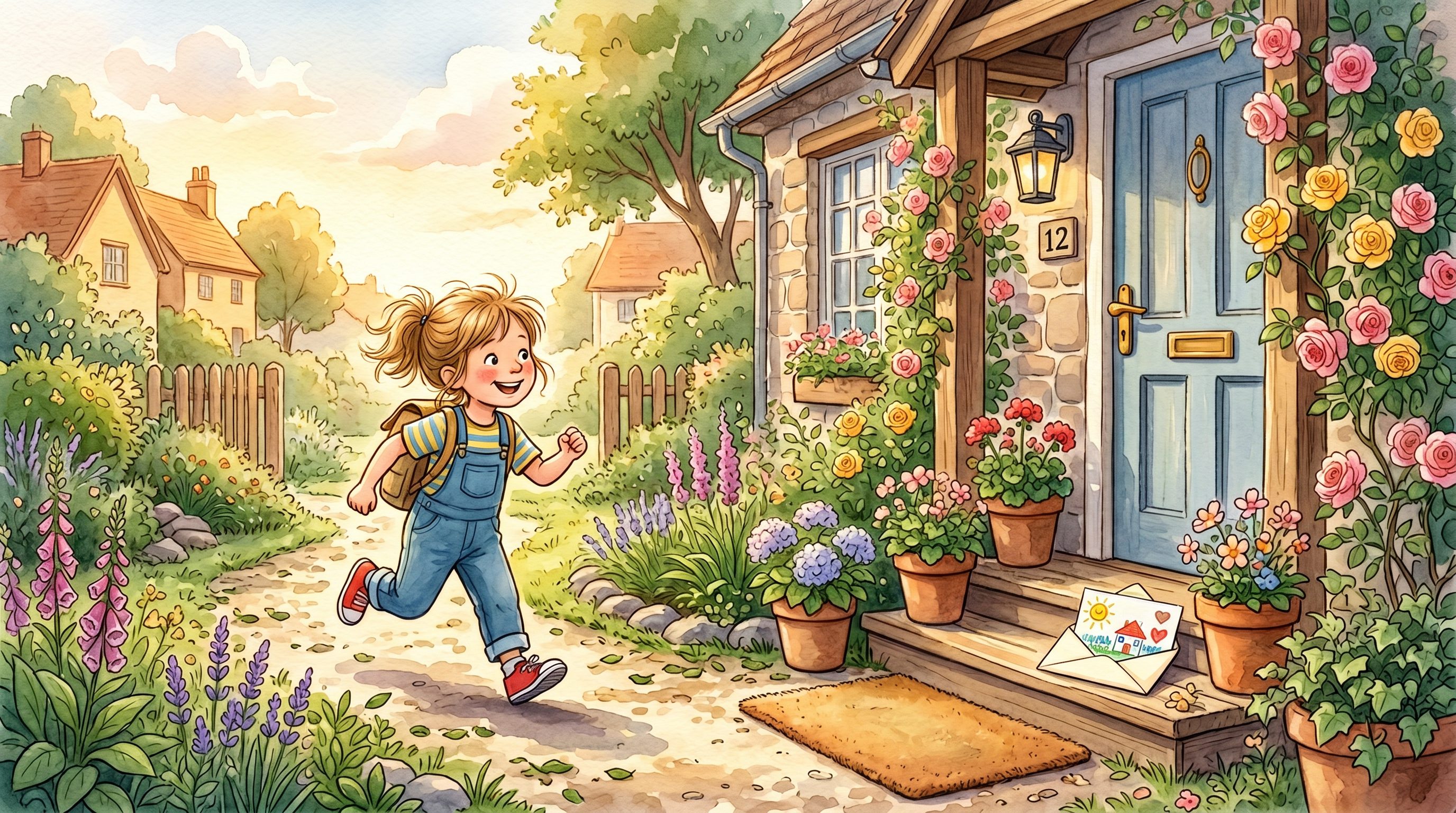
Kindness Gets Real When It Has an Address
You can talk about kindness in the abstract for years and it won't stick the way one afternoon of doing something for someone else will. There's a reason the Good Samaritan story has lasted two thousand years — it's not a theory. It's a man, a road, a person who was hurt, and a choice. Specific. Concrete. Real.
A devotional about random acts of kindness works for the same reason. You're not just giving your kid a value to hold. You're giving them an action to take, a moment they can remember, a story that becomes part of how they see themselves: I'm the kind of person who does things for others.
That identity piece is more powerful than any instruction. Let's make it practical.
<
Why "Random" Is Actually the Point
There's something specific about kindness that's unexpected. Your kid is already kind to the people they're close to — that's natural. But an act of kindness that catches someone off guard, that they didn't ask for and don't have any way to repay — that's different. It interrupts the normal transaction of social exchange.
Matthew 6:3-4 talks about this: "When you give to the needy, do not let your left hand know what your right hand is doing, so that your giving may be in secret." The principle extends beyond giving — it applies to any act of goodness done without expectation of credit or reciprocity.
The randomness trains your kid out of the "what do I get back" calculation. Over time, that becomes a posture: I do good things because that's who I am, not because I'm keeping score.
The Devotional Structure: Do It, Then Talk About It
The most effective approach isn't to talk about kindness first and hope your kid goes out and practices it. It's the opposite. Do something together, then bring it back to the devotional conversation that night.
Here's a simple structure:
Pick One Act (Together)
Don't assign it — choose it together. That investment makes them more likely to actually follow through. You can brainstorm a short list and let them pick: "We could write a note to someone at school, or bring something to a neighbor, or leave a treat in the mailbox for the mail carrier. What sounds good to you?"
Younger kids (ages 5-7) do best with tangible things they can make or deliver themselves. Older kids can handle more nuance — a kind word to someone going through something hard, a choice to include someone who's often left out.
Do It
Actually do the thing. Don't just talk about it. That afternoon, that morning, sometime that week — but the doing is essential. Without it, this is just another lesson that lived entirely inside a conversation.
Come Back to It That Night
At bedtime, ask: "What happened? How did they react? How did it feel to do that?" Those three questions are the whole devotional. The reaction question is interesting because sometimes the person they were kind to didn't react the way your kid expected — or didn't notice at all. That's a real conversation about doing good without needing the response.
<
Kindness Acts by Age Group
These are specific, actionable, and tied to things kids in different age groups can actually do:
Ages 4-6
- Draw a picture for someone who's sick or sad
- Leave a rock with an encouraging word painted on it somewhere in the neighborhood
- Let someone else choose first — a game, a seat, a snack
- Help set the table or clean up without being asked
- Tell someone something specific you like about them
Ages 7-10
- Write a note to a teacher or coach who's made a difference
- Go out of their way to say hi to someone who's usually quiet or alone
- Give away something they have that someone else needs (a book, a toy, a snack)
- Help a younger sibling or neighbor kid with something hard
- Do a chore for a parent or sibling without being asked — and don't mention it
Ages 11+
- Volunteer alongside you for something in the community
- Send an encouragement text or message to someone who's going through something
- Defend someone who's being talked about behind their back
- Spend time with a grandparent or elderly neighbor — real time, not obligatory time
Connecting It to Scripture
The passage worth grounding this in is Galatians 6:10: "Therefore, as we have opportunity, let us do good to all people, especially to those who belong to the family of believers."
The phrase "as we have opportunity" is useful. It's not overwhelming — it doesn't say do good constantly in every possible direction. It says: when the opportunity is in front of you, take it. That's a manageable challenge for a kid. You don't have to go looking for someone to help. You just have to be willing when the moment shows up.
The parable of the talents (Matthew 25:14-30) applies here in an interesting way: the servants who were given something were expected to do something with it. Your kid has been given kindness — the capacity to care about other people, to notice when someone needs something. The question is what they do with it.
<
What to Say When Your Kid Asks Why It Matters
Eventually your kid will ask — directly or by their behavior — why they should go out of their way for other people. Why bother when it's inconvenient? Why be kind to someone who won't notice or won't thank them?
The honest answer is theological, and you can give it in plain language: Because God was kind to us when we didn't deserve it and couldn't repay it. That's the whole argument. Ephesians 4:32: "Be kind and compassionate to one another, forgiving each other, just as in Christ God forgave you."
The model isn't "be kind because it feels good" or "be kind because you'll get it back." The model is: you have received something you didn't earn, and that changes how you move through the world. That's a concept that grows as your kid gets older, but you can start planting it early.
Making It a Habit, Not a One-Time Event
One random act of kindness is a nice thing. A pattern of them is character formation. The goal isn't to check a box — it's to gradually rewire how your kid moves through the world. That takes repetition.
One practical idea: at the start of each week, pick one act of kindness together to aim for by the end of the week. Not a big production — just a small, specific thing. Review it the following Sunday night. Over time, this creates a rhythm.
My older son and I have started something like this. It started because I wanted him thinking about other people during the day, not just at the end of it. Now he brings it up on his own sometimes — asks who we're thinking about this week. That's the shift you're going for. You're not managing behavior. You're building a person.
If you want a more structured framework for teaching kindness over multiple nights, the Power of Kind series on Hosted Devotions walks through specific situations and scripture in a kid-friendly format designed for this age group. The kindness devotional covers the harder emotional side — being kind when it's genuinely inconvenient or when the person hasn't been kind back. And for keeping the devotional routine itself sustainable and engaging, making family devotions fun has the practical side covered. The friendship devotional connects the relational dots — because for kids, kindness and friendship are almost always the same conversation.
📖 Read This Tonight
The Power of Kind series walks kids through real kindness situations across multiple nights — practical, concrete, and built to actually change how they treat people. Start tonight.
Get Notified When New Series Drop
We add new devotional series regularly. Sign up to hear about them first.
Join the Community