
The Night My 5-Year-Old Asked to Keep Reading
A few months ago I finished reading a devotional with my boys and went to close the app. My youngest — he was five at the time — grabbed my arm. "Dad, wait. Can we do one more?"
That's the moment you're going for. Not compliance. Not tolerance. Actual enthusiasm. The kid who would normally be trying to negotiate five more minutes of YouTube was asking for more Bible time.
If family devotions at your house feel like a chore — for you or for your kids — that's not a faith problem. It's a format problem. And format problems are fixable. Here's how to make family devotions fun in a way that actually sticks, whether your kids are four or fourteen.
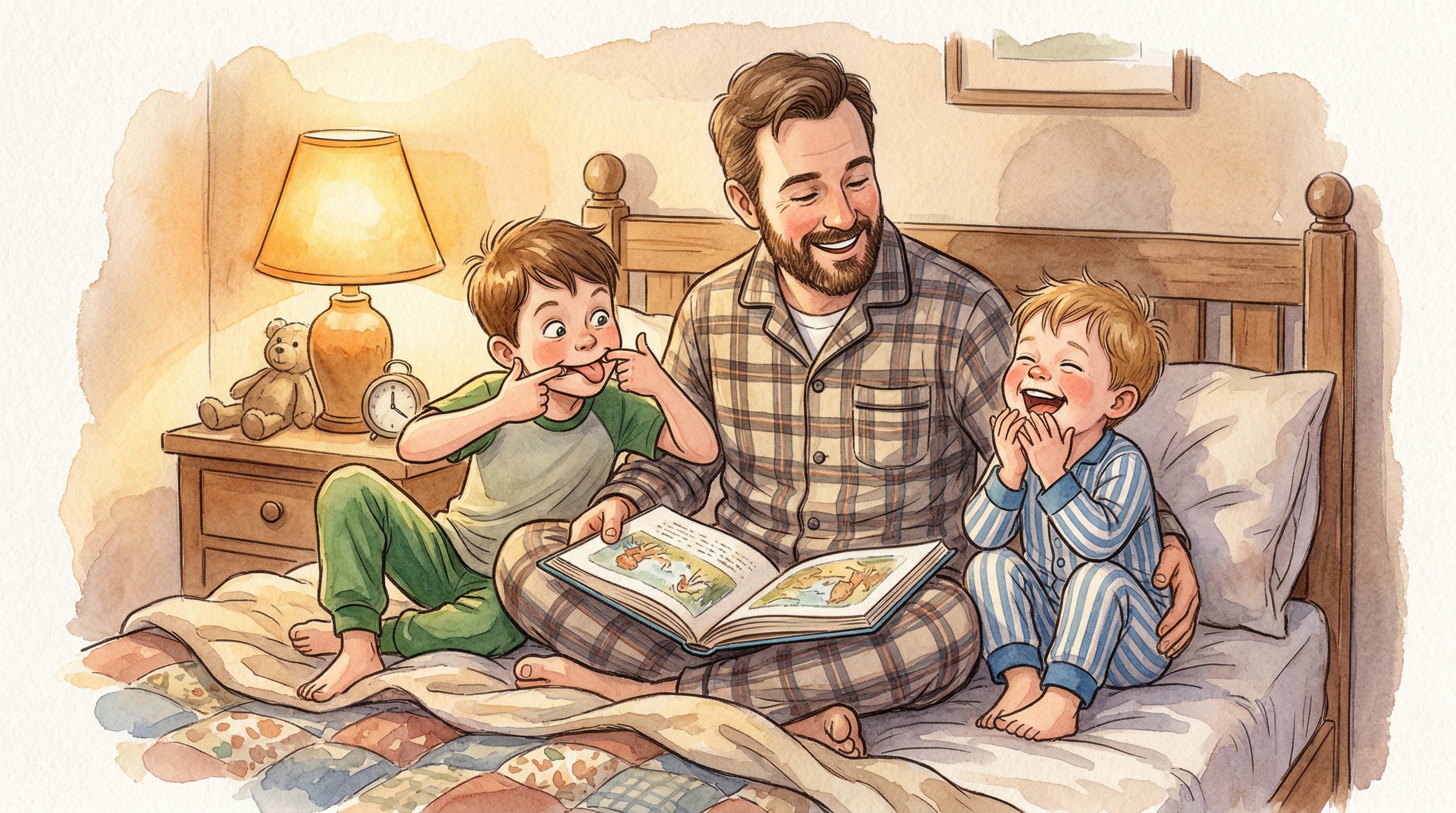
First: Understand That "Fun" Looks Different by Age
My two boys are 7 and 5. What holds my older son's attention and what holds my younger son's attention are genuinely different — and trying to hit both with the same approach every night doesn't work. Once I stopped treating them as a single audience, things got better fast.
Here's a rough breakdown of what tends to work at different stages:
- Ages 3–5: Short. Repetitive. Physical if possible. They want to participate — let them repeat phrases back to you, act things out, or answer simple yes/no questions. Attention spans are real and short.
- Ages 6–9: Stories grab them. They want to know what happens next. Curiosity questions work well — "What do you think God was thinking when He made giraffes?" They'll engage if you make space for their answers.
- Ages 10–13: They want to feel heard, not talked at. Invite their opinion. Let them push back a little. The goal shifts from teaching to conversation.
- Teenagers: Don't lecture. Ask questions you actually don't know the answer to. Be honest about your own doubts. They can smell performance from a mile away.
You don't need different devotionals for different ages — you need different entry points into the same material. A good story works across ages. What changes is how you engage around it.
Lead With a Story, Not a Lesson
This is the single biggest shift most dads can make. When you open a devotional by announcing the lesson — "Tonight we're going to learn about patience" — you've already lost them. Kids don't show up to be taught. They show up to be drawn in.
Start with the story. Let the lesson arrive on its own.
Think about how you first heard Bible stories as a kid. It probably wasn't through a three-point outline. It was through someone telling a story well enough that you actually wanted to know what happened. That same instinct is alive in your kid right now.
The Big Brother Devotional works well with kids because it's grounded in a situation they recognize — a kid navigating real life. There's no abstract moralizing. The story does the work, and the reflection follows naturally. That's the template worth following.
If you're currently reading straight from a devotional book that front-loads the lesson, try flipping it: read the story portion first, ask a few questions, then tie in the main point at the end. Same content. Totally different feel.
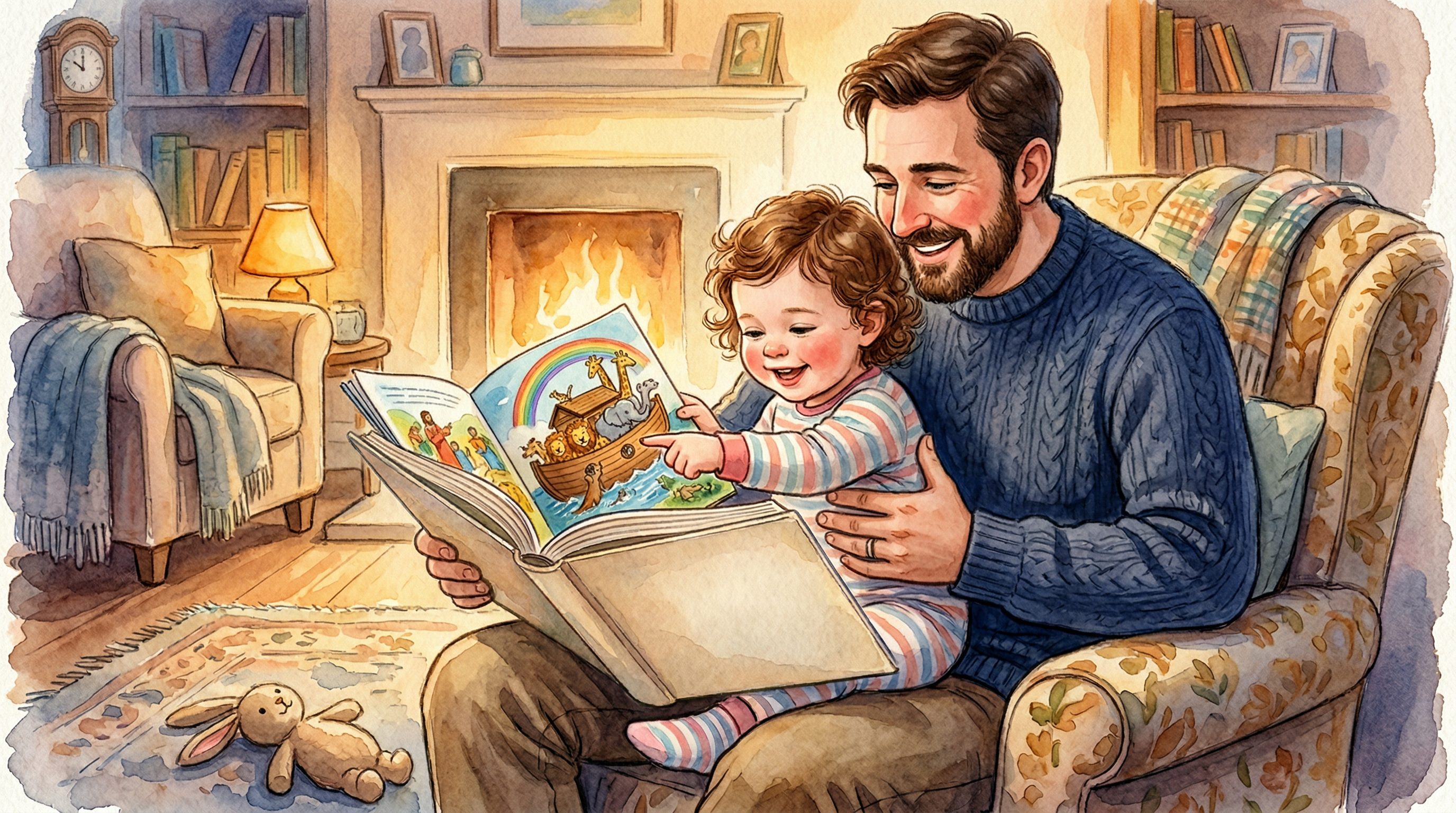
Ask Questions That Don't Have a "Right" Answer
Nothing kills engagement faster than a question where your kid knows you already have the answer and you're waiting for them to say it. "What does God want us to do when we're angry?" is a quiz, not a conversation.
Try questions that actually invite their thinking:
- "What would you have done if you were that person?"
- "Does that seem fair to you?"
- "Why do you think God made it work that way?"
- "Have you ever felt something like that?"
When my older son gets a question like this, he'll think about it for a few seconds and then say something that surprises me. Last week he told me he thought Jonah probably felt embarrassed when the fish spit him out. I had never thought about that. We talked about it for five minutes. That conversation happened because there was no correct answer to perform.
For younger kids, the bar for a "good" question is even lower. "Was that scary or not scary?" works fine. You're not trying to produce a theologian. You're trying to keep them present.
Let Them Have a Role
Kids who are participating are kids who are engaged. Passive listening is hard for adults. For a seven-year-old, it's nearly impossible for more than a few minutes.
Give your kid a job during devotions:
- Let the older one hold the book or device and "help" read
- Let the younger one be in charge of saying the prayer at the end
- Ask them to pick which story you read next time
- Let them predict what's going to happen in the next part of a series
Agency changes the whole dynamic. When your kid feels like they're part of running the devotional rather than sitting through it, their buy-in goes up. It also takes pressure off you — you're not performing, you're facilitating.
If you're looking for a series that naturally invites curiosity and participation, the Who Made Me series is a good place to start. It leans into questions kids actually ask — about their bodies, their brains, what makes them different — and it gives them real things to wonder about. My younger one comes alive with this kind of content. He has theories about everything.
Don't Try to Cover Too Much Ground
One of the fastest ways to drain the fun out of family devotions is trying to turn every night into a comprehensive theology lesson. You cover the story, then you circle back to last week's lesson, then you want to make sure they understood the main point, then you add your own commentary...
By the time you're done, your kid is checked out and you're frustrated.
One idea per night. Sometimes less. The goal at bedtime isn't full comprehension — it's a seed. You're planting. The soil doesn't need to be flooded; it needs a regular, manageable amount of water over time.
A 5-minute devotional done consistently beats a 20-minute devotional done grudgingly twice a week. If you haven't already, check out the 5-minute bedtime routine — it's a real framework that keeps things short enough to actually happen every night.
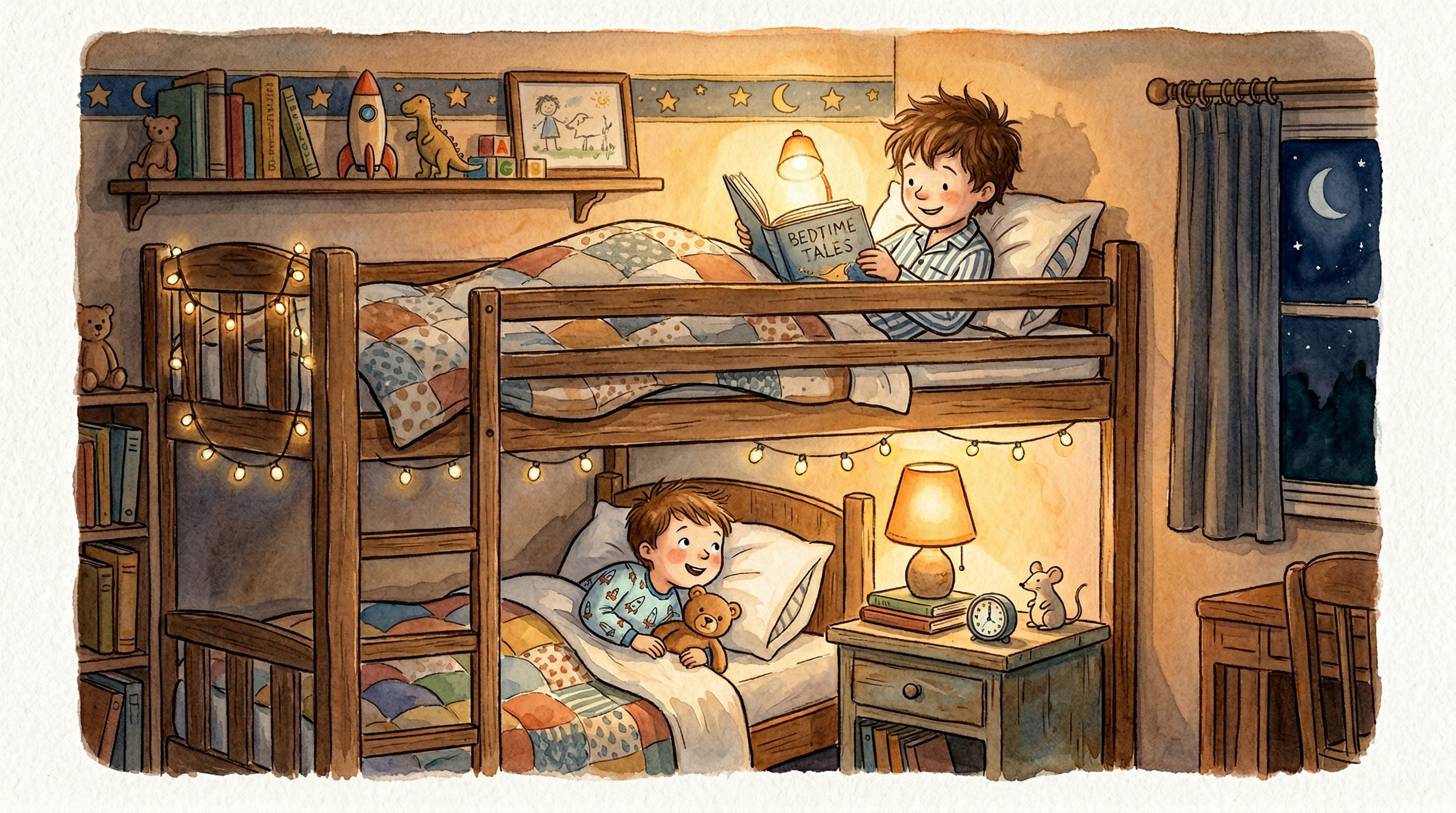
Make It Feel Like a Ritual, Not a Requirement
Rituals and routines look similar from the outside but feel completely different to a kid. A routine is something you complete. A ritual is something you belong to.
Small things build ritual:
- Always reading in the same spot
- Turning off overhead lights and using a lamp or nightlight
- Starting with the same opening phrase every night
- Ending with the same kind of prayer, even if it's brief
Kids find comfort in predictable structure. When devotion time has its own feel — its own small ceremonies — it becomes a place they look forward to rather than a thing they endure.
This is also why a series format works better than jumping around random topics. There's narrative continuity. Your kid wants to know what happens next. That anticipation is part of what makes them engaged before you've even opened the app. For more on building a routine that works, this guide to starting bedtime devotions covers the whole setup from scratch.
Be Honest When You Don't Know the Answer
Your kid will ask you something you don't know the answer to. Guaranteed. "Where was God when that bad thing happened?" "Why does God let kids get sick?" "Did dinosaurs know about Jesus?"
The dad response that kills trust: fake certainty. "Well, what God is saying here is..." delivered with total confidence when you're actually not sure.
The response that builds it: "That's a real question. I don't know the full answer. I've wondered about that too." And then maybe: "What do you think?"
Your honesty about the hard questions is more faith-forming than a packaged answer. It tells your kid that faith isn't fragile — that doubts and questions fit inside it. That's a better gift than any correct answer.
The Standard Is Low. The Consistency Is the Point.
Making family devotions fun doesn't mean every night is magic. Some nights someone's tired, someone's distracted, someone has a meltdown five minutes in. That's fine. You show up anyway, you do the short version, and you move on.
The fun comes from the rhythm. From the fact that this is something you do together. From your kid knowing that every night, their dad is going to sit with them and open something up. That reliability is the gift, even when the content is unremarkable.
Start there. The good nights will find you. For more on what to look for in a devotional your kids will actually enjoy, see this guide to devotionals for dads with young kids.
📖 Read This Tonight
If you want a series that genuinely makes kids lean in, start with Who Made Me — it's built around the questions kids already have, and it holds attention across ages. Try it tonight and see what happens.
Get Notified When New Series Drop
We add new devotional series regularly. Sign up to hear about them first.
Join the Community