
Ten Is Different — And That's a Good Thing
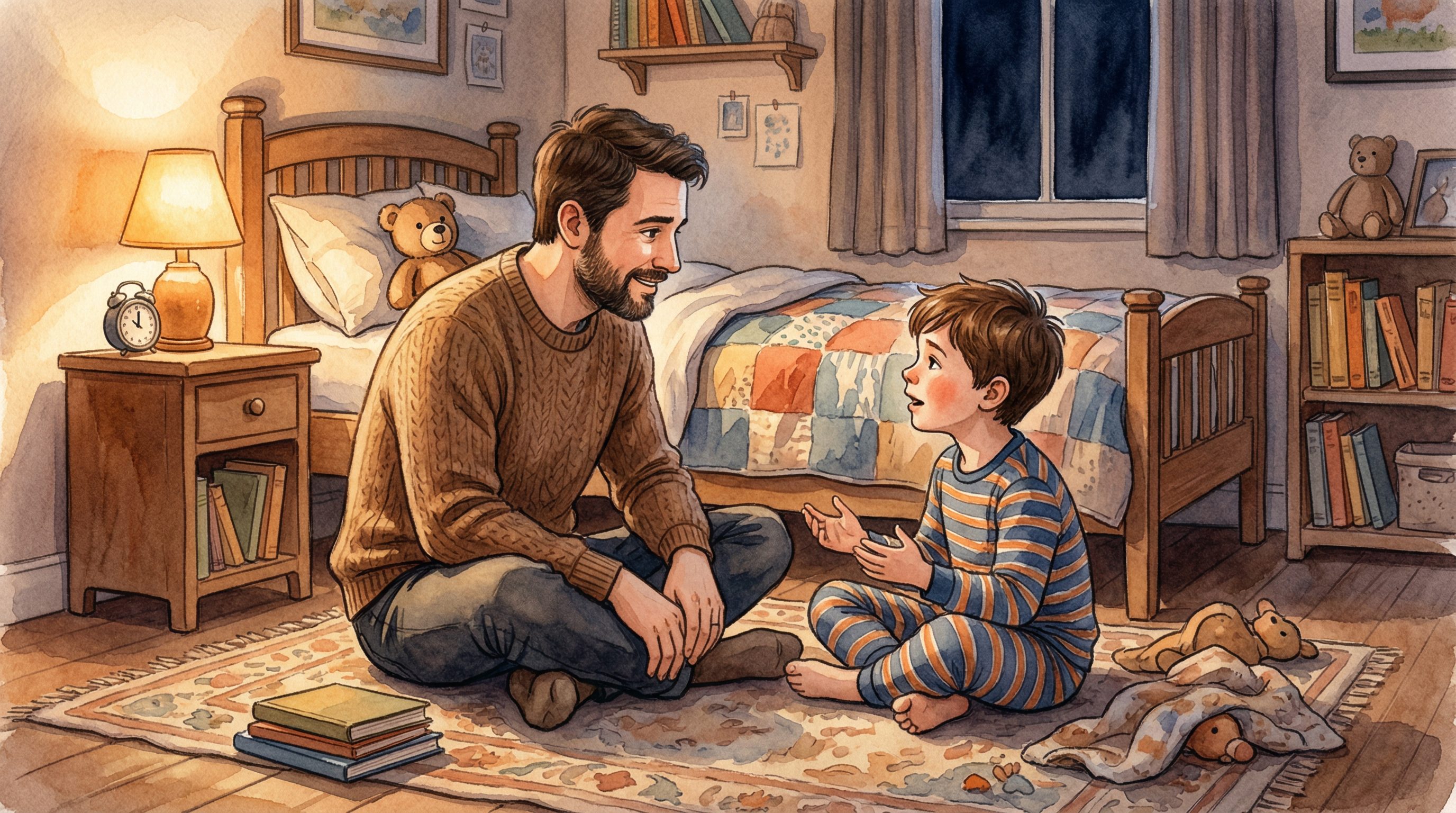
At ten years old, your kid is not a little kid anymore. They're watching the world, forming opinions, noticing when adults say one thing and do another. And when it comes to faith, they're probably already asking questions that don't have easy answers: Why does God let bad things happen? How do we know God is real? Does prayer actually work?
Some dads freeze when those questions show up. They either give a pat answer they half-believe themselves, or they dodge entirely and change the subject. Both backfire. A 10-year-old who gets a shallow answer doesn't stop asking questions — they just stop asking you.
That's the window you're protecting. Not their theology. Their trust that you're someone they can bring hard questions to. That's worth more than any perfect answer you could give.
What's Actually Happening at This Age
Around age 9-11, kids move from what developmental psychologists call concrete operational thinking into early abstract reasoning. In plain terms: they're starting to see the world in shades of gray instead of black and white. That's why the simple answers that worked at age six no longer land.
They can now hold two conflicting ideas at once. They can notice when something doesn't add up. They compare what they're told at home with what they see at school, on screens, from friends' families. Faith that was once accepted automatically is now being tested — not because your kid is turning away from God, but because their brain is doing exactly what it's supposed to do.
This is a good sign. It means they're taking faith seriously enough to think about it. The goal isn't to stop that process. It's to stay in the conversation while it happens.
What Not to Say (And Why It Backfires)
A few common traps dads fall into with 10-year-olds and faith:
"You just have to have faith." This shuts down the conversation. They hear: your question is unwelcome. Faith isn't blind trust — it's trust built on evidence and relationship. Teach them that.
"I don't know, go ask your mom." Not always wrong to admit you don't know — but passing it off signals that faith is someone else's territory. You don't have to have all the answers. You just have to stay in the room.
Arguing them into belief. Logic can open a door but it can't make someone walk through it. If every conversation about God turns into a debate, they'll associate faith with tension. That's not what you want.
Pretending you've never doubted anything. Ten-year-olds have excellent radar for inauthenticity. Admitting your own questions — real ones you've actually wrestled with — gives them permission to have theirs without shame.
How to Start the Conversation
You don't need a script. You need a few good habits:
Ask more than you tell. "What do you think about that?" does more than any lecture. Let them process out loud. Don't rush to correct — ask follow-up questions first. "What makes you think that?" or "Where did you hear that?" shows you're curious about their mind, not just trying to fix their theology.
Use current events as a bridge. Something hard happened in the news? Instead of shielding them from it, bring it into a conversation: "I saw that story too. I found myself wondering why God would allow that. Have you thought about it?" You're modeling that believers think about hard things — not that faith means pretending hard things don't exist.
Tell your own story. Not a polished testimony — a real one. When did you doubt? When did something click for you? What do you still wonder about? Your kid doesn't need a hero. They need an honest guide.
Using Devotionals as a Launching Pad
One of the best things about doing devotionals together at this age is that the content does the hard work of starting the conversation — you just have to show up. A story about doubt becomes an opening: "Has there ever been a time you felt like God wasn't listening?" A verse about prayer becomes: "Do you think God always answers? What do you think it looks like when he says no?"
The Let Me Tell You About God series is built specifically for this kind of conversation — age-appropriate but not dumbed down, honest about hard questions without pretending faith is simple. If you've been looking for something to read with your 10-year-old that doesn't sound like a Sunday school worksheet, this is worth trying.
If you're still building a foundation for how you talk about God — or if your 10-year-old missed some of that earlier groundwork — this guide to introducing your child to God is a good place to start before diving into the heavier questions. Then, if you're looking for age-specific guidance on what to read alongside these conversations, this guide to devotionals for 10-year-olds breaks down what actually works at this stage. For the broader context of navigating faith conversations with tweens, this piece for dads with tweens covers the relational side of keeping the connection strong through middle school.
When They Push Back
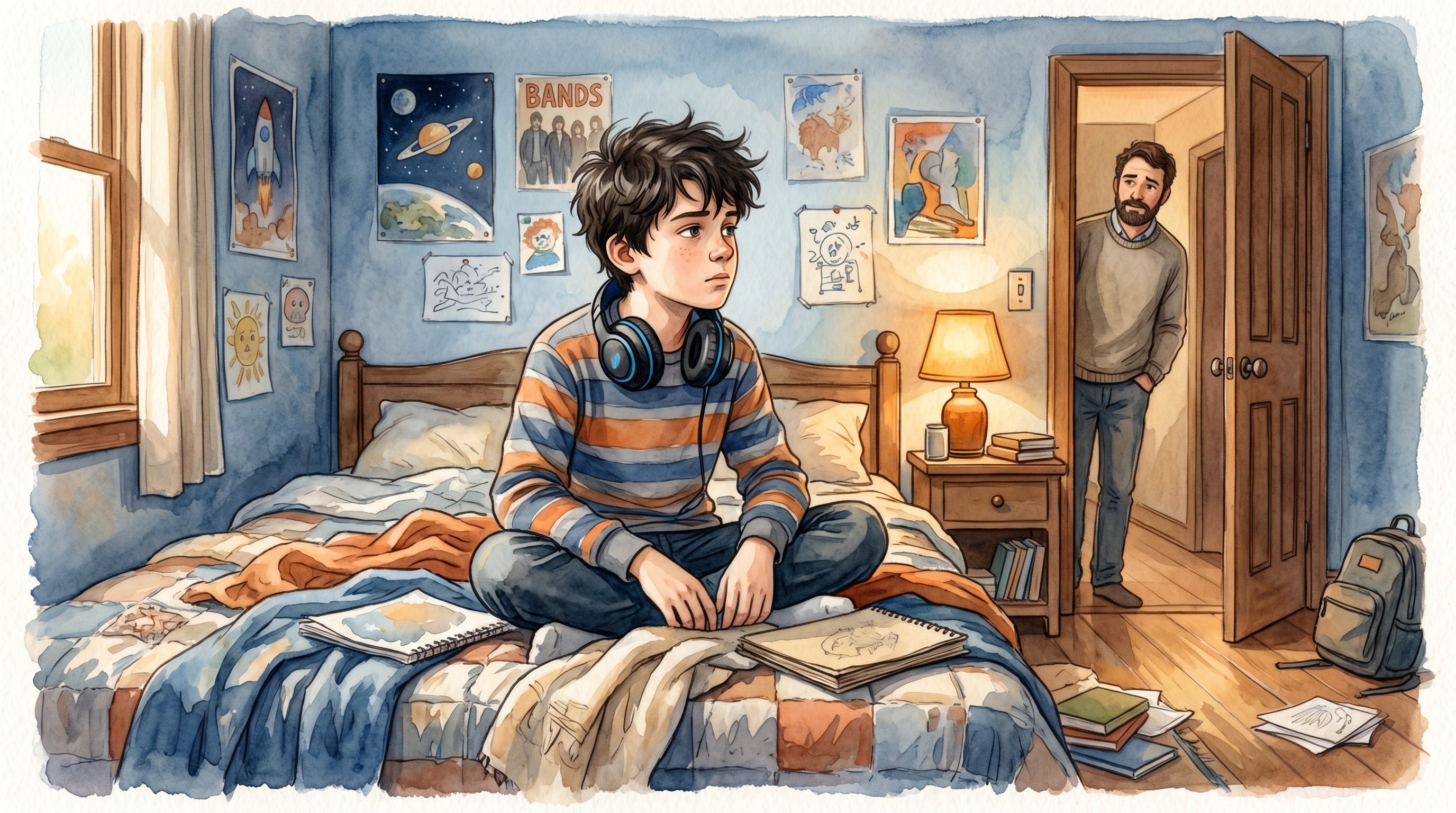
Some 10-year-olds don't just ask questions — they challenge. "I don't think I believe in God." "My friend says all religions are made up." "Why do we do devotions if nobody at school does?"
Resist the urge to panic or argue. Pushback is not rejection — it's engagement. A kid who pushes back is still talking to you. That's the whole game at this age: stay in the conversation.
A good response to "I don't think I believe in God" isn't a theological defense. It's: "Tell me more about that. What's making you feel that way?" You're not conceding. You're staying curious. And curiosity — yours and theirs — is what keeps the door open.
If they say something you genuinely can't answer, say so. "That's a really hard question. I don't have a great answer for that one. But I'd like to think about it with you." Then actually do that. Look it up. Come back to it. Show them that real faith doesn't require pretending you have everything figured out.
The Long Game
Your goal isn't to inoculate your 10-year-old against doubt. You can't. They're going to encounter hard things — in high school, in college, in life — that will test everything they've been taught. The single most protective factor isn't that they memorized the right answers. It's that they have a dad who modeled authentic faith and who they trust enough to talk to when things get hard.
That's what these conversations are building. Not theology. Trust.
Show up. Ask questions. Admit what you don't know. Read with them. That's it. That's the whole thing.

Specific Questions Your 10-Year-Old Might Be Asking
Some questions come up more often than others at this age. Here's how to approach them without either panicking or papering over them:
"Why does God let bad things happen?" This is the big one. Don't try to solve it in one conversation. Say: "That's one of the hardest questions humans have ever wrestled with. I don't have a complete answer. But here's what I believe, and here's where I'm still unsure." Then be honest. Kids at 10 can handle nuance. What they can't handle is a parent who pretends certainty they don't have.
"How do we know the Bible is true?" A good question — and one worth exploring together. You don't need to become an apologist overnight. Acknowledge the question is fair. Share why you find it credible. And invite them to keep asking. Faith built on real exploration is sturdier than faith built on "because I said so."
"Does prayer actually do anything?" This one requires honesty. Tell them about a time you prayed and something happened. Tell them about a time you prayed and didn't get what you wanted. Don't pretend prayer is a vending machine. But also don't reduce it to nothing. "I believe it matters. I don't always understand how. I keep doing it." That's a real answer.
"Why do bad people seem to get ahead?" Fairness is huge at this age. Don't dismiss this. The Psalms are full of exactly this question — Psalm 73 is a particularly honest grappling with it. Read it together sometime. Show your kid that even the most faithful people in scripture wrestled with whether it was worth it to live with integrity.
Keeping the Habit Going Through This Season
Conversations about faith with a 10-year-old aren't one-time events. They're an ongoing relationship. Some nights it'll flow. Other nights they'll shrug and say they're tired. Both are fine. The consistency of showing up matters more than the quality of any single conversation.
When you use a structured devotional — something with a story, a theme, and a question — you take the pressure off having to manufacture the conversation from scratch every night. The content does the starting work. You just have to follow where it leads.
I call before school sometimes and tell my son to remember his mission for the day. It sounds small, but it's a thread — a connection between what we talked about at bedtime and how he carries himself when I'm not around. That's what you're building at this age. Not just memories of devotional time, but an identity that goes with him.
📖 Read This Tonight
The Let Me Tell You About God series is designed for exactly these conversations — honest, age-appropriate, and built for dads who want to go deeper with their kids at bedtime. Start it tonight and see where the questions lead.
Get Notified When New Series Drop
We add new devotional series regularly. Sign up to hear about them first.
Join the Community