
You Can't Rush This. But You Can Lead It.
I haven't navigated this. My boys have one dad and one mom and we're all under the same roof. So when I write about helping kids welcome a step-parent, I'm writing from what dads have told me — not from the inside of it.
What they tell me is this: the biggest mistake isn't being too slow or too fast with the introduction. The biggest mistake is treating it like a logistics problem instead of a relationship problem. You can time everything perfectly — wait the recommended six months to a year, introduce gradually, do everything right on paper — and still have kids who are struggling a year later because nobody addressed what was actually happening inside them.
What's actually happening: your kid is being asked to expand their definition of family in a way they didn't choose and maybe don't want. That's not ingratitude. That's not misbehavior. That's a human being protecting loyalty and identity under pressure. Understanding that is the starting point.
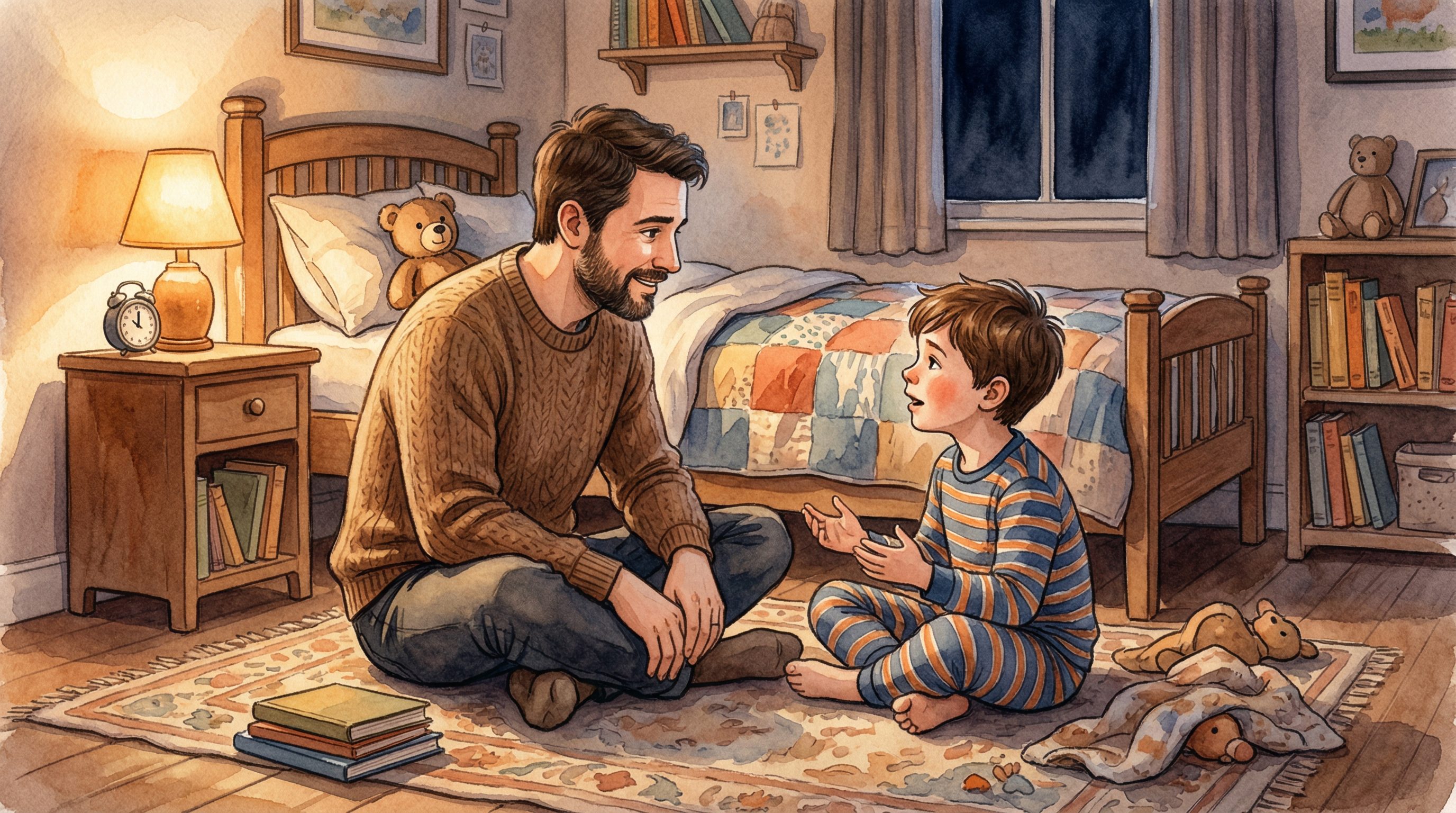
What Kids Are Actually Feeling (That They're Not Saying)
Dads who've gone through this describe their kids' resistance in terms that sound like behavior problems — "she won't talk to him," "he just ignores her," "they're rude when she's around." But when you dig into what's underneath, a few consistent themes show up:
Loyalty guilt. Kids often feel — at a deep, unspoken level — that liking a step-parent is a betrayal of their other biological parent. This is especially powerful when the divorce was painful or the other parent is struggling. They can't articulate it, but it shapes everything they do.
Fear of replacement. A new adult in Dad's life means Dad's attention is divided. For kids who already felt the loss of the intact family, this feels like another piece of what they had being taken away.
Identity confusion. "Who am I in this family now?" A new person reshuffles the relational order. The oldest is no longer the oldest if stepchildren come in. The dynamic changes. Kids need time to find their footing.
Grief under the surface. Even years after a divorce, kids can still be grieving the family they used to have. A step-parent's arrival can reactivate that grief — not because the step-parent did anything wrong, but because their presence makes the loss feel more final.
None of these are things a kid can usually say out loud. But a devotional — the right verse, the right question, the right space — can give them a way to get at what they're carrying.
What Not to Do
Dads who've been through this are often generous with warnings. A few things that almost always make it worse:
Forcing bonding experiences. A family camping trip six weeks in sounds good in theory. In practice, it traps resistant kids in close quarters before trust has been built and usually produces misery. Low-pressure, everyday moments build trust faster than planned bonding experiences.
Asking the step-parent to take on authority too fast. Discipline from a step-parent before the relationship is established almost always backfires. Kids need to experience the step-parent as safe before they'll accept any kind of correction from them.
Requiring positivity. "You need to be nice to Sarah. She's going to be part of our family." That instruction, without addressing the feelings underneath it, just teaches kids to hide what they're feeling. You want to know what they're feeling — that's the only way you can address it.
Minimizing the other parent. Even if the relationship with your ex is difficult, speaking negatively about them — or implying the step-parent is a better version — is corrosive to your kids. They love their other parent. Honor that, even when it's hard.
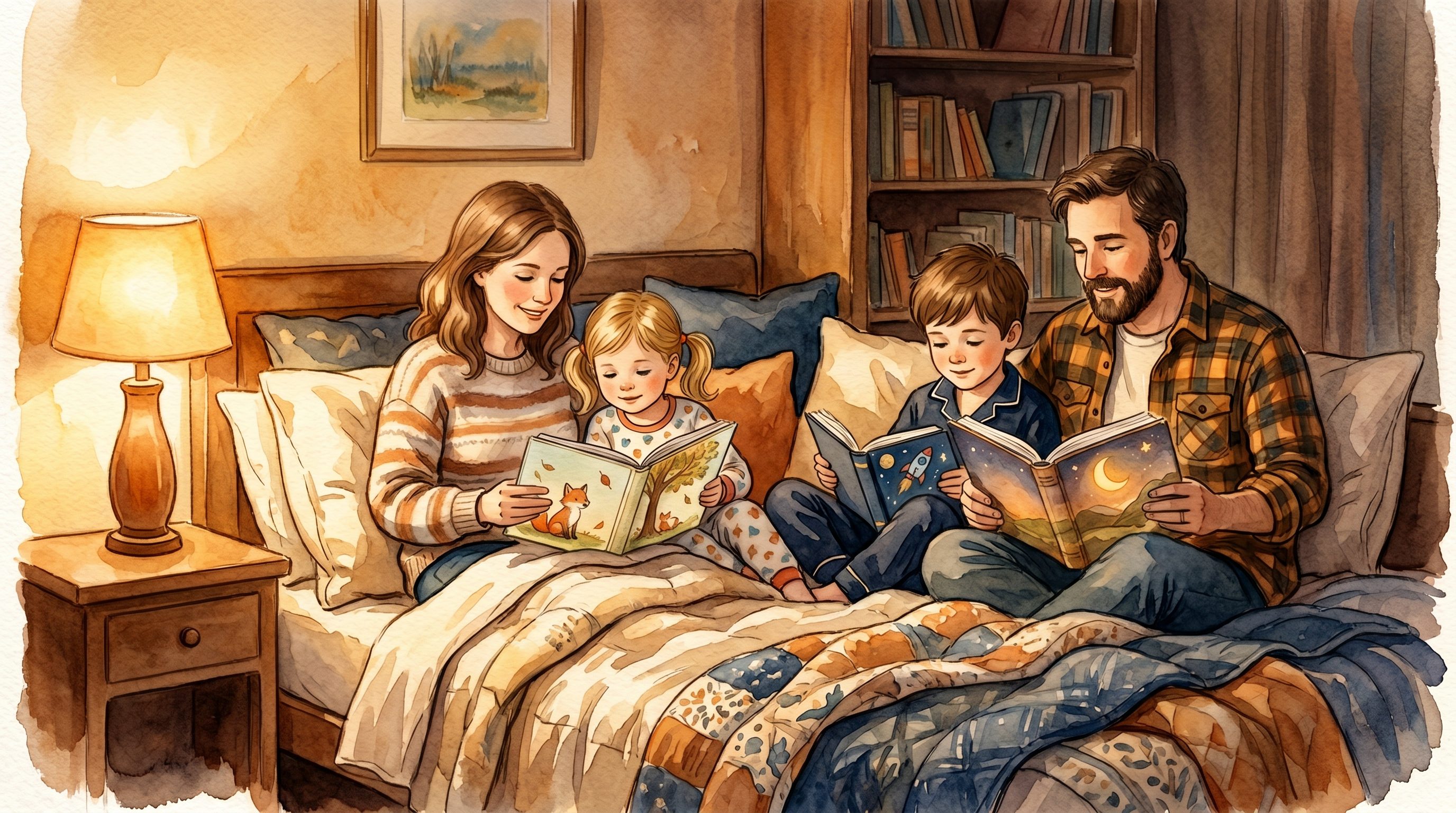
How Devotionals Can Help — and How They Can Hurt
Done well, devotionals in this season do a few things that are genuinely hard to achieve any other way. They create a recurring space where feelings are expected to come up. They give language to things kids can't otherwise name. They point consistently to something bigger than the family's current difficulty.
Done badly, they make things worse. A devotional that feels like it's being used to convince kids to accept the new family structure — or that rushes toward a happy ending before the kids are there emotionally — will be resisted and resented. The devotional has to serve the kids, not the dad's timeline.
What dads describe working well in this specific transition:
Start with identity. Kids in blended family transitions are often struggling with "who am I now?" A series focused on identity — who God says they are, regardless of family structure — is foundational. This piece on identity devotionals for kids is a good starting point for that conversation.
Address feelings without an agenda. A devotional on big emotions isn't about the step-parent — it's about what's inside your kid. Big Feelings works well here because it's not prescriptive. It gives kids language and space for what they're carrying, whatever that is.
Use the transition series directly. When Things Change addresses the fear and uncertainty that comes with major life shifts. For kids who are resistant to the new family structure, a devotional that names transition honestly — without telling them it's all going to be great — can feel more honest than the happy family narrative.
Create space for questions about God's role in this. Kids going through family transitions often have unspoken (and sometimes voiced) questions about why God let the divorce happen, why God isn't fixing it, why this is their life. Don't shut those questions down. Bring them into the devotional space.
Talking to Your Kids About the Step-Parent Directly
One thing dads underestimate: the power of just talking to your kid, directly and honestly, about what this transition is. Not as a pep talk. Not as a sales pitch. As a real conversation.
"I know this is different. I know it's not what you expected. I'm not asking you to love [step-parent's name] right away — that takes time, and that's okay. I am asking you to be fair and give it time. And I want you to tell me when things feel hard, not just hold it in."
That kind of conversation, repeated over time, builds trust. And a devotional that reinforces those themes — honesty, patience, giving things time — does the same work in a different register.
The Step-Parent's Role in Devotionals
This is one of the most common questions dads ask: should the step-parent be involved in devotionals? Lead them? Sit in? Stay out?
Dads who've navigated it successfully describe a gradual inclusion that follows the relationship. Early on: step-parent is present but not leading. They're listening. They're part of the room but not the authority in it. Over time, as trust builds: they start contributing. Maybe answering a question. Maybe reading a section. Eventually, if the relationship is strong, they might lead occasionally.
Forcing step-parent leadership before kids are ready often damages the devotional practice itself — kids stop participating because the authority dynamic feels wrong. Going at the pace of the relationship is slower but more durable.
If you're starting fresh with a blended family and want something built specifically for your situation, you can create a custom devotional series — one that speaks to the exact dynamics your kids are navigating and uses language that fits where they are. A series built for your family feels different from a generic one, and in a blended family, that difference matters.
The Question Nobody Asks: What Does God Think About Blended Families?
At some point, an older kid is going to ask this. Maybe they've heard something at church or from a grandparent. Maybe they're genuinely wondering whether God is okay with how their family is structured now.
You don't need to have a theological dissertation ready. What you need is honesty: "God loves you. God loves your family. The Bible has lots of examples of families that didn't look the way people expected them to. And God was in those families too. I believe He's in ours."
That's it. Simple, grounded, not defensive. It points them toward the truth that God is present in the complexity of their actual life — not just in some idealized family structure.
For more on navigating blended family dynamics with devotionals, this companion piece on devotionals for blended families covers the broader landscape — including new sibling dynamics and how to structure devotional time when kids come and go on custody schedules.
You're Doing Something That Takes Years, Not Weeks
The dads who've come out the other side of this — who have blended families that are genuinely working — uniformly say the same thing: it took years, not months. There were hard months in year one, hard moments in year two, and then something that started to feel real in year three or four.
Devotionals are part of the long game. Each night isn't going to feel like a breakthrough. But the pattern of showing up — of creating a space where your kids can bring what they're carrying, and where you point them to something bigger than the difficulty — builds something over time that matters. That's worth doing.
📖 Read This Tonight
When Things Change is a devotional series built for families navigating hard transitions. It meets kids where they are and gives them something solid to hold onto while things are still shifting.
Get Notified When New Series Drop
We add new devotional series regularly. Sign up to hear about them first.
Join the Community