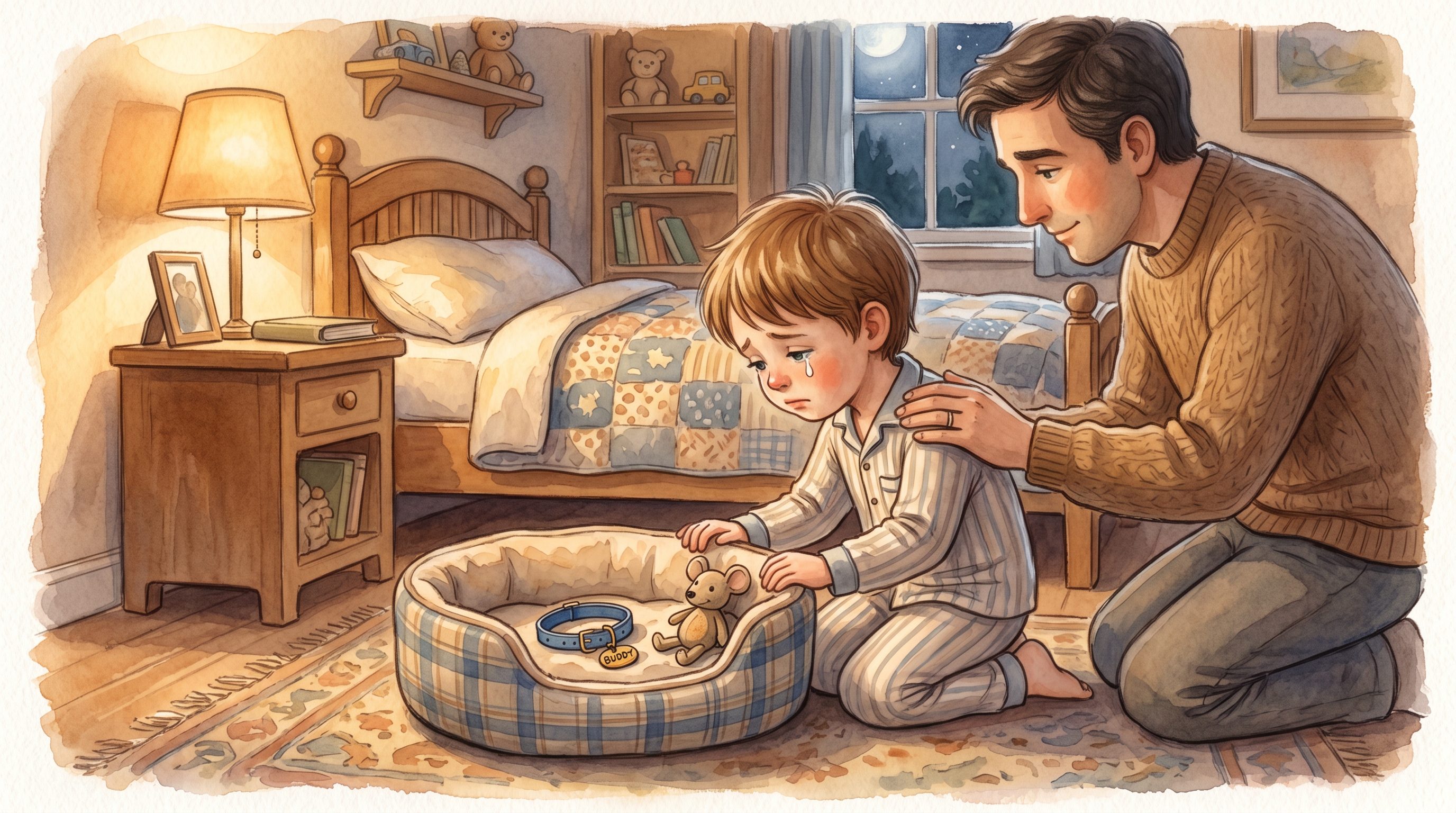
Your Kid Is Not Overreacting
The fish was just a fish. The hamster was just a hamster. You know that. You've been through real loss — funerals, hospital goodbyes, the kind of grief that sits with you for years. A pet dying doesn't compare to any of that, and part of you wants to gently help your child move on.
But here's what I've come to understand: for your kid, this might be the first time something they loved stopped existing. The first time they looked for something and it just wasn't there anymore. That's not a small thing. That's the beginning of understanding mortality — and it's enormous.
Don't minimize it. Not even accidentally. Not with "we'll get another one" or "he's in a better place now" before they've had a chance to cry. This moment, as uncomfortable as it is, is actually one of the most important conversations you'll ever have with your child about faith.
What Pet Loss Actually Teaches Kids (If You Let It)
Kids who lose a pet for the first time are sitting with something real: things end. That's a truth adults have learned to carry. Kids are just picking it up for the first time, and it's heavy.
If you rush past this, you miss an enormous opportunity. If you sit in it with them — not fixing, not explaining away, just being present — you teach them something that no Sunday school lesson can: grief is allowed. Grief is not the opposite of faith. Grief is something faith is designed to hold.
The psalms are full of lament. David cried out to God in anguish. Jesus wept at Lazarus's tomb — even knowing what was about to happen. Grief is not a lack of trust in God. It's an honest response to a world where real things are lost.
Your child needs to see you believe that.
What to Say (and What Not to Say)
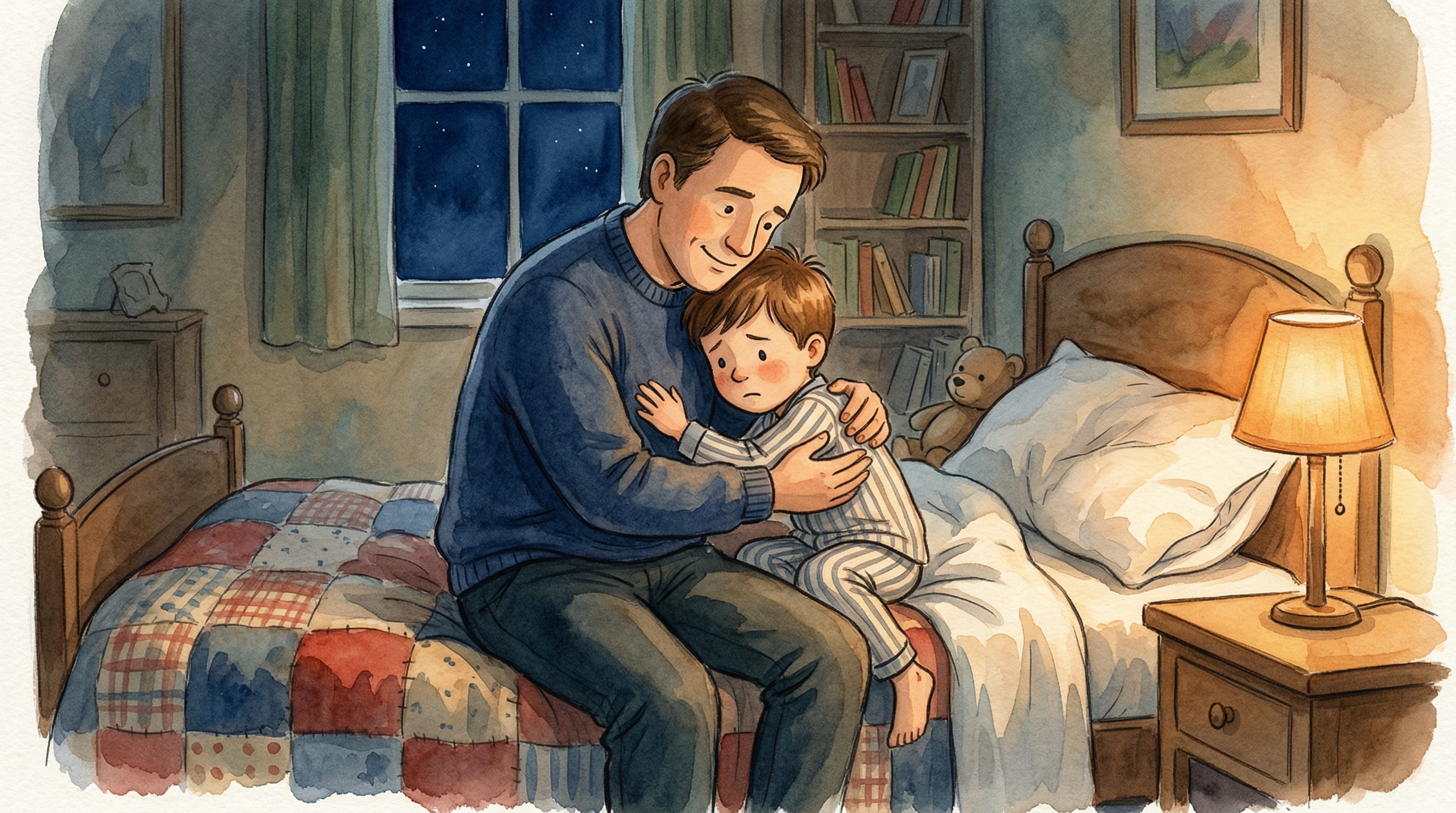
Most dads default to problem-solving mode when their kid is upset. It's how we're wired. Something is broken; let's fix it. But grief doesn't work that way, and the wrong words — even well-meaning ones — can close your child down fast.
Avoid these:
- "Don't be sad — he lived a good life." (Dismisses the emotion.)
- "You'll feel better soon." (Skips the process.)
- "It's just a pet." (Full stop — never say this.)
- "At least you still have [other pet]." (Comparison doesn't comfort.)
Try these instead:
- "Tell me your favorite thing about her."
- "It's okay to cry. I'm right here."
- "Do you have any questions? There's no wrong question."
- "I don't know all the answers, but I know God sees how much you loved him."
That last one matters. You don't need to have a clean theological answer about what happens to animals when they die. You don't need to make promises you can't keep. What you need to do is stay in the room — emotionally and physically — and let your child feel like their sadness makes sense.
Having the Faith Conversation
At some point, your child is going to ask the question. "Where did she go?" "Will I see him again?" "Does God care about animals?"
Here's the honest answer: the Bible doesn't give us a tidy checklist about animal afterlife. What it does give us is a picture of a God who notices sparrows (Matthew 10:29), who created animals on purpose and called them good (Genesis 1:25), and who one day will restore all things (Revelation 21:5). That's not nothing. That's actually beautiful.
You don't have to pretend certainty you don't have. Try something like: "I'm not exactly sure what heaven looks like for animals. But I know God made [pet's name], and God doesn't forget things He made. He loved her even more than you did — and that's a lot."
That's not a dodge. That's faith. And it models something powerful for your child: that you can trust God even when you don't have all the answers.
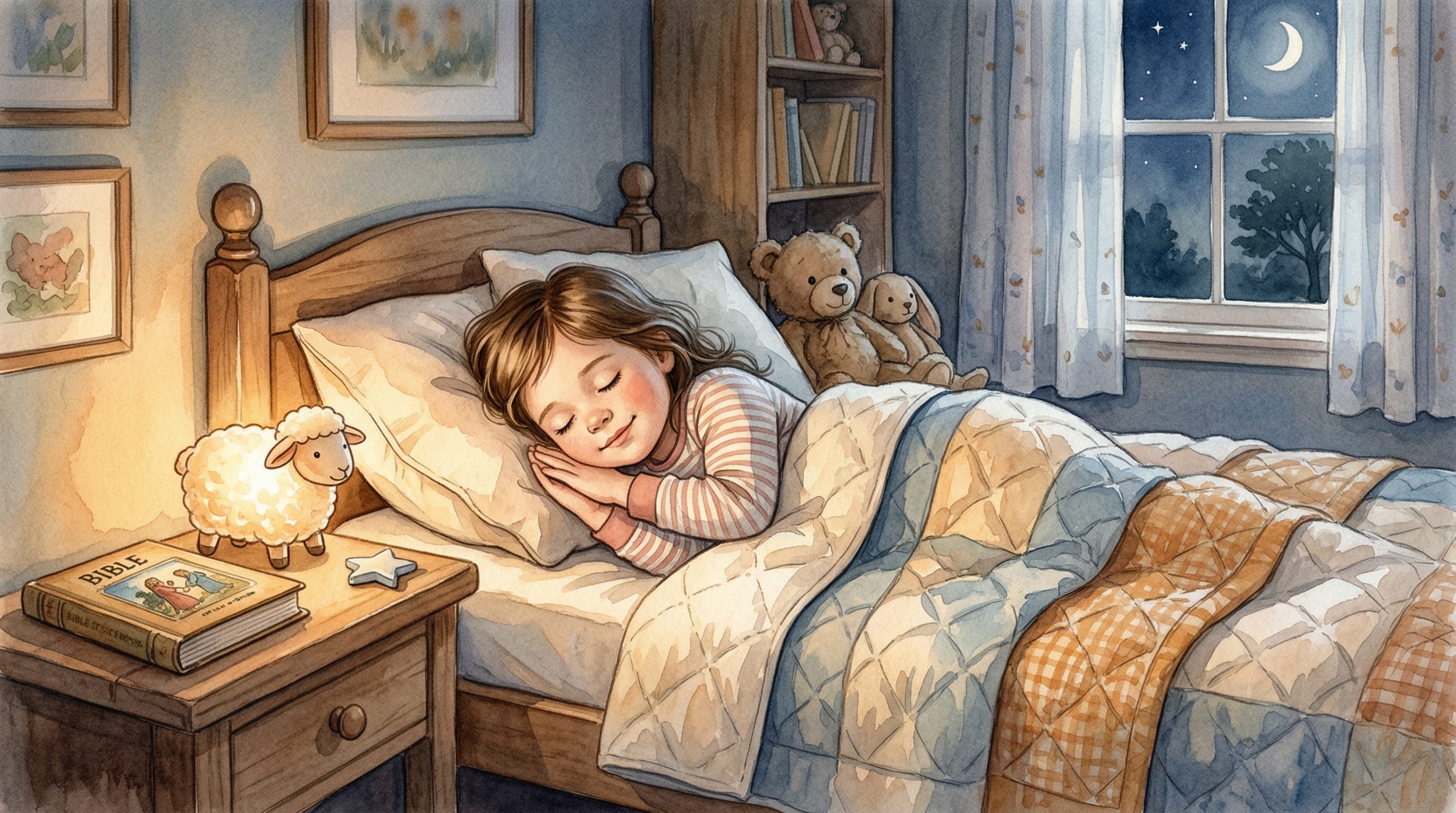
A Simple Devotional for the Night of the Loss
If you want something to do together — not a lecture, just a quiet moment — here's a simple structure for the night it happens:
1. Name it. Ask your child to say [pet's name] out loud and tell you one thing they're going to miss. Don't rush this. Let them take their time.
2. Read one verse together. Psalm 34:18 — "The Lord is close to the brokenhearted and saves those who are crushed in spirit." Let it sit. Don't explain it to death. Just read it.
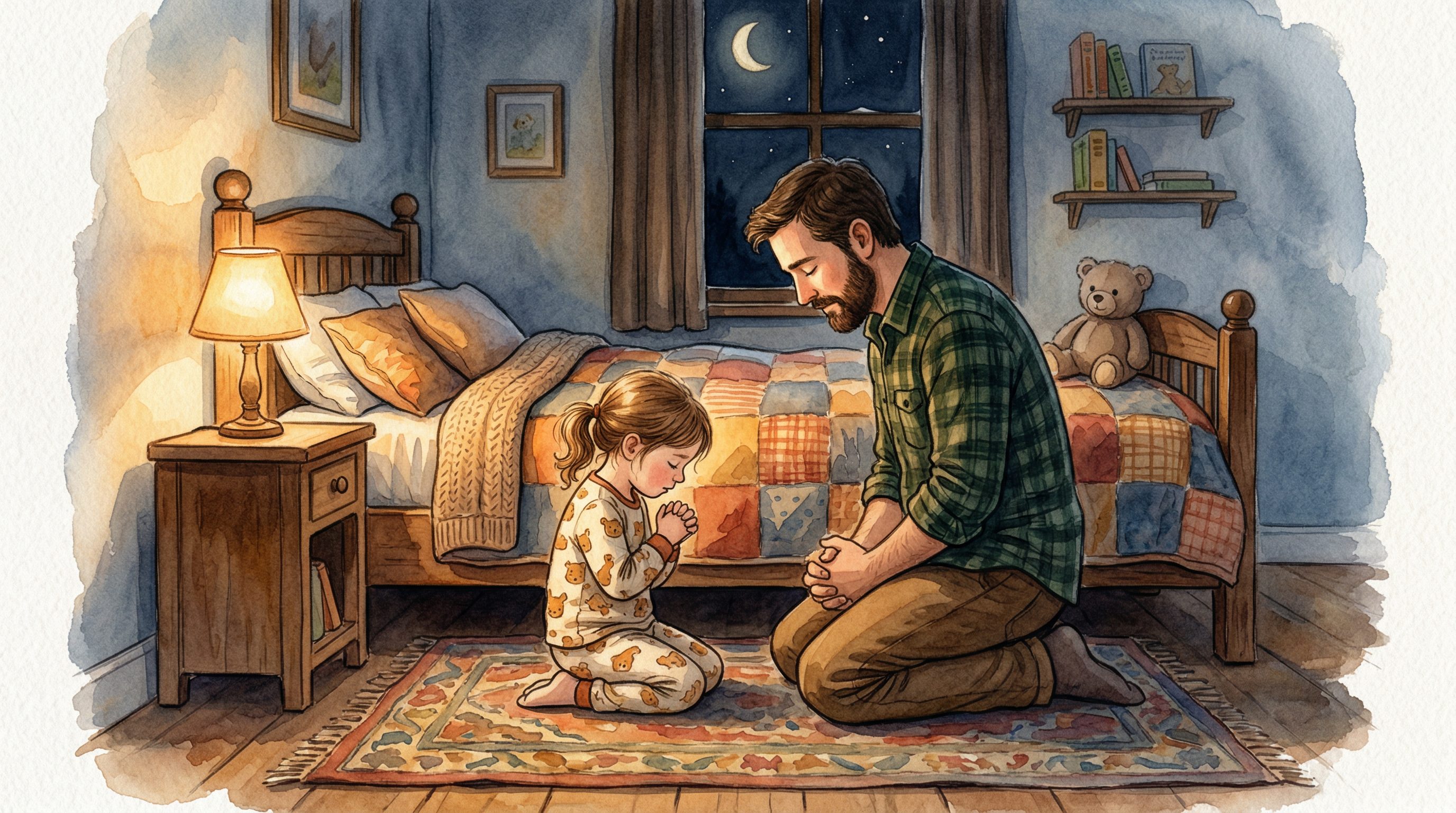
3. Pray together. Let your child pray if they want to. If they don't want to, you pray. Keep it simple: "God, thank you for giving us [pet's name]. We're sad tonight. Help us feel you close." That's it. Done.
4. Stay. Don't rush to leave the room. If they want to talk more, talk more. If they want to be quiet, be quiet. Your presence is the whole thing right now.
In the following days, grief often comes in waves — a moment of normal, then a wave of sad again. That's real. Let your child know that's expected. Check in after a few days: "How are you feeling about [pet]?" Don't assume the conversation ended on night one.
If Your Child Has Harder Questions About Death
Sometimes a pet dying opens a bigger door. Your child might start asking about grandparents, about you, about their own life. That can feel like a lot.
It's actually a gift. These are the conversations that matter most, and they almost never happen on a schedule. They happen in dark rooms when a hamster died and your kid's heart is open and you stayed in the room.
Don't shut the questions down. Sit with them. If you need a framework for those bigger conversations, the devotional on grief for kids has a longer guide for walking children through loss at different ages — and how to talk to your kids about death covers the faith angle more directly.
And if worry is showing up alongside the grief — if your child is suddenly scared about losing you or someone else — the worry devotional is worth reading too. Those two things often travel together in kids this age.
You Don't Have to Have It Together
I haven't lost a pet with my sons yet. They're still young, and our house is still intact. But dads who've walked through this have told me the same thing over and over: I didn't know what to say, so I just stayed. And that was enough.
You don't need the perfect words. You don't need a theological degree. You need to be the kind of dad who doesn't disappear when things get hard — who sits in the sad stuff with his kid instead of trying to sprint through it.
That's what your child is going to remember. Not whether you had the right answer. Whether you were there.
📖 Read This Tonight
If your child is working through grief or big feelings right now, the Big Feelings series walks kids through hard emotions with faith as the anchor — written for bedtime, no prep needed. Or build your own devotional around your child's specific situation.
Get Notified When New Series Drop
We add new devotional series regularly. Sign up to hear about them first.
Join the Community