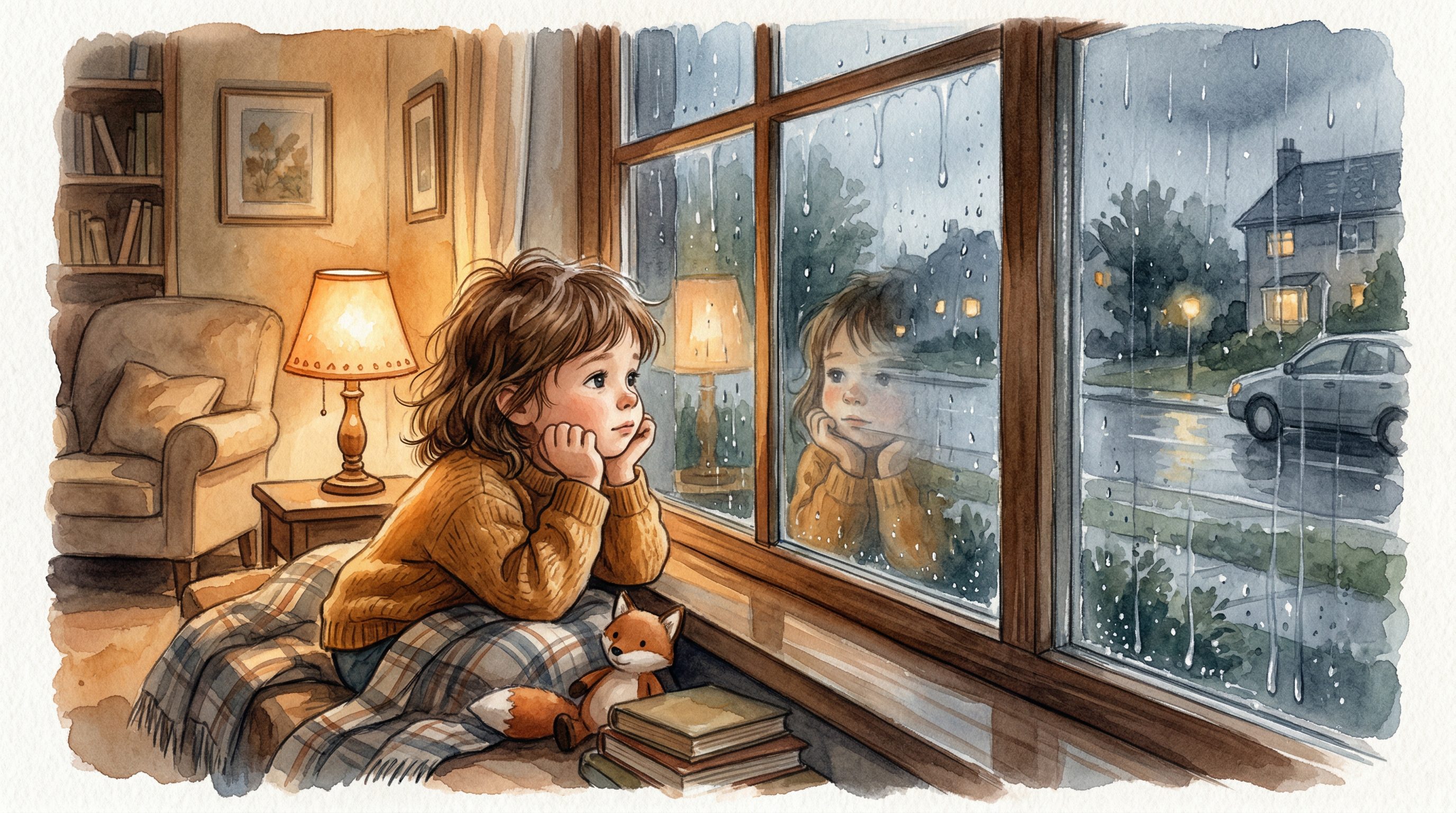
Everything Takes Too Long When You're Seven
Your kid wanted it five minutes ago. The birthday is too far away. Christmas takes forever to come. The microwave is slow. The drive is interminable. Why can't we just go now?
Patience is one of those virtues that sounds obvious to adults because we've lived long enough to see how things turn out. But from the perspective of a seven-year-old, waiting is just time stolen from right now — and right now is all that exists.
Here's what I've found: you can't teach patience by telling a child to be patient. That's like telling someone to calm down — it never works and usually makes things worse. What you can do is give them a framework for understanding why waiting exists — and what kind of God is on the other side of it.
Patience isn't passive resignation. It's active trust. And that's something your child can actually learn.
What the Bible Actually Says About Waiting
The Bible doesn't sugarcoat waiting. It doesn't say waiting is comfortable or that it always makes sense in the moment. What it says is something more honest: waiting is where faith gets built.
Psalm 27:14 — "Wait for the Lord; be strong and take heart and wait for the Lord."
That double use of "wait" isn't an accident. The psalmist knew this was hard. "Be strong and take heart" before "wait" is an acknowledgment that waiting takes something out of you — and requires something from you.
Isaiah 40:31 — "But those who hope in the Lord will renew their strength. They will soar on wings like eagles; they will run and not grow weary, they will walk and not be faint."
The word "hope" here in the Hebrew is better translated as "wait expectantly." This isn't passive. It's looking for God to move with the confidence that he will.
James 5:7-8 — "Be patient, then, brothers and sisters, until the Lord's coming. See how the farmer waits for the land to yield its valuable crop, patiently waiting for the autumn and spring rains. You too, be patient and stand firm."
The farmer illustration is perfect for kids. You plant the seed. You water it. You wait. You don't dig up the seed to check if it's doing anything. You trust the process and show up every day. Patience is showing up every day while the thing grows underground.
The Big Idea: God's Timing vs. My Timeline
Here's the concept that unlocks patience for kids (and honestly, for adults too): the reason God's timing is different from yours isn't that God forgot or doesn't care. It's that God sees things you can't see yet.
Try this with your child: "Imagine you're in a car and all you can see is the road right in front of you. But God is looking at the whole map — every road, every traffic jam, every shortcut. He knows things about where you're going that you don't know yet. When God says 'wait,' it's not because he forgot about you. It's because he can see something on the road ahead that you can't."
That's not a patronizing analogy — it's actually true. And kids can grab it.
The concrete application: "When you have to wait for something and you don't like it — and I know that feels hard — try asking God: 'What are you doing while I'm waiting?' And then actually pay attention. Because sometimes the waiting is the point."
Bible Stories That Show God's Timing
Abstract teaching on patience doesn't stick. Stories do. Here are two that work well:
Joseph — From the pit to Potiphar's house to prison to Pharaoh's court. At every point, Joseph had to wait. He didn't know the ending. He just kept being faithful where he was. The waiting wasn't wasted — it was preparation. (Genesis 37-41) For older kids, this story is powerful: "Every hard thing Joseph went through shaped him into exactly what Egypt needed. He couldn't have known that. But God did."
The Israelites in the desert — Forty years of wandering, and God provided manna every single day. Not a month's supply at once. One day at a time. Why? Because trust is built in daily dependence, not in stockpiles. (Exodus 16) For younger kids: "God could have given them all the food at once. But he gave it one day at a time so they'd remember to look for him every morning. That's why we pray every day instead of just praying once."
Practical Ways to Practice Patience
Patience is a muscle. It gets stronger with use. Here are practices that build it in kids:
The pause. When your child wants something right now, build in a short pause before it happens — not as punishment, but as practice. "We'll do that in five minutes." Then actually do it in five minutes. The goal is to give them practice experiencing the wait and then seeing it resolve. That builds the neural pathway: waiting ends. It doesn't go on forever.
The gratitude bridge. When your child is frustrated about waiting, help them name one thing that's good right now — not to dismiss the frustration, but to train the focus. "I know the birthday feels far away. What's something you're glad about today?" This doesn't eliminate the desire; it widens the field of vision.
The prayer practice. Teach your child to pray about the thing they're waiting for — specifically, honestly. Not just "God please give me what I want." But: "God, I really want this. Help me trust your timing. Help me be patient while I wait." That prayer does two things: it's honest (which God can handle), and it actively orients the child's heart toward trust rather than entitlement.
The waiting journal. For kids who can write, a simple notebook where they record what they're waiting for. When it resolves, they can look back and see God's faithfulness. That record becomes its own evidence.
When Waiting Feels Like God Isn't Listening
This is the hard conversation. Your child prays for something. It doesn't happen. Or it doesn't happen the way they wanted. And they start to wonder: does God hear me? Does he care?
Don't gloss over this. Don't give a quick theological answer and move on. Sit in it with them.
"I know that's hard. I've felt that way too. Here's what I've figured out, and you're going to have to figure it out for yourself too: God always hears. His answer isn't always yes. Sometimes it's 'not yet.' Sometimes it's 'I have something better.' And sometimes we don't know until a lot later why he said what he did."
That's honest. That's faith that has texture and weight. And it's the kind of answer that your child will actually be able to build on — because it doesn't crumble when life gets hard.
I wake up at 4:30 most mornings, and there's always something I'm waiting on — a decision that hasn't come through, a conversation that's still unresolved, something I planted that hasn't grown yet. Sitting with that in the early morning quiet, before anyone else is up, is where I've had to work out what I actually believe about God's timing. The stuff I tell my boys at night? I had to learn it too.

What Patience Produces
Romans 5:3-4 says: "We also glory in our sufferings, because we know that suffering produces perseverance; perseverance, character; and character, hope."
Patience is in that chain. Waiting, done faithfully, produces perseverance. Perseverance builds character. Character leads to hope. That's a long game — but it's the game that matters.
The child who learns to wait well becomes the adult who can sit with uncertainty without spiraling. Who can pursue something long-term without needing constant validation. Who trusts God in the seasons that don't feel like progress.
You're not teaching your child to grit their teeth and endure. You're teaching them to look for God in the middle of the wait — to find him faithful there — and to carry that forward into every hard, slow, unclear season that's coming.
If you want more Bible story material to work through patience and other character topics, teaching patience through Bible stories goes deeper on the narrative side. And if patience and anger are coming up together in your house — which they often do — the anger devotional pairs well with this one. For making these conversations feel lighter and more natural, how to make family devotions fun has practical ideas.
📖 Read This Tonight
Browse the full library for a series that fits where your child is right now — from big feelings to faith foundations to character building. There's something for every season.
Get Notified When New Series Drop
We add new devotional series regularly. Sign up to hear about them first.
Join the Community