
Middle School Is Not the End of the Conversation — But It Does Change It
Every dad with a tween son knows the shift. The kid who used to ask you anything, follow your lead on everything, and think you were basically the smartest person alive — that kid starts to have opinions of his own. He pushes back. He acts like sitting with you is slightly embarrassing, even when no one else is watching. He's more interested in what his friends think than what you think.
This is normal. It's actually healthy. But it does mean that the devotional approach that worked at eight is not going to work at twelve. If you try to force a format that feels childish or preachy, you won't just lose the devotion time — you'll lose the relationship ground that comes with it. The approach has to grow with him.
Here's what actually works for tween boys, and why it matters more than ever to get this right.
What's Happening Inside a Tween Boy's Head
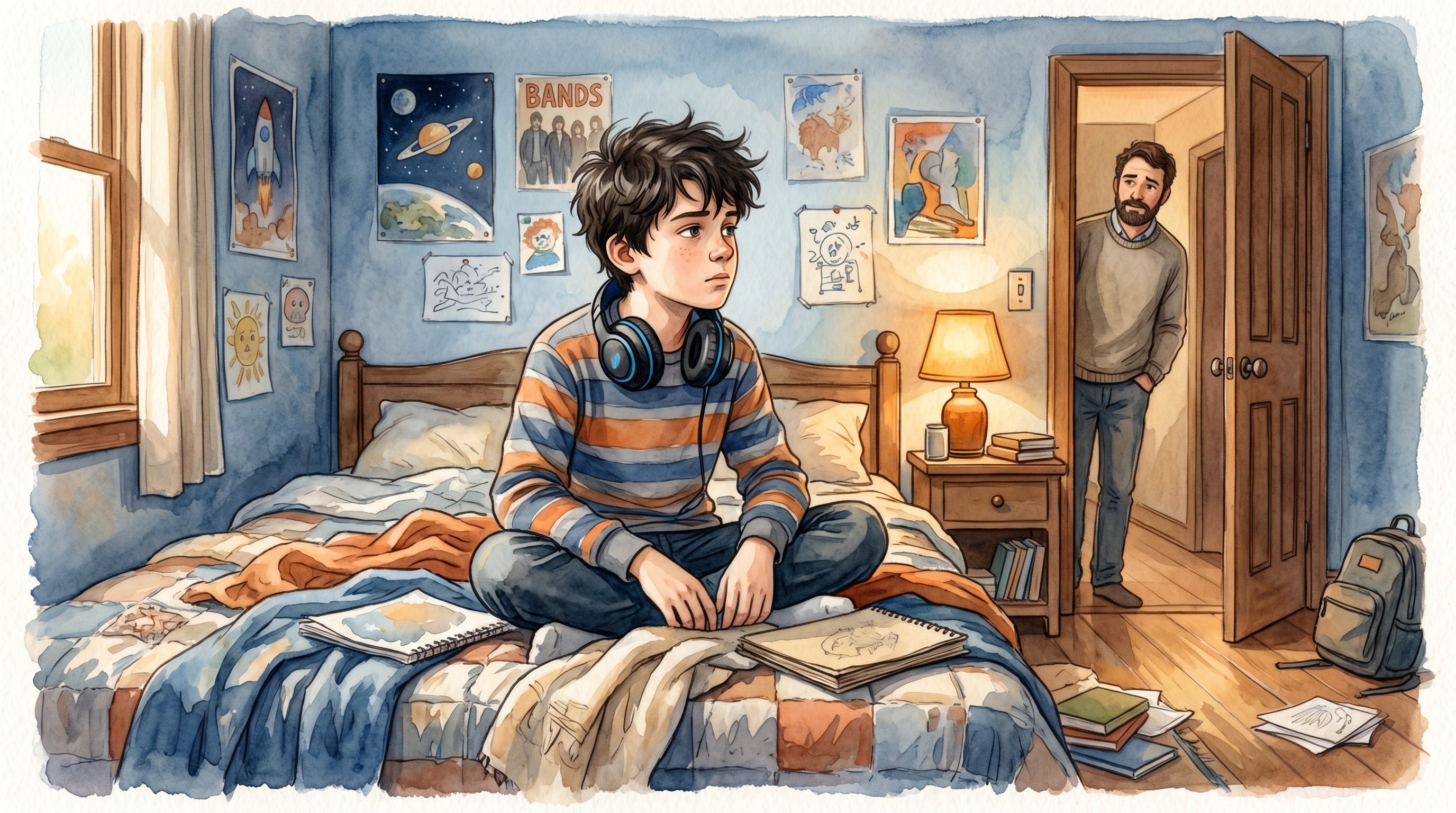
Boys in the 11–13 range are going through one of the most intense periods of identity formation in their lives. Their brains are literally restructuring. The prefrontal cortex — the part responsible for decision-making, weighing consequences, and impulse control — is actively under construction. Meanwhile, the limbic system is running at full speed: emotions are intense, social signals feel like life-or-death, and risk feels more appealing than it should.
They're also beginning what researchers call the "individuation" process — the psychological work of becoming a separate person from their parents. This is why they push back, test boundaries, and seem to care more about peer approval than your approval. They're not rejecting you. They're becoming themselves. But they still need you in the room — even when they'd never admit it.
Studies on adolescent development consistently show that boys who maintain close relationships with their fathers during early adolescence show better emotional regulation, stronger identity development, and are less susceptible to negative peer influence. Presence during this season has measurable effects. Devotional time is one reliable structure for maintaining that presence consistently, without making every interaction feel like a serious talk.
The challenge is that most tween boys won't tell you they need this. They'll act like they don't. They'll roll their eyes or be distracted or seem like they're barely there. And then something will happen — a hard situation at school, a friendship conflict, something they're scared of — and they'll come to the dad who showed up consistently. That's the return on the investment. You just don't see it until you need it.
What a Tween Boy Actually Needs From a Devotional
Content that works for tween boys tends to share a few qualities:
- Respect. Nothing shuts down a tween boy faster than feeling condescended to. The content has to treat him like he's capable of real thought — because he is. If he's being talked down to, he'll check out within two minutes.
- Relevance to what he's actually navigating. Peer pressure, social status, what it means to be a man, how to handle conflict, what to do when you've messed up — these are live topics every day of his life. Content that speaks to them directly lands. Content that doesn't, doesn't.
- A male voice and framework. Boys at this age are actively looking for models of manhood. A devotional that speaks to what it means to be a good man — in specific, non-preachy terms — gives them something to think about. Something to aim at that isn't just about achievement.
- Short and substantive. Tween boys have a low tolerance for being lectured and a high sensitivity to anything that feels performative. Punchy, real, honest content works. Extended moralizing does not. Get in, say something true, get out, and then talk.
The Identity Piece Is the Whole Game
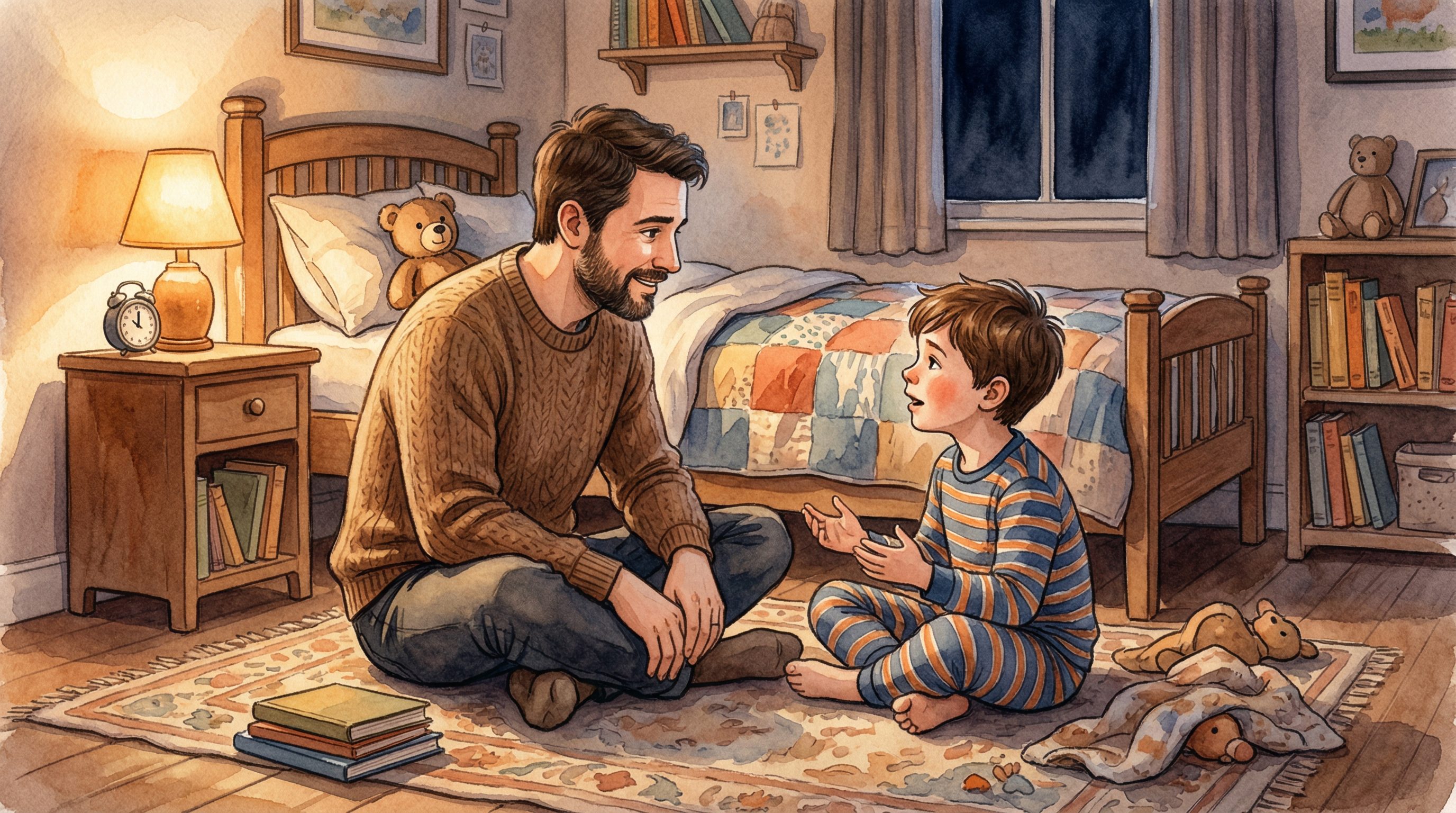
If there's one thing tween boys need more than anything else — more than courage content, more than behavioral guidance, more than Bible knowledge — it's a secure sense of who they are. The middle school world is ruthlessly hierarchical. Kids who don't know who they are get sorted by someone else's framework. Kids who do know who they are have something to stand on when the pressure comes.
That identity conversation is most powerful when it comes from a dad. Not a youth pastor, not a mentor, not a coach — though all of those matter. A father saying to his son, directly and repeatedly, This is who you are. This is what I see in you. This is what matters — that sinks in at a level that outside voices can't reach.
The You Are My Son series on Hosted Devotions is built around exactly this. It's designed for the father-son context, in language that actually sounds like something a real dad would say — not a church curriculum but a conversation between a man and his kid. For tween boys who are figuring out who they are, having a father read that content with them consistently is more significant than it might look on the surface.
For a broader look at the identity topic specifically, the article on identity devotionals for boys goes deep on what kind of content helps boys develop a faith-rooted sense of self during these years. And for the practical side of keeping the habit alive during the tween season, the article on devotions for dads with tweens is exactly what it sounds like — a practical guide for the whole season, not just one age.
How This Connects to the Earlier Work
If you've been doing devotions with your son since he was younger, the tween years are where that investment becomes visible. The boy who has been having faith conversations with his dad for five years is not the same as the one who hasn't. He has vocabulary. He has framework. He has a track record of his dad showing up for real conversations — so when things get hard, that's still where he goes.
The guide to devotionals for 11-12-year-olds covers the age-specific approach in more detail, including how to handle pushback and keep the conversation going when engagement is harder to come by.
If you're entering the tween years with your son and haven't been doing devotions consistently until now — it's not too late. Start where he is. Don't try to go back and catch up on content. Start with what's real for him right now. The tween years are actually a great entry point because the stakes are high enough that he might surprise you with how much he's willing to engage.
What to Do When the Content Runs Out
One common problem dads run into with tween boys: they find content that works for a while, and then their son has heard it all and starts disengaging again. Here's how to navigate that without losing momentum:
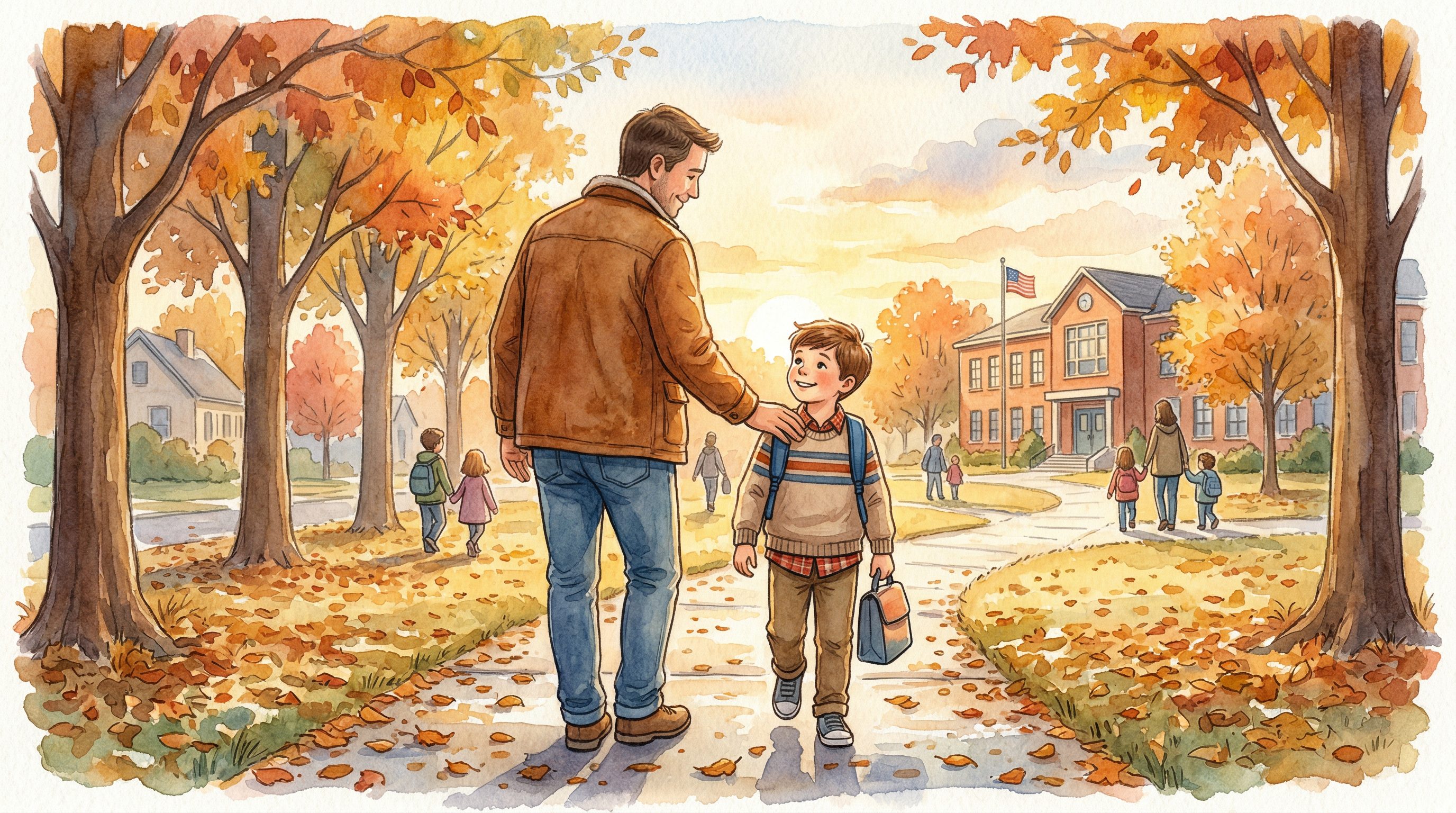
First, don't feel like you need a new devotional series every month. Sometimes the right move is to go back to something you read a year ago and see how it lands differently now. Your son has grown. The same content will hit differently at twelve than it did at ten. Ask him: Do you think about this differently now than you used to? That question alone can open a good twenty-minute conversation.
Second, real life is content. If something happened at school — a conflict, something someone said, a moment where he had to make a choice — that's a devotional. You don't need a book. You need a question and some time. What do you think the right thing to do was? What did you actually do? What would you do differently? That kind of real-time processing is some of the best faith formation available.
Third, let him bring something to the table. Ask what he's been thinking about. What does he wonder about God? What's confusing? What doesn't make sense? Tween boys often have more genuine theological curiosity than they let on. Create the space, and they'll surprise you.
The Practical Stuff: Making Devotions Work at This Age
A few things that consistently work for dads navigating devotions with tween boys:
Let him have a say in what you read. If he feels like the content is being imposed on him, he'll treat it like another thing adults make him do. If he's had a hand in choosing it, the engagement is different. Ask him what he wants to understand. What's he thinking about? What do his friends deal with? Start there and find content that speaks to it.
Be honest about your own struggles. Tween boys have a finely tuned hypocrisy detector. If you're presenting faith as something you've mastered and he needs to catch up to, he'll tune out. If you're honest — this is something I'm still working on too — he'll lean in. Shared pursuit beats top-down instruction every time at this age. The dad who admits he doesn't have it all figured out earns more credibility than the one who pretends he does.
Don't make it a performance review. If every devotional turns into a conversation about how he could be doing better, he'll dread it. The devotional is relationship time. Keep it that way. The behavior conversations can happen in their own space, on their own terms — not piggybacked onto a shared reading.
And keep going even when it's imperfect. The nights where your tween son seems completely checked out are still nights where you showed up. He's noticing even when it doesn't look like it. That consistency is the point — and he'll thank you for it eventually, even if it takes a decade.
📖 Read This Tonight
The You Are My Son series speaks directly to the father-son relationship — identity, worth, and what it means to be known. It's the kind of content that doesn't feel like church but still goes deep. A strong fit for tween boys navigating who they are.
Get Notified When New Series Drop
We add new devotional series regularly. Sign up to hear about them first.
Join the Community