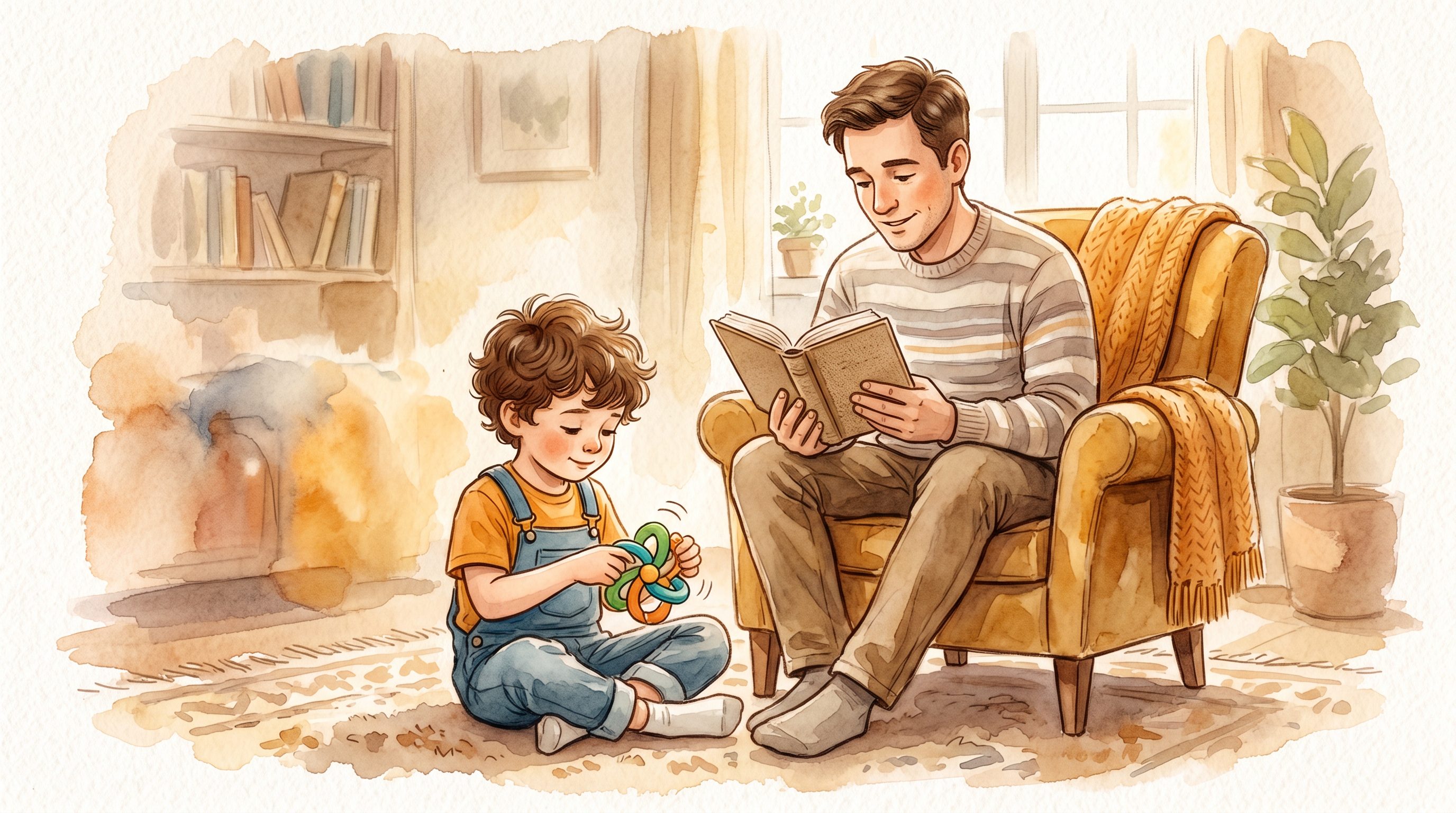
The Devotional That Actually Worked Was the Shortest One
Most devotional content for kids is designed for a kid who sits still, listens quietly, and answers thoughtfully when asked. That kid exists. Your kid might not be that kid.
If you have a child with ADHD, you already know: the standard playbook doesn't apply. Fifteen-minute structured reading time sounds like a parenting article. In real life, it's a negotiation that ends with someone frustrated and nobody feeling spiritually enriched.
This is part of a broader conversation about how bedtime devotionals can meet kids where they are — for more on that foundation, this related piece covers the emotional groundwork. Here's the thing I've come to believe: the format is the problem, not the kid. ADHD brains aren't broken brains — they're wired differently, and they need a differently-shaped container. That's not a workaround. It's just accurate.
<
Why Bedtime Is Actually Good for ADHD Kids
This might surprise you: bedtime can be one of the best windows for an ADHD child, not the worst. Here's why. By the end of the day, the stimulation is winding down. There's nowhere to go. The screens (hopefully) are off. The house is quiet. And for a brain that's been running at full speed since 7 a.m., that transition can actually create a brief window of focus that doesn't exist at 4 p.m.
It's not guaranteed, and it doesn't last long. But it's real. The key is using that window well instead of fighting it by trying to cram in more than it can hold.
Keep it short. Aim for five minutes, maybe seven. If it goes longer because your kid is actually engaged, great. But don't plan for more than five. A five-minute devotional that actually happens is worth more than a fifteen-minute one that never gets off the ground.
For more on building a simple, sustainable routine, this piece on the 5-minute bedtime routine is worth reading before you start. And if anxiety is part of the picture alongside ADHD — which it often is — the devotional for anxious kids covers a lot of overlapping ground.
Format Adjustments That Actually Help
Short content is the starting point, but format matters too. Here's what works and what doesn't:
What works:
- One verse, not a chapter. Pick a single verse, read it once, maybe twice. That's the text. Don't read more hoping more will sink in.
- One question. Not three. Not a discussion guide. One question and then you listen.
- Movement-based missions. Instead of just talking about a concept, give your kid something to do with it. "Tomorrow, try to listen to someone for a whole minute without interrupting" turns a spiritual idea into a physical action. ADHD brains respond to this.
- Predictable structure. Same time, same order, every night. ADHD brains find comfort in routine even when they resist it in the moment.
What doesn't work:
- Long readings where you're hoping they'll "get something" from it
- Open-ended reflection with no anchor
- Sitting still with no fidget outlet
- Any setup that requires the day's last energy reserves

A Word About the Fidgeting
Your kid might squirm while you're reading. They might pick at their blanket, stare at the ceiling, or seem like they're not tracking at all. This is where most parents conclude the devotional isn't working and stop.
Don't stop yet. ADHD kids often process better when their hands are busy. The appearance of inattention doesn't mean they're not absorbing anything. Ask your question at the end and see what comes back — you might be surprised.
No shame about the fidgeting. No corrections mid-reading about how they're sitting or whether they're looking at you. That breaks the moment and sends the message that devotional time is another place where they're getting something wrong. That's the last thing you want to build into this.
The goal isn't compliance. It's connection. If your kid is in the room and half-listening, that's enough to start. You're planting seeds, not running a quiz.
Also worth flagging: if you're dealing with a kid who connects ADHD with shame or a sense that they're "bad," the identity angle matters a lot here. Devotionals around identity can help reframe how they see themselves — including the parts of their brain that work differently.
What to Read With an ADHD Kid
Look for content that's structured in short bursts with clear application. Avoid long narrative sections without stopping points. The best format is: short truth → brief reflection → one actionable mission.
The Hosted Devotions library has series built with this structure in mind — short chapters, clear themes, with something concrete to take into the next day. The mission-style approach works especially well for ADHD kids because it gives the idea somewhere to go besides just the brain. Something to do tomorrow. Something to report back on.
If your kid came home from school frustrated about something that ties into the devotional — conflict with a friend, a hard moment in class — bring that in. ADHD kids often engage more deeply when the content connects to something real in their life. Don't manufacture the connection, but if it's there, use it.
<
The Long Game
Building a devotional habit with an ADHD kid isn't about nailing it every night. It's about showing up consistently enough that it becomes a known part of the day. Some nights will be a disaster. Some nights your kid will surprise you with something that makes you catch your breath.
You're not teaching them to sit still during devotionals. You're teaching them that faith is something their family does together — and that it has room for them exactly as they are. That's a message worth delivering, even if the delivery is messy.
📖 Read This Tonight
Browse the library and find a short series that fits your kid's attention span tonight. Short chapters, real missions, no shame.
Get Notified When New Series Drop
We add new devotional series regularly. Sign up to hear about them first.
Join the Community