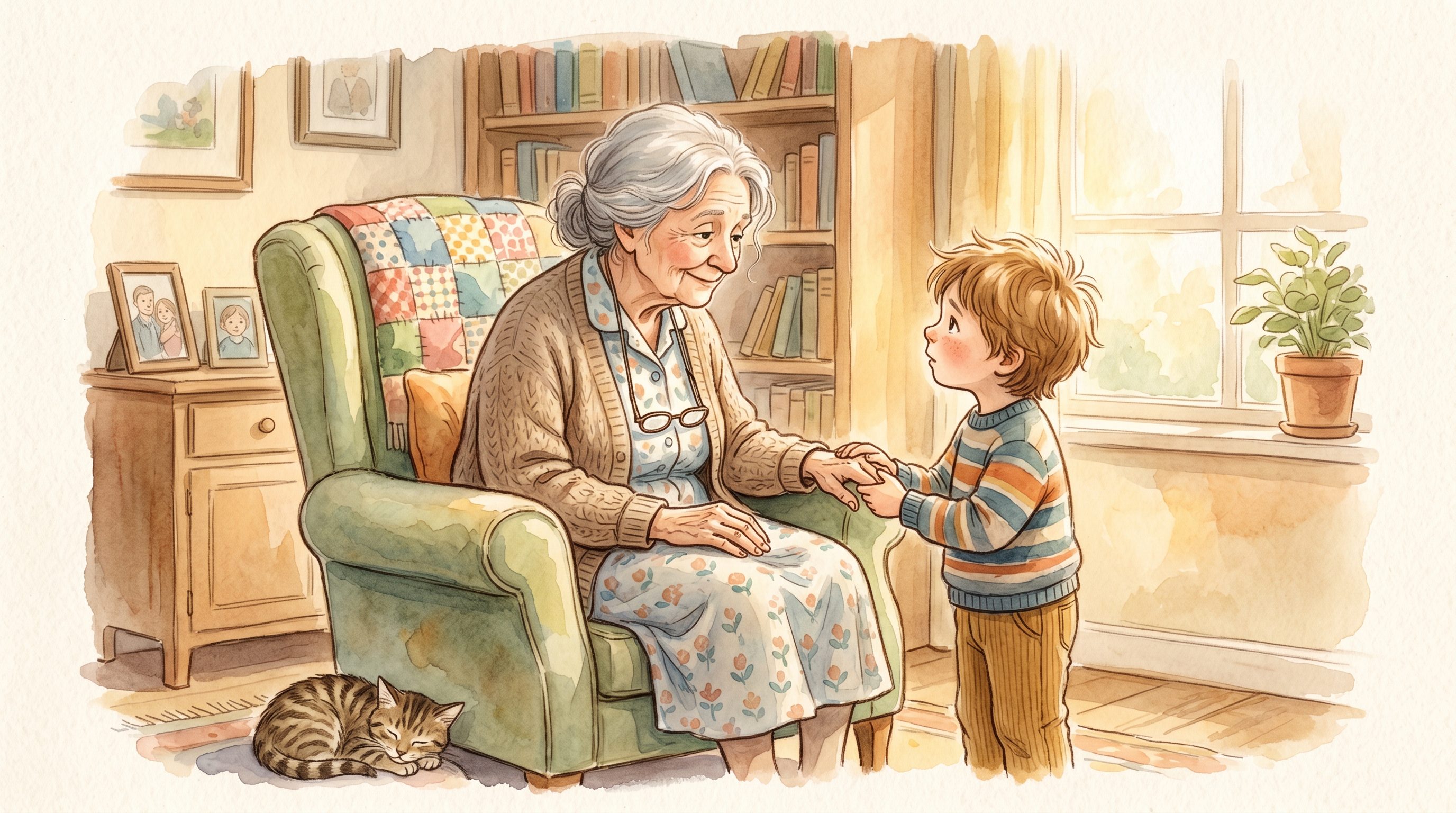
When Your Kid Sees It on Your Face Before You Say a Word
You get the call. Your dad's in the hospital, or your mom's diagnosis just changed, and you do your best to hold it together for the rest of the evening. But kids — especially young ones — read you better than you think. They notice the way you stare at your phone. The way you're quieter than usual. The way you hug them a half-second longer at bedtime.
I haven't been through this yet. My parents are healthy, my in-laws are doing fine, and I'm aware that puts me in a different place than a lot of dads reading this. But the dads I've talked to who have watched a parent get sick while raising young kids — they describe a version of this that's almost impossible to navigate alone. You're scared for your parent. You're trying to shield your kids. And you have no idea what to say when your 7-year-old asks why Grandpa can't come to the game this weekend.
The devotional isn't a magic fix for any of that. But it gives you a container — a moment at the end of the day where you can bring it to God together, name what's happening, and not pretend everything's fine.
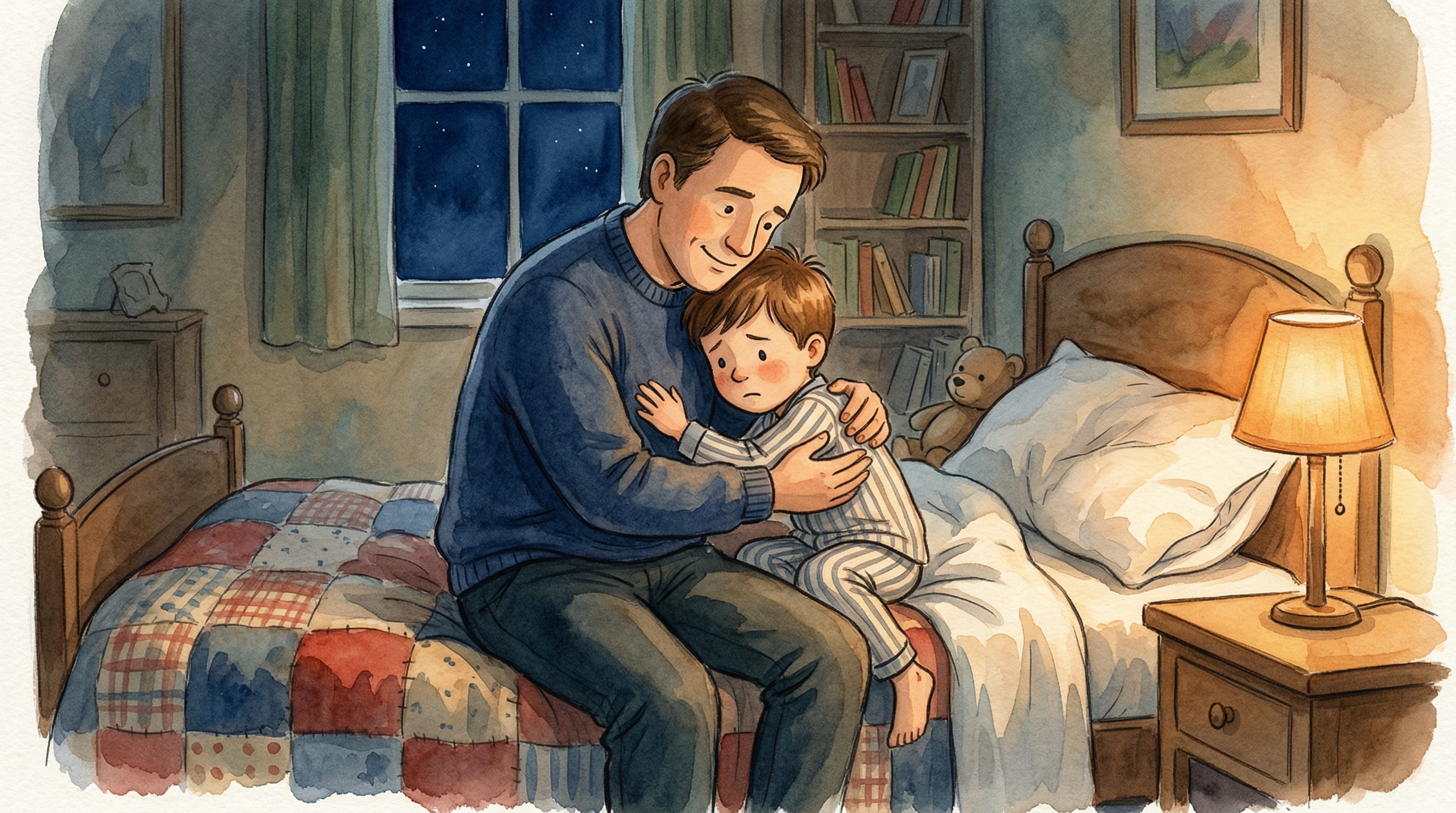
How Kids Process a Grandparent's Illness
A grandparent's illness is often a child's first real encounter with mortality. Before this, death was something abstract — something in movies, something that happened to old people far away. A sick grandparent makes it immediate and close. That's a lot for a small person to hold.
What dads describe seeing in their kids during this time varies by age, but a few things show up consistently:
- Young kids (4-7) often become clingy or regress — more nighttime waking, more separation anxiety, more attachment to routines. They don't have language for fear, so they need extra physical reassurance.
- Middle kids (8-11) tend to ask questions — sometimes uncomfortably direct ones. "Is Grandma going to die?" They're trying to build a mental map of what's happening. Honest, calm answers help more than reassurance that turns out to be wrong.
- Older kids (12+) often go quiet. They're processing something that feels too big to talk about, and they don't want to add to the family's stress. This silence looks like okay-ness but usually isn't.
A short devotional at bedtime gives you a low-pressure moment to check in — not with a big "how are you feeling?" that puts them on the spot, but through the content itself. The right verse, the right question, opens the door without forcing it.
What to Actually Say to Your Kid
The temptation is to protect them. "Grandma's just resting. She'll be fine. Don't worry." Dads who've been through it will tell you: this strategy backfires. Kids sense the gap between what they're being told and what they're feeling in the room. When you're honest — at the right level for their age — they trust you more. And they're less scared, not more.
A few things that actually work:
For young kids: "Grandpa is sick right now. The doctors are helping him. We're all worried about him, and that's okay. Even when we're worried, God is with Grandpa and with us. Want to say a prayer for him tonight?"
For middle kids: "I'm going to be honest with you — Grandma is pretty sick. I don't know exactly what's going to happen, but I know we're going to love her and be with her as much as we can. And I know God doesn't leave her alone in this. Let's read something together tonight."
For older kids: "I don't want to pretend things are fine when they're not. Grandpa's diagnosis isn't good news. I'm scared. I think you might be too. I want us to bring that to God tonight instead of just carrying it alone."
That last one — inviting them to bring fear to God rather than just carrying it — is where devotionals shine. It's not about making the fear go away. It's about where you take it.
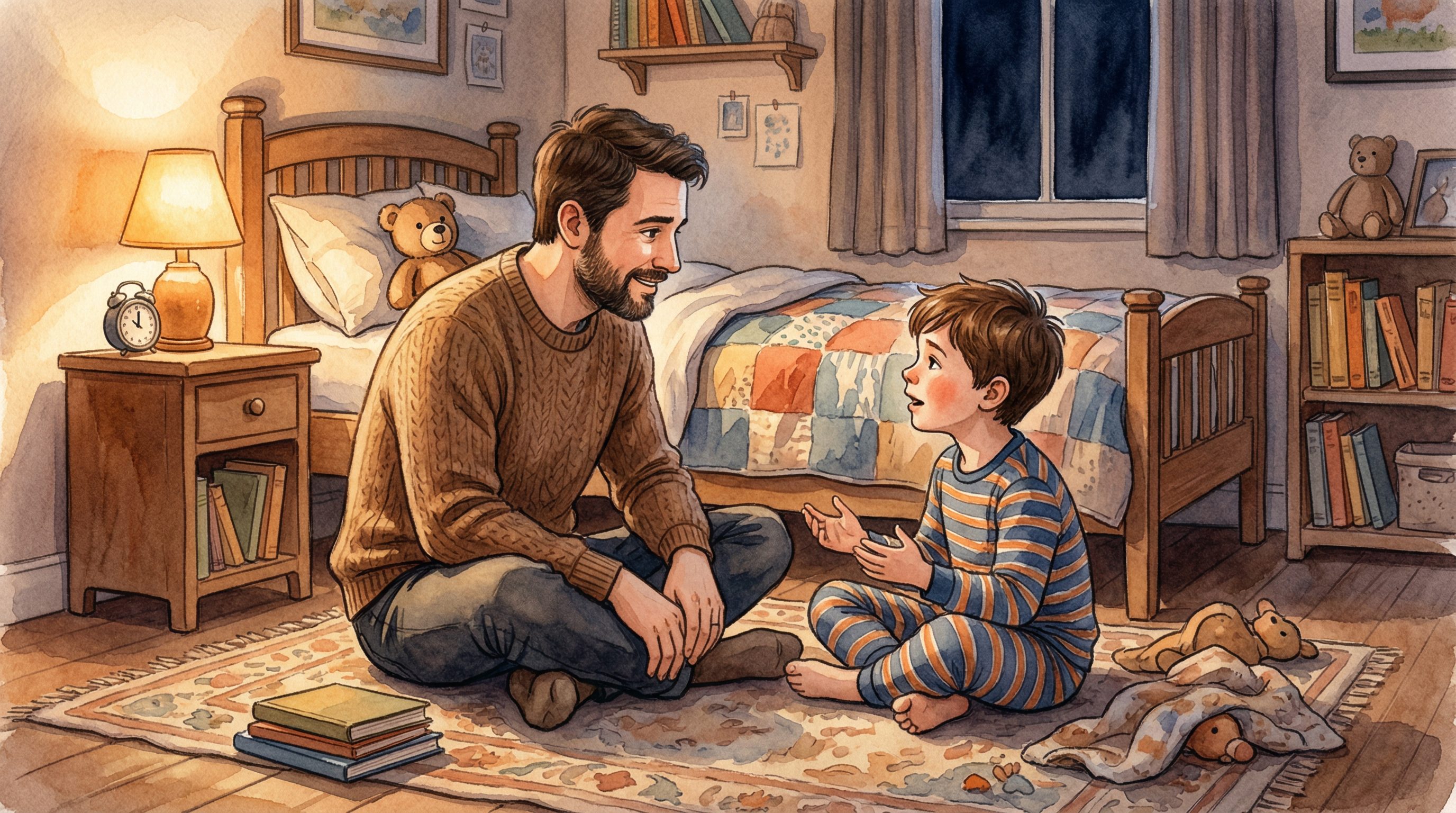
Verses That Speak to This Specific Fear
These are the passages that dads in this season keep coming back to. They're not the tidy ones — they're the honest ones.
Psalm 46:1-2 — "God is our refuge and strength, an ever-present help in trouble. Therefore we will not fear, though the earth give way and the mountains fall into the heart of the sea." Read that to a kid who's scared about Grandma, and then explain: mountains falling doesn't mean God leaves. It means He's still there even in the falling-apart moments.
John 14:27 — "Peace I leave with you; my peace I give you. I do not give to you as the world gives. Do not let your hearts be troubled and do not be afraid." The key distinction: this isn't the world's peace, which depends on things being okay. It's a different kind of peace — one that exists even when things aren't okay.
2 Corinthians 1:3-4 — "The Father of compassion and the God of all comfort, who comforts us in all our troubles, so that we can comfort those in trouble with any comfort we ourselves receive from God." This is a good one for older kids who want to do something. The comfort you receive, you pass on. Even visiting Grandpa, even sending a card — it's part of this.
Philippians 4:6-7 — "Do not be anxious about anything, but in every situation, by prayer and petition, with thanksgiving, present your requests to God." A good launching pad for prayer at bedtime. Ask your kid: what do you want to ask God about Grandma tonight?
Running a Devotional When You're Barely Keeping It Together
Here's the honest thing: when a parent is sick, you're not in a place to prepare a thoughtful devotional. You're fielding calls, doing research, managing your own grief while trying to be present for your kids. The last thing you have is bandwidth to come up with something from scratch at 8 p.m.
This is exactly why having a structured guide matters. When Things Change is built for this kind of season — it's short, it's honest, and it's designed to be used when you don't have anything left. You pick it up, read one night's entry, and let it carry the structure for you. You just show up.
Even five minutes of reading together and praying together is better than nothing. And here's something dads tell me consistently: the nights they most didn't want to do it — the nights they were most exhausted and most depleted — those ended up being the nights that mattered most to their kids.
If the current series in the app isn't speaking to your specific situation, you can build a custom devotional series designed around what your family is actually going through. A few minutes of setup to create something tailored is worth it when you're in a hard season and need the content to actually land.
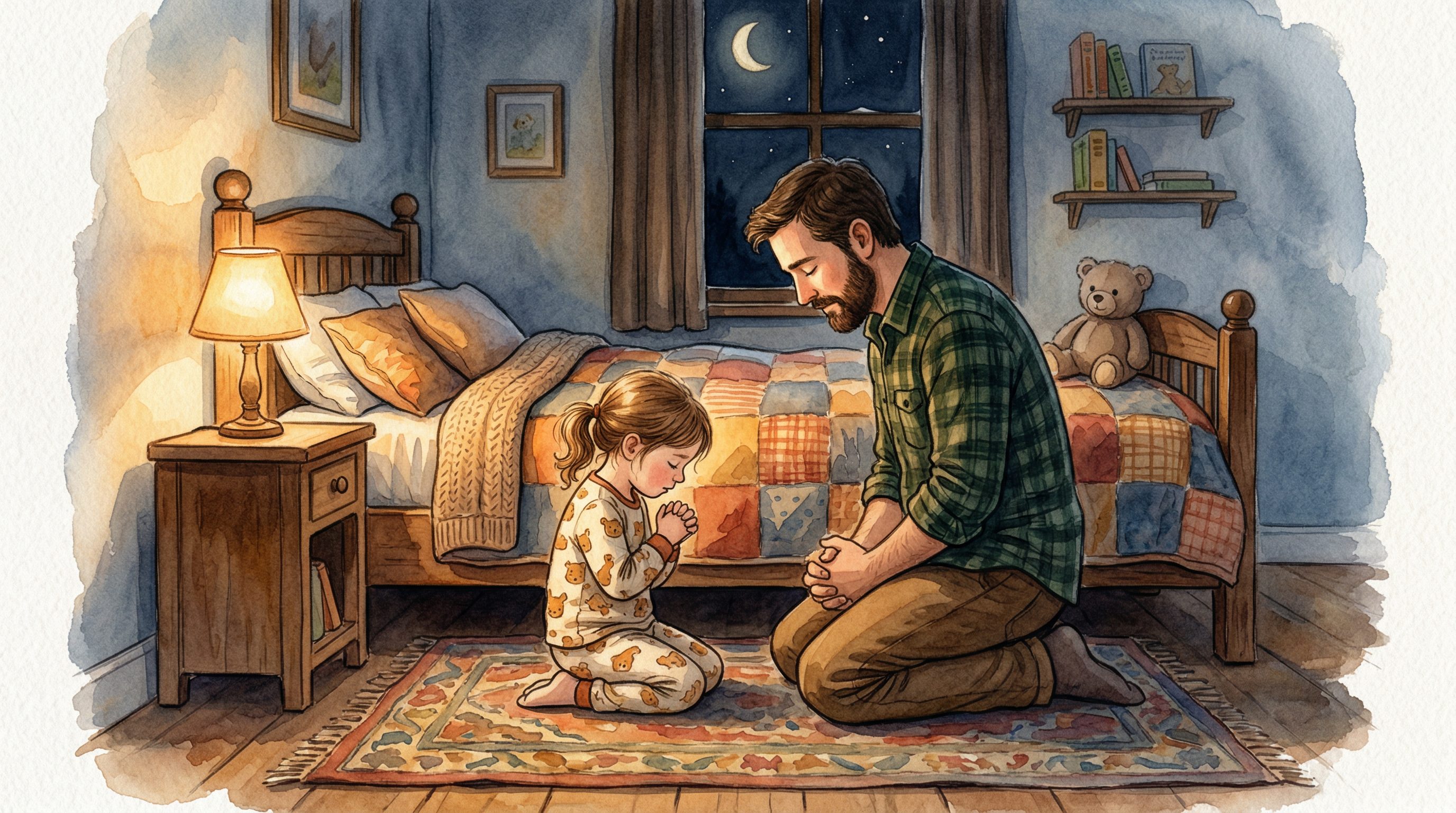
The Visit Question: How to Prepare Your Kid to See a Sick Grandparent
At some point, the question of visiting comes up. Maybe Grandpa's in the hospital. Maybe Grandma's at home but looks different than she used to. Kids need to be prepared for what they're going to see — and a devotional in the days before a visit is a real tool for this.
Dads who've navigated this say the key is: tell them the truth in advance. "Grandpa looks different. He's thinner, he sleeps more. But he's still Grandpa, and he loves you, and your visit is going to mean everything to him." Then ask: what do you want to say to him when you see him?
That question — what do you want to say — gives kids a sense of agency in a situation where they feel helpless. It also sets up the visit as something they're bringing to Grandpa, not just something being done around them.
For more on walking kids through loss and illness, this guide on devotionals for kids about grief covers the full arc from illness to loss. And how to talk to kids about death has direct, practical language for the harder conversations. If the illness is progressing and loss becomes real, the piece on when a parent is sick covers the same principles from a slightly different angle.
What You're Actually Teaching Them
I think about this a lot — what am I actually building with my sons during devotionals? It's not just Bible knowledge or prayer habits. It's a posture. A reflex. When things are hard, we bring them to God. Not instead of doing everything else we need to do. Not as a magic solution. Just as the thing we do — the thing we start with.
When your kid watches you sit down for devotions on a night when Grandma's sick and you're clearly not okay — that's one of the most powerful things they'll remember. Not the words. The fact that you did it anyway.
📖 Read This Tonight
When Things Change is a devotional series for families navigating scary seasons — illness, uncertainty, transition. Short entries, honest content, built for nights when you don't have much left.
Get Notified When New Series Drop
We add new devotional series regularly. Sign up to hear about them first.
Join the Community