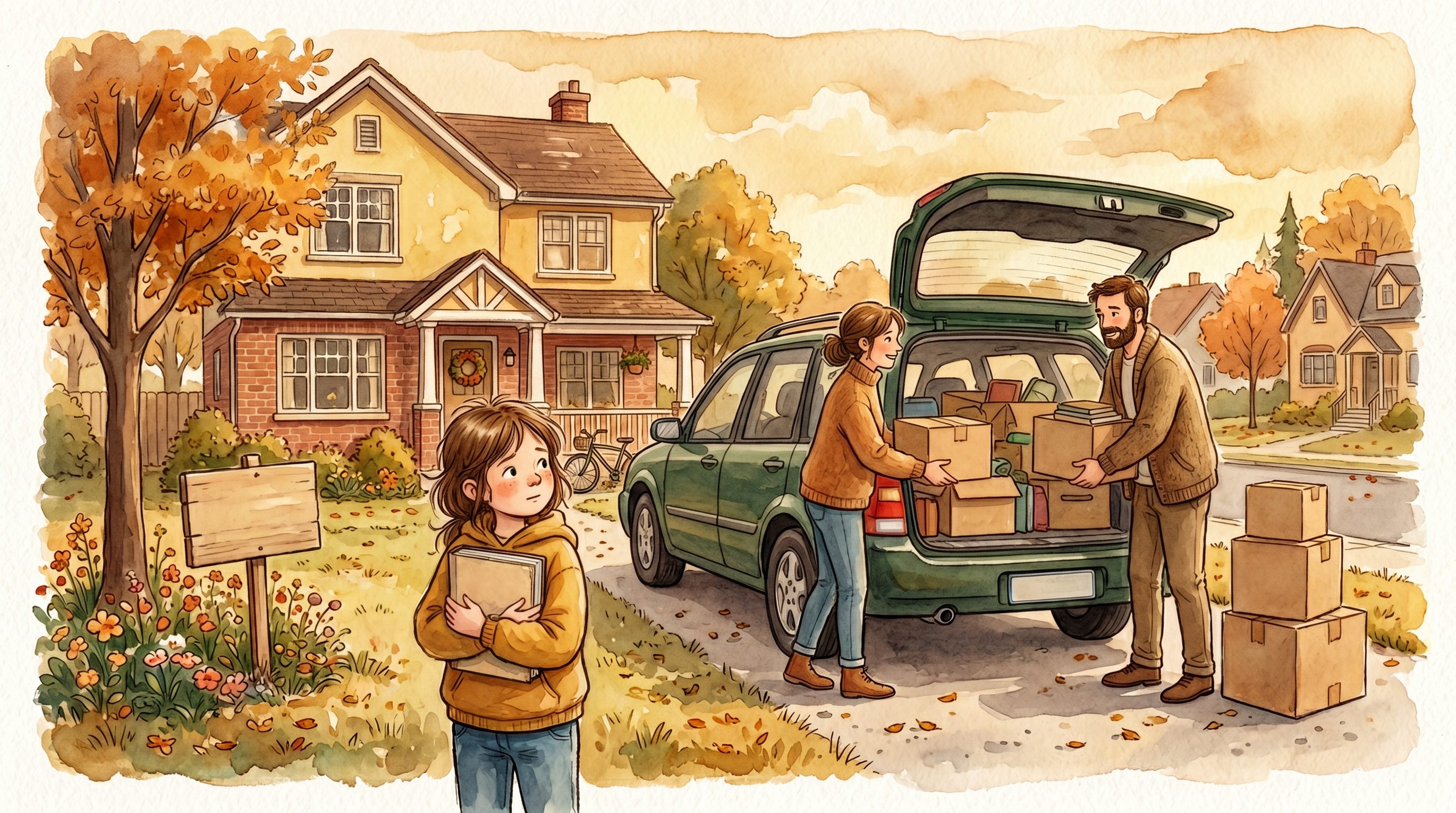
Moving Is a Big Deal. Treat It Like One.
Adults move to new cities and feel it — the disorientation, the loss of familiar places, the awkward weeks of not knowing where anything is. And we have decades of experience adapting. We have established identity, professional context, social frameworks that come with us.
Your kid has none of that. When you move to a new city, your child is losing their school, their friends, their neighborhood, their sense of where they fit in the world. They're also losing the comfort of the unknown being small — because now the unknown is everything.
That's not being dramatic. That's just what's happening.
A devotional that speaks directly into this moment isn't a nice add-on. It's one of the most concrete things you can offer a kid whose world just got rearranged. A story that says: God was with people who moved. God was with people who lost their home. God doesn't stay behind when the moving truck leaves.
That kind of language, read aloud by a dad who's physically present, is stabilizing in a way that logistics and reassurance just aren't.
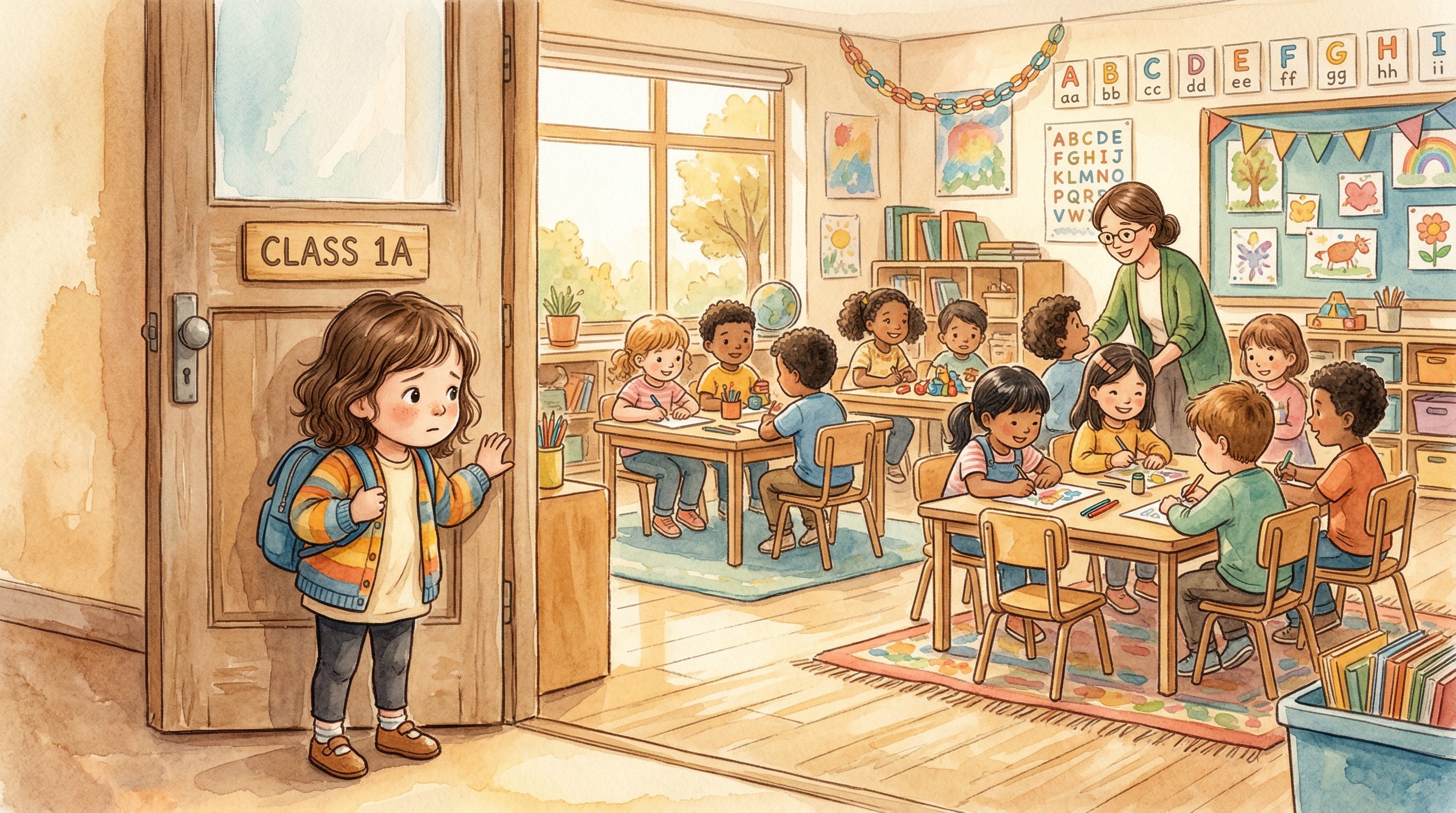
What Your Kid Is Actually Experiencing
Kids process moves differently depending on age, personality, and how much advance notice they had. But there are a few common threads worth knowing:
The Loss of Social Capital
Especially for school-age kids, friendships aren't just nice to have — they're foundational to identity. Who you sit with at lunch tells you who you are. Moving erases all of that in a single afternoon. Your child is starting from zero in a social environment where everyone else already has their people. That's genuinely hard, and minimizing it ("you'll make new friends so fast!") doesn't help. Acknowledging it does.
The Loss of Familiarity
Kids draw more stability from their physical environment than adults realize. The route to school. The park they always went to. The specific light that came through their bedroom window. Small things, but they add up to a felt sense of home. When those things disappear all at once, the disorientation is real — even if your kid can't name it.
The Underlying Question
Underneath all of it, most kids carry some version of this question after a move: Does God know where I am now? Did everything I knew about who I am come with me, or did some of it stay behind? They won't phrase it that way. But if you pay attention to what they're actually saying — "I miss my old bedroom," "none of these kids are like my real friends" — that's what's underneath it.
A devotional that addresses identity and belonging — that God's knowledge of your child isn't geographically limited — is exactly what this moment calls for. The New Kid Devotional was built for exactly this: a child stepping into an unfamiliar environment and needing to know that who they are came with them.
The Timeline Nobody Tells You About
Parents often expect kids to bounce back from a move faster than they do. The "adjustment period" in parenting advice is usually framed as weeks. The reality is often longer — sometimes months, sometimes the better part of a school year before a child genuinely feels settled.
Understanding that timeline matters because it shapes what you do. If you're expecting your kid to feel better by week three and they're still struggling at week eight, you'll start to worry that something is wrong — when in fact, the adjustment is completely normal, just slower than you expected.
The devotional piece doesn't compress that timeline. But it changes the character of the wait. Instead of just riding it out, your child is actively being given language for what they're experiencing, stories of people who navigated similar disorientation, and the concrete experience of a dad who shows up every night with something true to say. That's not nothing. That's actually a lot.
How to Use Devotional Time During a Move
The moving period — a few weeks before, the move itself, the first weeks after — is chaotic. Routines are disrupted. Bedtime gets pushed around. The house doesn't feel like home yet. Which makes devotional time simultaneously harder to do and more important to do.
Here's how to approach it:
Make It the Consistent Thing
When everything else is in boxes, the devotional becomes the thing that stayed. Same routine, same time, same presence. In a new bedroom, in a house that still smells like someone else, reading with Dad is the anchor. Lean into that intentionally. Say it out loud if it helps: "Everything else is new. This part is the same."
Let the Content Name What's Happening
Pick content that speaks directly to new beginnings, to being the new kid, to God's presence in unfamiliar places. Don't default to your usual rotation. Choose deliberately. Your kid needs to hear, in the language of story and Scripture, that what they're feeling has a name and that people have walked through it before.
Make Space for Grief
The devotional isn't the time to spin the move as positive. It's the time to be honest. Abraham left his hometown. Ruth left her home country. Joseph ended up somewhere he never asked to be. The Bible is full of people who moved — some by choice, some not — and found God present in the new place. That's not a happy ending that erases the hard part. That's God meeting people in the hard part. Let your kid hear that.

Practical Questions to Ask During Devotion Time
After you finish reading, the question you ask matters as much as what you read. Here are a few that open things up rather than closing them down:
- "What's one thing from the old house you wish you could bring here that you can't?" (Don't fix it. Just listen.)
- "If you could tell God one thing about how you're feeling about the new place, what would you say?"
- "What's one thing in the new place you haven't tried yet that might be good?"
These questions work because they're honest. They don't require your kid to perform positive feelings they don't have. And they keep the conversation open enough that the real stuff can come out — sometimes over multiple nights, which is fine. Let it be a running thread.
What to Do If Your Kid Refuses to Engage
Some kids, especially older ones, will shut down during a move. Everything feels like too much. The devotional included. If your kid is going quiet on you, here's what works:
Don't force the conversation. Read anyway — even if they're facing the wall. Content gets in even when engagement appears low. Kids often process sideways, through apparent distraction. A kid who looks checked out might be taking in every word.
Keep the time short. This is not the season for long devotionals. Five minutes. A short reading. One question, offered without pressure. Then goodnight. Low stakes, consistently maintained, is the right posture here.
Name what you see without demanding a response: "I know this has been hard. I'm not going anywhere. I'll be right here when you're ready." And then actually be there, night after night. Presence is the argument. You don't need to win it with words.
Related reading: helping kids adjust to a new home goes deeper on the practical faith-based adjustment piece, and devotionals for kids starting a new school addresses the specific fear of new social environments. If worry is the dominant emotion for your child right now, devotionals for kids about worry give you more tools for that specific thread.
What You're Actually Building
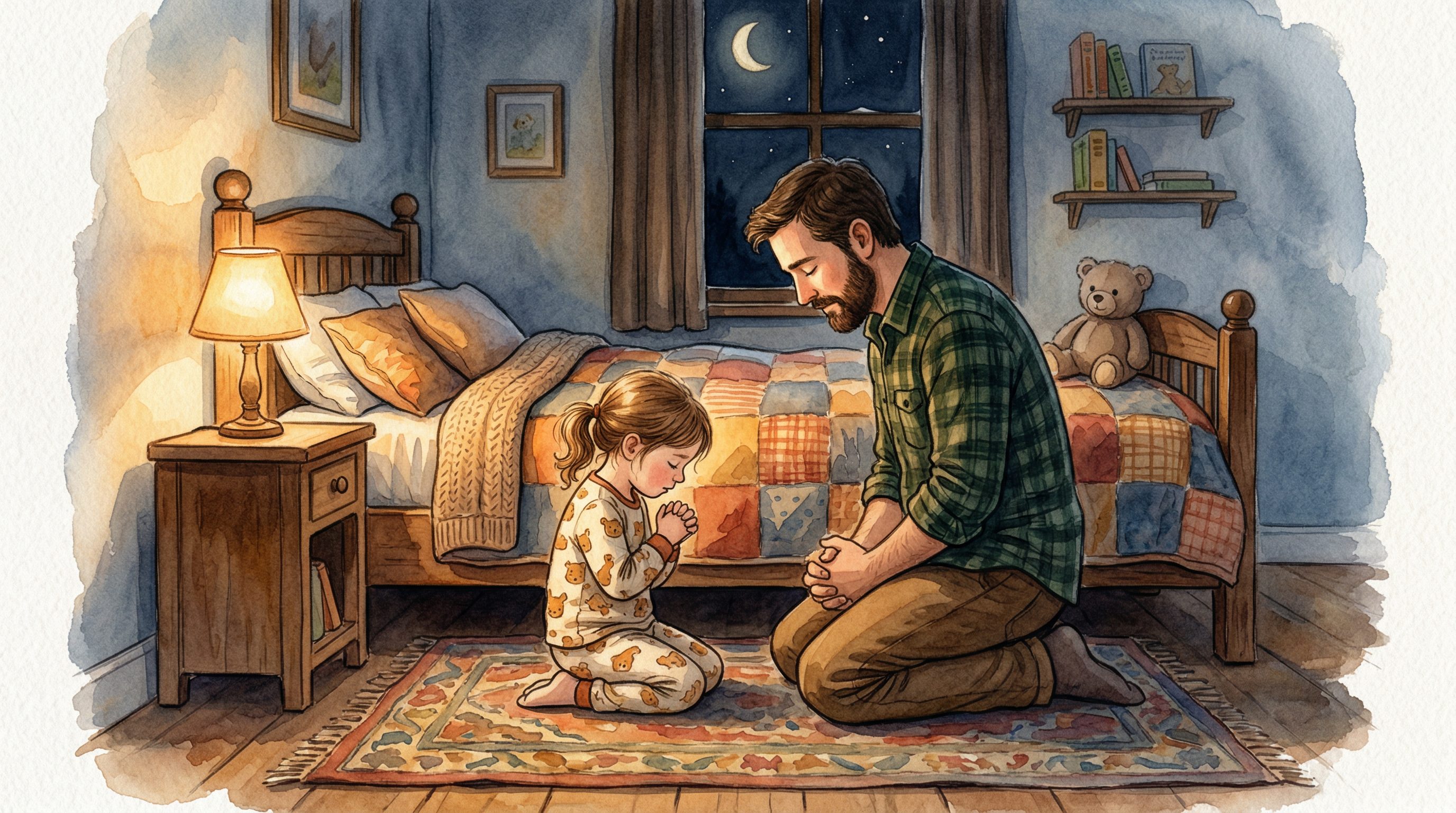
When you sit down with your kid in a new city, in a new bedroom, and open a devotional — you're not just doing a nice thing. You're creating a memory of who their dad is. A dad who, when the world got unfamiliar, sat down and made something familiar happen.
That's the thing they carry forward. Not the city. Not the school. The dad who showed up.
The New Kid Devotional is ready when you are. You can start it tonight, in whatever state of unpacking you're in. The cardboard boxes don't have to be gone first.
📖 Read This Tonight
The New Kid Devotional was built for exactly this moment — helping kids find their footing in a new place, with God and Dad beside them. Start tonight, even if the boxes aren't unpacked yet.
Get Notified When New Series Drop
We add new devotional series regularly. Sign up to hear about them first.
Join the Community