This Is the One Nobody Talks About Enough
When a grandparent dies, there's a whole cultural framework for it. When a parent dies, the support systems mobilize. But when a child's friend dies — a classmate, a kid from the neighborhood, someone they played with every day — there's almost nothing designed to help a parent navigate that with their child.
I haven't been through this with my boys. And I genuinely hope I don't have to write about it from experience. But dads who have — dads who got that call from the school or heard through the neighborhood and had to sit down with their kid that night — they describe it as one of the most disorienting parenting moments they've ever faced. You're trying to process something shocking yourself, while also being the calm, grounded presence your child needs. It's almost impossible.
A devotional isn't a solution to that. But it's a space. And sometimes a space is exactly what you both need.
Why This Grief Hits Differently
When a grandparent dies, kids are sad. When a pet dies, they're devastated in a specific, contained way. When a friend dies — someone their own age, someone they thought was just like them — something different happens. It's the first time many kids realize that death doesn't only come to old people. That it can come for anyone. Including them.
That realization, even if they don't put it in those words, is terrifying. Dads report seeing their kids ask questions they've never asked before. Questions that are really about their own safety, their own future. "Could that happen to me?" "Will I die?" "Why did God let this happen to my friend?"
These questions aren't just grief. They're a kid grappling with their own mortality for the first time. And they need a dad who can sit with that without flinching.
What the Grief Looks Like in Practice
Dads describe a range of responses depending on the child and the closeness of the friendship:
- Shock and numbness — especially in the first day or two. Your kid might seem almost okay. They're not. They're processing something too big to feel all at once.
- Anger — at God, at the unfairness of it, sometimes at you for not having answers. Don't shut this down. Anger is grief with nowhere to go.
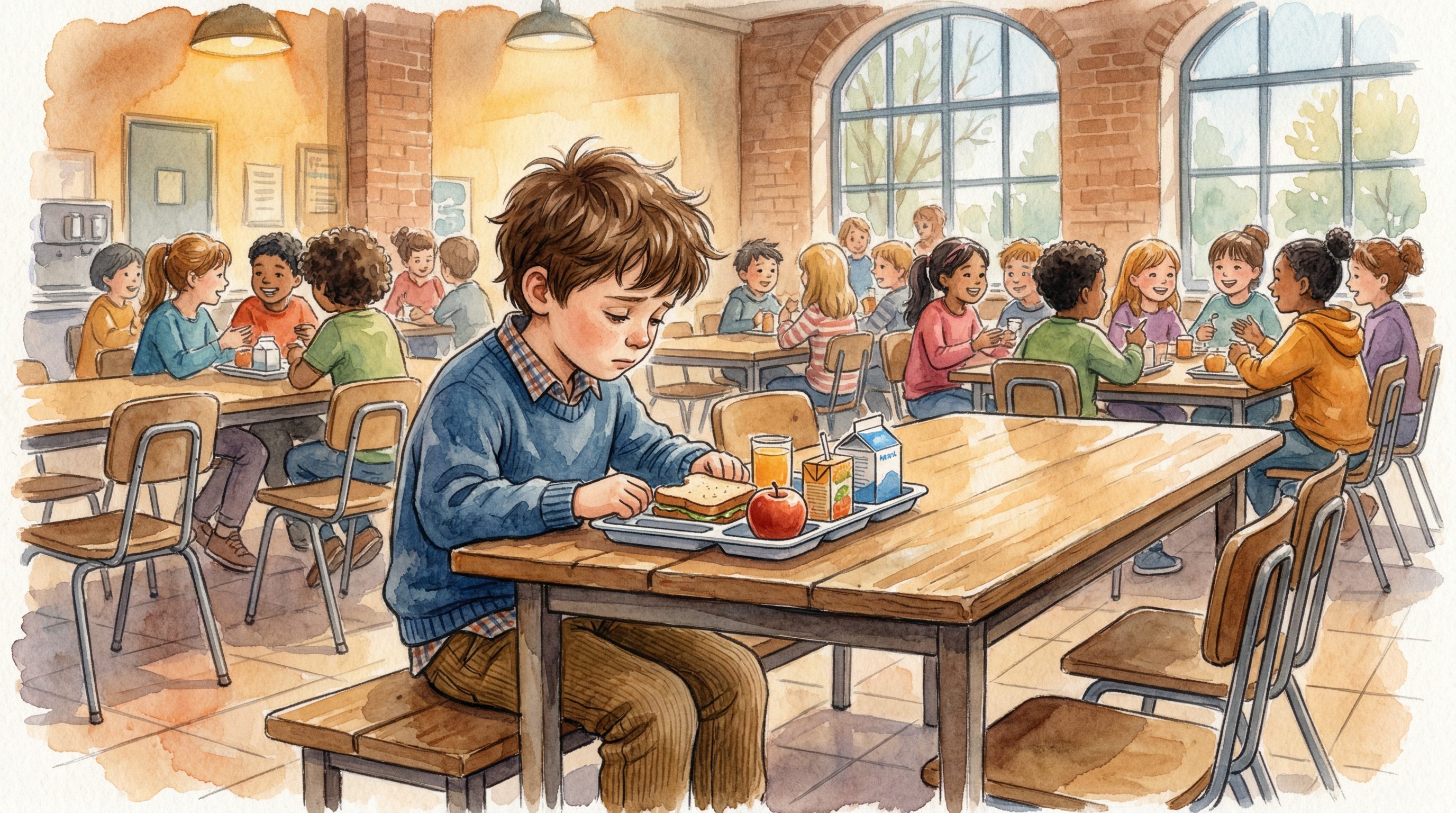
- Intense sadness at random moments — triggered by small things. A song they liked. The seat at school that's now empty. The game they used to play together.
- Survivor guilt — especially if the death was sudden or accidental. "Why him and not me?" This is heavy for a child to carry and needs to be named.
All of this is normal. None of it needs to be fixed. It needs to be witnessed.
What to Say on Night One
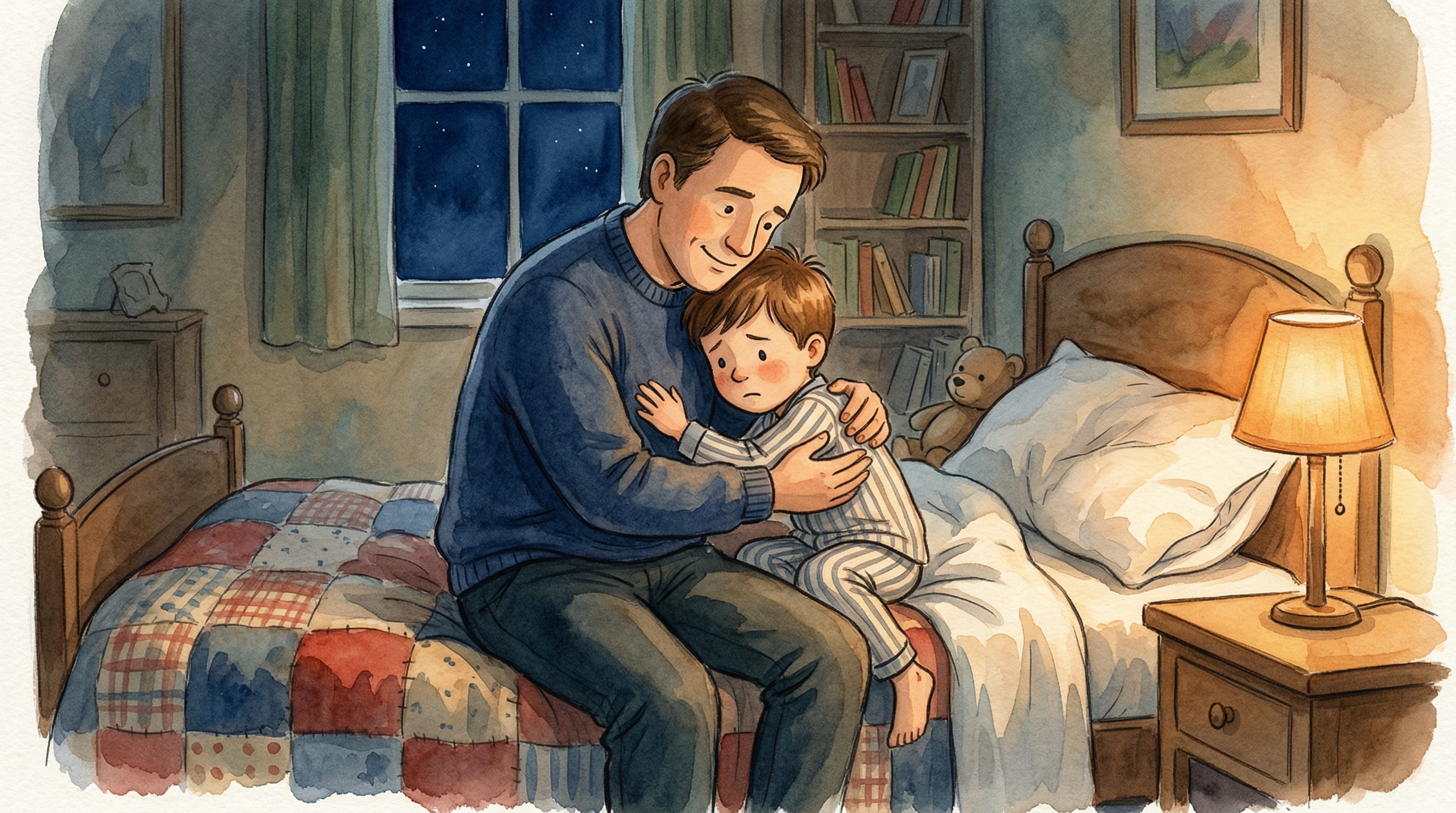
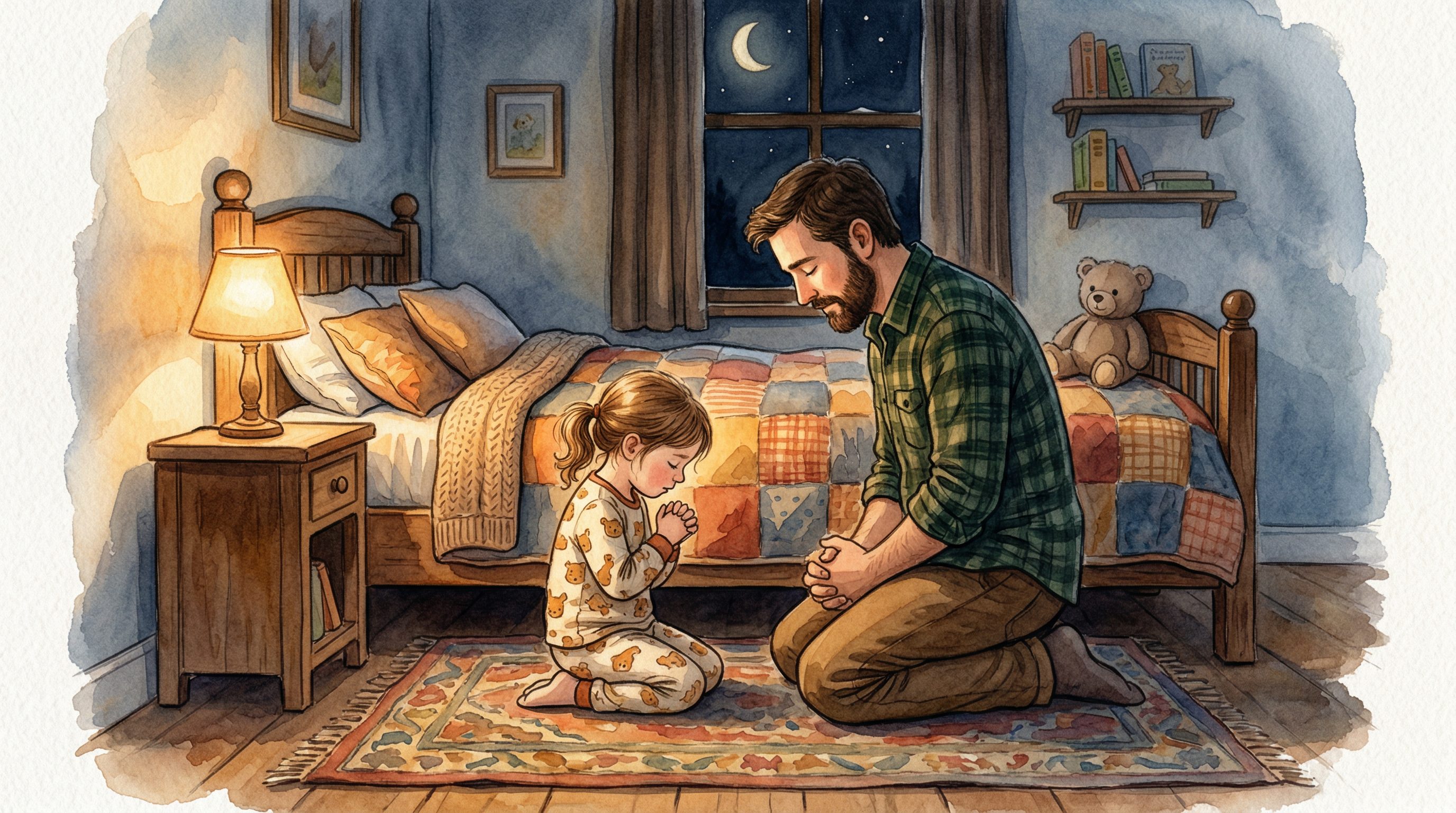
The night you find out — that first bedtime — you don't need to have a plan. You don't need a devotional series or a framework. You need to be present. Sit with them. Ask them to tell you about their friend. Listen more than you talk. And then pray together — whatever prayer comes, however imperfect.
Dads who've navigated this almost universally say: the thing that helped most on night one wasn't what they said. It was that they stayed. They didn't rush the bedtime routine or hand their kid a verse and say goodnight. They stayed in the dark and let the grief take as long as it needed to take that night.
Then the following nights, you start to build something. That's where devotionals come in.
Verses That Can Hold This Kind of Loss
Not every verse is built for this. Some of the most-quoted comfort verses feel hollow when the loss is sudden and the dead is a child. Here are the ones that dads say have actually helped:
John 11:25-26 — "I am the resurrection and the life. The one who believes in me will live, even though they die." Jesus didn't say this to make death less real. He said it in front of a tomb, to a grieving friend. It holds the weight of real loss.
Psalm 34:18 — "The Lord is close to the brokenhearted and saves those who are crushed in spirit." Your kid doesn't need God to feel far away right now. This verse says He moves toward the broken places, not away from them.
Romans 8:38-39 — "Nothing will be able to separate us from the love of God." For a child who's asking whether their friend is okay, whether God is still there — this passage is sweeping in scope. Nothing separates. Not death. Not tragedy. Not anything.
Proverbs 17:17 — "A friend loves at all times." Use this one to open a memory conversation. Ask your kid what they loved about their friend. What made them a good friend. Let the memory be honored before moving into loss.
The Hard Questions — and How to Stay in Them
"Why did God let this happen?" is going to come. Maybe the first night. Maybe weeks later. You don't have to answer it perfectly. You have to stay in it.
"I don't know why. I've wondered the same thing. I don't think God wanted this to happen. And I don't know why He didn't stop it — that's one of the hardest things about faith, and I'm not going to pretend I have it figured out. What I do know is that God is with your friend right now. And He's here with you tonight."
That answer is honest. It doesn't pretend to have the answer to the problem of evil — because you don't, and your kid will know if you're faking. But it doesn't leave them with nothing either. It stays in the question with them while pointing to what's still true.
For more on navigating these conversations, this guide on grief devotionals covers the broader landscape of how kids process loss. And this piece on losing a grandparent has a similar framework that translates well to other kinds of loss.
School and Social Dynamics After a Friend Dies
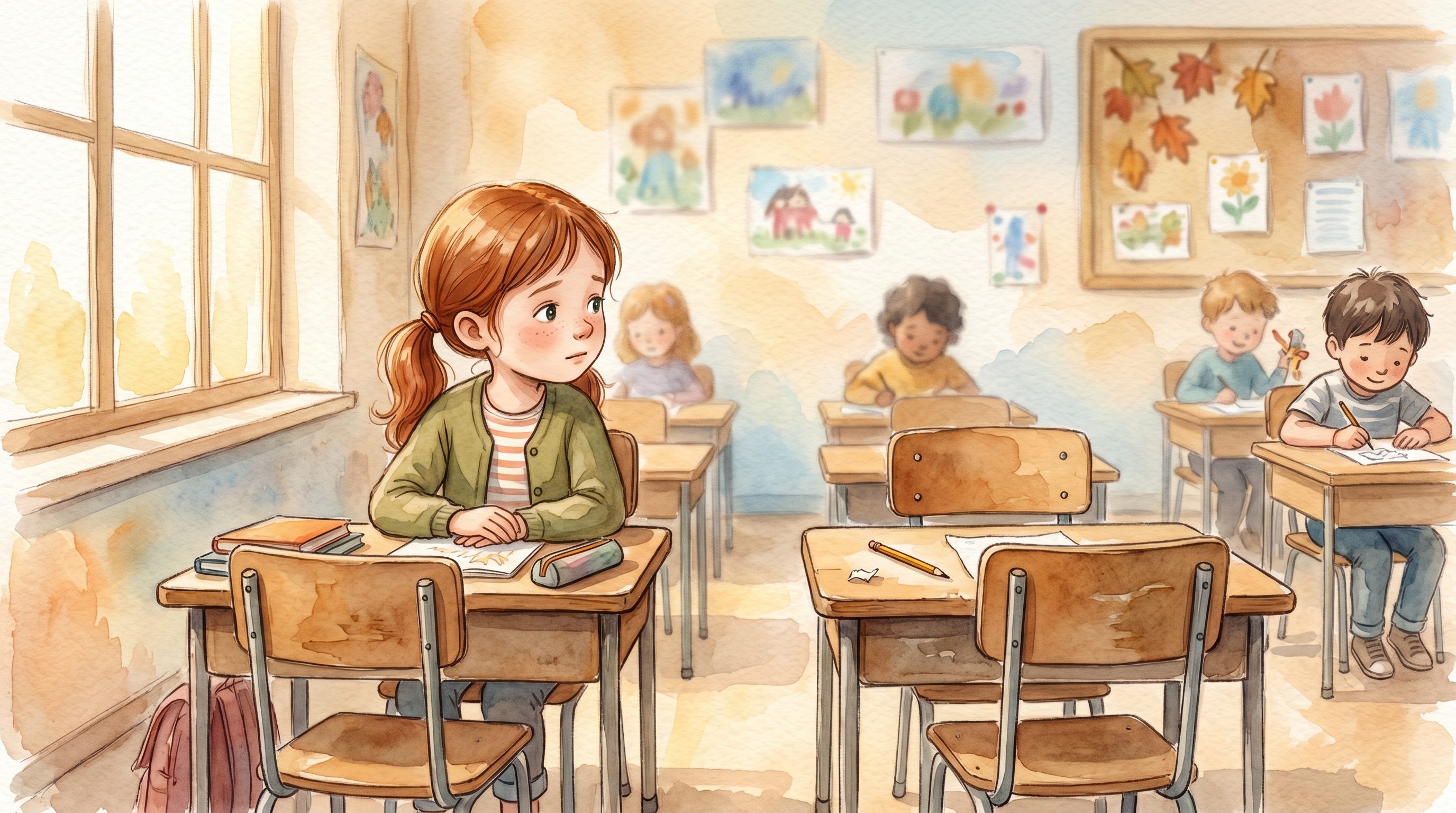
One thing that doesn't get talked about enough: the social dimension after a classmate or friend dies. Your kid has to go back to school. They have to sit in a classroom that feels different. Navigate friends who are also grieving. Encounter adults who say awkward things. Handle the memorial announcement over the intercom.
A brief devotional before school on those hard days is something dads describe as surprisingly powerful. Not long — even a verse and a prayer as they're getting their shoes on. "I know today's going to feel different. Let's ask God to go with you." Then send them out the door knowing they went with something.
The friendship devotional series at devotionals for kids about friendship touches on what it means to love people well — which has a different weight when a friend is gone. It can be a gentle entry point for conversations about what their friend meant to them.
How to Know If They Need More Support
Devotionals are not therapy. They're an important part of how your family processes hard things together — but they're not a replacement for professional support when a child is really struggling.
Watch for: prolonged sleep disruption, withdrawal from activities they used to love, decline in school performance that doesn't improve after a few weeks, or expressions that suggest they're questioning their own will to live. Any of those warrant a conversation with a school counselor or child therapist.
Most kids process grief without needing formal intervention. But you know your kid. Trust what you're seeing. And don't wait too long to get help if something seems off.
The Long Tail of This Kind of Loss
Grief from losing a peer doesn't end when things go back to normal. It resurfaces. Milestones — their friend's birthday, the anniversary of the loss, a holiday they shared — can bring it all back. The consistency of devotions matters in these moments: when grief resurfaces, there's already a space waiting for it.
You're not trying to make your kid forget. You're building a kid who knows how to carry hard things with God. That's a very different goal. And it's worth showing up for, night after night, even when the acute season feels like it's passed.
What to Do in the Weeks That Follow
The acute season — the first week or two after a friend dies — is followed by something that can feel almost worse: the return to normal. Life continues. School continues. And your kid is expected to function in a world that has moved on, while they're still carrying something huge.
This is where consistent devotionals matter most. The acute season is easy to be present for — you're on high alert, you're checking in, you're there. The harder thing is maintaining that presence six weeks later when everything looks normal on the surface.
Build in moments to return to the loss: anniversaries (the one-month mark, the birthday of the friend), moments at school that come up, any time your kid references their friend. These aren't problems to manage — they're invitations to stay connected to what your kid is carrying. Treat them that way.
A custom devotional can help here. Rather than generic grief content, you can build something specific — a short series that focuses on friendship, memory, heaven, and hope, in an order that fits where your kid is. Something that uses their friend's name, their specific situation, their specific questions. That kind of personalization is what makes a devotional feel like it belongs to your family rather than like something produced for everyone.
The most important thing you can do in the weeks after a friend's death is simple: keep showing up. Keep the routine. Keep the space. Keep asking. The devotional you do on an ordinary Wednesday night, three months after the loss, when your kid says something small that's actually something big — that's the night that matters. And you won't know it mattered until years later. Do it anyway.
📖 Read This Tonight
When Things Change is built for the hard seasons — loss, grief, uncertainty. Start here tonight and give your kid a structured space to bring what they're carrying.
Get Notified When New Series Drop
We add new devotional series regularly. Sign up to hear about them first.
Join the Community