Your House Just Got More Complicated
I'm going to be honest: I haven't fostered. My family hasn't walked this road. So I'm not going to write this like I've been there — because I haven't, and you'd know the difference immediately.
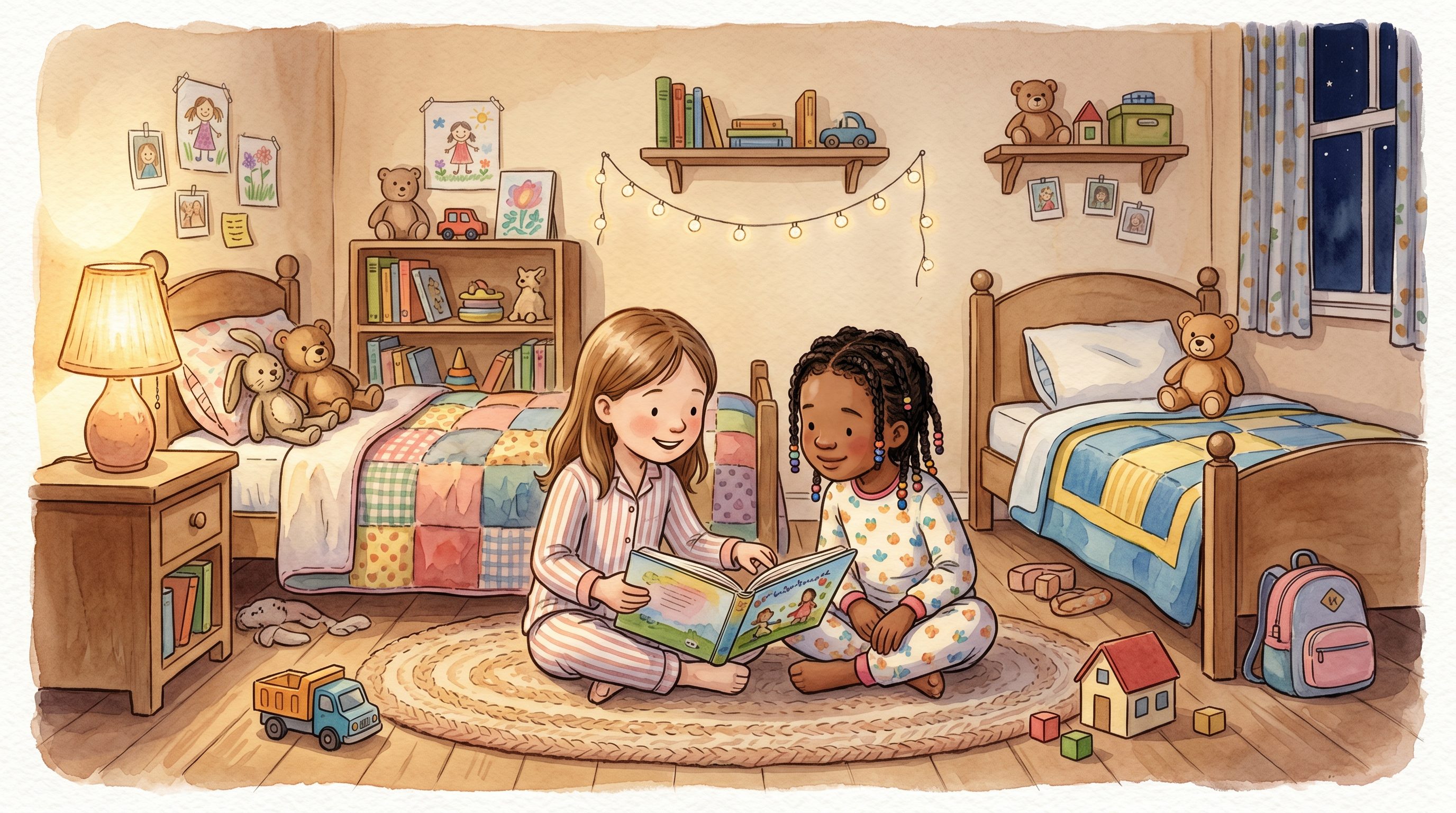
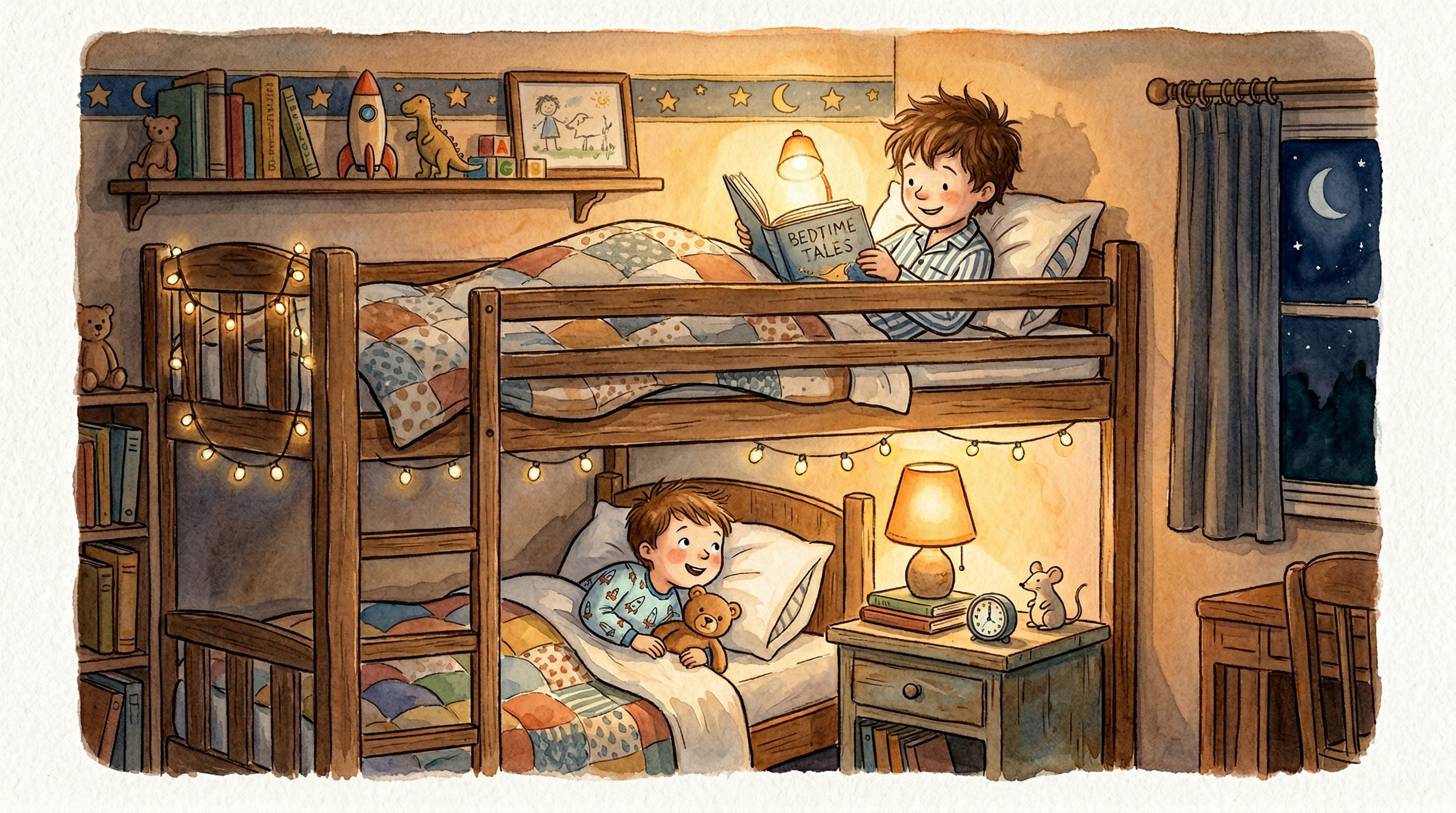
What I do know is that foster families consistently tell me one thing: the hardest conversations don't happen at the dinner table. They happen at bedtime. For both the bio kids and the foster kids. Everyone processing something different. Everyone trying to figure out what the rules are now.
This is what I've heard from families in this situation, and it's why I'm writing this piece.
<
What Each Kid Is Carrying
Foster siblings puts multiple kids in your house who are each navigating entirely different emotional realities — and they have to do it in the same space, at the same time, often with limited language for what they're feeling.
Your bio kids are navigating the arrival of someone who needs more of your attention. They may feel displaced, confused about the rules — what they can say, what they can't, what's going on and why. They're also, often, silently trying to figure out how to treat this person who's now sleeping in their house. They want to do it right. They're not always sure how.
Your foster child is navigating something entirely different — a new house, new adults, new rules, new kids, and a level of uncertainty about their future that no child should have to carry. They may be withdrawn. They may be disruptive. They may latch on immediately. All of those are responses to trauma and uncertainty, not character statements.
Bedtime devotional doesn't solve any of that. But it can create a container for it — a nightly ritual that says: this family does something together, and everyone in this house is included.
The Ground Rules for Devotional Time in a Foster Home
Foster care brings complexity that not all devotional content is designed for. A few things worth keeping in mind:
- Don't force participation. A foster child who's been in the system knows how to perform compliance without engaging. Don't chase that. Invite, don't require. Let them be in the room. Let that be enough at first.
- Keep the theology accessible. Concepts like "God is Father" can carry complicated weight for a child who has experienced broken fatherhood. Stay concrete. God is present. God sees you. You matter. Those land differently than abstract concepts about divine relationship.
- Protect your bio kid's one-on-one time. If possible, give your bio kids their own separate devotional moment sometimes — not as exclusion, but as continuity. They need to know the old rhythm still exists for them too.
- Be consistent, not perfect. This season is chaotic. Five imperfect minutes every night beats a perfect once-a-week effort.
What Scripture Offers This Situation
The Bible is full of people who were received into families and communities that weren't originally theirs. Ruth followed Naomi into a foreign land and was absorbed into a family line that ended at Jesus. The early church was built on the radical inclusion of people who had no prior claim to belong. Ephesians 2 describes people who were "excluded" and "without hope" being brought near.
These aren't tidy stories. They're stories about real displacement, real grief, and real welcome — all at the same time. They're actually perfect for the complexity of a foster home.
Psalm 68:6 is one worth reading in this season: "God sets the lonely in families." That's not a metaphor about feeling included. It's a statement about what God does with people who have nowhere to go. Your home is a real-world version of that verse. That's worth saying out loud at bedtime.
For the identity questions that come up alongside the belonging questions — especially for foster kids trying to understand who they are apart from their circumstances — the devotional for adopted kids covers overlapping ground with language that transfers well. And for the bigger-picture questions about how kids process family transitions in general, this piece on devotionals during family change has tools that apply here too.
When There Are Kindness Questions
Your bio kids will have moments where they don't know how to treat the foster child. They'll make mistakes — say the wrong thing, get territorial, not share. This is normal. It's also a tremendous teaching opportunity that most families stumble through without a framework.
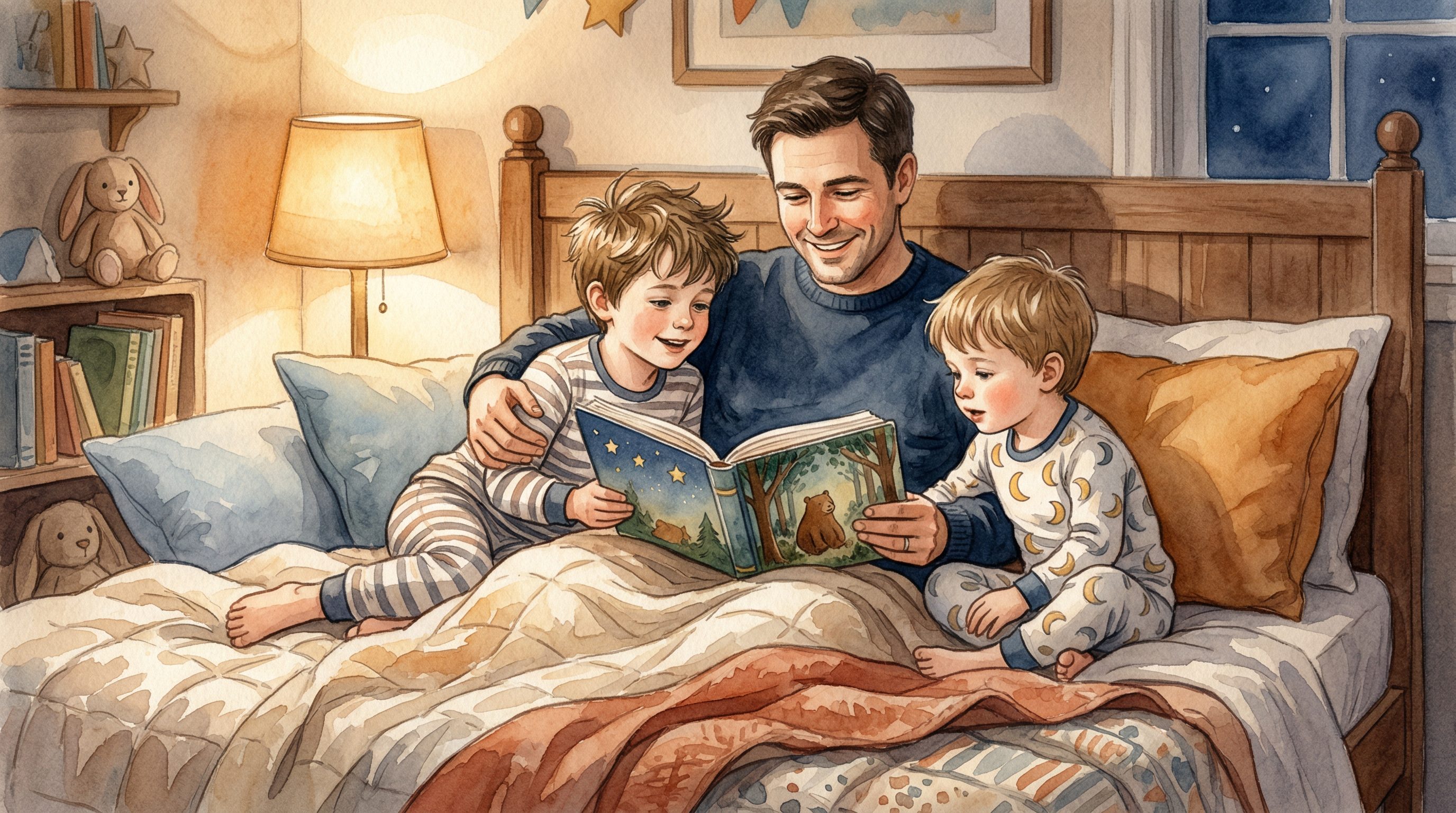
Bedtime is when you can debrief those moments without making anyone the villain. "That situation today was hard. How do you think [foster sibling] was feeling? What would kindness look like tomorrow?" That's not a lecture. It's a guided reflection that builds empathy without shame.
If kindness is a consistent thread you're working on with your bio kids during this season, the kindness devotional piece has specific content for building that muscle intentionally.
<
The Right Devotional Content for This Season
Standard devotional series weren't written for foster families, and trying to force a generic format can feel hollow when the room is carrying this much weight. The most effective approach for many foster families is content you shape around your specific situation — the questions your kids are asking, the themes that keep surfacing, the things nobody is saying out loud yet.
The custom devotional builder lets you do that. Input the themes that matter for your family right now — belonging, uncertainty, kindness to someone new, finding your place — and build something that speaks directly to where you are. Families navigating foster care have told me this is the most useful tool they've found, because their situation doesn't fit a template.
You're doing something hard. And you're still showing up at bedtime. That counts for more than you know.
📖 Read This Tonight
Your family's situation is specific. Build a devotional series that fits it — one that speaks to belonging, kindness, and being seen, in language your kids can hold onto.
Get Notified When New Series Drop
We add new devotional series regularly. Sign up to hear about them first.
Join the Community