
He's Not Trying to Ruin Devotions. He Just Has a Different Engine.
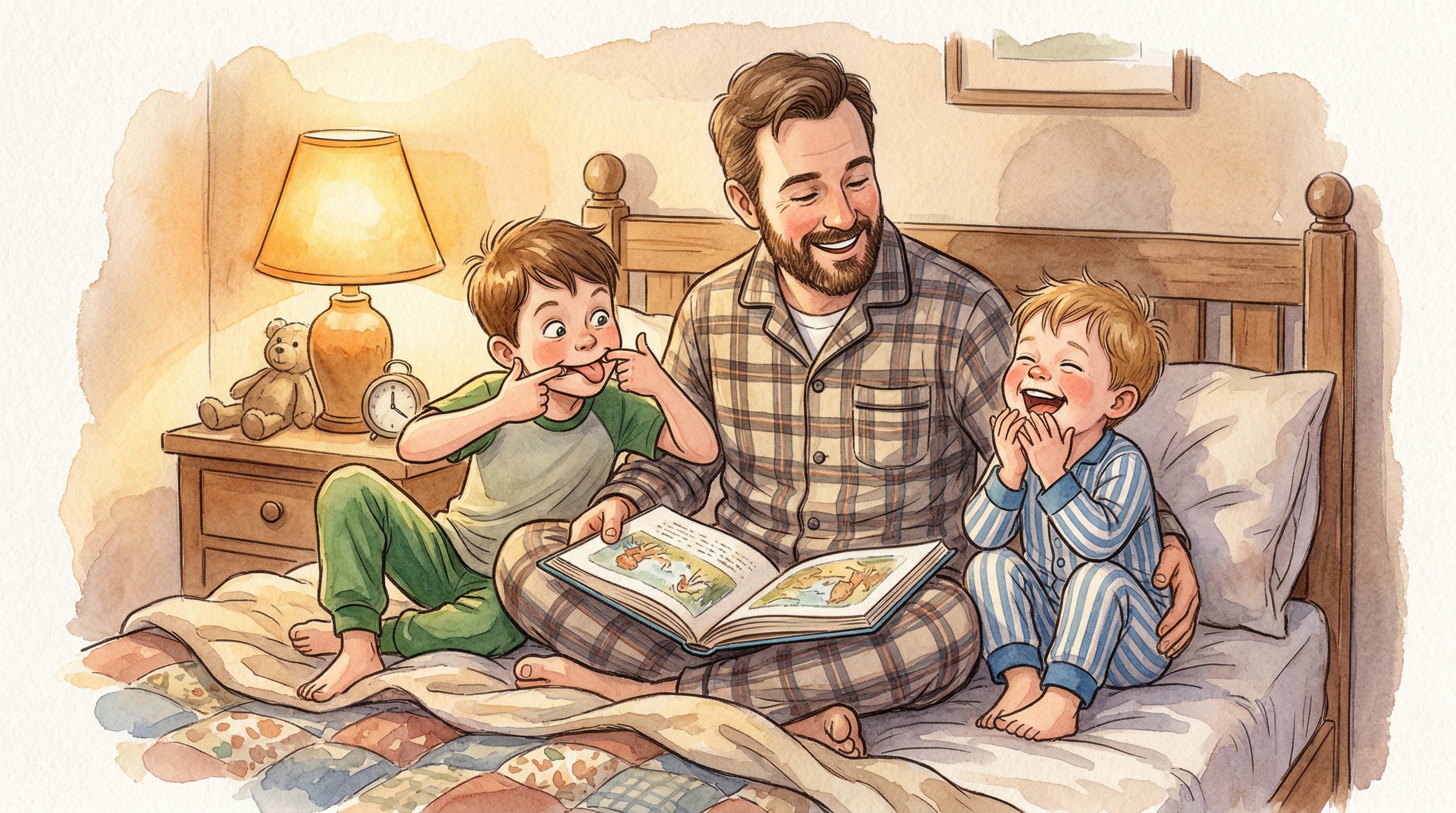
You sit down to start the devotional. Your kid is immediately somewhere else — bouncing on the bed, picking at the carpet, climbing on you, asking a question that has nothing to do with anything. By the time you finish the first sentence, you've already redirected him three times and you haven't even gotten to the story yet.
Sound familiar? You're not alone, and your kid's not broken. High-energy, active kids aren't resisting the content — they're managing sensory input differently than a quiet kid would. The problem isn't their faith. It's usually the format.
The good news: devotionals can work for these kids. But you have to stop trying to do them like a sit-down classroom lesson and start thinking about what actually captures and holds an active kid's attention.
What's Actually Happening With Your Active Kid
Some kids need physical movement to regulate their nervous system. This isn't a discipline issue — it's neurology. For these kids, stillness is genuinely effortful. Forcing it doesn't create calm; it creates resistance and, eventually, a negative association with the thing you're forcing them to sit through.
The approach that works is counterintuitive: instead of demanding stillness before the devotional starts, work with the energy rather than against it. Let some movement happen. Structure the engagement so the body gets to participate, not just the mind.
A few other things tend to be true about active kids:
- They're often highly creative thinkers — their minds move fast
- They respond well to novelty and to content that surprises them
- They disengage from repetitive, slow-moving content quickly
- They come alive with dialogue and interactive moments
- They retain information better when they respond to it — act it out, draw it, talk about it
These are features, not bugs. A kid who thinks fast and needs to move is often wired for engagement — they just need the right format to plug into.
Practical Adjustments That Actually Work
Let them hold something. A fidget, a stuffed animal, a small object from their room — giving their hands something to do actually frees up mental bandwidth for listening. This sounds counterintuitive but is well-supported by what we know about sensory regulation. Don't fight the hands. Channel them.
Keep it short and tight. For a highly active kid, five focused minutes is worth more than fifteen distracted ones. If you're losing them at the four-minute mark, trim the reading. You are not failing devotions by reading less. You are failing them by grinding through content while your kid mentally checks out.
Ask questions early, not just at the end. Instead of reading straight through and then asking a question, pause in the middle: "What do you think happens next?" or "If you were this kid, what would you have done?" These mid-story check-ins give active minds something to chew on and keep them tracking with the narrative.
Let them respond physically when it makes sense. "Show me with your face what Daniel felt when he heard the news." "If you were in that situation, would you have run or stayed? Act it out." These moments of physical response make the content tactile — and for sensory-driven kids, tactile input is what makes things stick.
Allow some movement during the reading. If your kid needs to sit against the wall, lie on their stomach, squeeze a pillow, or gently rock — let it happen as long as they're listening. You don't need to decide what regulated attention looks like for your kid. They'll show you. Trust the process enough to observe instead of control.

Format Matters More Than Content for These Kids
An active kid who's genuinely engaged in a 4-minute devotional is getting more from faith formation than the same kid staring at a wall while you read for fifteen minutes. Format is the lever.
What you're looking for in a devotional for high-energy kids:
- Tight, moving narrative. Story first, theology embedded — not the other way around.
- Dialogue and character. Stories with characters who argue, struggle, and make decisions hold active kids' attention better than narrative-heavy exposition.
- One clear question at the end. Not a list. One question. Let them run with it.
- Short enough to finish before they're gone. If you can read it in 3-5 minutes, you're in the zone.
For kids who resist devotions for other reasons — not energy level, but genuine disinterest in the format — this guide to devotionals for kids who don't like reading covers a related but different challenge. And if you're still working out how to make the whole family devotions experience work without it feeling like a chore, this piece on making family devotions fun has practical approaches for different kid types.
Bedtime Is Actually an Advantage Here
Here's something active-kid parents sometimes overlook: bedtime is one of the better windows for these kids, not a harder one. By the end of the day, even the most high-energy child has burned through a significant amount of physical fuel. The combination of physical tiredness and the natural transition toward sleep can actually work in your favor.
The key is timing. Do the devotional in the middle of the bedtime routine, not at the very end when they're already fighting sleep, and not right when they walk in from the living room still buzzing from screen time. Ten minutes after they're in bed, lights dimmed, PJs on — that's often the sweet spot. They've had enough time to start winding down without having fully crashed.
You might also find that for these kids, the devotional becomes the thing that actually helps them settle. The story gives their brain something to process while the body begins to rest. Some parents report that nights with devotionals actually end with the kid falling asleep faster — not slower — because the mind has a story to hold onto.
Give Yourself Permission to Do It Imperfectly
Devotions with an active kid are rarely serene. Someone might interrupt. Something will go sideways. Your kid might ask a completely off-topic question right at the most important moment in the story.
That's okay. It's still worth doing. A chaotic five minutes where something connected is more valuable than a perfectly structured session where nothing landed. Presence matters more than polish.
You also don't have to figure out the perfect format alone. The Hosted Devotions library includes series designed for the bedtime format specifically — short, story-driven, built for dads reading aloud to kids of different temperaments. Browse it and find something that fits your kid's energy, not just their age.
Also worth reading: this guide to a 5-minute bedtime devotional routine lays out a simple repeatable structure that works especially well for high-energy kids — tight enough to hold their attention, consistent enough to build habit over time.
📖 Read This Tonight
Browse devotional series built for short bedtime sessions — story-driven, conversational, and designed to hold the attention of a kid who's always moving. Find the right fit for your kid tonight.
Get Notified When New Series Drop
We add new devotional series regularly. Sign up to hear about them first.
Join the Community