We Actually Lived This One
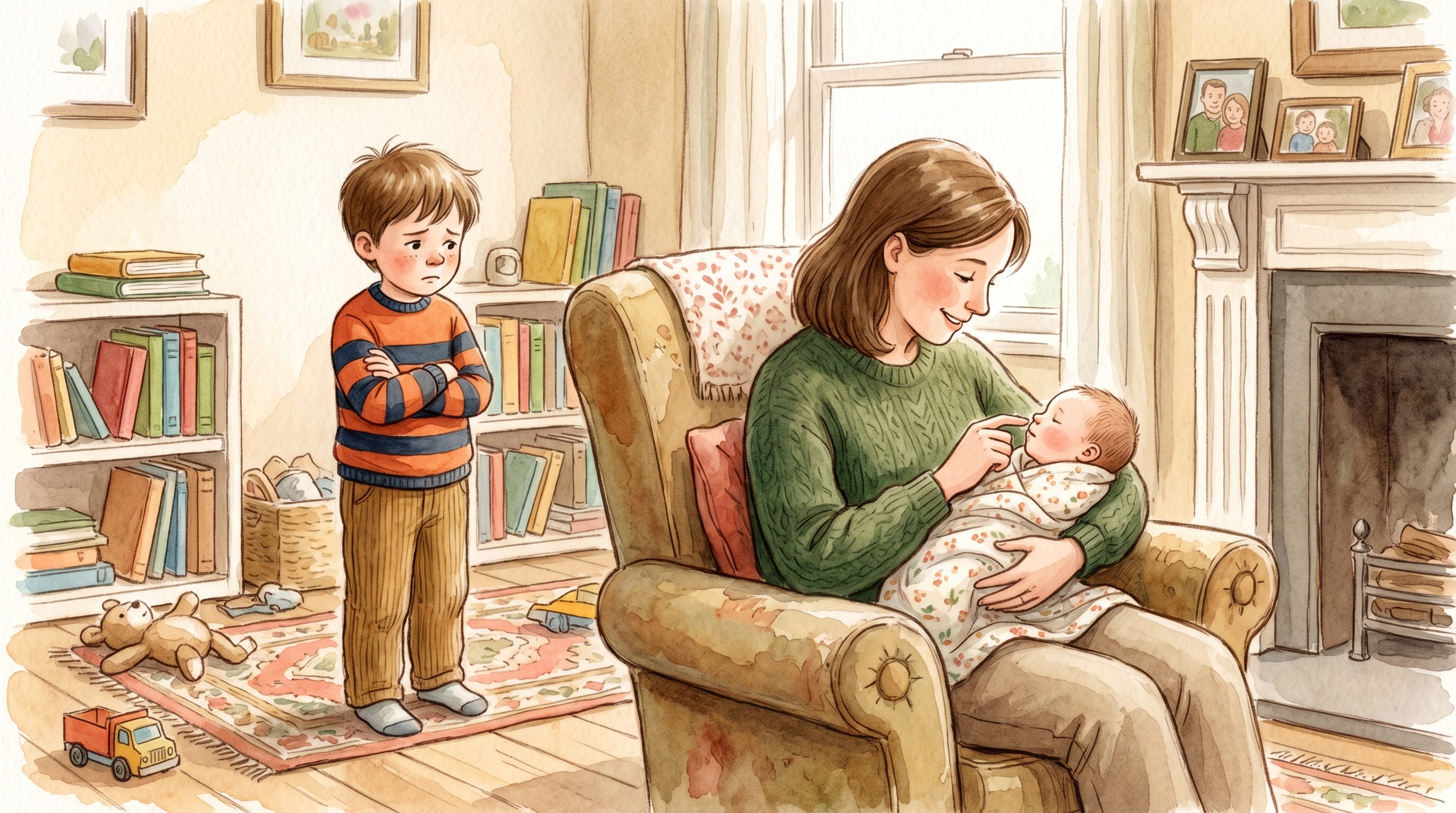
My oldest son was two when his brother was born. He didn't cry at the hospital. He didn't throw a tantrum in the delivery room. He held it together better than I expected, honestly — which made me feel like we were going to be fine.
Then we got home. And within about seventy-two hours, I had a two-year-old who was doing everything he could to get me to look at him — including things he knew he wasn't supposed to do. Not because he was a bad kid. Because he was scared. He'd had me his whole life. And now I was split.
That experience — watching my son navigate becoming a big brother, watching him feel things he didn't have words for yet — is what eventually led to the Big Brother Devotional. It took a while to build it. But the origin was those first few weeks of watching my oldest try to figure out where he fit in a house that had just reorganized itself around someone else's needs.
Jealousy is a hard word. It feels like an accusation. But what I watched in my son wasn't meanness — it was fear, dressed up as anger, sometimes expressed as behavior I didn't understand until I slowed down long enough to look underneath it.
What Child Jealousy About a New Baby Actually Looks Like
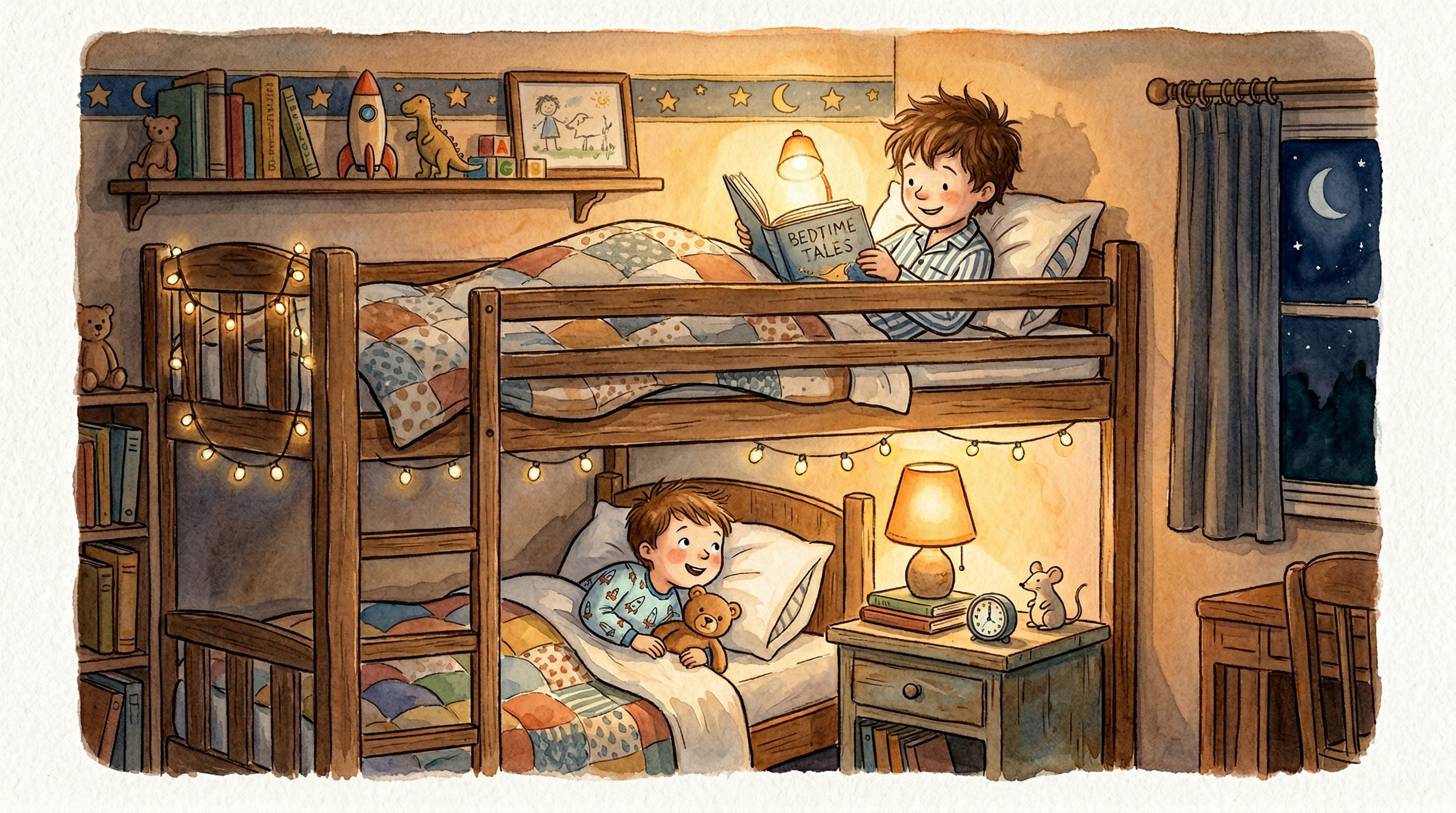
It's not always obvious. Most kids don't walk up to you and say "I am jealous of the baby." What you actually see looks more like this:
- Regression — a kid who was potty-trained starts having accidents again
- Aggression — hitting, pushing, roughhousing that suddenly has an edge to it
- Clinginess — doesn't want to be more than two feet away from you
- Withdrawal — goes quiet, stops talking about things that used to excite him
- Acting out — deliberately breaking rules he knew perfectly well before
Every single one of those behaviors is communication. Your kid is telling you something he doesn't have the language to say: I'm scared I lost my place. I need to know you still see me.
The instinct is to address the behavior. And sometimes you have to — you can't let a four-year-old knock over the infant. But if you only address the behavior without getting underneath the fear, you're fighting the wrong battle. The jealousy doesn't go away because the behavior was corrected. It goes underground.
And underground jealousy is worse. It comes out sideways — in resentment toward the sibling that builds over years, in attention-seeking that escalates, in a kid who internalizes the message that certain feelings are off-limits and learns to hide them rather than work through them.
The Age Factor: How Old Your Child Is Matters
The way jealousy shows up depends heavily on your child's developmental stage, and understanding that changes how you respond.
Toddlers (Ages 1-3)
Toddlers don't have the cognitive development to understand "sibling" as a permanent category. The baby might feel more like a strange new object that keeps getting in the way. Regression is common here — suddenly wanting a bottle, wanting to be carried, reverting to thumb-sucking. This isn't manipulation. It's a developmental response to stress. Meet the regression with patience, not punishment. And keep the physical affection high — toddlers need reassurance in their bodies, not just in words.
Preschoolers (Ages 3-5)
This is often the hardest age for new sibling adjustment. Your preschooler is old enough to understand that the baby is here to stay but not old enough to regulate the emotions that come with that understanding. Expect ambivalence: deep love for the baby in the morning, wanting to "give it back" by afternoon. Both are real. Give them both space without correcting either.
School-Age Kids (Ages 6-10)
Older kids often internalize jealousy more quietly. They've learned that expressing it gets them in trouble, so they may appear fine on the surface while carrying something heavy underneath. Watch for more subtle signals: suddenly struggling with schoolwork, withdrawing from friends, getting unusually quiet around the baby. These kids need explicit, direct naming: "I've noticed you seem a little far away lately. What's going on?" And then — genuinely — listen.
Why Faith-Based Conversations Help Here
You might wonder what a devotional has to do with any of this. Here's my honest answer: almost everything.
When you sit down with your older child at bedtime and you read something that says — in a language a kid can absorb — you were not replaced, you were chosen, God gave you this family on purpose — that's not theology. That's identity formation. And identity formation is exactly what your jealous kid needs right now.
The alternative is to just wait it out. Some parents do that. And eventually, most kids do adjust. But the adjustment without foundation is just time passing. The adjustment with foundation is something that shapes who your child becomes.
A story about a biblical character who felt overlooked — think Joseph, think the older brother in the prodigal son — gives your child a mirror. A mirror that says: your feeling is real, it has a name, and there's a way through it. That's what good devotional content does. It doesn't tell kids to stop feeling things. It gives feelings a home and points toward something better.
The older brother in the prodigal son story is one of the most honest portrayals of sibling jealousy in all of literature. He did everything right and still felt overlooked when his brother came back. The father doesn't rebuke him for the feeling — he goes out to him, meets him in it, and tries to bring him back in. That's the model. Meet the feeling. Don't deny it. Invite them in anyway.
What to Say When He Tells You He Doesn't Like the Baby
At some point, you'll get it directly. Your kid will say something like "I don't like the baby" or "I want to send him back" or (my personal favorite moment from my own experience) "I liked it better before."
Here's the wrong response: "Don't say that. You love your brother." That shuts the conversation down, teaches him that certain feelings are off-limits, and doesn't actually help anything.
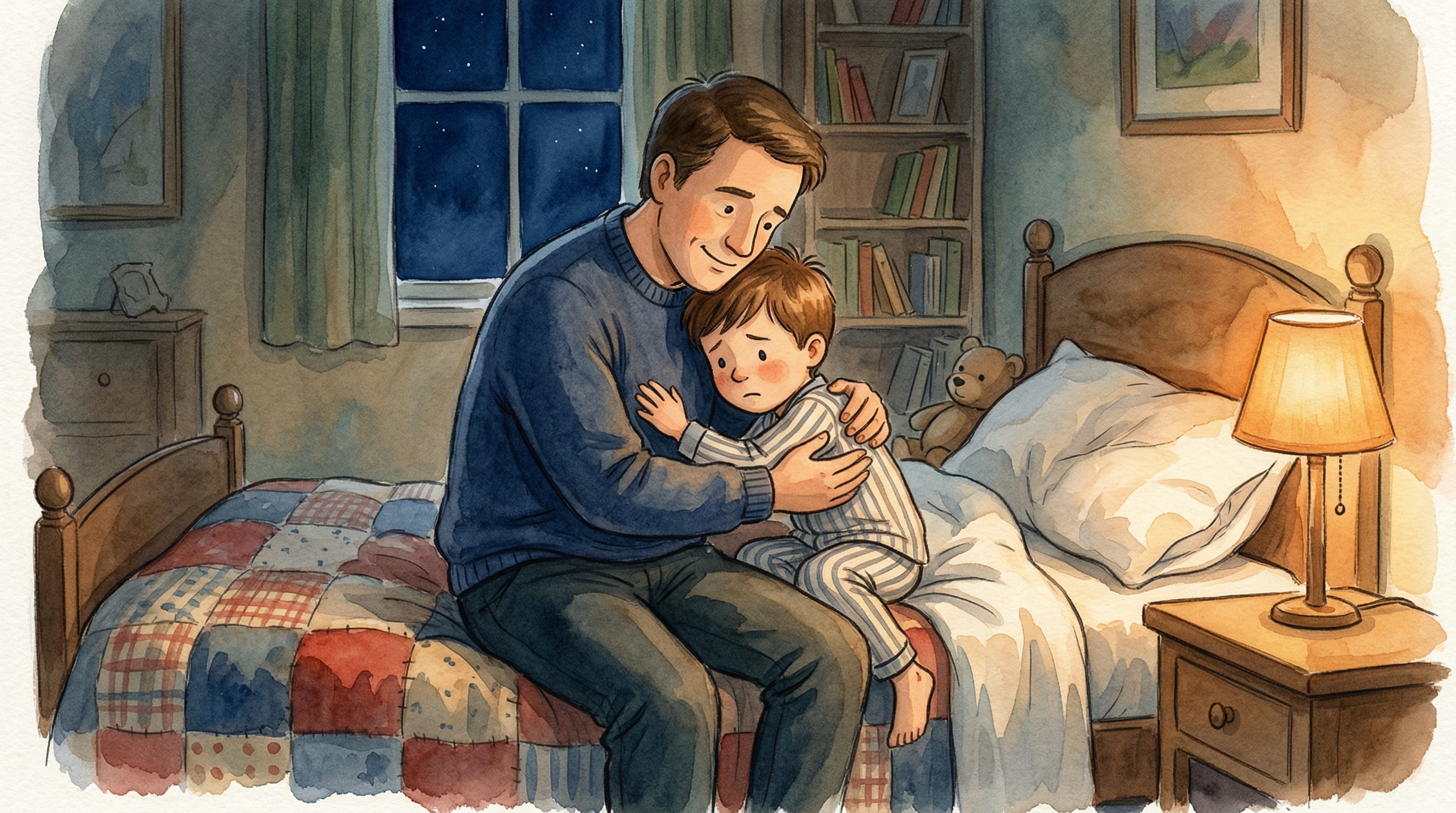
Here's the better response: "I hear you. It's different now, isn't it? What's the hardest part?" And then — this is the important part — you stop talking and you listen. You don't defend the baby. You don't reassure him yet. You just let him say the thing.
After he's said it, then you can go there: "You know what? Feeling weird about a big change is totally normal. Even good people in the Bible felt that way. Want me to show you one tonight?"
That's your doorway. Take it.
Practical Things That Help Alongside the Devotional
A devotional won't solve everything. Here are some practical reinforcements that work alongside it:
Protect One-on-One Time
Even fifteen minutes a day, just him and you, no baby, nothing else. The devotional itself can be that time. Make it sacred. Don't let it get crowded out. Your older child needs proof — not just words — that he still has access to you. This is especially important in the first three months after the baby arrives, when the imbalance of attention is most dramatic and most felt.
Give Him a Role, Not Just a Title
"You're the big brother" means nothing without content. But "you're the one who's going to teach him how to throw a ball" or "you're the one who knows how the bedtime routine works" — that's a role. That's something to live into. Kids don't need to be told they matter. They need to be given something that makes them matter.
Name What You See
When he does something kind toward the baby — even something small — name it out loud and specifically. Not "good job." Something like: "I noticed you handed him the toy before he started crying. That was you being a really good big brother." Specific observations are what stick. Your kid is watching to see whether you notice who he actually is — not just whether he behaves. Give him evidence that you do.
Don't Force the Bond
Some dads push too hard for the older kid to love the baby right away. That pressure backfires. The sibling relationship will develop on its own timeline. Your job isn't to manufacture affection — it's to create enough emotional safety that affection can grow naturally. Back off the "give your brother a hug" directives and let the relationship find its own rhythm.
For the faith side of those conversations, devotionals about jealousy give you more language and more stories to draw from. And when the jealousy turns to frustration and anger — which it will — devotionals about anger are your next stop.
What the Devotional Does That Nothing Else Can
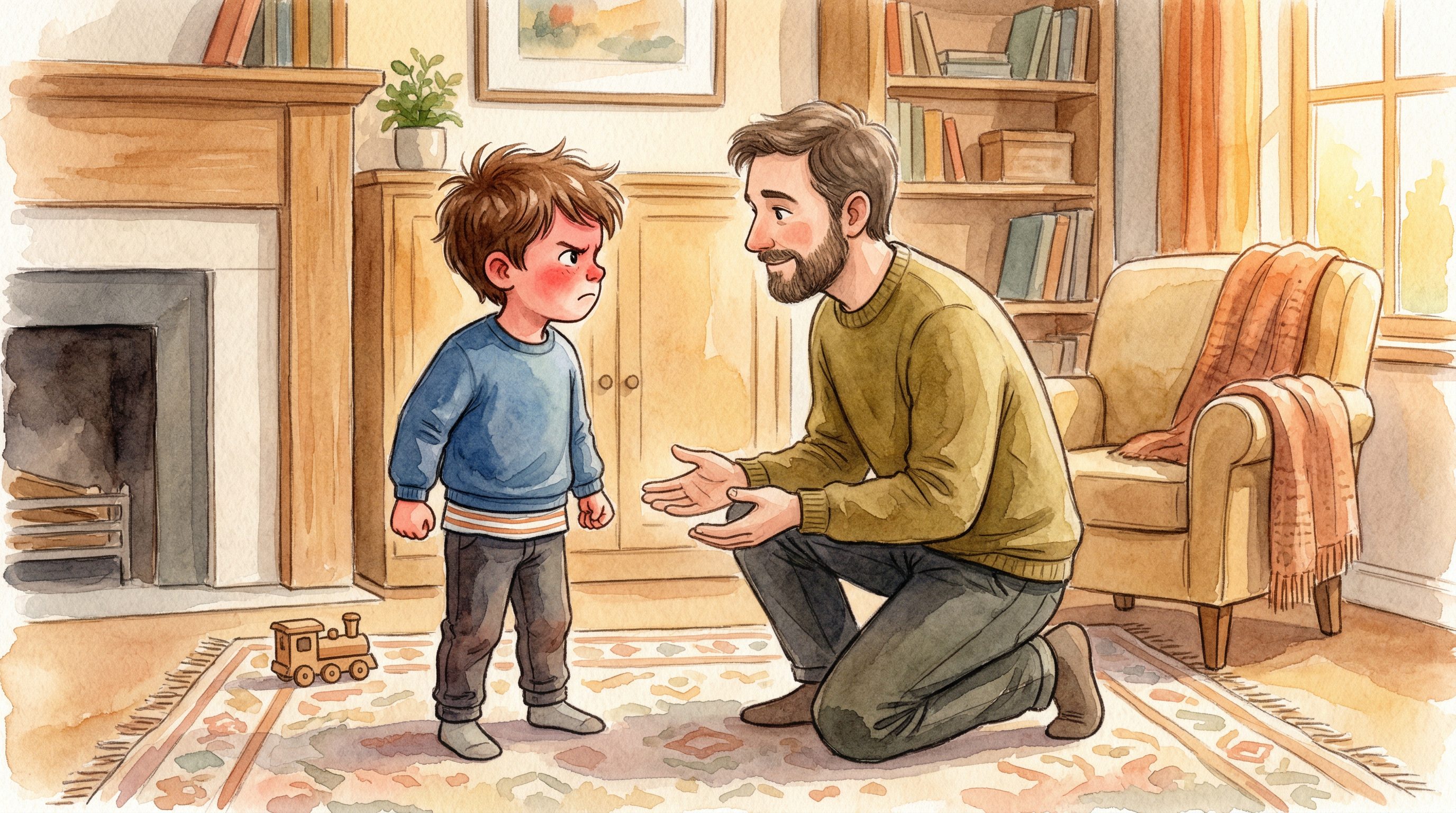
You can do all the right practical things — protect one-on-one time, give him a role, name what you see — and your kid can still carry a quiet sadness about what changed. The devotional reaches into that sadness at the level where sadness actually lives: story, meaning, identity.
When your son hears — from a real story, not just a parental speech — that God knew him before he was born, that he was placed in this family on purpose, that his role as a big brother isn't a consolation prize but something he was made for — that language gets into places that logic can't reach. Kids think in story. Speak in story.
This will pass. Most sibling jealousy fades within the first year. Kids adapt. They find their footing. They start to actually like the new sibling — sometimes a lot. That part usually takes care of itself.
What doesn't take care of itself is whether your child walked through this transition with you, in conversation, with his feelings acknowledged and his identity reinforced — or whether he just endured it, quietly, until the discomfort passed.
The first version builds something. The second version just burns time.
The Big Brother Devotional was built for this exact season. It came out of my own experience watching my son navigate exactly what your son is navigating right now. Start tonight. You don't need to have all the answers before you sit down. Just show up and open the thing.
📖 Read This Tonight
The Big Brother Devotional was built for exactly this moment — helping older kids step into their new role with confidence instead of fear. Start tonight.
Get Notified When New Series Drop
We add new devotional series regularly. Sign up to hear about them first.
Join the Community