
Most Devotional Books Are Boring — And That's the Real Problem
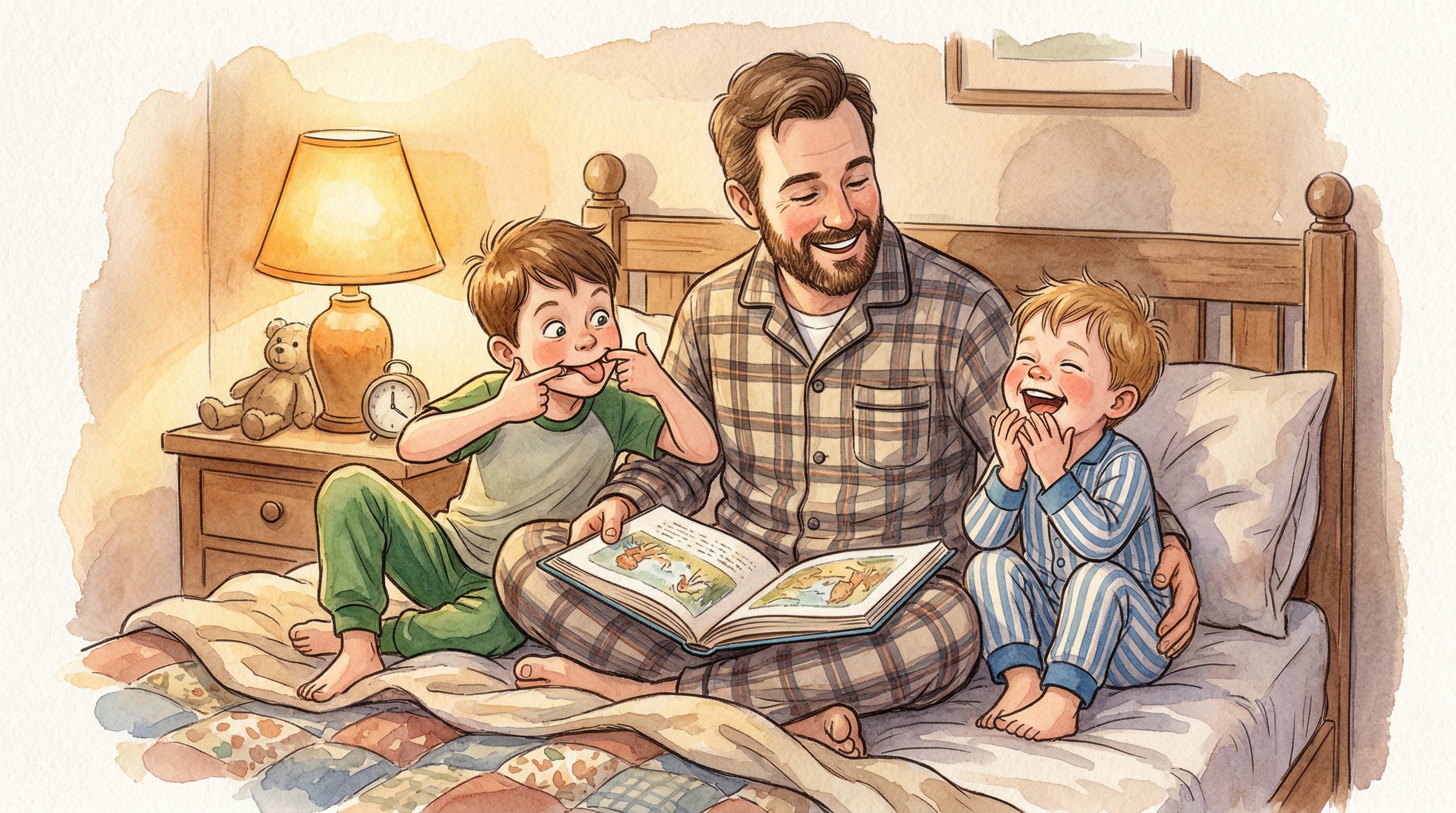
If you've ever tried to sit down with a devotional book and a kid who's 10 minutes from sleep, you know how fast it can go sideways. The reading goes long. The words are churchy. Your kid's eyes glaze over before you hit the second paragraph. And somewhere in there, you start to wonder if you're doing this wrong — or if the book is.
It's the book. Usually.
Not every devotional. But a lot of them are written for an audience that doesn't exist — the idealized Christian family that sits still, nods along, and closes in prayer with no one asking when this will be over. Real kids don't work that way. Real dads don't have 45 minutes. And a devotional that doesn't fit your actual life isn't going to last more than three nights before it gets quietly shelved.
I built Hosted Devotions because I kept running into exactly this problem. So I've thought a lot about what actually makes a family devotional work — and what quietly kills it. Here's what I've landed on.
<
What a Good Family Devotional Actually Does
A good devotional is not a Bible study. It's not a theology lesson. It's a conversation starter. Something that gets you and your kid talking, thinking, and walking away with something to carry into tomorrow.
The best ones do a few specific things well.
It Sounds Like a Real Person Wrote It
This is the first thing I look for. Pick up almost any kids' devotional and read it out loud. Does it sound like something a human dad would actually say? Or does it sound like it was written for a Sunday school classroom?
Voice matters more than content. If the writing is stiff, formal, or saturated with church language, your kid is going to tune out — and so are you. A devotional should feel like a dad talking to his kid. That's the whole thing. Warm, direct, a little honest about how hard life can be.
The second you're reading something that makes you want to do a church voice, put it back.
It's Short Enough to Actually Finish
A good devotional fits inside a sleepy kid's attention span — which at bedtime is roughly five to seven minutes, max. That means a reading that takes three to four minutes, a question or two, maybe a quick prayer. Done.
If a devotional requires 15 minutes minimum to cover the material, that's not a bedtime devotional. That's a Sunday school lesson dressed up in different packaging. For more on this, check out how long family devotions should actually be — the answer is shorter than most books assume.
It Gives You Something to Actually Do
This is the one most devotionals miss. The reading ends, you close the book, your kid goes to sleep — and then what? A devotional without a mission is just a story. It's passive. Kids don't retain passive. They retain things they did.
The best devotionals give your kid a small, concrete thing to do tomorrow. Be kind to someone who's having a bad day. Tell your brother one thing you appreciate about him. Ask a classmate how their weekend was. Simple, actionable, age-appropriate. That's what makes it stick.
It's also what makes the next night's devotional feel connected. You ask: Hey, did you do your mission today? And suddenly you're in a real conversation, not just a reading exercise.
It Has a Dad's Component
This one matters more than people think. If the devotional is only for your kid, you're leading something you're not personally invested in. You're a facilitator, not a participant.
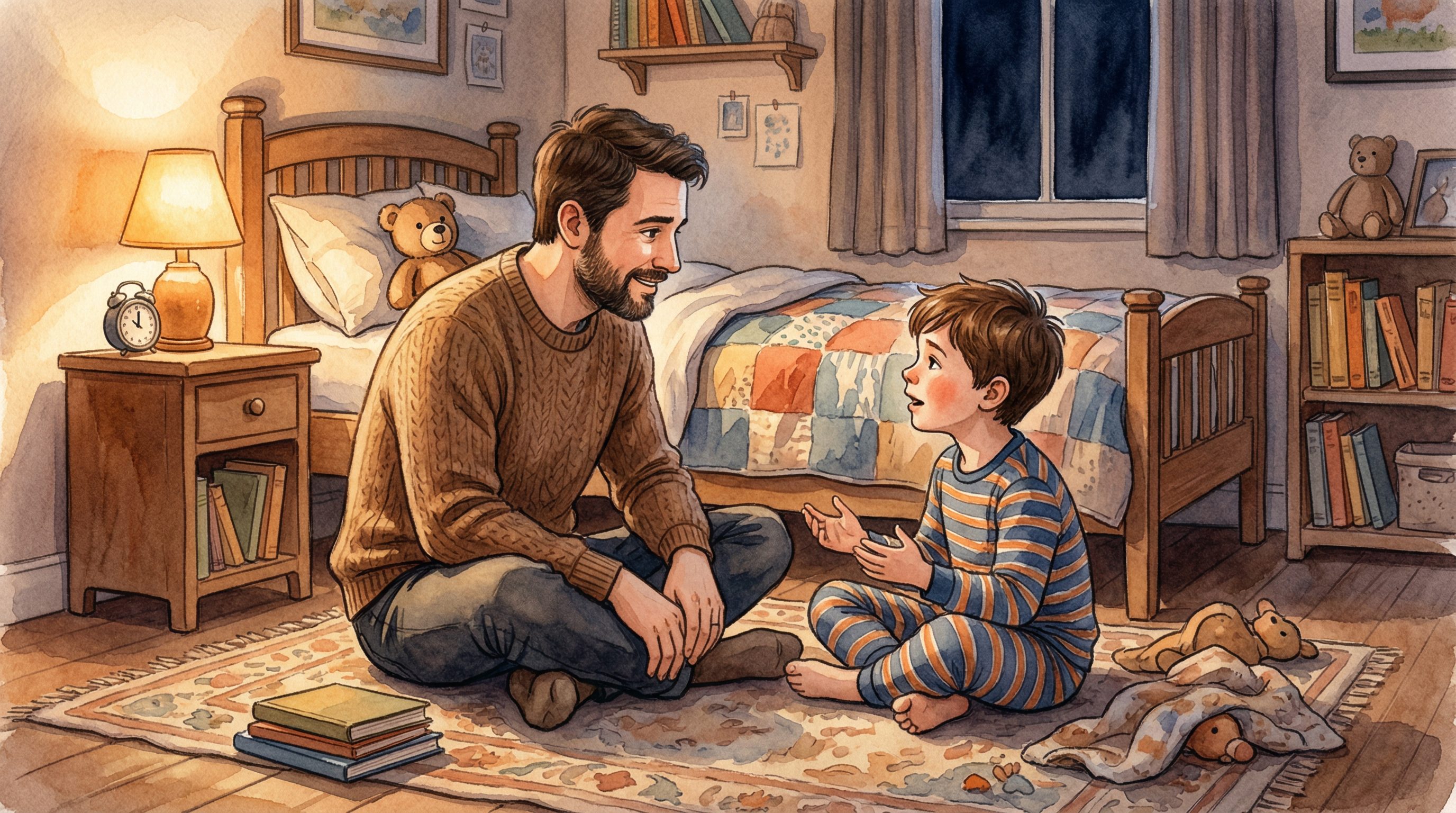
The best devotionals have something for the dad too — a reflection, a parallel challenge, something that makes you think about your own life and not just manage your child's. Your kid needs to see you doing the work, not just assigning it. When you're genuinely engaged, they feel the difference.
<
What to Avoid in a Family Devotional
The stuff that kills a devotional habit is usually not obvious on the cover. It shows up when you're three nights in and the wheels start coming off.
Guilt-Based Framing
Some devotionals — especially older ones — lean heavily on what happens if you don't follow the right path. Fear and shame as motivators. This doesn't work with kids, and it doesn't work with dads either. It turns devotion time into a performance review. Your kid starts to associate faith with judgment, and that's a hole that's very hard to climb out of later.
Look for devotionals that lead with love, identity, and belonging — not with consequence. You are good. You are loved. Here's how to live out of that. That's the message that lands.
Language That Requires a Dictionary
If the reading uses words your kid will never encounter anywhere else in their life, you're going to spend half the time explaining vocabulary instead of having a conversation. Words like "sanctification" and "atonement" have their place — but not in a seven-year-old's bedtime devotional.
The test: can you read a passage out loud and have your kid follow along without stopping? If not, find something written at a grade level that actually matches where your child is.
No Practical Application
If the devotional ends with a prayer and nothing else — no question, no challenge, no action — it leaves no footprint in your kid's day. They heard something. That's it. Compare that to a devotional that sends your kid to sleep thinking I'm going to try that tomorrow. The second one has a chance of actually changing something.
This is the difference between devotionals written to check a box and ones written to build a kid's character. You can usually tell within the first three nights which type you've got.
Too Long, Too Heavy
Anything over seven or eight minutes starts to feel like homework. Your kid starts looking at the ceiling. They give you one-word answers. They want to know how many pages are left. That's not the mood you want before lights-out.
Shorter devotionals read completely beat longer ones read halfway. Don't let perfect be the enemy of done.
<
How to Actually Evaluate a Devotional Before You Commit
Most dads just grab whatever shows up first on Amazon or whatever their pastor recommended. That's fine — but before you start night one with your kids, spend five minutes vetting it.
Read one entry out loud to yourself. Ask: Does this sound human? Would I be embarrassed reading this to my kid? Is it too long? Does it end with something actionable? Is there anything in it for me as the dad, or is it entirely kid-facing?
If the answer to those last questions is "no," you're probably going to give up on it by the end of the week. And that's not on you — it's on the book.
The series in the Hosted Devotions library are built around exactly these criteria. Short enough to finish, written in plain language, mission-based, and every one includes a Dad's Companion section so the reading doesn't stop when your kid's light goes out. If you want to see how to match the right series to your kid's age and situation, this guide on picking the right devotional walks through all of them.
The right devotional doesn't feel like an obligation after the first week. It feels like the part of the day you actually look forward to. That's the bar. Hold out for it.
📖 Read This Tonight
The Hosted Devotions library is built on every principle in this article — short, mission-based, plain language, with a Dad's Companion included in every series. Browse what's available and pick one that fits your family tonight.
Get Notified When New Series Drop
We add new devotional series regularly. Sign up to hear about them first.
Join the Community