My Son Thought Prayer Was a Performance
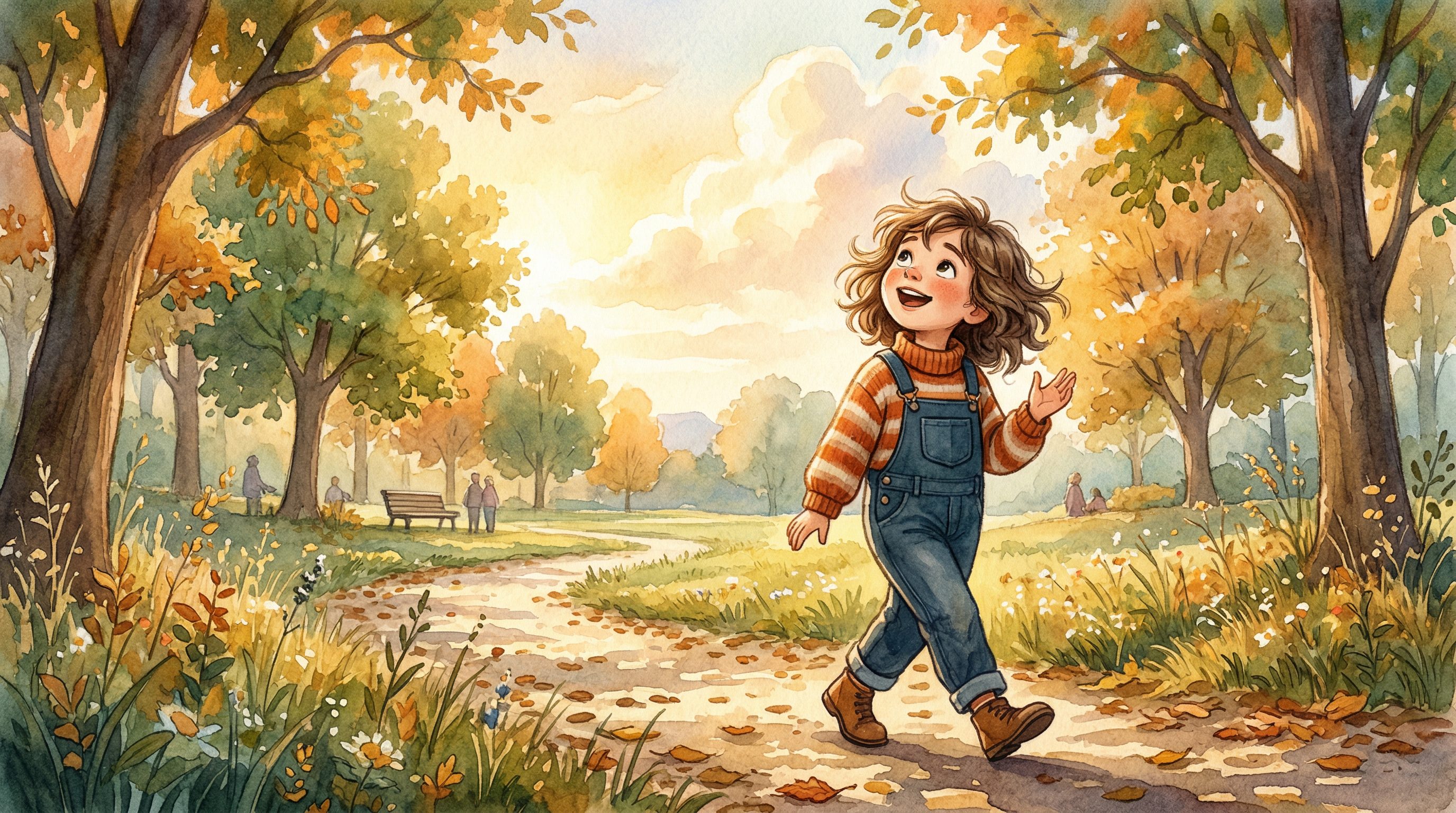
I noticed it when my older son was about six. Every time I asked him if he wanted to pray, he'd get this look on his face — like I'd just asked him to go onstage. He'd squeeze his eyes shut and start in this stiff, formal little voice: "Dear God, thank you for this day and for our food and for our family..."
He wasn't connecting with anything. He was performing. And honestly, I couldn't blame him — because nobody had ever told him it was okay to just talk.
That's what this article is about. Not the mechanics of prayer. Not the theology. Just how to help your kid understand that prayer is a conversation — the same way he talks to you, except the other person is God and the conversation never ends.

Where the "Performance" Idea Comes From
Kids pick up on cues fast. When they see adults close their eyes and use a different voice and say certain phrases — they learn that prayer is a special mode you switch into. It has a format. Rules. A way of doing it correctly.
That's not necessarily bad. Ritual has its place. But if all a kid ever sees is formal, scripted prayer, they grow up thinking that's the only way in. And if they don't have the right words, they don't try.
Research on children's spiritual development suggests that kids form their concept of God primarily through their relationships with caregivers — especially fathers. If a child sees his dad pray with ease and honesty, he learns that God is approachable. If he only ever sees prayer as a liturgical exercise, he learns that God is distant.
The shift you're making when you teach conversational prayer isn't just a technique. It's theological. You're telling your kid: God actually wants to hear from you. As you are. Right now.
What Conversational Prayer Looks Like
Conversational prayer sounds exactly like it sounds. It uses regular words. It talks about what's actually going on. It doesn't switch into a different register the moment it starts.
Here are some real examples:
- "God, today was kind of rough. My friend didn't want to play with me at recess and it made me sad. I don't totally get why. Can you help me not be so bummed about it?"
- "Hey God, thank you for that game today. That was really fun. Help me be a good sport next time even when we lose."
- "God, I don't know what to say today but I know you're there. That's all."
Notice: no thees or thous. No "we just come before you." No format to follow. Just a kid (or a dad) telling God what's on their mind.
That's the whole thing. The formality isn't what makes prayer real. The honesty is.

How to Teach It Without Making It a Lesson
The worst thing you can do is sit your kid down and say "I'm going to teach you how to pray." That immediately makes it a performance — now there's a right answer to get to.
Instead, teach conversational prayer the way you teach everything that matters: by modeling it in front of them, consistently, over time.
Step 1: Let them hear you pray honestly
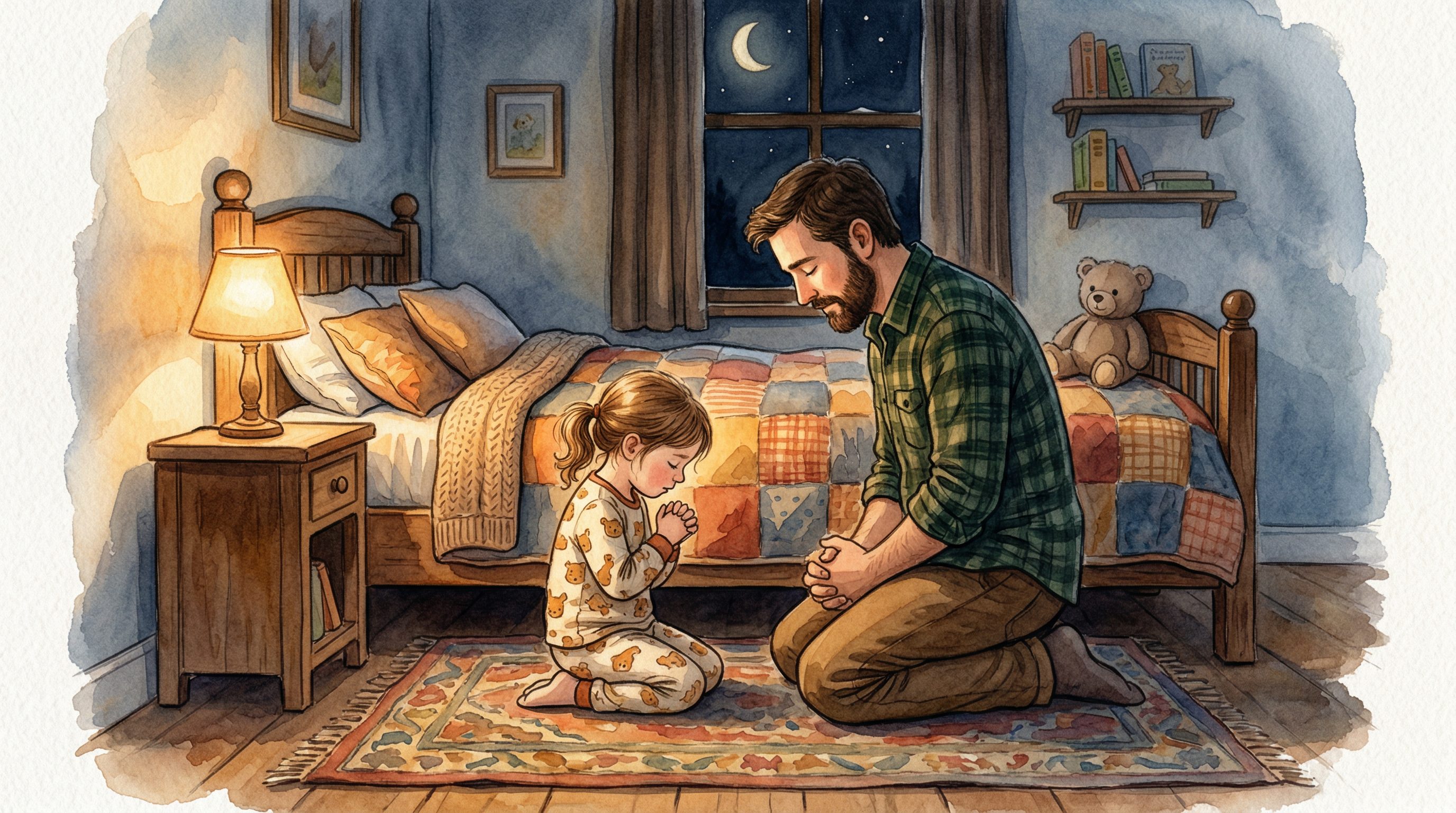
Pray out loud at bedtime. Use your real voice. Mention real things from the day — the traffic that frustrated you, the win at work, the fact that you're tired and grateful to be home. Let your kid hear that prayer includes the ordinary stuff, not just the big spiritual moments.
Step 2: Explain the why, briefly
At some point, just say it plainly: "Prayer is just talking to God. You can say anything. He already knows what you're thinking anyway, but he likes to hear it from you." Kids respond well to honest, direct explanations. You don't need to be elaborate.
Step 3: Invite them into it without pressure
After you pray, ask: "Is there anything you want to say to God?" Not "It's your turn." Not "What's your prayer request?" Just an open invitation they can take or leave. Some nights they'll pass. Some nights they'll talk for five minutes. Both are fine.
Step 4: Affirm honesty over form
When your kid says something honest in prayer — even if it's "I'm really mad at my brother right now" — tell them that was a good prayer. Genuinely. Because it was. Honesty in prayer is the whole ballgame. You want them to keep doing that for the next 40 years.
What to Do When Your Kid Says "I Don't Know What to Say"
This comes up a lot, especially with younger kids. They want to participate but they're staring at the ceiling, frozen.
Try prompting them with a single question before you pray:
- "What was the best part of today?"
- "Is there anything that was hard today?"
- "Is there anything you're worried about?"
- "Who do you want to say a prayer for tonight?"
Once they answer that question out loud, the content of their prayer is basically already there. You can even say: "Okay, you can tell God the same thing you just told me." That click — when they realize prayer and normal talking aren't two different things — is a real moment. Watch for it.
For practical examples of prayers a dad can lead alongside his kids, this article on bedtime prayers for kids has you covered with real language you can use tonight.
Handling the Hard Questions That Come Up
Once your kid starts praying honestly, things will surface. Anger. Doubt. Questions that don't have clean answers. "Why didn't God answer my prayer about grandpa being sick?" "Does God actually hear me?" "What if I say something wrong?"
Don't dodge these. This is exactly what you want. A kid who brings his doubts and hard questions to prayer is developing a real relationship with God, not a surface-level performance of one.
Your answer doesn't have to be perfect. "I don't fully know" is a legitimate thing to say. What matters is that you stay in the conversation, you stay curious alongside them, and you model what it looks like to wrestle with faith honestly rather than pretending everything is simple.
If harder conversations come up — about death, loss, or things that feel unfair — this article on talking to kids about death has a framework for staying honest without overwhelming them.
Age-by-Age Guide: What Conversational Prayer Looks Like
The way conversational prayer develops changes as your kid grows. Here's a rough guide so you know what to expect:
Ages 3–5
At this age, prayer is mostly observation. Your kid watches you do it. They might repeat a word or two. Don't push for participation — just let them see it happening. The consistency of watching you pray every night is the lesson. You're building the picture of what prayer is before they're ready to do it themselves.
Ages 6–8
This is when you can start inviting them in. They understand enough to say something real, even if it's short. "Is there anything you want to tell God tonight?" works well here. Don't correct their theology — if they thank God for their Legos, that's a perfect prayer. You're reinforcing that prayer is normal and accessible, not formal and selective.
Ages 9–12
By now, they've seen the pattern long enough to have opinions about it. Some will be enthusiastic. Some will start going through the motions. Watch for the motions — if prayer starts feeling like a ritual to get through, that's when to mix it up. Ask something unexpected. Share something real from your own day. Honesty breeds honesty. If you stay real, they will too.
The Long Game
The goal here isn't to produce a kid who can say a nice prayer at Thanksgiving. The goal is to plant the habit of talking to God so deep in your child that it becomes as natural as breathing — so that at 16, when life gets hard and confusing and you're not in the room, they already know where to turn.
That habit starts at bedtime. It starts with you saying something real and imperfect and honest, and your kid watching you do it. Night after night after night.
If you want a structured way to build this into your nightly routine, the Talking to God series on Hosted Devotions gives you short devotionals built around teaching kids how to pray — including what to do when prayer feels hard or confusing. Real content, built for dads to lead.
And if you're still figuring out how to structure prayer time within a broader devotional habit, the guide on how to teach kids to pray gives you the full picture.
📖 Read This Tonight
The Talking to God series was built around exactly this idea — that prayer is a real conversation, not a script. It gives your kid a guided way to open up and talk to God, with a dad leading the way.
Get Notified When New Series Drop
We add new devotional series regularly. Sign up to hear about them first.
Join the Community