Easy Generosity Isn't the Real Thing
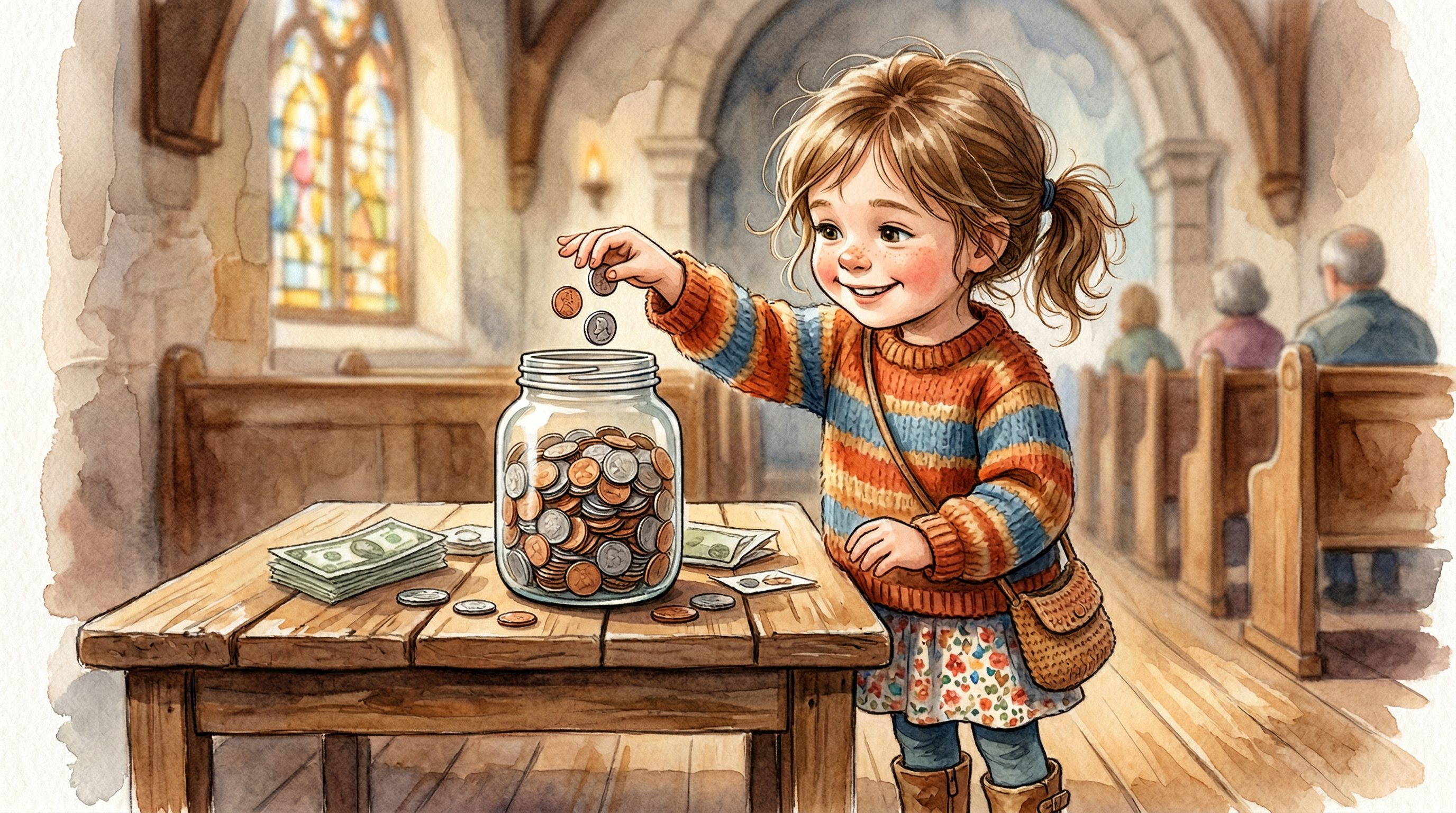
Giving away the extra toy — the one they haven't touched in six months — doesn't cost your kid much. And it counts for something, sure. But the real formation happens when the thing they're giving away is actually something they want. When it costs them. When they do it anyway.
That's the kind of generosity the Bible talks about. Not the comfortable, nothing-to-lose kind. The kind that requires something real from you. And teaching that to a child — without crushing the instinct to hold on, without shaming the reluctance — is one of the harder things we do as dads.
Here's how to approach it.
What the Bible Actually Teaches About Generosity
The widow in Mark 12 dropped two small coins into the temple treasury. Jesus didn't praise her because of the amount — He praised her because "she, out of her poverty, put in everything — all she had to live on." That's the definition of biblical generosity: giving from what matters, not just from the surplus.
Proverbs 11:24 says: "One person gives freely, yet gains even more; another withholds unduly, but comes to poverty." And 2 Corinthians 9:7 is the one most parents know: "God loves a cheerful giver." Worth noting — Paul isn't demanding cheerfulness. He's describing the heart that generosity, over time, produces.
The biblical picture isn't "give until it hurts, then give more." It's more honest than that. It acknowledges that real giving is hard, and it points toward a transformed heart that eventually makes it less hard. That's a long game. That's formation, not a single lesson.
<
The Hard Moment: When Your Kid Doesn't Want to Give
Here's a scene most dads know: your kid has something — a toy, a treat, a turn — and someone else needs or wants it. You say "share," and they look at you with genuine distress. Not defiance. Distress. Because it actually matters to them.
What you do in that moment shapes more than the next five minutes. If you force compliance without acknowledging their feeling, you teach them that feelings don't matter — generosity is just coercion. If you let them off the hook entirely, you miss an opportunity. The goal is to hold both: their honest emotion and the invitation to grow past it.
Something like: "I know you really wanted to keep that. That's real. And I also want to ask you to try something hard. Can you give it anyway and see how it feels after?" Then follow up. Ask them later. "How did that feel?" Don't assume it felt great — ask. And when it doesn't feel great, don't panic. That's honest. Generosity takes time to become joy.
Stories That Make Generosity Concrete
Abstract teaching slides off kids like water off a raincoat. Stories stick. Here are a few approaches that actually land:
- The widow's offering (Mark 12:41-44). Read it short, then ask: "If you only had two pennies left, would you give them? Why or why not?" Let them wrestle with it. There's no wrong answer — the point is the conversation.
- The loaves and fish (John 6:1-13). A kid gave what he had — and it became more than enough. This hits different for a child who worries there won't be enough if they give something away.
- Your own story. Tell them a time you gave something that cost you — money, time, an opportunity. Be specific. Be honest about whether it felt good in the moment or only in retrospect. Kids can handle complexity.

Age-Appropriate Ways to Practice Generosity
Talking about generosity is step one. Practicing it is step two. Here are things that actually work at different ages:
- Ages 4-6: Sharing snacks. Letting a sibling or friend pick the movie. Putting coins in a donation box they can see. Keep it tangible and low-stakes.
- Ages 7-9: Choosing toys to donate before birthdays or Christmas. Helping pick a cause to give to. Participating in a family act of service — even something simple like making food for a neighbor.
- Ages 10+: Having a real conversation about how your family gives — tithing, charity, why you do what you do. They're old enough to be included in the decision, which builds ownership rather than compliance.
The thread across all ages is the same: make it real, make it theirs, and then talk about it afterward. The debrief is where the formation actually happens.
What to Say When They Ask "Why?"
Good question. A great question, actually. Here's a simple framework for answering it:
First: because God is generous. Everything we have came from Him. When we give, we're reflecting who He is. Second: because it changes us. Generous people are freer people — less controlled by the fear that there won't be enough. Third: because it matters to the person on the other end. Generosity isn't abstract. It's real help to a real person.
Pick one of those. You don't need all three at once. Whichever one lands with your kid that night is the right one.
<
What Generosity Does to the Giver
This is the part your kid needs to know, and it's actually scientifically backed as well as biblically true: giving changes you. Research consistently shows that acts of generosity activate the parts of the brain associated with reward and connection — not just for the receiver, but for the giver. The Bible got there first: Proverbs says the generous person gains, not just in some cosmic ledger, but in the shape of their own heart.
What this means practically is that you can tell your kid honestly: "When you give something and it costs you, you're going to feel something. Maybe not immediately. But over time, you'll notice that generous people are lighter. They worry less about their stuff. They're less controlled by what they have and don't have." That's not a sales pitch — it's an honest description of what formation does. Generosity is a practice that changes the person who practices it. That's worth starting early.
Connecting Generosity to the Rest of What You're Building
Generosity doesn't live in isolation. It's connected to gratitude, to kindness, to how a kid understands their own identity and what they have to offer. That's why the devotional framework matters — you're not teaching a single virtue. You're building a whole picture of what it means to live well and treat others well.
For the relational side of this — how generosity shows up in everyday interactions with other people — pair this conversation with the devotional on sharing and generosity, which takes a more day-to-day angle on these ideas. And if you want to connect this to broader character formation in your family's devotional routine, the full series library has options for whatever your kid is working through right now.
The best thing you can do for your kid's generosity isn't one great conversation. It's a thousand small ones. Tonight is one of them. That counts.
📖 Read This Tonight
Browse the full library to find the right series for where your kid is right now — generosity, kindness, identity, and more are all waiting.
Get Notified When New Series Drop
We add new devotional series regularly. Sign up to hear about them first.
Join the Community