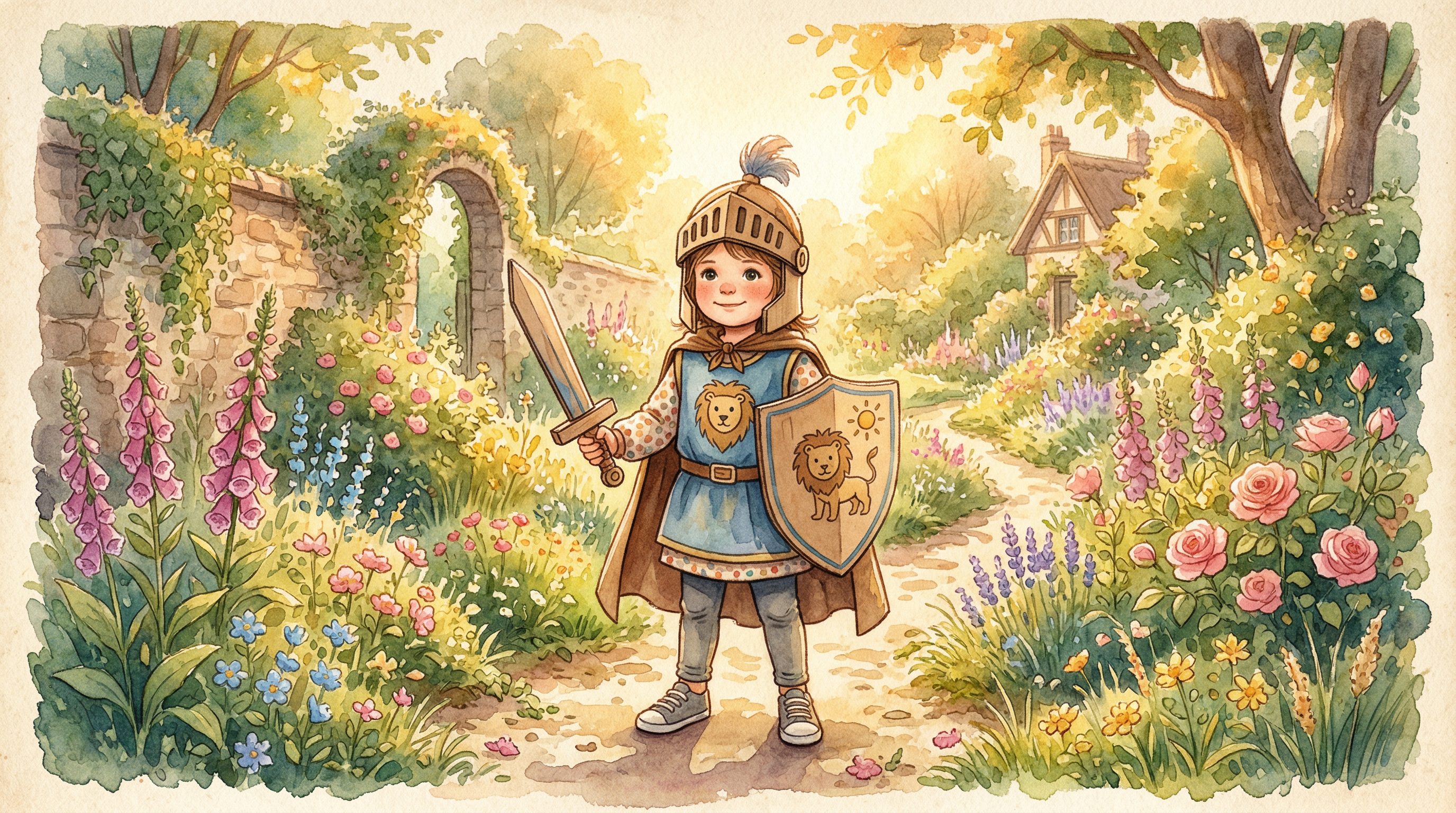
Brave Isn't a Personality Type
Some kids are just brave, right? The ones who leap off the diving board without looking down, who introduce themselves to strangers without prompting, who don't flinch when things get hard. And then there's your kid — hesitating at the edge of the pool, asking you to go first, waking up at 2am with worries you didn't know he was carrying.
Here's the thing the Bible makes clear from start to finish: bravery has nothing to do with personality.
The people God called to do the hardest things were almost universally terrified. Gideon was hiding when God found him. Moses had a speech impediment and argued with God for a chapter before finally agreeing to go. Esther was an orphan girl in a foreign palace who could be executed for speaking out of turn. Jeremiah told God he was too young and didn't know what to say. These were not bold, fearless personalities. They were ordinary, scared people who did something hard anyway — because God asked them to and they said yes.
That's the definition of bravery: not the absence of fear, but the decision to act despite it. And it's a skill that can be learned. Your child can learn it — starting now, at home, at bedtime, in small moments that build toward something real.
Three Bible Heroes Who Were Terrified
The heroes of scripture are not sanitized. When you read them honestly, you find fear, doubt, avoidance, and argument with God. Let your child see that — because it makes bravery possible to aspire to.
Joshua
God told Joshua to lead millions of people into a land full of fortified cities and powerful armies. God's instruction was not: "Don't worry, it'll be easy." It was: "Be strong and courageous. Do not be afraid or terrified because of them, for the Lord your God goes with you." (Deuteronomy 31:6)
That verse only makes sense if Joshua was afraid. You don't tell someone to "be strong and courageous" if they're already feeling invincible. God acknowledged the fear and gave Joshua a reason to act anyway. Your child's fear is not disqualifying. God works with scared people constantly.
David
Before David fought Goliath, his brother mocked him. Saul told him he was too young and small. The Philistines had a giant warrior who had been fighting since before David was born. By any reasonable assessment, David should have been terrified. He was a teenager with a sling.
But David had rehearsed faith. He'd killed a lion. He'd killed a bear. He told Saul: "The Lord who rescued me from the paw of the lion and the paw of the bear will rescue me from the hand of this Philistine." (1 Samuel 17:37) Bravery, for David, was built on a track record of seeing God come through in smaller things first.
This is practical for your child: small acts of courage in everyday life build the faith muscle for bigger ones.
Esther
Esther's courage is arguably the most relatable for kids — because her fear was social, not physical. She wasn't scared of a giant or a battle. She was scared of speaking up in a room where speaking up had consequences. She was scared of being vulnerable, of sticking out, of saying the thing nobody wanted to hear.
Her older cousin Mordecai said to her: "And who knows but that you have come to your royal position for such a time as this?" (Esther 4:14) That sentence hit her. She fasted, she prayed, and she walked into the king's court knowing it might kill her. "If I perish, I perish." She was scared. She did it anyway.
Your child faces social bravery every day. Standing up for someone being bullied. Saying the right thing when it's easier to stay quiet. Being kind to someone nobody else is being kind to. For such a time as this.
Bravery Is a Skill — Here's How You Build It
Bravery doesn't arrive. It's trained. Here's how that training looks in practical terms:
Start small and celebrate specifically. When your child does something that required courage — raises their hand in class even though they weren't sure of the answer, apologizes when it was hard, tries the food they hate, speaks up in a situation where they could have stayed quiet — name it. Not just "good job." Tell them exactly what you saw: "You were scared to do that and you did it anyway. That's what brave looks like." Specific recognition trains the behavior.
Let them be appropriately uncomfortable. Helicopter-rescuing your child from every difficult moment teaches them that discomfort is dangerous and requires your intervention. Some discomfort is developmental. Your child needs to experience the feeling of being scared, doing the hard thing, and surviving — over and over, in increasingly significant situations. That's how courage gets built.
Tell them your own brave stories. Not the fake-humble version where you downplay the hard parts, but the real version: "I was really scared before that conversation. I didn't want to do it. But I knew it was right, so I did it." Kids need to see their dads as people who have fear and choose courage anyway.
Pray for it together. Not just "God give him courage" in a vague way — but specifically, about the specific thing he's scared of tomorrow. The presentation. The conversation. The tryout. When your child hears you take his specific fear seriously enough to bring it to God by name, it says: this matters, and God is involved.
The God Who Goes First
Here's the thing that makes Christian bravery different from just motivational-poster toughness: you're not doing it alone.
"Be strong and courageous. Do not be afraid; do not be discouraged, for the Lord your God will be with you wherever you go." (Joshua 1:9) That's not a pep talk. That's a promise. The reason your child can be brave isn't that they're tough enough — it's that they're never actually alone in the scary place.
That distinction matters enormously for kids. Telling a child "you're stronger than you think" is motivational, but it puts the whole weight on the child. Telling a child "God is with you in this" removes that weight and replaces it with something solid.
Your child doesn't have to be brave enough on their own. They just have to be brave enough to take one step — and God meets them there. That's the whole pattern in scripture, over and over. Moses raised the staff. Joshua put his foot in the Jordan. David picked up the stone. One step, and God moved.
When Your Child Says "I Can't"
Every child has moments of collapse — where the fear is bigger than the muscle, where "I can't" is what comes out before they even think. That's not failure. That's an opening.
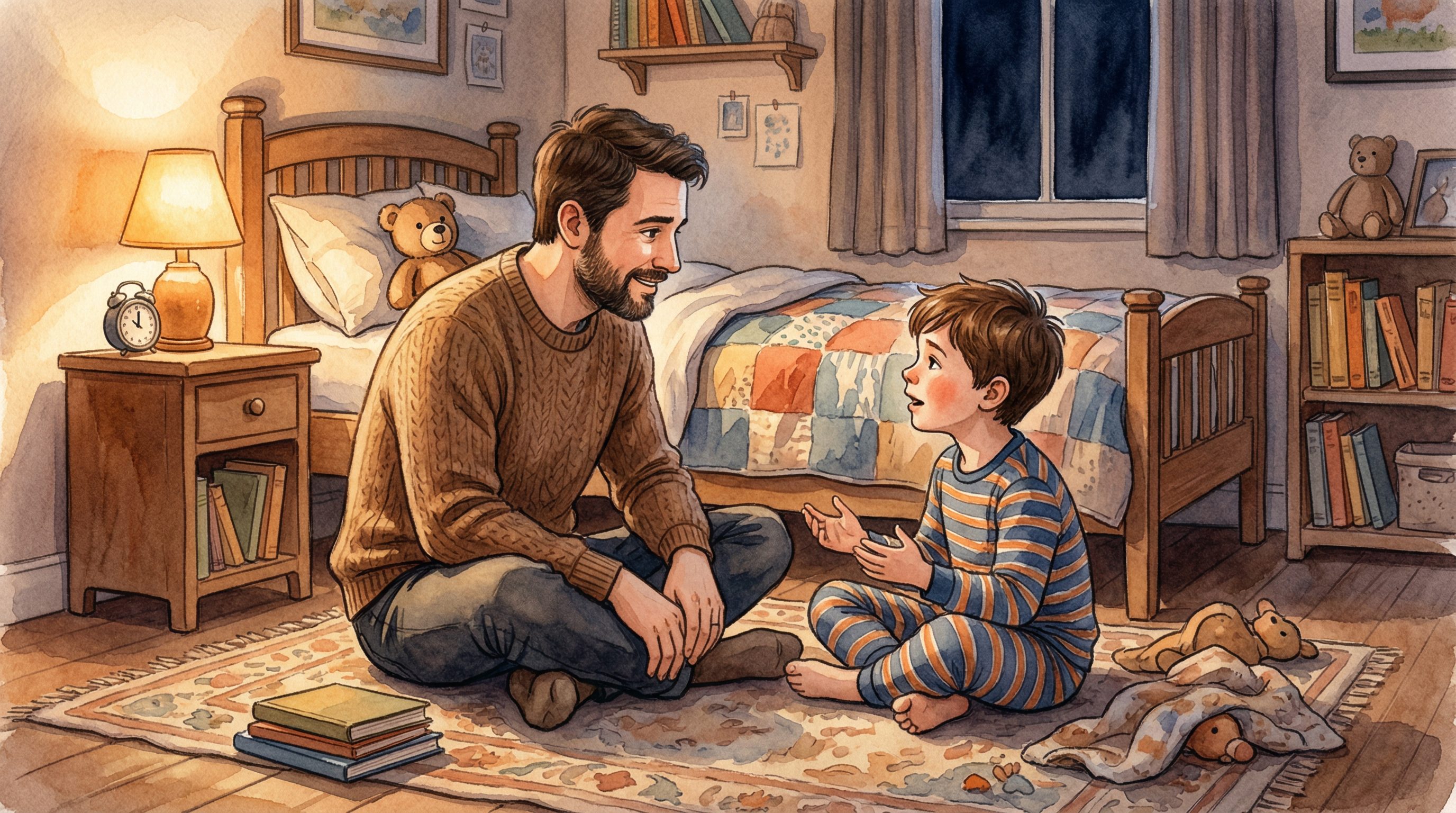
When that happens, get low (literally — eye level). Say: "I hear you. That sounds really hard. Let's figure it out together." Don't tell them they can. Show them the smallest possible next step. Not the whole scary thing — just the next step. "What's the smallest version of brave you can do right now?"
Most of the time, there's something. And small bravery, named and celebrated, builds toward big bravery over time.
If fear is the primary obstacle — if it's not just occasional nervousness but something that regularly gets in your child's way — the deeper guide on kids and fear is worth reading alongside this one. Fear and bravery are two sides of the same conversation.
The Brave series on Hosted Devotions was built for this — a devotional walk through what bravery looks like for kids, grounded in scripture. It's designed for bedtime, which is exactly when the "I'm scared for tomorrow" conversations tend to happen.

The Brave Kid You're Building
You're not trying to raise a fearless child. Fearless people don't make great decisions — they miss signals that fear is designed to send. You're trying to raise a child who knows what to do with fear: name it, hand it to God, and take the next step anyway.
That process takes years. It won't look linear. There will be seasons where your child is braver than you expect, and seasons where they retreat. Keep showing up. Keep pointing to the stories. Keep telling the truth about your own fear and what you did with it.
That child becomes a brave adult. The adult who speaks up in hard meetings, who apologizes when he's wrong, who shows up for people when it's inconvenient, who leads his family with honesty instead of performance. That's what you're building at bedtime with a Bible story and a five-minute conversation.
Joshua, David, Esther — they were all scared. They all showed up anyway. Your child is in the right lineage.
📖 Read This Tonight
The Brave series walks kids through what it means to choose courage when fear shows up — Joshua, David, and more, told in a way that connects to your child's actual life.
Get Notified When New Series Drop
We add new devotional series regularly. Sign up to hear about them first.
Join the Community