
I'm Building Something My Boys Will Inherit
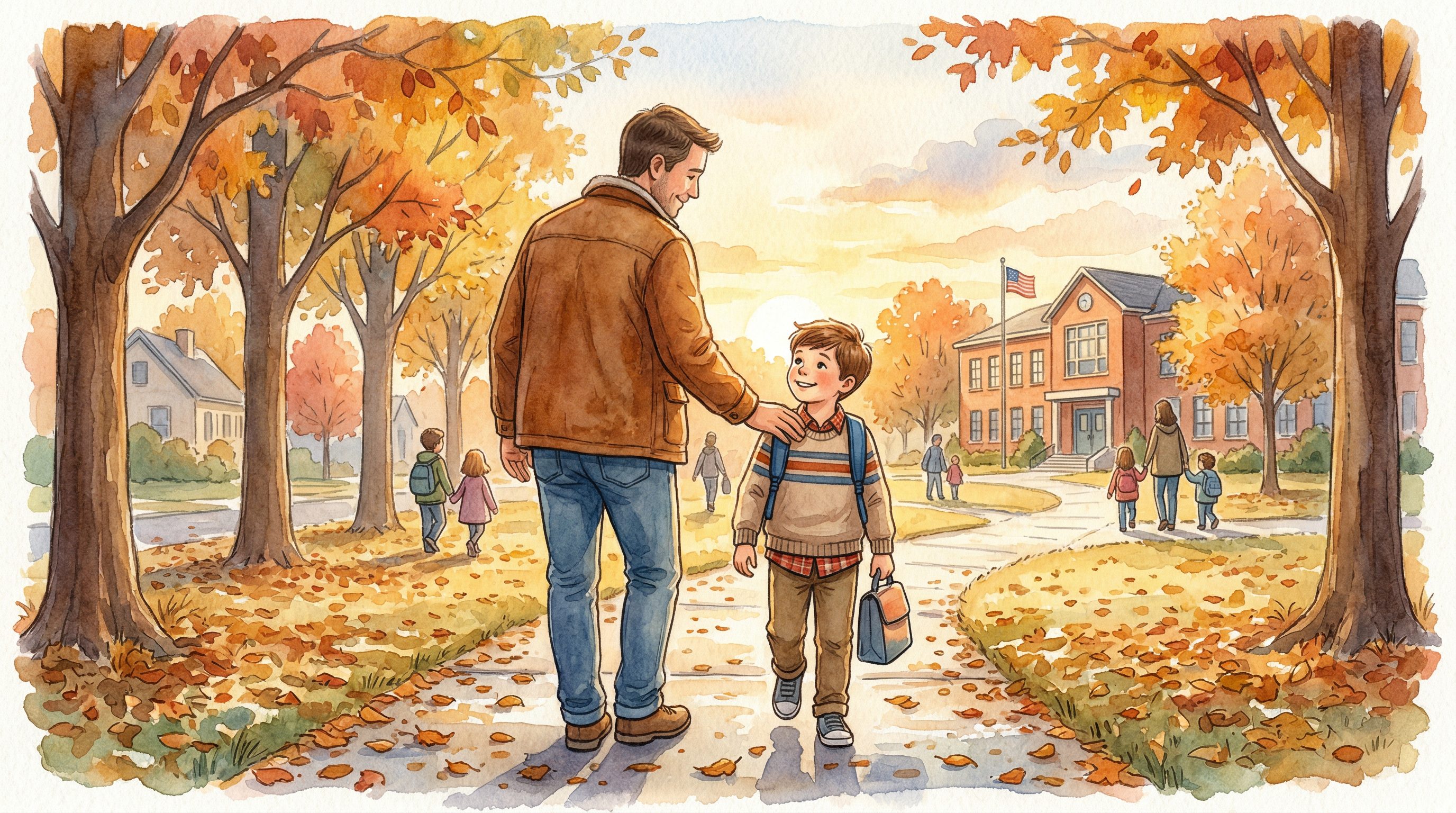
I don't think about legacy in the abstract. I think about it in terms of two specific kids — a 7-year-old and a 5-year-old who will someday be men, who will make decisions without me in the room, who will face things I can't protect them from, and who will need something deep and durable to stand on when that happens.
I think about what I want them to have. Not money. Not a name. Not even a clean track record from their dad. I want them to have faith — the kind that's been tested and held up. The kind they've seen in real life, not just heard about at church. The kind that was handed to them on ordinary Tuesday nights in their bedrooms, year after year, in the small ritual of sitting together and reading and praying and talking about what actually matters.
That's what I'm building. And if you're reading this, I think you're trying to build something like that too.

What It Actually Means to Leave a Legacy of Faith
Legacy of faith is a phrase that can sound big and a little intimidating — like it requires some kind of spiritual greatness that regular dads don't have. It doesn't.
Leaving a legacy of faith means your kids grow up having watched a real person actually live by what he believes. Not perfectly. Not without doubt or failure. But consistently, over time, with enough honesty that they can see it's real.
Research on faith transmission — why some kids hold onto their parents' faith and others don't — consistently points to one factor above all others: a warm, personal relationship with a parent who took their own faith seriously. Not theology. Not church attendance. A real person who believed something and let their kids see it.
That's accessible to any dad. Including you. Including me, on the nights I feel least qualified to be the one leading.
The Honest Part: You Have to Do Your Own Work First
Here's something I think most devotional resources skip over: you can't pass down a faith you don't have. Or more precisely — you can try, but your kids will notice the gap between what you say and how you live, and that gap does more damage than anything else.
There was a period where I found myself telling my boys that faith was important while privately wondering whether I was walking that out myself. It was uncomfortable to sit with. Why should I tell him this matters if I'm not doing my own work? That question pushed me to get more serious about my own devotional practice — not just the bedtime routine with my kids, but my own reading, my own prayer, my own honest engagement with my faith.
I'm not saying you need to have it all figured out before you lead your family. You don't. But the most powerful thing you can do for your kids' faith is to genuinely pursue your own. They will see it. And it will mean more than any devotional you read them.
That's why resources like the Dad's Companion matter — not just for what you do with your kids at bedtime, but for what you do with God on your own. Both halves of this matter.
The Devotional as a Legacy Practice
Bedtime devotionals — done consistently over years — are one of the most powerful legacy-building tools available to a dad. Not because they're dramatic, but because they're regular. Because they're built into the architecture of your family's daily life. Because your kids will look back and remember not any single night, but the pattern of a father who showed up.
The content matters, but the consistency matters more. Here's how to think about devotionals as a legacy practice specifically:

Tell your story
Your kids need to hear how faith has worked in your actual life. The time it carried you through something hard. The time you weren't sure and kept going anyway. The moment something clicked that you'd heard a hundred times before. These stories are your legacy — more than any verse you explain correctly. Tell them, even when it feels vulnerable to do it.
Connect scripture to real life — yours and theirs
The gap between Bible content and real life is where most kids lose the thread. Your job in a devotional isn't to teach theology. It's to close that gap. "This is what this looks like in our house." "This is where I've seen this be true." "What do you think this would look like at school tomorrow?" That's how scripture becomes something that lives in them instead of something they heard once.
Name what you believe — out loud, to them
Don't assume your kids know what you believe. Tell them. Not in a lecture — in moments. "I believe God is actually real. And I believe he cares about what happens to us. That's not just something I say — I've seen it." Kids need to hear their dad make a direct claim about what he believes. It gives them permission to believe something too.
Return to the same themes
The things worth leaving behind are worth saying more than once. Don't try to cover every topic of theology across a childhood. Pick the handful of things that matter most — the things you'd want them to be absolutely solid on — and return to those themes again and again in different forms. Repetition is how formation works.
The Legacy series on Hosted Devotions is built specifically around these themes — identity, faith, character, and what it means to leave something behind worth having. If you're looking for a structured place to start this kind of intentional devotional work with your kids, that's the right series to pull up tonight.
What You're Actually Passing Down
It's worth being specific about what a legacy of faith actually gives your kids — because it's more than "they'll be Christians." Here's what you're building in them when you do this consistently:
- A framework for meaning — They'll have a way to understand why they're here and why it matters.
- A source of stability under pressure — When life gets hard, they'll have something to stand on.
- A model for how to live — Not a perfect one, but a real one. Which is exactly what they need.
- A relationship with you — These devotionals aren't just about God. They're about the two of you, talking about what matters, year after year. That relationship is its own legacy.
Start Small. Start Tonight.
Legacy sounds like something you build over decades, and it is. But it starts tonight, with one 10-minute bedtime routine that probably won't feel significant in the moment. That's fine. Significant things rarely do when they're happening.
You don't need to be eloquent. You don't need to have all the answers. You need to show up, open something worth reading, and let your kids see that you take this seriously. Do that enough times over enough years, and you will have built something your boys — or your girls — carry for the rest of their lives.
That's the inheritance. That's the whole thing.
For practical guidance on building the day-to-day devotional structure that makes this kind of legacy possible, this guide on building a family legacy devotional walks through the specifics. And for the broader picture of what spiritual leadership looks like for a regular dad, this article on spiritual leadership for dads is worth reading alongside it.
And when you're ready to go deeper in devotional practice — both your own and with your kids — this guide on leading family devotions as a dad covers the practical side of making it consistent.
📖 Read This Tonight
The Legacy series is 14 nights of devotionals built around what you want to pass down — faith, character, identity, and what it means to build something worth leaving behind. It's the right place to start.
Get Notified When New Series Drop
We add new devotional series regularly. Sign up to hear about them first.
Join the Community