The Bar Is Lower Than You Think
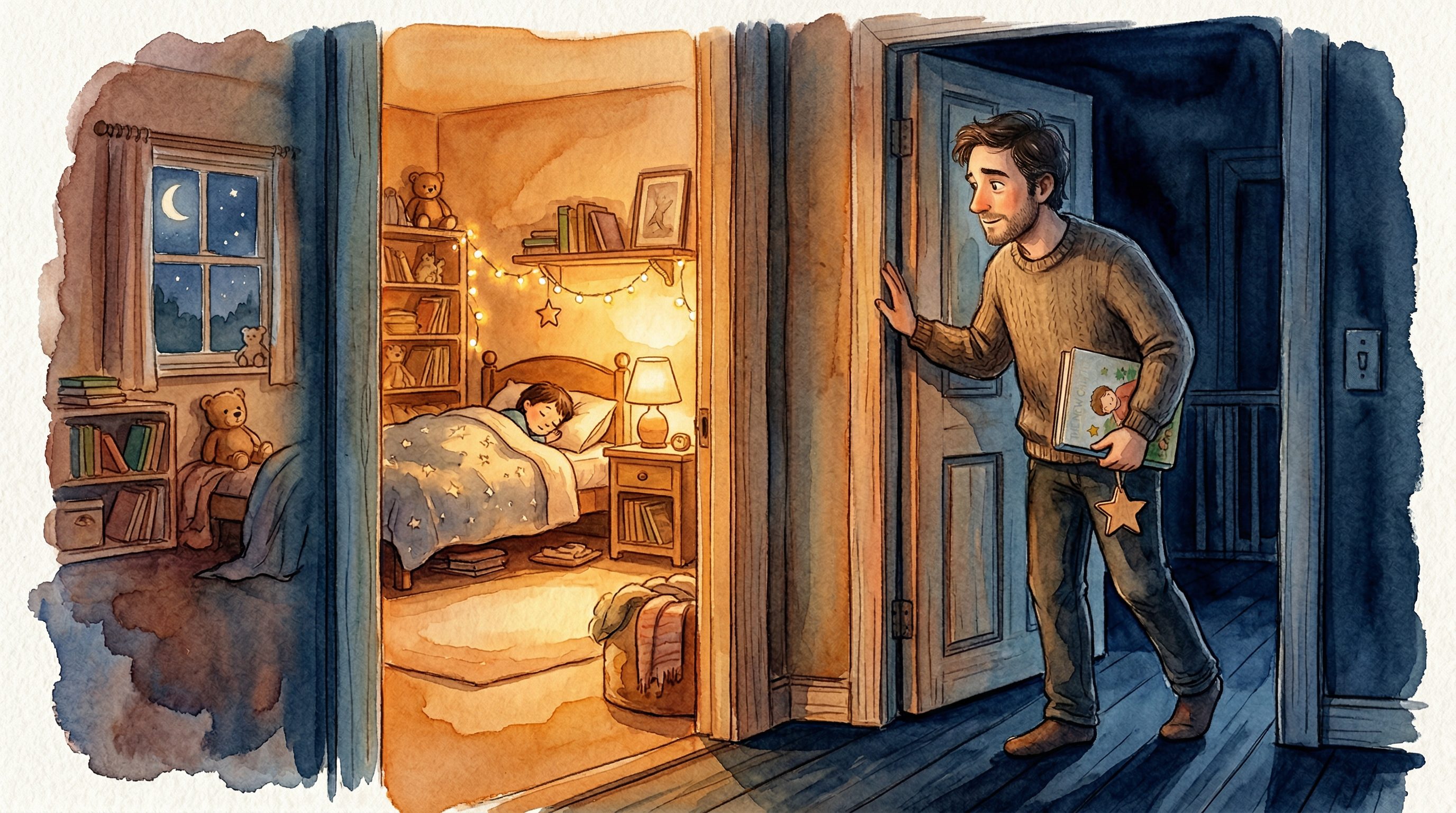
Here's the thing nobody tells you when you decide you want to lead family devotions: you don't need to be qualified. You just need to show up.
I know that sounds like a bumper sticker. But I mean it literally. The version of "spiritual leadership" that lives in most dads' heads is some composed, well-read guy who sits down with a leather Bible, calmly explains scripture, and fields every theological question his kids throw at him. That guy doesn't exist in real life. Or if he does, his kids are terrified of him.
The bar is this: you love your kids and you want God to be real to them. That's it. That's the qualification. Everything else is just learning as you go.
Why Dads Feel Unqualified — And Why That Feeling Is Actually a Feature
The most common thing I hear from dads who want to start family devotions but haven't yet is some version of: "I don't know enough." They're worried they'll say the wrong thing, get a hard question they can't answer, or come off as a hypocrite because their own faith has had some rough patches.
Let me tell you something: that tension you feel is doing more for your kids than you know.
For a while, my own faith felt thin. I'd gone through a stretch where my consistency was just off — I wasn't reading, wasn't praying much, wasn't tracking. And I kept asking myself, why should I tell my son this is important if I'm not doing it myself? That question almost stopped me from starting at all. But here's what I've figured out since then: kids don't need a perfect dad. They need a dad who takes the thing seriously enough to show up for it.
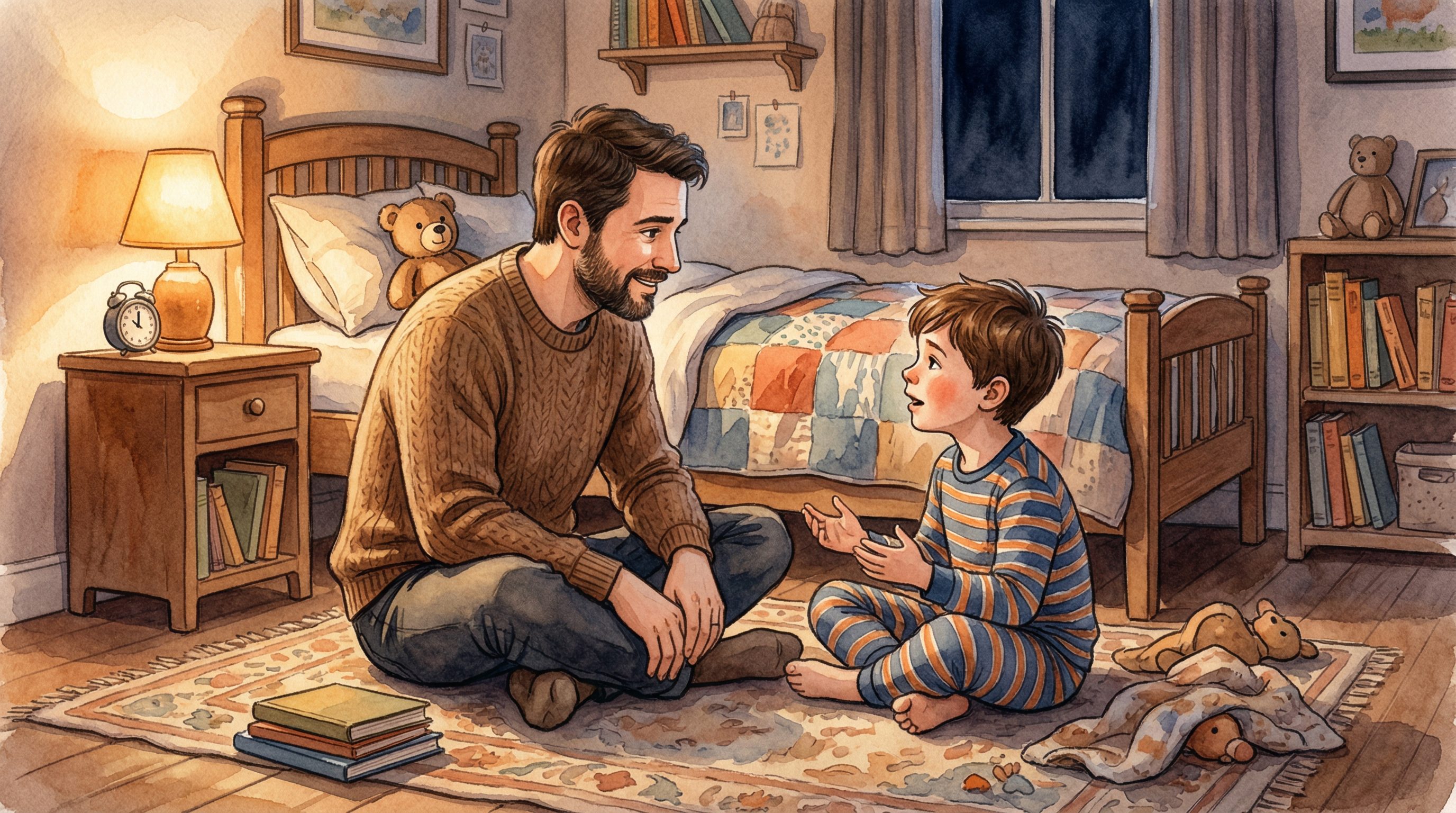
When your kid watches you open a devotional book even on a night you're exhausted, when they see you say "I don't know, but let's think about it together" — that's the lesson. That's what sticks. The content matters, but the modeling matters more.
If you're looking for practical guidance on the basics, this guide on how to do bedtime devotions with your kids lays out the full routine from scratch.
What "Leading" Actually Looks Like
Leadership in family devotions doesn't mean you have all the answers. It means you hold the space. You're the one who decides tonight it's happening. You're the one who starts it. That's genuinely most of the job.
Here's what a real devotion night looks like for most dads:
- You read something short. A verse, a short story, a prompt from a devotional app. Doesn't have to be long.
- You ask one question. Something your kid can actually answer. Not "what does this passage teach us about the nature of God" — more like "has anything ever made you feel like that?"
- You let them talk. This is where the real stuff happens. Kids will surprise you if you give them space.
- You close with prayer. Short. Simple. Doesn't have to be polished. "God, thank you for today. Help us be kind tomorrow. Amen." That counts.
That's it. That's the whole structure. You don't need a curriculum or a lesson plan. You need a starting point and a willingness to let the conversation go wherever it goes.

The Prep Problem (And How to Get Rid of It)
One of the biggest reasons dads don't start is that they think they need to prepare. They imagine sitting down the night before, picking a passage, thinking through application points, maybe finding a related story or object lesson. That sounds like homework. Nobody wants homework after a full day.
The prep problem disappears when you have a good starting point.
A pre-written devotional that's designed for dads and kids removes almost all of the friction. You open it, you read it, and the content does most of the work. The question is already there. The story is already there. You're not crafting a mini-sermon — you're facilitating a conversation.
This is exactly why I built Hosted Devotions. Every series is written to sound like a real dad talking to his kid, not a children's pastor talking to a classroom. The language is plain. The questions are real. You can open it ten seconds before you sit down with your kid and still run a solid devotion.
If you want a series to start with tonight, Let Me Tell You About God is a good first pick — especially if your kids are younger and you're not sure how to talk about who God actually is without it getting weird or churchy.
How to Handle the Hard Questions
At some point — usually around age 6 or 7 — your kid is going to ask you something you don't have a clean answer to. Why does God let bad things happen? Is heaven real? Why do people die? What happens if someone doesn't believe in God?
Here's what not to do: make something up. Kids have excellent radar for when they're being managed instead of talked to honestly.
Here's what to do instead: be honest about what you don't know, and honest about what you do. "I don't fully understand that one, buddy. But here's what I believe..." That's a complete answer. It shows your kid that faith isn't about having everything figured out — it's about wrestling with the big stuff and holding on anyway.
That kind of honesty is actually what makes devotions matter long-term. It's what makes the conversations real instead of performative. And honestly, if you want to go deeper on this one, this piece on spiritual leadership for dads gets into the mindset behind it — not the tactics, but the actual posture.
Starting When It's Been a While
Maybe you've tried this before and it fizzled out. Maybe you went a few weeks strong and then life got busy and it just quietly stopped. That happens to almost every dad. The guilt about that gap is usually what makes it hard to restart.
Don't make a thing of it. Don't announce that you're starting over or apologize for stopping. Just start. Sit down tonight, open something, read it. Your kid isn't keeping score. They're just glad you're there.
The one thing that actually helped me stay consistent was building in a companion habit for myself — something that kept the practice feeling real on my end, not just something I was doing for my kids. Doing my own morning reading before anyone else was up made the bedtime devotions feel like they were part of the same thread, not two separate things. When it connected that way, it stopped feeling like a performance.

One Week Is All It Takes to Build the Habit
Research on habit formation consistently shows that the biggest predictor of long-term consistency isn't motivation — it's environmental design and repetition. In plain terms: if you do it the same way, at the same time, for about a week, it starts to feel automatic. Your kids will start expecting it. They'll ask about it on nights you try to skip.
That expectation becomes the accountability. Once your kid is the one reminding you, you've already won.
If anxiety is something your kid deals with, devotionals for kids about worry is worth bookmarking — that's some of the best content for nighttime when worries tend to surface.
You don't need to be a theologian. You don't need to have your own faith perfectly sorted. You don't need to prepare for an hour. You need to show up, open something, and let the conversation happen. That's the whole job. Start tonight.
📖 Read This Tonight
If you're not sure what to open with your kids tonight, start with Let Me Tell You About God — it's written for exactly this moment. Plain language, real questions, no prep required.
Get Notified When New Series Drop
We add new devotional series regularly. Sign up to hear about them first.
Join the Community