I'm Not a Military Dad — But Here's What They've Told Me
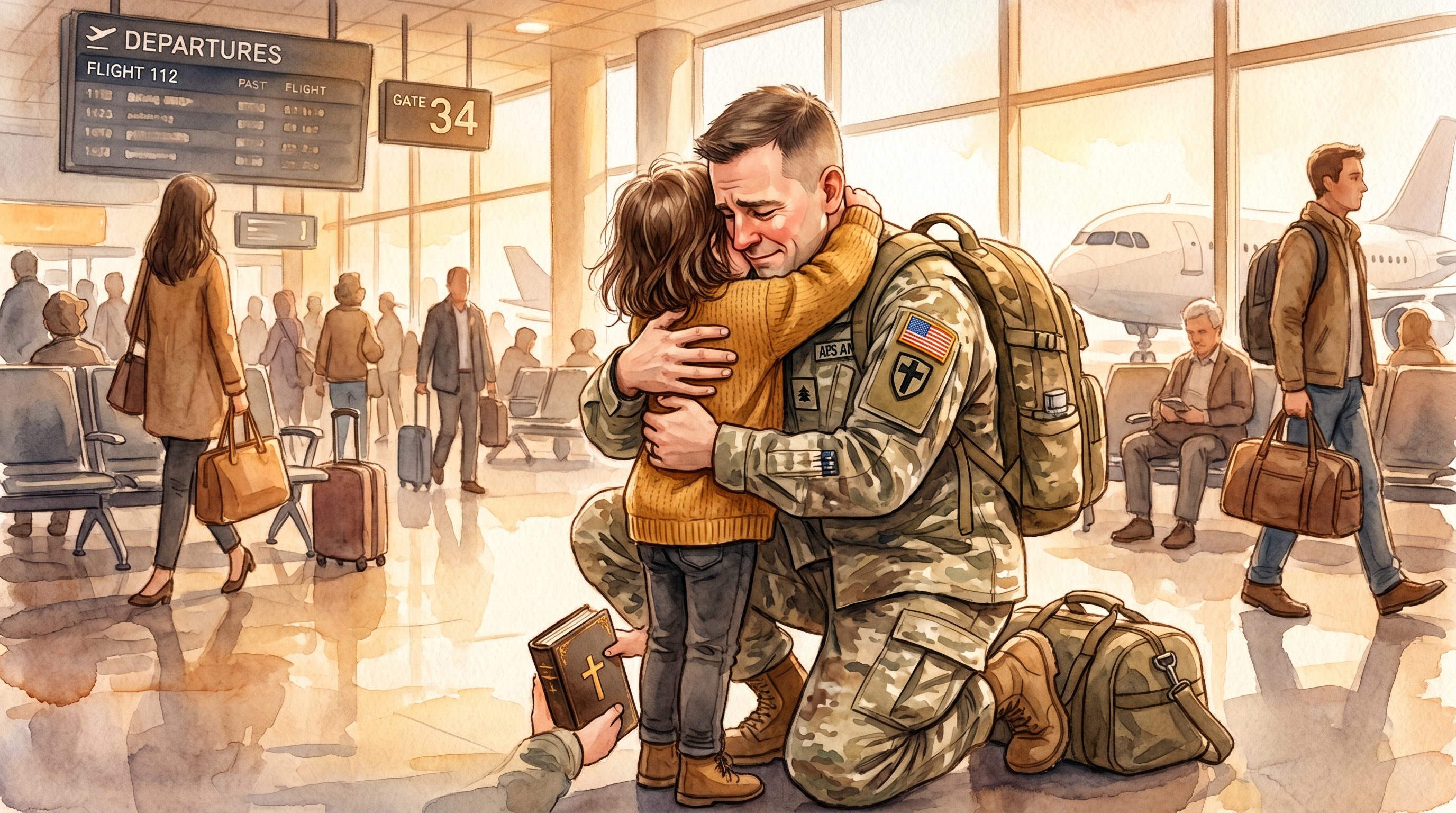
I want to say something upfront: I'm not a military dad. I've never had to put on a uniform, walk out the front door, and spend the next six months on the other side of the world from my kids. I haven't watched my son's face when I said goodbye not knowing exactly when I'd be back. That's not my story.
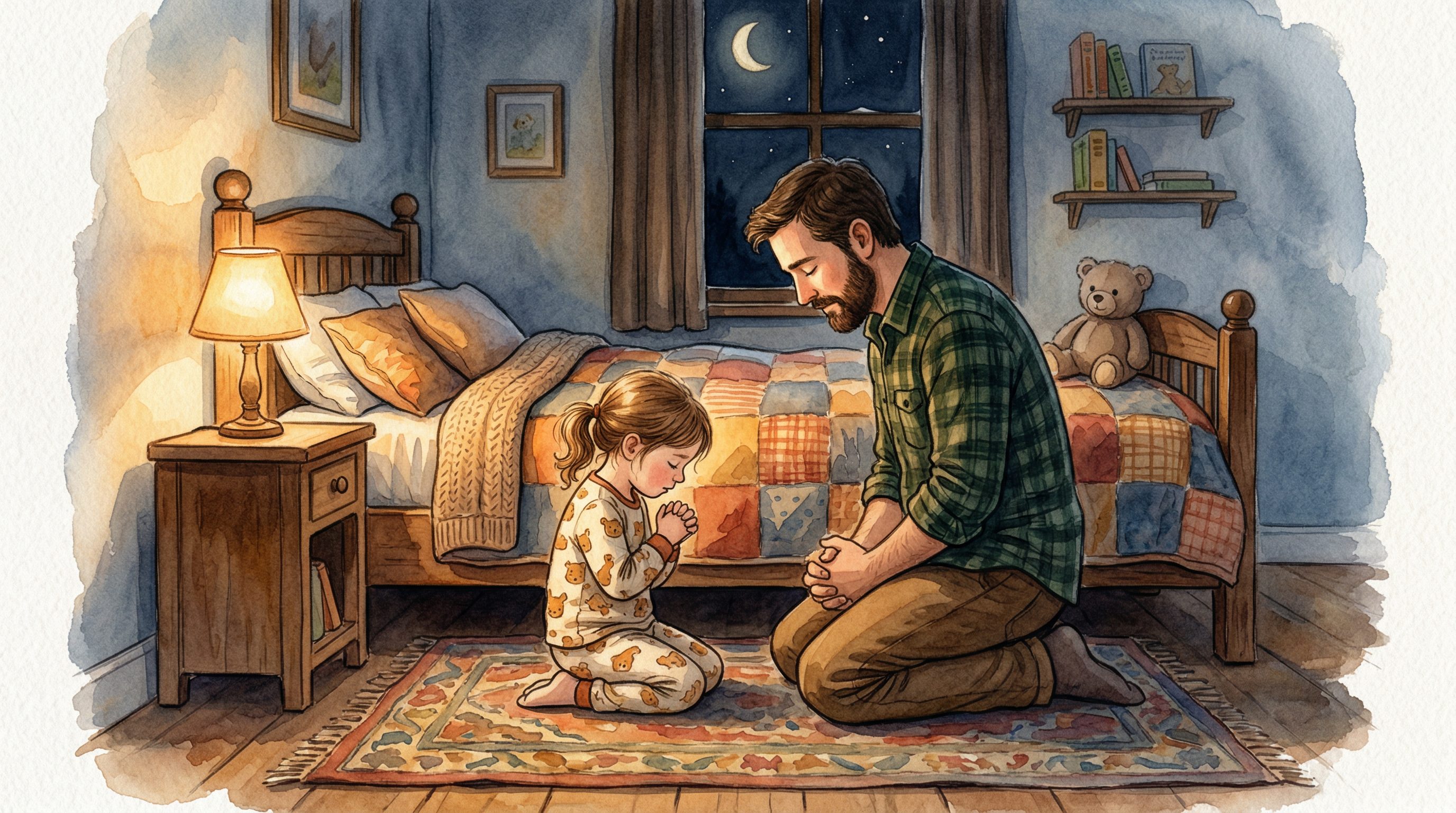
But military families have told me — more than once — what that experience is actually like for the kids. And one thing keeps coming up: bedtime is when it hits hardest. That's when the absence is loudest. That's when a child who held it together all day finally falls apart a little, asks the question they've been carrying, or goes quiet in a way that scares you even from across the ocean.
If you're a deployed dad trying to figure out how to stay spiritually present with your child — or a mom holding things together at home and trying to give your kid something to hold onto — this is for you.

Why Kids Process Deployment Differently Than Adults
Adults understand the abstract. They understand mission, duty, risk, timelines. Kids don't — and they're not supposed to. A 6-year-old doesn't process "Dad is deployed in support of a foreign operation." They process: Dad isn't here and I don't know when he's coming back.
That gap between what's actually happening and what a child can comprehend is where a lot of anxiety lives. Kids fill in the blanks with their imagination, and their imagination — especially at bedtime — doesn't always go to good places. They need something concrete. Something they can return to every night. Something that says: God knows where your dad is. And God knows where you are. And that doesn't change just because there's an ocean between you.
A devotional can be that thing. Not because it answers every question — it won't. But because ritual creates stability, and a child who has a nightly routine of prayer, a verse, and a moment to say what's on their heart is a child who has a container for the hard feelings instead of just stewing in them alone in the dark.
The FaceTime Devotional: Reading Together Across the Distance
Here's something military families have figured out that I think more people should know about: you don't have to be in the same room to do a devotional together. FaceTime, WhatsApp, whatever you've got — it works.
The ritual matters more than the proximity. If Dad calls in from wherever he is in the world, and the kid knows that at 7:30 every Thursday night they're going to hear his voice and read something together — that's not a consolation prize. That's real. That's a dad showing up in the way he actually can.
The same principles that apply to dads who travel for work apply here, only with higher stakes and more emotional weight. The dad who calls from a hotel room and reads a verse with his kid is doing something powerful. The dad calling from a base overseas is doing the same thing, just with a longer distance and a stronger reason.
Some practical things that help:
- Use the same devotional every time — familiarity is comforting for kids under pressure
- Keep it short. A deployed dad calling in doesn't need a 20-minute devotional. Five minutes of presence beats twenty minutes of obligation.
- Let the child lead occasionally — "What do you want to pray about tonight?" gives them agency when the rest of their situation feels out of their control
- End with something consistent — the same prayer, the same phrase. "God's got you and I've got you" — something that becomes a signal

What to Actually Say: Devotional Themes for Deployment
If you're the parent at home trying to lead the devotional when Dad is gone, you might be wondering: what do I even say? Do I pretend everything's fine? Do I address the deployment directly?
Address it. Kids know what's real. Pretending Dad isn't somewhere potentially dangerous doesn't make them feel safer — it just makes them feel like they can't talk about the thing that's sitting right in the middle of the room.
A few devotional themes that work well for kids navigating deployment:
God Sees Where Dad Is
Psalm 139 is built for this. "Where can I go from your Spirit? Where can I flee from your presence? If I go up to the heavens, you are there; if I make my bed in the depths, you are there." Read a few verses. Ask: "Do you think God can see Dad even when we can't?" Let them answer. Don't rush it.
Courage Isn't the Same as Not Being Scared
One of the greatest disservices we do to military kids is telling them to "be brave." Brave isn't the absence of fear. Joshua 1:9 — "Have I not commanded you? Be strong and courageous. Do not be afraid; do not be discouraged, for the Lord your God will be with you wherever you go." Talk about what it means that God is with both of them. The child here. Dad there.
Waiting Is Hard — But Waiting Has a Shape
Lamentations 3:25: "The Lord is good to those who wait for him, to the soul who seeks him." Waiting doesn't mean doing nothing. It means staying connected — to God, to the parent at home, to the routines that hold things together. Give your child something to do with the waiting.
For families looking for a structured series to read through, You Are Loved was built for moments exactly like this — reminding kids that their identity and worth aren't contingent on circumstances, even hard ones. The worry devotional is also worth working through during deployment, because the worry doesn't take a break just because a child isn't saying it out loud.
For the Parent Holding It Together at Home
If you're the one on the ground — running the house, managing the emotions, fielding the midnight questions, doing the school runs and the bedtimes and the everything — this part is for you.
You're carrying a lot. And the devotional isn't going to fix that. But it might give you something to return to at the end of the day that reminds you that you're not actually doing this alone either. The thing you're giving your kid — the anchor — you need one too.
A lot of the parents I've heard from didn't start doing devotionals because it felt easy. They started because the alternative — doing nothing, letting bedtime just be another exhausted goodbye — felt worse. The devotional became less about the spiritual content and more about the signal it sent: even right now, we're going to stop and do this together.
That signal matters. Your kid will remember it.
The Share Feature: How Deployed Dads Stay in the Story
One thing I've seen work well: when a dad is deployed, he can still pick what his family is reading. With Hosted Devotions, you can share a specific series — text or email the link — and the family reads what he selected. It's a small thing. But it means Dad still has a voice in the bedtime routine even when he's not there to deliver it in person.
It's not a substitute for presence. Nothing is. But it's better than silence. And for a kid who needs to know their dad is still thinking about them, still part of their life — Dad picked this one carries more weight than you'd expect.
Closing Thought
I said it at the start and I'll say it again: I'm not a military dad. I don't know what that goodbye at the airport feels like, or what it means to watch your kid's face as you drive away. I'm not going to pretend otherwise.
But I know what these families have told me. I know that the ones who found something to anchor their kids during deployment — a routine, a verse, a shared moment however many miles apart — talked about it differently than the ones who didn't. Not easier. Not fixed. But steadier. More connected. Less alone.
That's what a devotional can do. It won't fill the empty chair. But it can remind everyone in the house that they're held by something bigger than the absence. And on the hardest nights, that's not nothing. That's everything.
📖 Read This Tonight
The You Are Loved series speaks directly to kids who are dealing with hard circumstances they didn't choose — reminding them that their worth and identity aren't shaken by what's happening around them. A powerful one to read through during deployment.
Get Notified When New Series Drop
We add new devotional series regularly. Sign up to hear about them first.
Join the Community