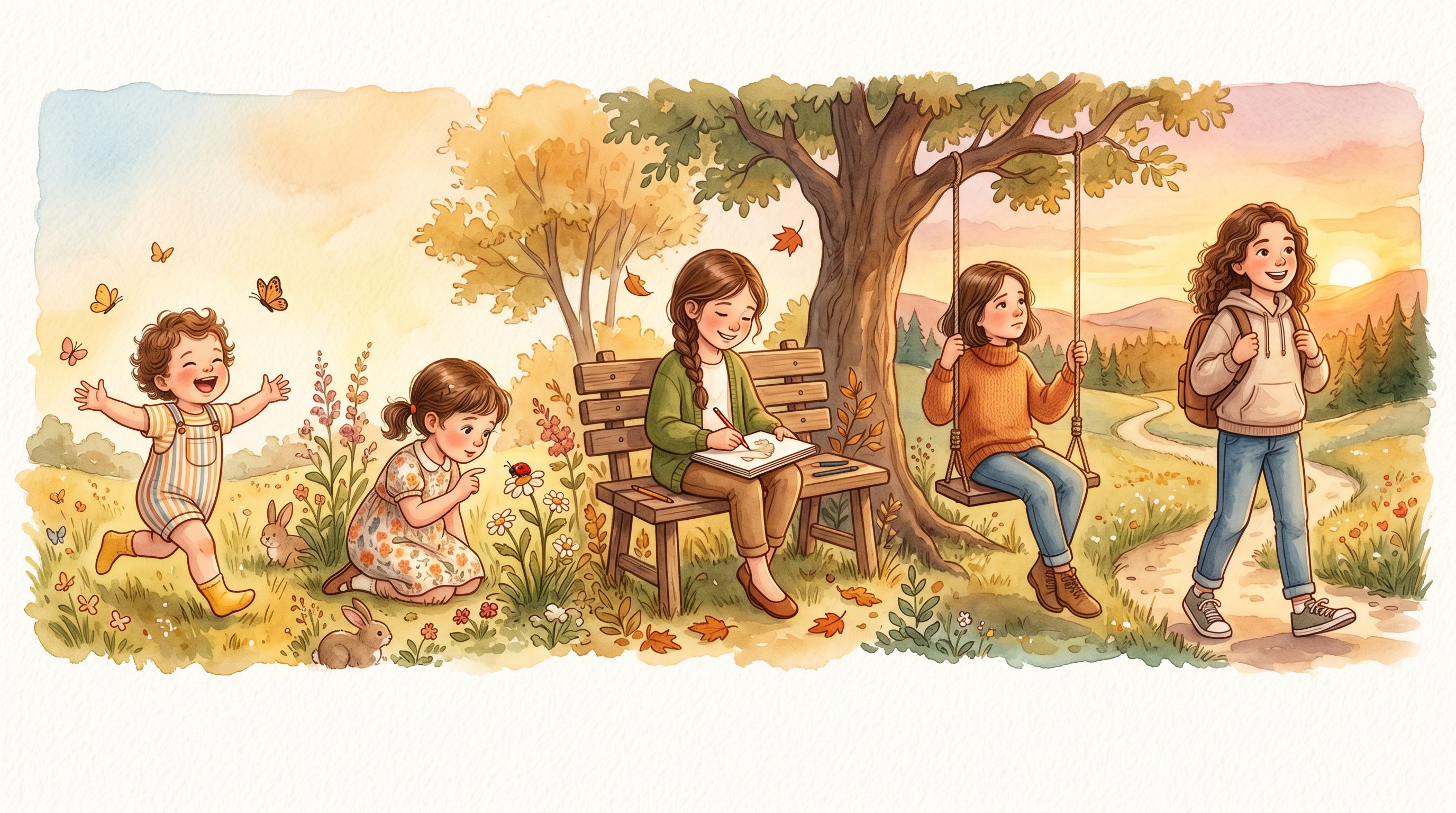
The Right Conversation at the Wrong Age Doesn't Work
Here's a scenario every dad has lived: you try to help your kid process a hard feeling, and it goes completely sideways. Not because you said the wrong thing — but because you said the right thing at the wrong developmental moment.
A four-year-old doesn't need a nuanced conversation about where emotions come from. A ten-year-old doesn't need simple feelings words anymore — they need permission to sit with complexity. Age matters when it comes to feelings, and faith conversations about emotions are no different.
This isn't about having a perfect script. It's about knowing roughly where your kid is developmentally so you can meet them there instead of talking over or under them. Here's a breakdown by age group.
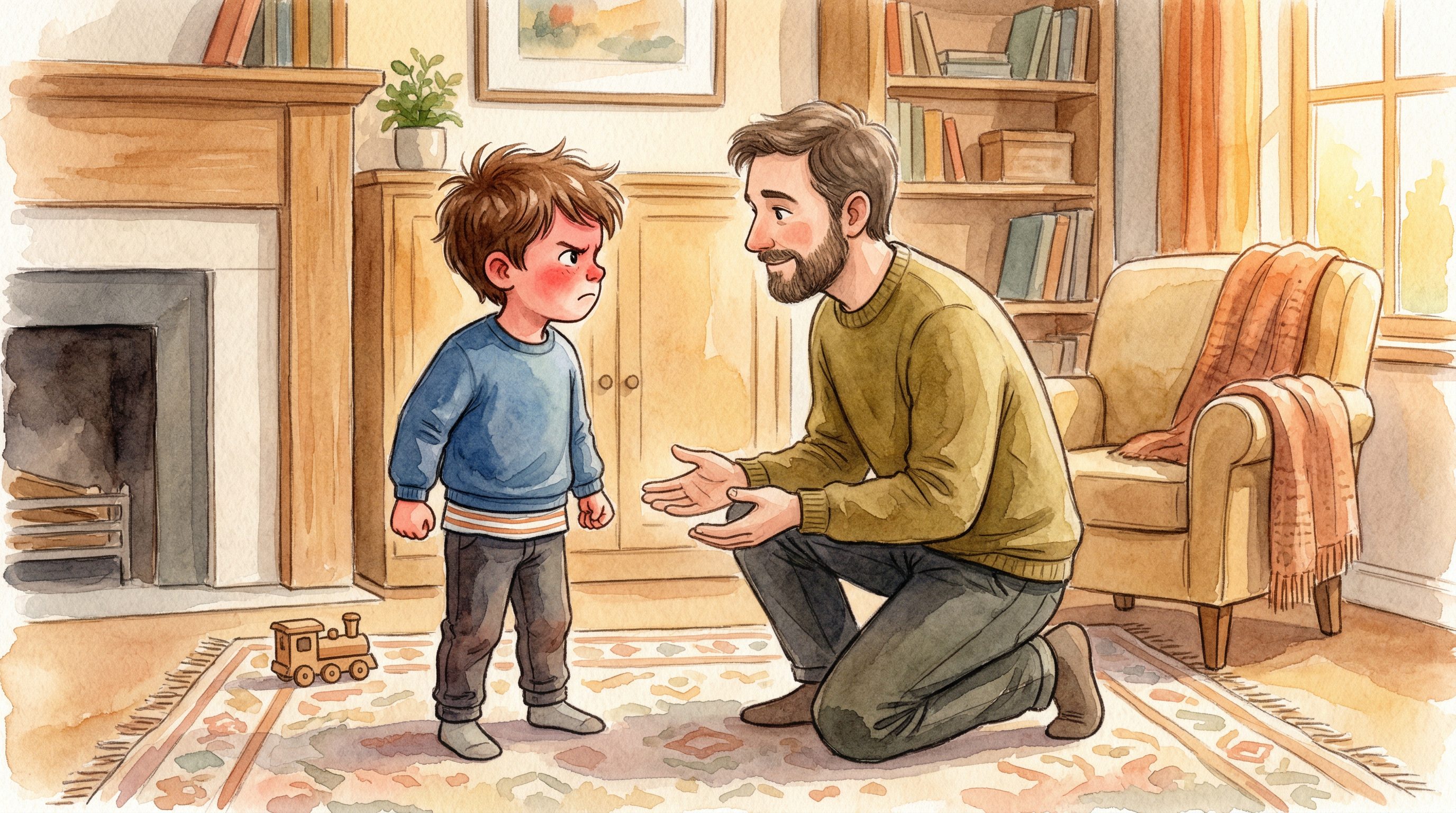
Ages 3-5: Name It First
At this age, the most important thing you can do is name the feeling out loud. Kids this age experience emotions intensely but don't have the vocabulary or the cognitive architecture to understand what's happening. They just know they feel terrible, or scared, or furious — and it's overwhelming.
Your job: give it a name. "You look really frustrated right now. Does that feel right?" That simple act of labeling helps the brain begin to regulate. It's not a fix — it's a bridge.
Faith conversation at this age: keep it concrete and warm. "God made you with feelings. Even the big ones. And He's always with you when they feel too big." That's enough. You're building a foundation of safety, not theology.
Stories that work: Daniel and the lions (he was scared and God was with him), baby Moses in the basket (his mom was scared too, and God took care of them). Short, resolved, warm.
Ages 6-8: Expand the Map
By early elementary, kids have more feelings vocabulary but still struggle with the internal experience of big emotions. They can tell you they're angry, but they often can't tell you why. This is when the "big feelings" conversations start to have some traction — but they need structure.
The emotion wheel is useful here: help them see that there are feelings under feelings. Anger is often covering hurt, embarrassment, or fear. Sadness can be about loss, disappointment, or loneliness. You're not psychoanalyzing your kid — you're expanding their map of their inner world.
Faith conversation: introduce the idea that God sees the whole picture, even the feelings we can't name. Psalms are good here — David was angry, sad, scared, and elated, and he brought all of it to God. That permission to feel everything is formative.
If your 6-8 year old deals with specific emotional challenges — anger especially — this guide to devotionals for kids about anger goes deeper on exactly how to handle that at bedtime.
Ages 8-10: The "Why" Gets Complicated
This is when emotional life gets genuinely complex. Your kid starts to experience social anxiety, peer comparison, embarrassment in public, and the dull weight of not fitting in. They also start to have feelings they don't want to talk about — not because they're hiding them, but because they're still figuring out what they are.
At this age, the worst thing you can do is force the conversation. The best thing you can do is stay available and ask low-stakes questions. "Anything frustrating about today?" lands better than "How are you feeling?" (which gets a shrug) or "You seem upset — what's going on?" (which puts them on the defensive).
Faith conversation: this is when you introduce the concept of lament. The Bible is full of people bringing their honest feelings to God — not polished prayers, but real ones. Job. The Psalms of Asaph. Jesus in the garden. Your kid should know they can pray the messy version.
The Learning to Handle Big Feelings series is built for this window — structured conversation starters at bedtime that help kids actually name and process what's going on inside, without turning it into a therapy session.
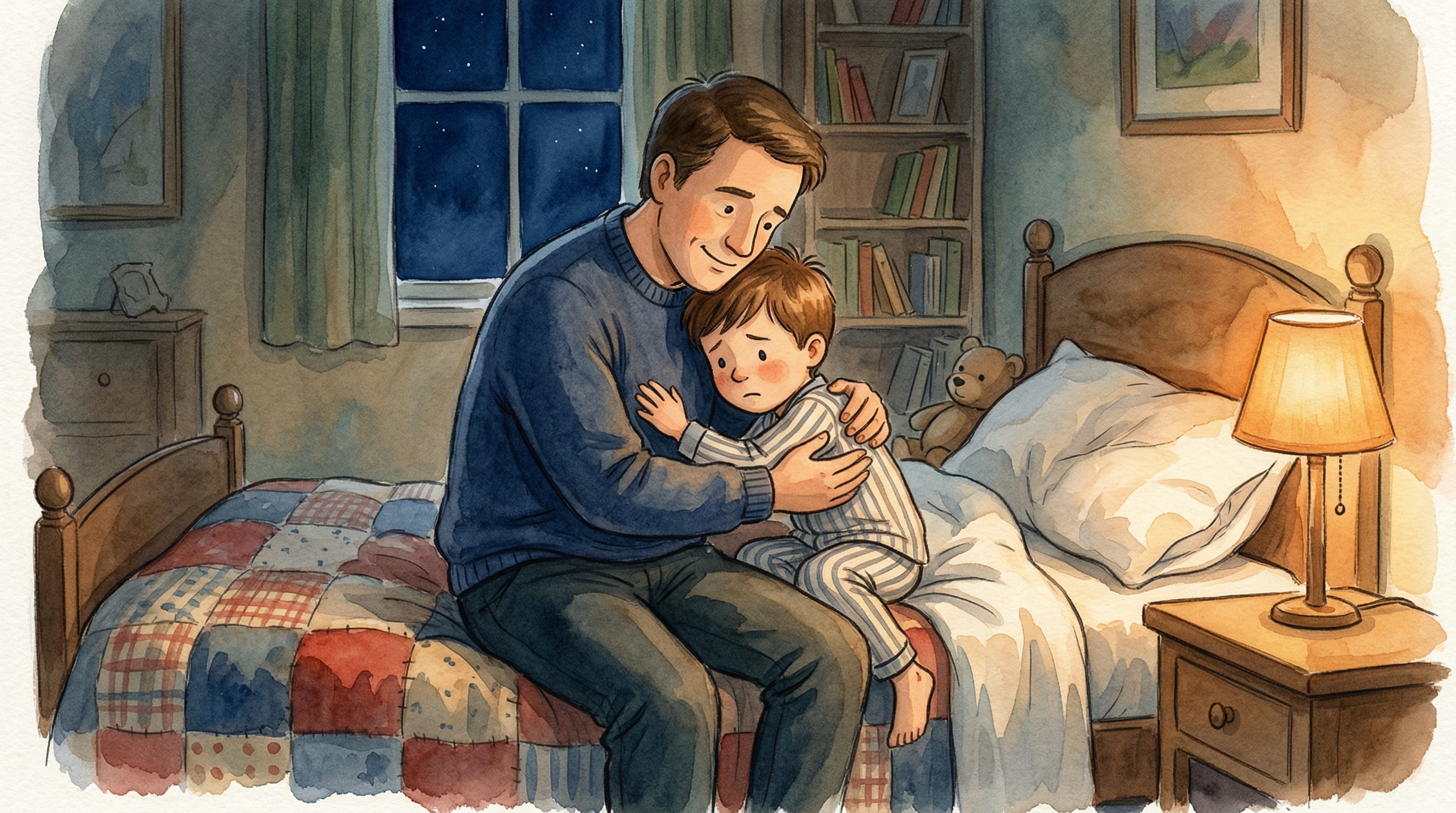
Ages 10-12: Complex Feelings Need Complex Conversations
By the tween years, your kid may be experiencing emotions that surprise them. Self-consciousness spikes. The gap between what they feel inside and what they show outside widens. They may feel things that seem contradictory — missing someone they're also angry at, feeling excited and terrified at the same time.
This is also when boys, especially, often start shutting down emotionally — not because they stop feeling, but because the cultural signals around them tell them that's what they're supposed to do. Fight that hard. The single most valuable thing you can model at this stage is a man who acknowledges his own emotional reality without drama or shame.
Faith conversation: move from "here's what the Bible says about feelings" to "here's what I've noticed in my own life." Share something real. Not a polished testimony — an honest moment. That's what a tween needs to see from you to believe it's safe to be honest about their own interior life.
For age-specific devotional recommendations around the 6-8 window, this guide to devotionals for 7-year-olds covers the sweet spot just before the complexity increases. For the bigger picture on what devotional content actually keeps tweens engaged, this guide to devotionals for 11-12 year olds breaks down what the content needs to look and feel like at this stage.
What Changes at Every Age (and What Doesn't)
A few things shift as kids grow: their emotional vocabulary, their capacity for abstraction, their willingness to be vulnerable, and the kinds of situations that generate big feelings. All of that requires you to adjust.
But some things stay the same at every age:
- Presence matters more than words. Being in the room, staying calm, making eye contact — that regulates your kid's nervous system before you say a single thing.
- Labeling is always useful. At every age, naming the feeling is step one. "You seem really disappointed" never stops being the right first move.
- Your own emotional health models theirs. Kids don't learn emotional regulation by being told about it — they learn it by watching a grounded adult handle hard feelings. That's you.
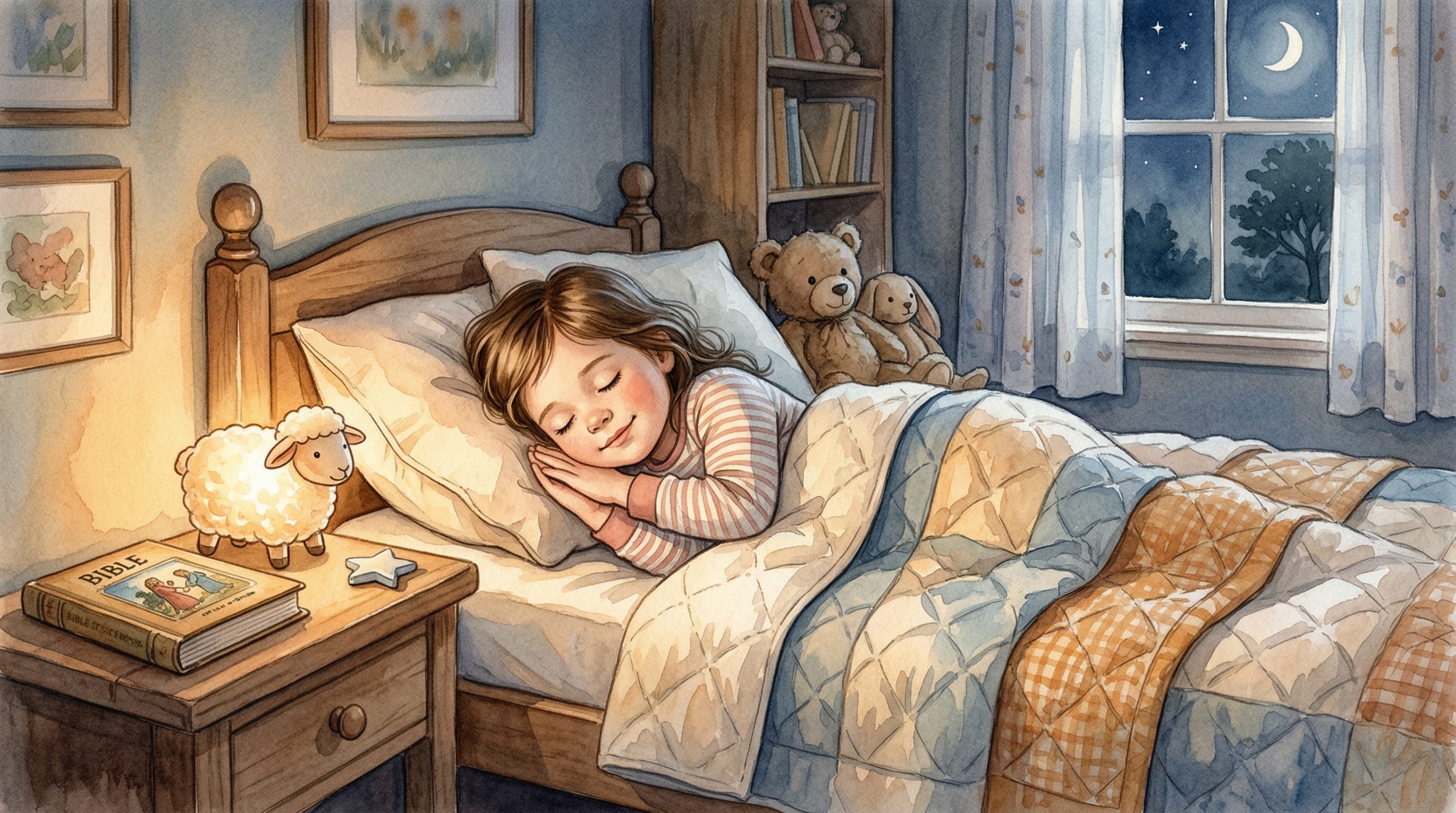
Bringing This Into Bedtime Devotions
You don't need a separate emotional check-in system. The best time to have these conversations is already built into your night: bedtime. Specifically, the five minutes after the devotional when the lights are dimmed and the pressure is off.
End your reading with one open question tied to the theme. "Is there anything you felt today that you're still carrying?" or "What's something that's been hard this week?" You're not requiring an answer. You're leaving a door open. And over time, kids walk through open doors.
The Big Feelings series at Hosted Devotions is specifically designed for this — built to open emotional conversations without making them feel clinical, and structured for dads who want to show up for their kids' inner world without having a psychology degree. Start it any night of the week.
When Feelings Get Complicated: Mixed Emotions and Faith
One of the more advanced emotional territory kids move into — usually around 8-10 — is mixed emotions. They can feel two things at once that seem contradictory. Sad about something but also relieved. Excited about something but also scared. Missing someone they're also a little angry at.
This trips kids up because they often don't have language for it, and because adults sometimes tell them they can only feel one thing at a time: "You should be grateful, not disappointed." That creates shame around normal human experience.
Faith conversation here: the Bible is full of mixed emotions. The disciples at the ascension are described as both worshiping and doubting (Matthew 28:17). Mary and the other women at the empty tomb felt fear and great joy simultaneously (Matthew 28:8). These are not contradictions to resolve — they're the honest texture of a life lived in real time. Show your kid that the Bible makes room for their whole emotional experience, not just the tidy parts.
Practical Prayer That Matches the Feeling
One of the most practical things you can teach your kid is to pray from where they actually are, not from where they think they should be.
For little kids: keep prayer short and simple. "God, thank you for today. I felt [feeling] today. Help me sleep." That's enough.
For 6-8 year olds: start adding more specificity. "There was a hard thing today — I felt left out at lunch. I didn't like it. Can you help me know what to do?" Teach them that prayer is a real conversation, not a performance.
For 9-12 year olds: give them permission to bring the unresolved stuff. "I'm still upset about what happened this week, and I don't totally understand why. But I'm bringing it to you." That's a theologically mature act — more mature than a polished prayer that papers over the real feeling.
You're teaching them to pray honestly. That habit, built young, will carry them through things you can't even see coming in their future.
📖 Read This Tonight
The Learning to Handle Big Feelings series meets kids where they are emotionally — age-appropriate, honest, and designed to open conversations rather than close them. Start it tonight.
Get Notified When New Series Drop
We add new devotional series regularly. Sign up to hear about them first.
Join the Community