
Your Kids Are Already Learning Your Values — The Question Is Whether You're Teaching Them
Kids are paying attention even when it looks like they're not. They're watching how you respond when someone cuts you off in traffic. They're listening to how you talk about your coworkers at the dinner table. They're absorbing what you do when things get hard — whether you keep your word, whether you treat people with respect, whether your faith actually shows up in your real life.
The question isn't whether your kids are learning your family's values. They are. The question is whether you're being intentional about which values they're learning — or just leaving it to chance.
A devotional built around family values isn't just a Bible activity. It's a dad deciding to make the invisible visible — to name what his family stands for and give his kids a framework they can actually use.

What "Family Values" Actually Means in Practice
"Family values" can sound like a bumper sticker. Let's make it concrete.
Family values are the 3-5 things your family comes back to again and again as the standard for how you treat people, make decisions, and respond to the world. They're not aspirational posters on the wall. They're the things you'd want your kids to name if someone asked them, "What does your family believe in?"
Common examples: honesty, generosity, courage, respect, faith, kindness, loyalty. But the power isn't in the word — it's in the stories and conversations you attach to it. A kid who knows their family believes in honesty is different from a kid who has been told stories about what honesty costs and why it's worth it.
That's where devotionals come in. A good family values devotional doesn't just define a virtue. It connects it to scripture, to real-life examples, and to your family's own story.
How to Run a Family Values Devotional With Young Kids
The format is simpler than you think. You don't need a pre-packaged curriculum (though the Respect series on Hosted Devotions is a great place to start if you want something ready to go tonight). The basic structure works in 10-15 minutes:
Name the value
Start by naming it simply. "Tonight we're going to talk about respect." Or kindness, or honesty, or whatever you're working through. Say it out loud. Ask your kids what they think it means before you explain it. Their answers will tell you a lot about what they've already absorbed — and what needs more work.
Connect it to scripture
Find a verse or short passage that speaks to the value. You don't need to do a deep Bible study — one clear verse is enough. Read it together. Then ask: "What does this say about how we should treat people?" Or: "How does this connect to what we talked about at dinner last week?"
Tell a story
This is the part most dads skip — and it's the most important part. Tell your kids a real story about a time when this value was tested in your own life. Not a cleaned-up version. A real one. When you chose to be honest even when it cost you something. When you respected someone you didn't agree with. When you were generous even when it wasn't convenient.
Kids remember stories. They don't remember definitions.
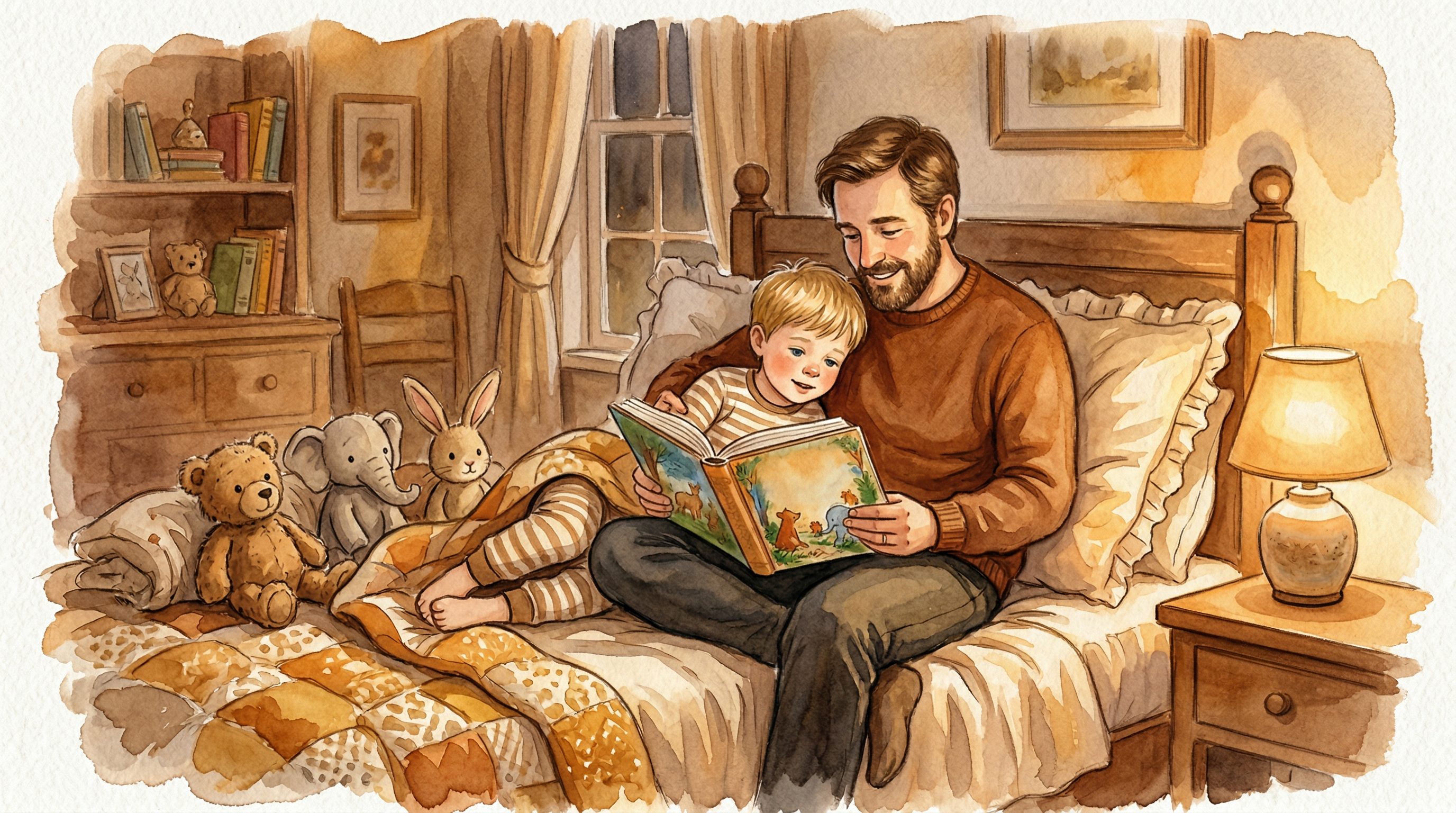
Make it personal to them
Ask your kids: "When did you show this value this week?" Or: "When was a time it was hard to do this?" Let them think. Don't rush it. The goal is for them to connect the value to their actual life — not just agree with an abstract principle.
Pray it in
Close with a prayer that's specific to what you talked about. Not a formula — an actual prayer where you ask God to help your family live this out. If your kid wants to pray too, even better.
Values to Work Through as a Family
If you're not sure where to start, here are five values that work well for young kids and connect naturally to scripture:
- Respect — Treating people with dignity, even when it's hard. (Romans 12:10)
- Kindness — Actively choosing to be good to people. (Ephesians 4:32)
- Honesty — Telling the truth even when it costs something. (Proverbs 12:17)
- Courage — Doing the right thing even when you're scared. (Joshua 1:9)
- Generosity — Giving without keeping score. (2 Corinthians 9:7)
Don't try to cover all of them in one sitting. Spend a week or more on each one. Let it show up in everyday moments — at the dinner table, in the car, when something relevant happens. Values are formed through repetition, not a single conversation.
For more structured content around these themes, the family legacy devotional guide walks through how to build this into a consistent practice. And if your family has already worked on naming its values together, creating a family mission statement with your kids is the next natural step.
When Values Get Tested in Real Life
Here's the thing about teaching values: the devotional isn't where they're actually formed. It's just the conversation. The formation happens in the moments that come after — when your kid has a real choice to make and reaches back for something you said at bedtime.
That's why you keep coming back to the same themes. That's why you tell the stories and ask the questions week after week. You're not trying to fill your kid's head with information. You're trying to build something in them that's available when they need it — when you're not in the room.
That's the whole point of a family values devotional. Not compliance. Not checking a spiritual-parenting box. Building something durable.

If you want a devotional series built around teaching kids what it means to live with character — specifically around respect and how it shows up in real relationships — the Respect series is a strong place to start. It's practical, it's written for kids in a way kids actually respond to, and you can start it tonight.
And for a devotional specifically focused on kindness — one of the values kids can practice immediately — this guide on teaching kids about kindness through devotionals is worth reading alongside this one.
📖 Read This Tonight
The Respect series helps kids understand what it actually means to treat people well — with real stories, real scripture, and real conversations. Start it tonight with your family.
Get Notified When New Series Drop
We add new devotional series regularly. Sign up to hear about them first.
Join the Community