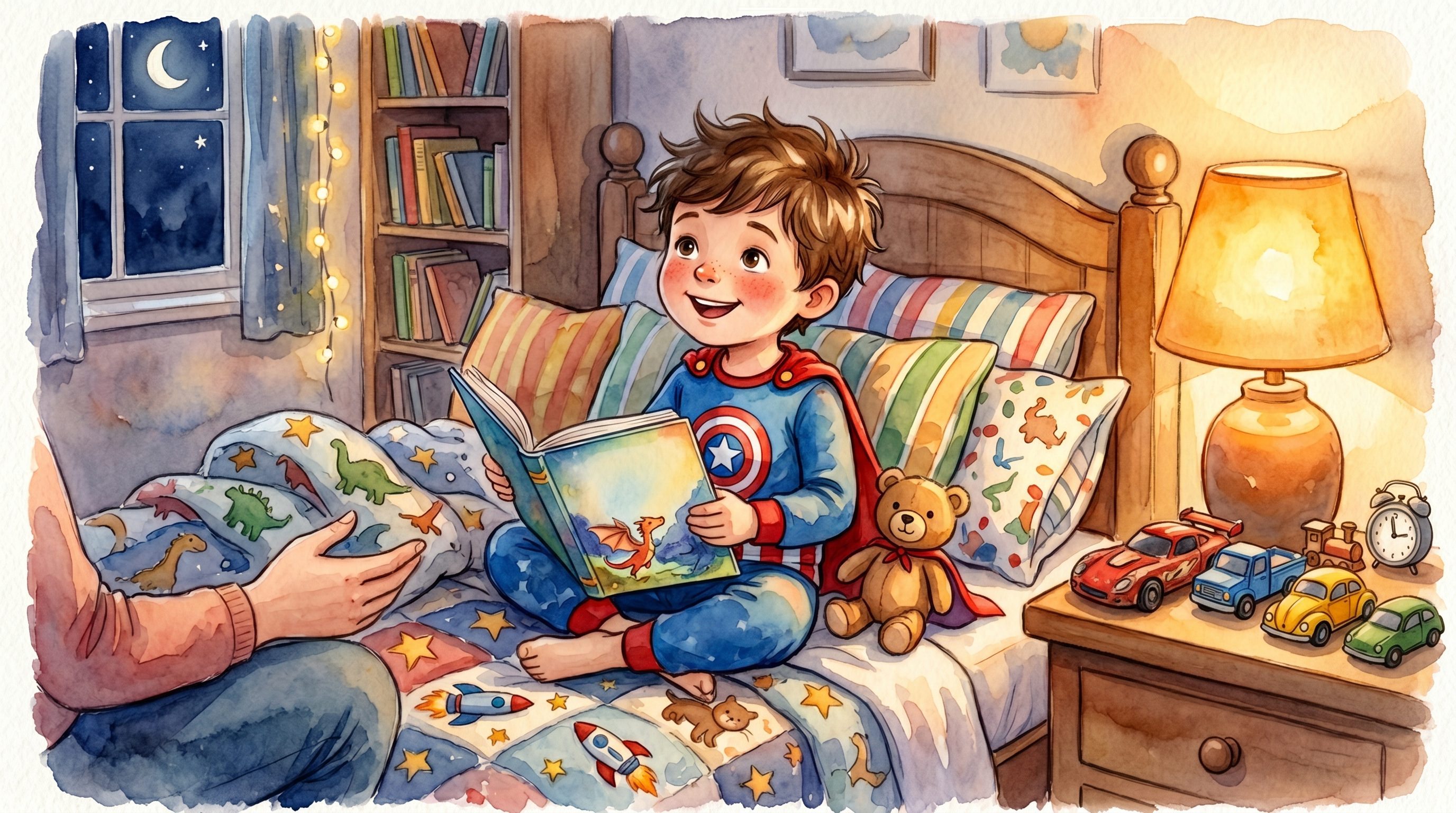
My Son Is 5. Here's What I've Figured Out.
I'm not writing this from a theory. My younger son is 5 right now — in the middle of kindergarten, obsessed with superheroes, currently going through a phase where he announces whatever he's thinking the second it enters his head, including during bedtime devotions. Last week he interrupted a prayer to tell me that sharks can't stop swimming or they die. True fact, completely off-topic, absolutely typical.
Five-year-old boys are a specific category. Not because boys are so different from girls in some big dramatic way, but because at 5, most boys are wired for action, movement, and doing — and a lot of standard devotional content is built for sitting still and listening. Those two things do not naturally coexist.
So here's what I've learned — from my own kid, from building devotional content, and from talking to a lot of other dads in the same moment.
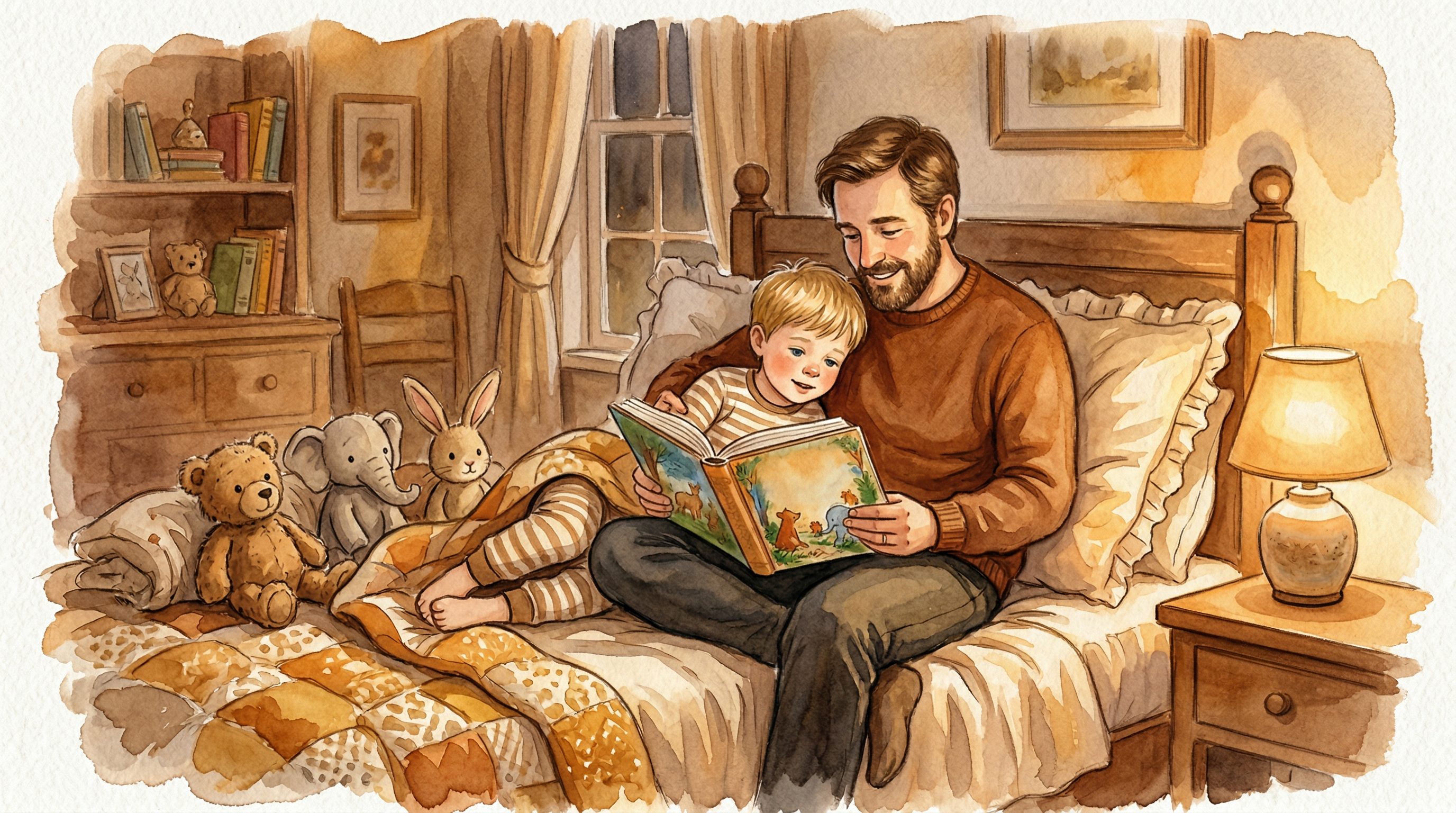
What 5-Year-Old Boys Are Actually Like
At 5, boys are starting to form a real sense of identity — not just "I'm a kid" but "I'm a specific person with specific things I'm good at." This is huge. It means they respond to content that speaks to who they are, not just what they should do.
They're also at the age where they start thinking seriously about what it means to be brave, to be strong, to be a good person. Those questions aren't abstract anymore — they've hit moments on the playground or at school where they had to make a real choice, and they remember it. A 5-year-old boy can tell you about a time he felt scared and did something anyway. That emotional memory is a devotional doorway.
Here's what to know about this age:
- Attention span: 8 to 12 minutes if the content is engaging. Less if it's passive. More if they're involved.
- They need to feel like the hero. Stories where a kid (or someone) is brave, strong, or does the right thing hit differently than stories where someone is just told what to believe.
- They will remember what you say to them directly. "You are my son" lands. "Children should obey" doesn't. Personal beats abstract every time.
- Movement helps. A prayer where they raise their hands, a moment where they repeat something back — physical engagement keeps them in the room.
- They want your honest reaction. If you read something and it moves you a little, show it. A 5-year-old who sees his dad tear up or get quiet — that registers deeply.
What Doesn't Work at This Age
Let me save you some time. Long paragraphs of instruction don't work. Content that's primarily a list of rules or behaviors doesn't work. Readings that talk about boys in the abstract — "boys should be kind, boys should be honest" — don't land. They want to be seen as this boy, not a category.
Also: if there's no story, you're going to lose them. Five-year-old boys learn through narrative. They need a character, a situation, a problem, a resolution. That's the shape of how they process the world right now. Devotionals that skip the story and go straight to the moral are asking this age group to do something they're genuinely not ready for.
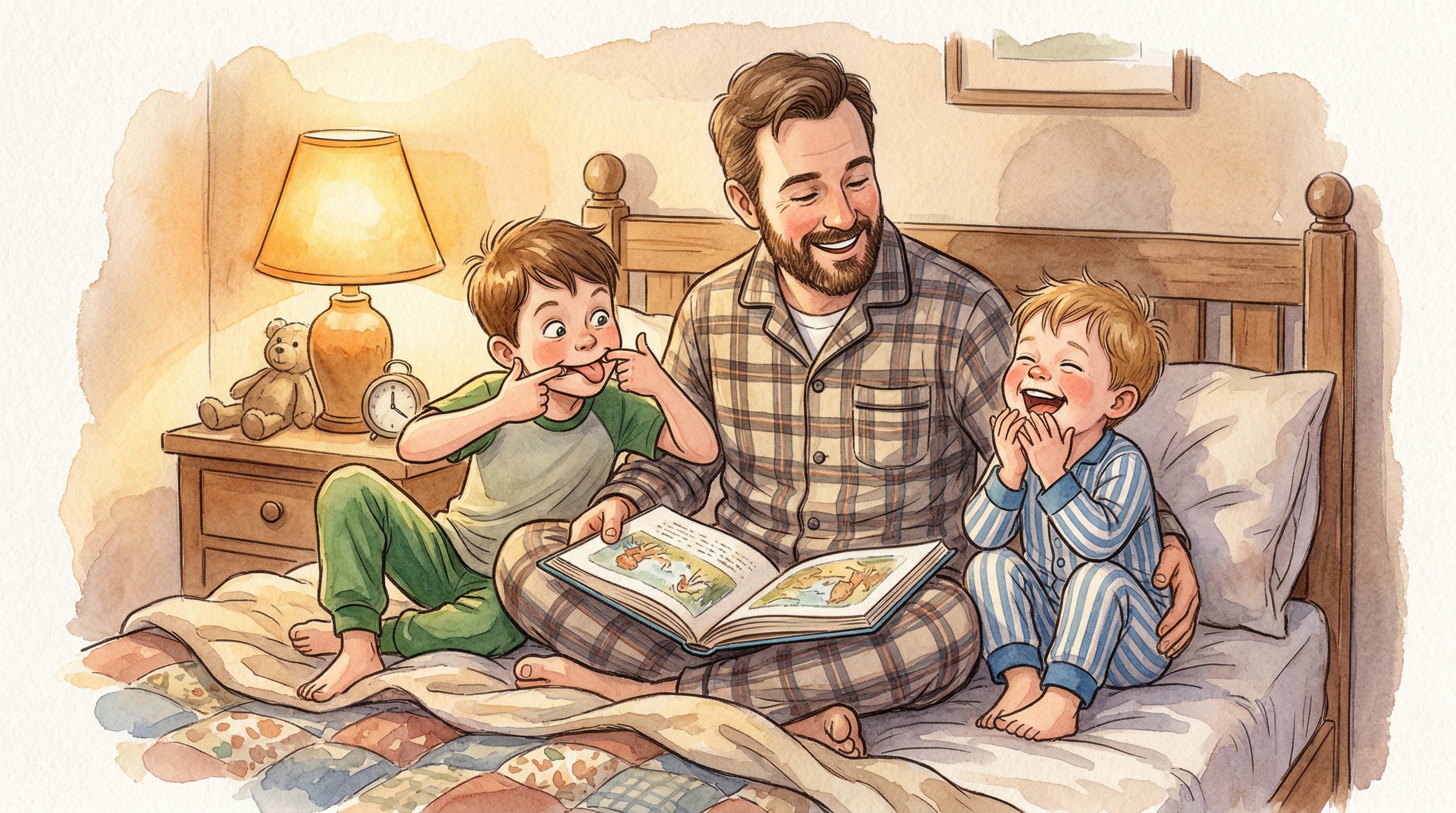
The Identity Angle: Why It Matters at 5
Here's what I keep coming back to with my son at this age: he is forming opinions about himself. Not consciously — he can't articulate it — but when I watch him, I can see it happening. He's deciding what kind of person he is. Brave or scared. Good at things or not. Someone who matters or someone who's just along for the ride.
That formation process is exactly why devotional content centered on identity is so powerful at 5. When you sit with your son at bedtime and read him something that says — not metaphorically, but directly — you are my son, you are known, you are made for something — you are depositing something into that formation process. Something that competes with what the world is going to tell him later.
The You Are My Son series was built specifically for this. It speaks directly to boys — to their identity, their bravery, their place in their dad's life — in language that actually sounds like a dad talking to his kid. Not a pamphlet. Not a sermon. A dad, in a dark room, telling his son who he is. That's what lands at this age.
If your son is also working through big feelings — which most 5-year-olds are, especially if there are other transitions happening — this guide on helping boys handle big emotions pairs well with the devotional content. And for broader ideas on how to structure father-son time at bedtime, these father-son devotional ideas are worth a read.
How to Run the Session Without Losing Him
Practical setup for a 5-year-old boy:
- Keep it under 10 minutes. Seriously. Stop before you've hit the limit, not after.
- Let him hold the book or device. Ownership of the object = investment in the content.
- Ask him questions, not vice versa. "What do you think that means?" "Has that ever happened to you?" His answers matter. Let them matter.
- Don't correct every theological rabbit hole he goes down. If he asks why God doesn't just make everyone be nice, that's a real question. Sit with it. You don't have to resolve it tonight.
- End with something specific. A prayer that uses his name. Something about his day. Personal, concrete, short.

The Topics That Actually Connect at 5
Based on what works with my son and what I hear from other dads, here are the themes that land best with 5-year-old boys in devotional content:
Bravery. Not theoretical bravery — real situations where someone had to do something scary and did it anyway. Five-year-old boys are navigating a world full of things that feel scary: new kids, new situations, falling off bikes, getting in trouble. Content that names that experience and gives it a faith framework connects immediately.
Being known. There's something that happens when a 5-year-old hears that God knows their name, knows what they're good at, knows what they're afraid of. It's not abstract theology to them — it's personal. "God knows you" hits differently at 5 than it will at 25.
Right and wrong in real situations. Not rule-following — actual scenarios where someone has to make a choice. Should I tell the truth even if I get in trouble? Should I stand up for the kid who's being left out? Five-year-olds think in situations, not principles. Meet them there.
Their dad. A devotional read by his dad, in his dad's voice, in his room at night, is already doing something powerful before the content even starts. The relationship carries the message.
What You're Really Doing at This Age
At 5, your son is watching you more than he's listening to you. He's watching whether this matters to you. Whether you come back to it. Whether you're present or distracted. Whether you shut the book and immediately check your phone, or whether you sit with him for another minute after.
The devotional is the vehicle. What it's delivering is your presence, your voice, your belief that he's worth showing up for. That's the thing that lasts. The specific content matters less than the fact that night after night, his dad was there, reading something that said you are known and you are loved and you were made on purpose.
Start there. The rest builds on it.
If your son is ready for something that grows with him as he gets older, this look at devotionals for 5-year-old girls offers some perspective on what works across this age group — and why the approach matters more than the specific title.
📖 Read This Tonight
The You Are My Son series speaks directly to 5-year-old boys — their identity, their bravery, their place in their dad's life. It's written in dad language, not church language. Start it tonight.
Get Notified When New Series Drop
We add new devotional series regularly. Sign up to hear about them first.
Join the Community