
Six Is When It Gets Real
Something shifts at 6. You've probably already noticed it — your kid starts asking questions that are harder to answer. They've been in school long enough to hear different things from different people. They've had experiences you weren't there for. They've started forming opinions about the world that didn't come from you.
That's not a warning sign. That's actually the setup for the best devotional conversations you've had yet. Six-year-olds are developmentally ready for something more than simple picture-and-verse. They can hold a bigger idea. They can connect what they're reading to something that happened this week. They can express what they feel and what they're uncertain about — if you ask the right question and actually listen to the answer.
Bedtime is still the sweet spot for this, and at 6, you have more time than you did at 3 or 4. The window is real. Here's how to use it.
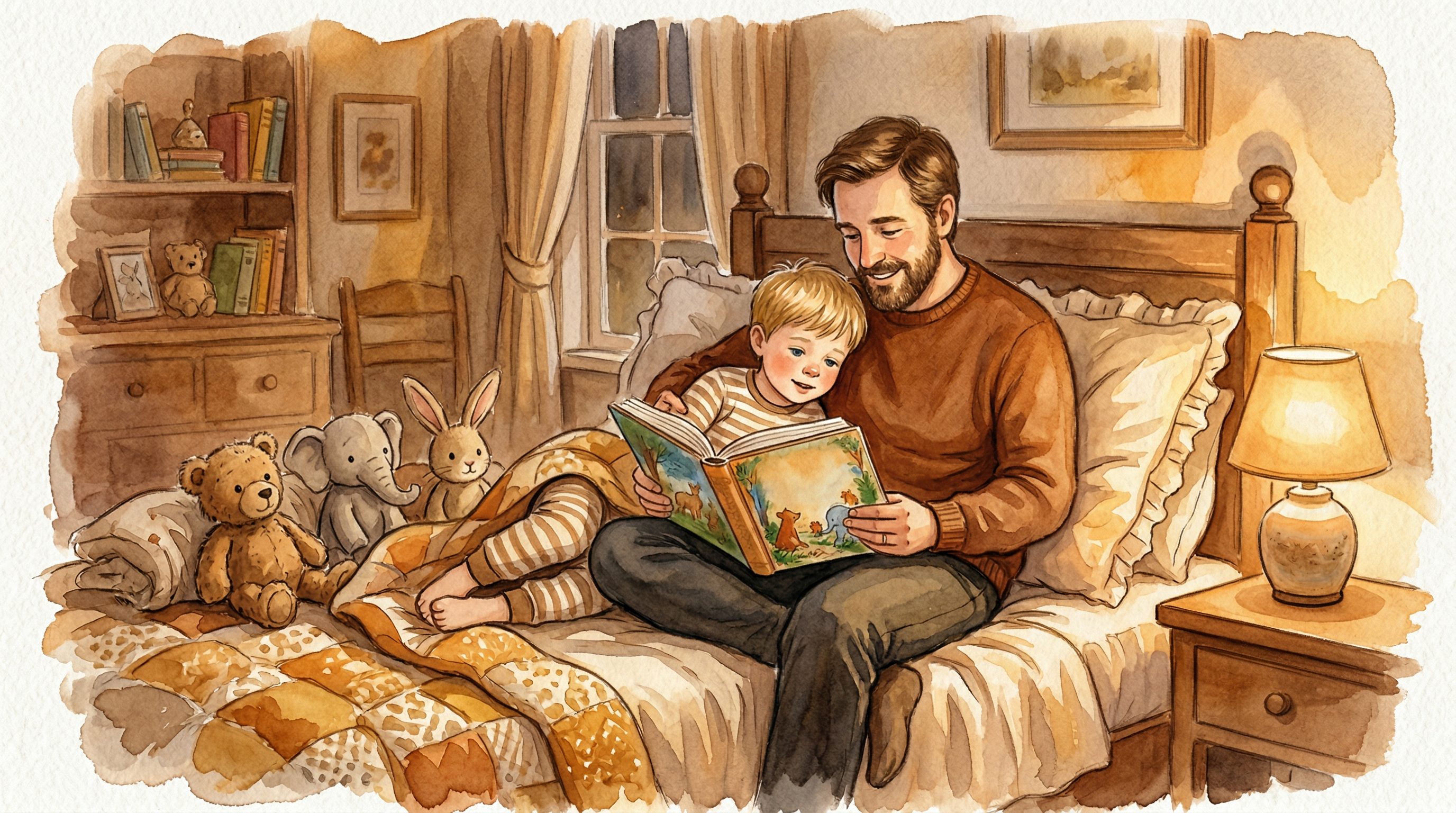
What 6-Year-Olds Are Ready For
Before you pick any content, know what you're working with at this age:
- Attention span: 10 to 15 minutes for content that's engaging and interactive. That's a real devotional. Not just a two-minute point-and-talk — something with layers.
- Real emotional language. Six-year-olds can tell you they felt embarrassed, or left out, or proud. They've developed enough vocabulary for real conversation about real feelings.
- Moral reasoning is online. They're thinking about fairness, about what's right, about why rules exist. Devotional content that engages these questions gets traction.
- Memory is stronger. A verse or a phrase said at bedtime doesn't disappear by morning anymore. Repetition at this age builds something that sticks for years.
- They know when you're checking a box. A 6-year-old can tell the difference between a dad who's present and a dad who's going through the motions. Don't phone it in at this age.
What's still true: they still need story. They still need short over long. They still need your voice to be engaged, not monotone. The format from the younger years doesn't disappear — it just has more room to breathe.
What Makes a Good Bedtime Devotional at This Age
Here's what to look for when evaluating content for a 6-year-old:
1. It goes somewhere. A devotional that ends where it started — with a general truth and no application — wastes the window. At 6, you want content that gives you something to talk about. A question they didn't know they had. A connection to something in their life this week.
2. It doesn't talk down to them. Kids this age have a finely tuned detector for being condescended to. Content that's overly cutesy, or that explains obvious things in obvious ways, loses them fast. Respect their intelligence. They have more of it than most devotional content gives them credit for.
3. It gives you a real question to ask. Not a leading question with one right answer. An actual open question — "what do you think about that?" or "has anything like that ever happened to you?" The best bedtime devotionals at this age function less like a lecture and more like the first move in a conversation.
4. It's short enough to finish. Still. Even at 6. You want to close the session before you've run dry, not after. Ending a devotional while your kid still has something to say is a feature, not a failure — it means they'll want to come back tomorrow.

Bedtime Is Still the Right Call at 6
Some dads try to shift their devotional time to morning or dinner as their kids get older, thinking bedtime is only for toddlers. It's not. At 6, bedtime is actually more valuable than it was at 3, because the conversations can go somewhere. The quiet of the evening, the transition into sleep, the one-on-one time — all of that still creates an openness that doesn't exist at 7 a.m. when someone can't find their shoes.
If you're still building the habit, this breakdown of a 5-minute bedtime devotional routine is a good practical starting point — it's designed to be repeatable even on the hard nights. And if you're someone who needs a reminder of why bedtime specifically works better than the alternatives, this article on why bedtime is the best time for family devotions covers the research and the real-life reasoning.
The Conversation, Not Just the Content
Here's the thing I've learned from doing this with my older son, who's 7 now: the devotional content is the spark, but the conversation is the fire. The 10 minutes of reading matter less than the 5 minutes of real talk that follow it.
At 6, your kid is processing a lot. School relationships. Questions about fairness and God and why bad things happen. First experiences of real disappointment. First experiences of feeling genuinely proud of themselves for something. All of that is sitting right under the surface at bedtime — and a good devotional gives it permission to come out.
Don't rush past that. If you open a conversation and something real comes out, let the devotional be the setup and the conversation be the main event. You can finish the reading tomorrow.

Topics That Open Up at 6
At 6, you can start going places with devotional content that weren't accessible at 4 or 5. Here's what's newly available at this age:
Friendship and belonging. Your kid has a social world now — real friendships, real conflicts, real experiences of being included or excluded. Devotional content that touches on these themes finds immediate traction because it's speaking to something they just lived through. "Who do you want to sit with at lunch" is not a small question at 6. It's one of the biggest questions of their day.
Fear and trust. Six-year-olds have enough imagination to worry about real things — bad things happening, people they love getting hurt, their own mortality in some cases. Devotional content that addresses fear honestly, and gives it somewhere to go, is doing real work at this age. Not "don't be afraid" — but "here's what you do with the fear."
Identity under pressure. By 6, your kid is getting messages from peers about who's cool, who's not, what's worth caring about. Devotional content that grounds their identity in something fixed — something that doesn't shift with the social winds of first grade — is more valuable at this age than it's ever been.
Prayer as conversation, not formula. At 6, you can start helping your kid develop their own prayer voice — not just repeating what you say, but actually talking to God in their own words. This is a significant developmental shift. The best devotional content at this age leaves room for it.
Where to Find the Right Content
At 6, your kid has outgrown the simplest picture-based content but isn't ready for anything that reads like an adult devotional. The sweet spot is story-driven, identity-centered, short but substantive — and it should sound like it was written by someone who actually talks to kids, not by a committee that has read books about kids.
The Hosted Devotions library has multiple series that hit this range — content built for the 5 to 8 age window, with language calibrated for real conversation rather than passive listening. Browse the library and find what matches your kid right now. Your 6-year-old is at a specific moment, and what you do in the next year or two with this habit matters more than most parenting decisions you'll make.
Start tonight. It doesn't have to be perfect. It just has to be something — consistent, personal, and present. That's what this age actually needs from you.
📖 Read This Tonight
The Hosted Devotions library has series built for exactly this age — story-driven, short, and written in a dad's voice. Browse and find what fits your 6-year-old right now.
Get Notified When New Series Drop
We add new devotional series regularly. Sign up to hear about them first.
Join the Community