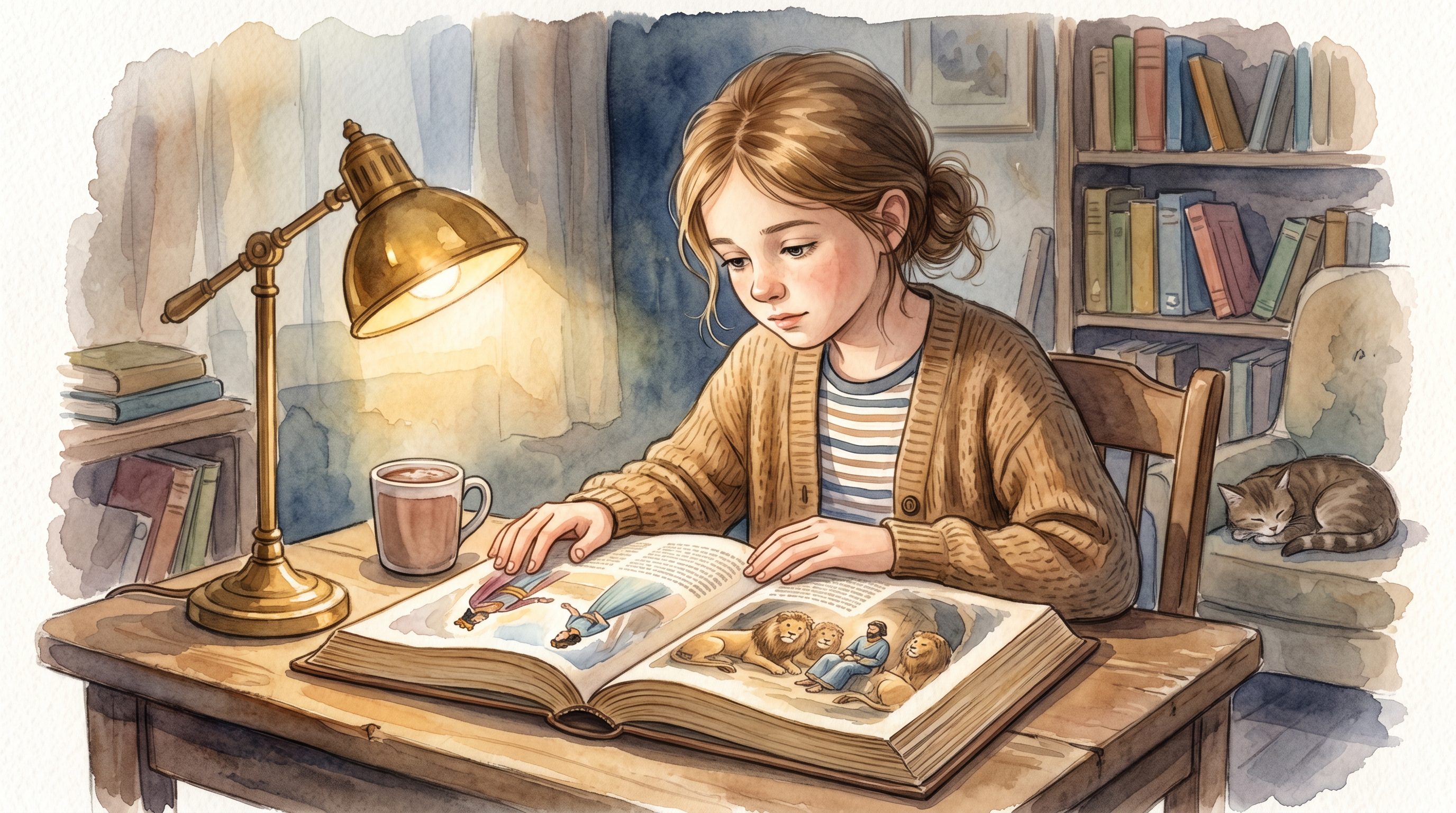
Tweens Smell Shallow from a Mile Away
If you've tried reading a "children's Bible" with an 11 or 12-year-old lately, you may have noticed it going sideways fast. The pictures feel babyish. The simplified language feels condescending. The application points feel obvious. Your kid either tunes out or — worse — starts associating Bible time with content that's beneath them.
This is one of the most common reasons devotional habits fall apart right before middle school: the content doesn't keep pace with the kid. Tweens are not big children. They're small adults in formation. They're asking real questions about identity, injustice, and whether any of this actually makes sense. The Bible stories that work at this age are the ones that don't dodge those questions.
Good news: the Bible has plenty of those stories. Most parents just don't know which ones to reach for.
What Tweens Need From a Bible Story
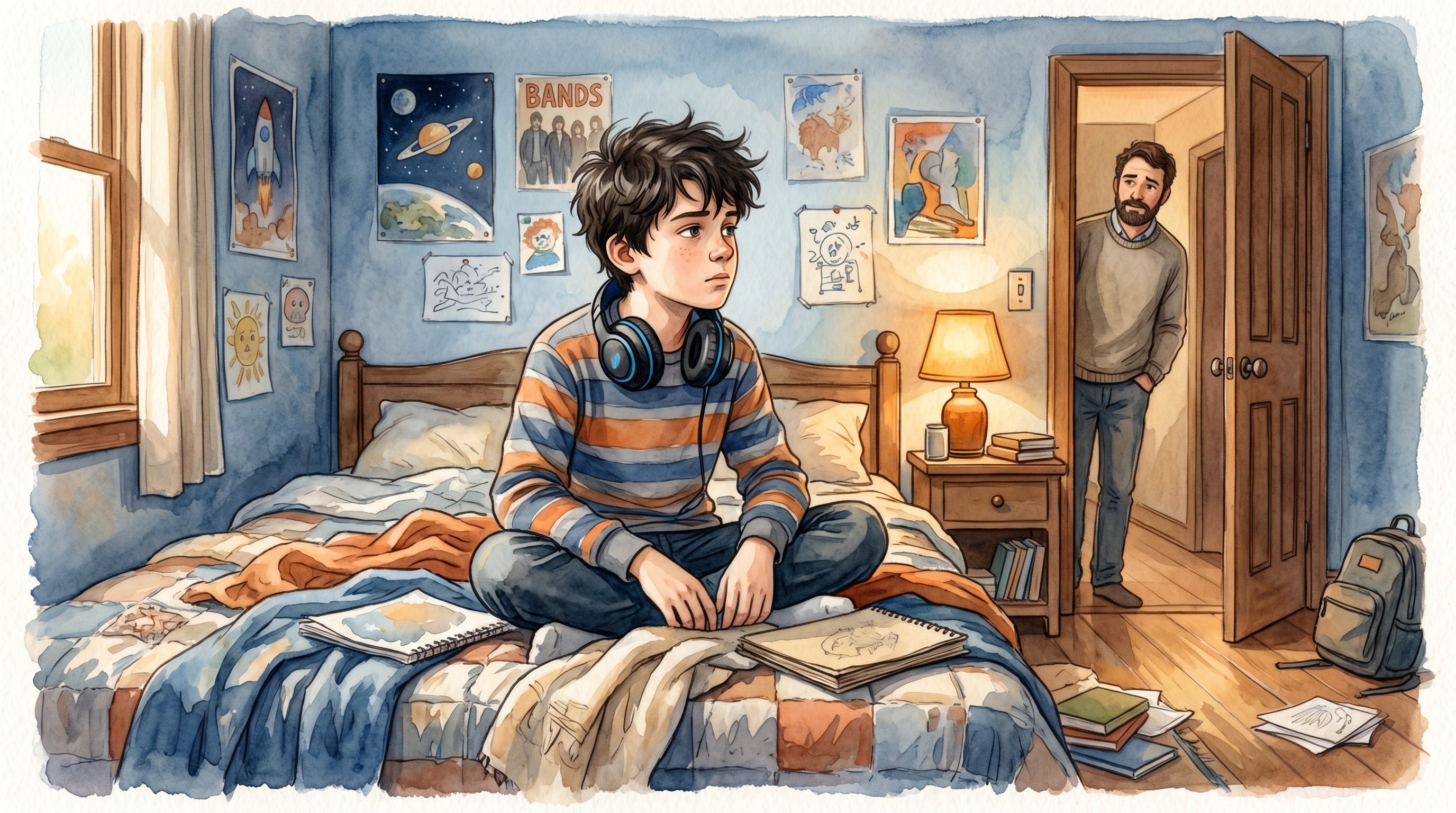
Before you pick up the Bible, it's worth understanding what's happening developmentally at 11-12. A few things are in full swing:
Identity is front and center. Who am I? What do I stand for? Who are my people? These are the defining questions of this stage. Stories about people who had to figure out who they were — especially under pressure — resonate deeply.
Peer pressure is real and intense. Social belonging feels like survival to a tween. Stories about people who chose integrity over approval feel personally relevant in a way they didn't at age eight.
They're skeptical. They've been told things by adults that turned out to be oversimplified or untrue. They've heard "just trust God" when life got complicated. Authentic faith now has to survive actual scrutiny — and the best Bible stories hold up under that scrutiny.
They want to matter. Stories where an ordinary person did something that actually counted — changed things, stood up when others didn't — speak directly to the desire to have significance that every tween is carrying.
Bible Stories That Actually Land at 11-12
Identity Under Fire
Daniel's full story (Daniel 1-6) — Not just the lions' den. Start in chapter one: Daniel, Hananiah, Mishael, and Azariah were teenagers. Taken from their homes. Renamed to break their identity. They held on anyway. That's a story about identity under pressure that a 12-year-old in middle school can feel in their bones.
Gideon (Judges 6-7) — He didn't want to lead. He was convinced he was the wrong person. God chose him anyway — and then made his army smaller to prove a point. For a tween who feels inadequate or overlooked, this one hits differently. "The LORD is with you, mighty warrior" said to someone who was hiding. Sit with that.

Friendship, Loyalty, and Hard Choices
Ruth and Naomi (Ruth 1-4) — A story about loyalty that costs something. Ruth chose someone who couldn't give her anything back. She stayed because of love, not advantage. For tweens navigating the social complexity of middle school friendships, this story is worth reading slowly.
David and Jonathan (1 Samuel 18-23) — Genuine friendship between two people on opposite sides of a conflict. Jonathan protected David at personal cost, including his father's rage. Ask: What does it actually mean to be a good friend when it costs you something?
Failure and Restoration
Peter's arc (Luke 22, John 21) — Tweens need to know that failure isn't final. Peter denied Jesus three times — loudly, definitively — and was not discarded. The conversation on the beach in John 21 where Jesus asks "do you love me?" three times is one of the most powerful restoration stories in the Bible. Don't skip it.
Jonah (the whole book) — Not primarily a fish story. It's a story about a man who ran from God, got a second chance, completed his mission — and then threw a tantrum when it worked. The ending is deliberately unresolved. That's intentional. Ask your tween: What do you think Jonah did after the book ends?
Justice and Hard Questions
Job (highlights — Job 1-3, 38-42) — Don't try to read the whole book. But don't skip it either. Job's situation was genuinely unfair and he said so loudly to God. God's response wasn't an explanation — it was presence. For a tween who's experienced something genuinely hard, that's a more honest answer than most devotionals offer.
Lamentations (chapter 3) — The Bible contains lament. That matters. The famous verse about mercies being new every morning (3:22-23) is surrounded by honest despair. Read the context. It teaches that real faith makes room for hard emotion.
How to Actually Use These Stories
With tweens, the format matters as much as the content. A few things that work:
Read it together, don't summarize it. Tweens can handle the actual text, and they should hear it in your voice. Start with a modern translation (NIV, CSB, or NLT read naturally out loud). Don't paraphrase down to them.
End with an open question, not a lesson. "What do you think?" lands better than "Here's what this means." Let them draw conclusions. Correct major theological errors if they come up, but otherwise let the conversation run.
Let them be uncomfortable. The stories that make tweens squirm — where God does something unexpected, where the good guy fails, where the ending doesn't feel fair — are the ones that generate real conversation. Don't rush to resolve the tension.
If your tween is in this age bracket, the guide to Bible stories for ages 8-10 gives you context on where they were developmentally just a year or two ago — useful if you're building a long-term reading plan. And for ongoing devotional structure that actually keeps tweens engaged, this guide to devotionals for 11-12 year olds covers the format and content that works at this stage.
The Bigger Goal
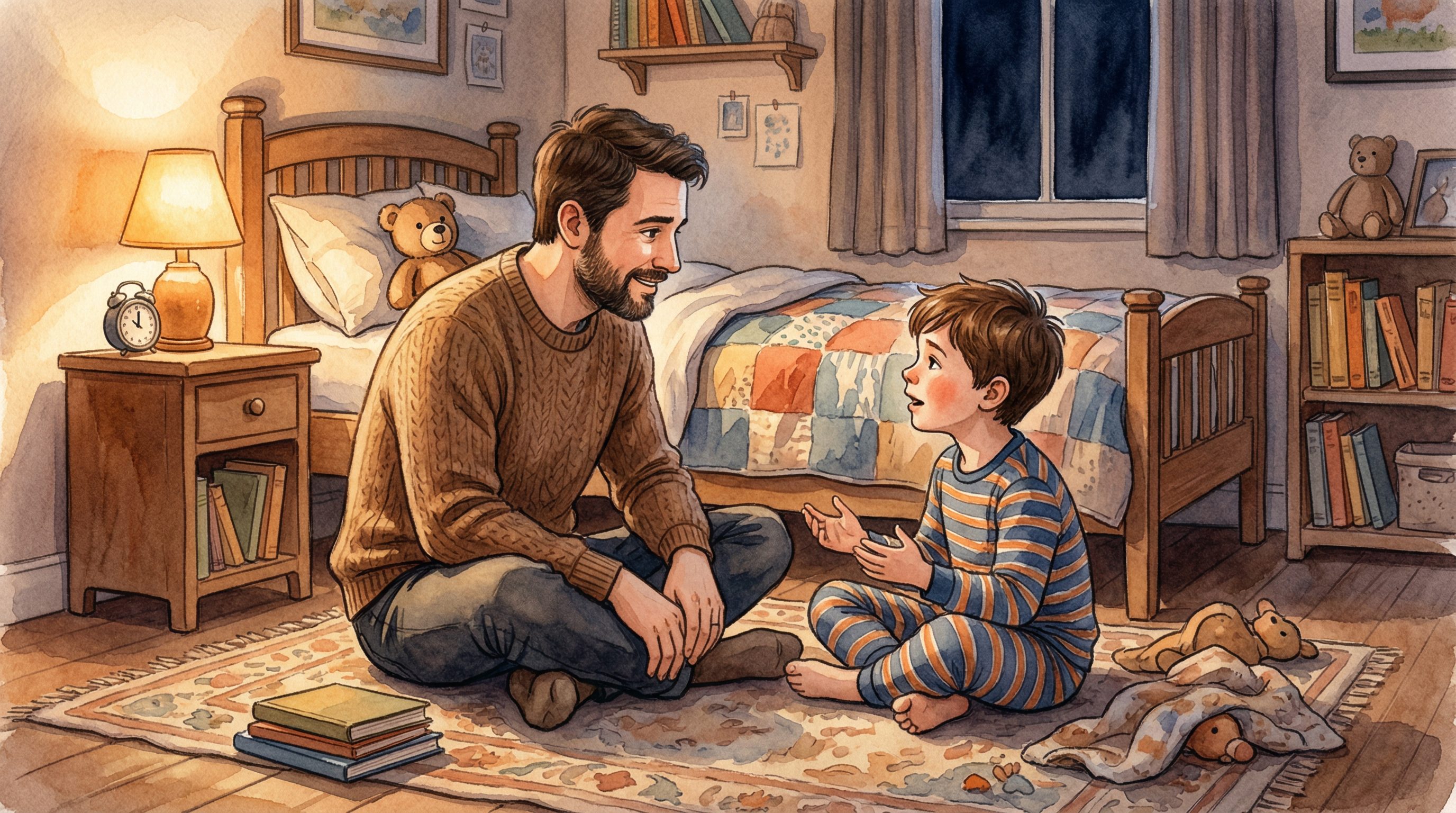
The point of reading Bible stories with your tween isn't to produce correct theology. It's to keep the conversation going. To establish that hard questions are welcome. To show them that faith can handle scrutiny — and that you can handle their doubts without panicking.
The Legacy series at Hosted Devotions is built for this exact age — stories and questions designed to go deeper without being preachy, and structured for bedtime even when schedules are tight. It's worth a look if you want something that meets your tween where they actually are.
Middle school is when a lot of kids quietly step back from faith because nobody gave them anything to hold onto that was real enough. This is the window. Use it.
How to Keep the Conversation Going Beyond Bedtime
One thing that works especially well with tweens: don't try to finish the conversation in one sitting. Read the story tonight. Ask one question. Then let it sit. Come back to it at breakfast, or in the car, or when they bring it up — because sometimes they will, days later, with something they've been thinking about.
Tweens process slowly. Their social world is complex, their academic demands are increasing, and they're doing a lot of internal work that doesn't show on the surface. A Bible story from Tuesday night might surface in their thinking on Thursday. Let it. That's not a sign the devotional didn't land in the moment — it's a sign it's working the way good ideas are supposed to work.
The fathers who have the deepest faith conversations with their tweens are almost never the ones doing formal Bible study every morning. They're the ones who stay curious, ask questions out of genuine interest rather than obligation, and treat their kid as someone worth talking to — not someone to instruct. That posture changes everything about how a tween receives faith content.
📖 Read This Tonight
The Legacy series is built for tweens who are ready to go deeper — real questions, real stories, and conversation prompts that actually work at 11 and 12. Start it tonight.
Get Notified When New Series Drop
We add new devotional series regularly. Sign up to hear about them first.
Join the Community