These Kids Can Handle More Than You Think
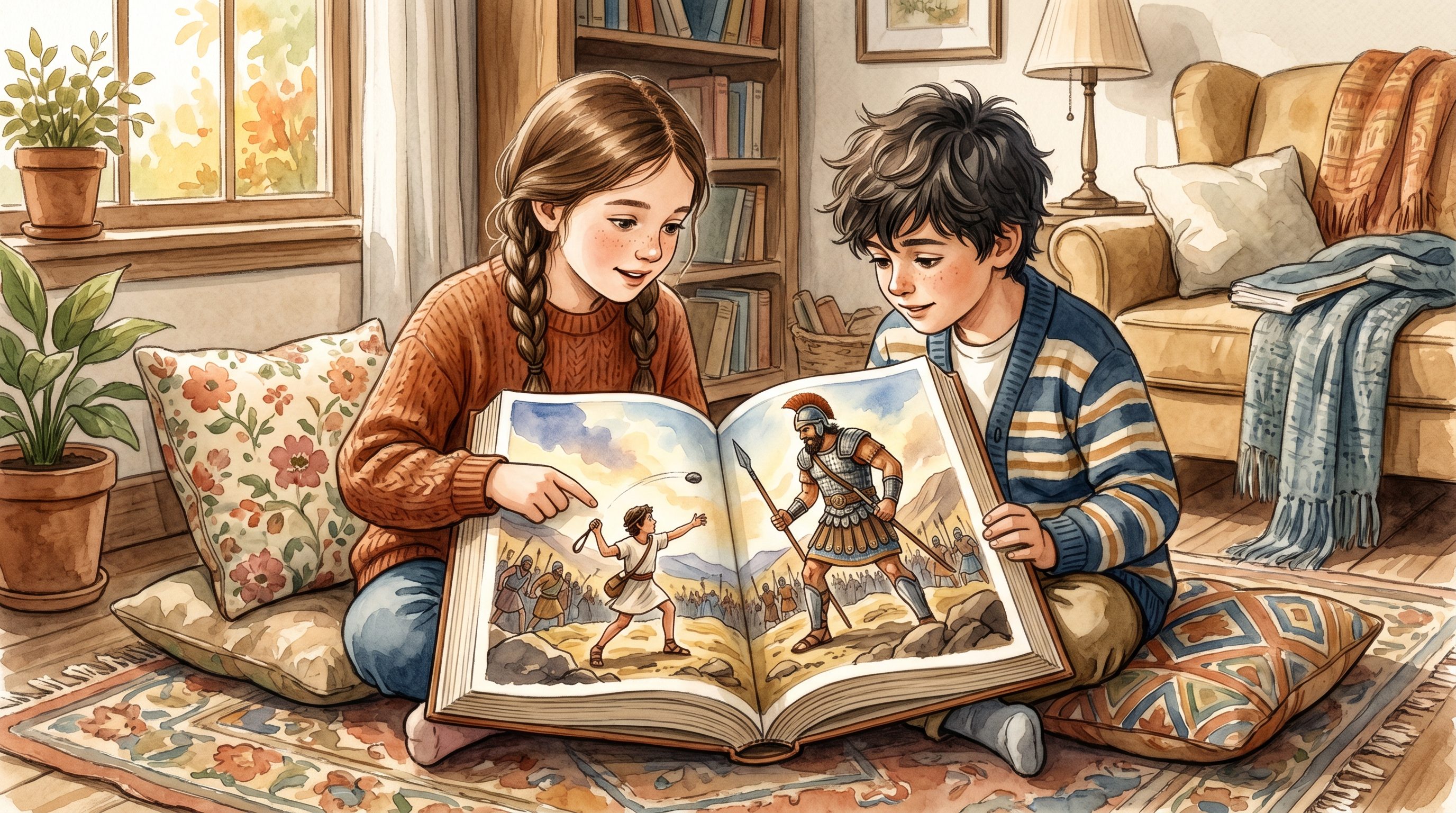
By age eight, your kid is not a preschooler who needs a felt-board version of Noah's ark. They're reading chapter books. They're tracking complex story lines. They can hold a character's motivation in their mind and debate whether they made the right choice. They're ready for real Bible stories — not just the sanitized highlights reel.
The problem is that most children's Bible content doesn't catch up. It keeps serving the gentle, watercolor version of scripture to kids who are already reading stories about war, betrayal, and sacrifice in their school novels. No wonder they zone out.
The stories that work at ages 8-10 have one thing in common: they're honest about how hard things get, and they don't tie everything up too neatly. That's what this age group actually connects with.
What Changes Between 8 and 10
Kids in this window are in what developmental researchers call the middle childhood stage. A few things are happening that directly affect how they receive Bible stories:
They want fairness. Justice matters enormously to 8-10 year olds. Stories where the bad guy wins, or where someone suffers for no obvious reason, provoke genuine wrestling — which is exactly what you want. Don't smooth those stories over.
They think in cause and effect. They're not just absorbing what happened — they're asking why. "Why did David do that?" "Why didn't God stop Saul earlier?" These are great questions. Invite them.
They identify with underdogs. Goliath stories, David running from Saul, Joseph being thrown in a pit — these resonate because kids at this age often feel small and overlooked. The theme of "God shows up for the person everyone else counted out" hits home.
They're starting to feel social pressure. Stories about standing alone — Daniel, Shadrach, Meshach, and Abednego — speak directly to what they're already navigating at school.
Bible Stories That Work at Ages 8-10
These aren't ranked — they're grouped by the themes that land strongest at this age:
Courage Under Pressure
Daniel in the Lions' Den (Daniel 6) — Not a cute bedtime story. Daniel knew the law had been changed and prayed anyway. Ask your kid: Would you have prayed if you knew what would happen? Would you have stopped if you thought God might not rescue you?
Shadrach, Meshach, and Abednego (Daniel 3) — The line that always stops 8-year-olds cold: "Even if he does not rescue us." They trusted God before they knew the outcome. That's a concept worth sitting with.
Esther's Risk (Esther 4-5) — She wasn't sure it would work. She fasted and asked for help first. This story is excellent for kids who feel like one person can't make a difference.
Character Under Pressure
Joseph's Long Story (Genesis 37-45) — The whole arc, not just the coat. Betrayed by family, falsely accused, forgotten in prison — and still faithful. For a kid who's experienced something genuinely unfair, this story lands differently than it does for a five-year-old.
David and Goliath (1 Samuel 17) — Every kid knows this one, but most only know the fight. Slow down on the part before: David's own brothers mocked him. The king didn't believe in him. He went anyway. That's the part worth unpacking.
David and Jonathan (1 Samuel 18-20) — Loyalty, friendship, and doing the right thing even when it costs something. For kids navigating real friendships with real stakes, this story is more relevant than most adults realize.
Honesty and Consequences
Ananias and Sapphira (Acts 5) — Yes, this one's jarring. That's why it works. Not every story ends with rescue. The consequence here is severe and the lesson is sober: God takes honesty seriously. Read it together, then talk about why.
Peter's Denial (Luke 22) — A leader, a close friend of Jesus, who failed at the worst moment — and was restored. This is a story about failure not being final. That matters to kids who are starting to feel the weight of their own mistakes.
How to Make These Stories Stick
Reading the story is only half the work. A few approaches that actually work with 8-10 year olds:
Ask one good question, then stop talking. "What do you think Daniel was feeling when he heard the new law?" Then wait. Don't fill the silence. Let them think. The pause is where the real processing happens.
Let them push back. "That doesn't seem fair" is a great response to a Bible story. Say: "You're right. It doesn't. Why do you think it happened that way?" You're not defending God — you're exploring together.
Connect it to something real in their life. Not every devotional needs an application point, but the best ones do. "Is there anything in your week that felt like what Daniel faced?" Short, simple, genuine.
If you're building out a full devotional rhythm with your 8-10 year old, this guide to Bible stories for ages 5-7 shows how the earlier developmental stage differs — useful context if you have multiple kids at different ages. And for what the next age bracket looks like, this breakdown of devotionals for 9-year-olds covers the specific needs of kids heading into double digits.

The New Testament Gets Underrated at This Age
Most parents lean Old Testament for this age group — the battles, the miracles, the sweeping stories. That's fine. But don't skip the Gospels. Jesus's actual conversations with people — the woman at the well, Zacchaeus, the disciples arguing about who was greatest — are rich with the complexity 8-10 year olds can handle.
The parables especially work well because they resist easy answers. The Prodigal Son (Luke 15) always generates conversation about the older brother — the "good kid" who resented the celebration. A lot of 8-10 year olds recognize that feeling. That's a conversation worth having.
The full Hosted Devotions library includes series built for this exact age range — structured around the kind of real-talk conversations these stories open up. If you want something organized and ready to go at bedtime, that's the place to start.
What to Do When Your Kid Pushes Back on the Story
Here's something worth saying directly: when your 8-10 year old says "that doesn't make sense" or "that's not fair" about a Bible story, that is a good thing. That means they're actually engaging with the material, not just passively absorbing it.
Your job in that moment is not to defend God or shut the question down. It's to ask a follow-up: "You're right, it does seem unfair. What do you think should have happened instead?" Let them reason through it. Sometimes they'll land somewhere surprisingly insightful. Sometimes they'll reveal a misunderstanding you can gently correct. Either way, the conversation is doing exactly what it should.
Some of the most theologically rich conversations I've had with my son happened because he pushed back on something in the story and I didn't immediately correct him. I asked why he thought that. And then the real thing he was wrestling with came out — which wasn't about the Bible story at all, but about something that happened to him that week.
That's the whole point. The story is a door into the real conversation.
📖 Read This Tonight
Browse devotional series designed for this age — stories and questions that take 8-10 year olds seriously and open real conversations at bedtime.
Get Notified When New Series Drop
We add new devotional series regularly. Sign up to hear about them first.
Join the Community