
The Nights Are Different Now. The Devotional Doesn't Have to Be.
I want to say something up front: I'm still married. My family is intact. I haven't sat in a quiet apartment after dropping my kids off and tried to figure out how to maintain any sense of spiritual rhythm with them across two households.
But dads in that situation have talked to me. And the thing I hear, over and over, isn't "I don't know what to read" — it's "I don't know if I'm still allowed to lead this." As if divorce somehow revoked the credential. As if your kids still needing a dad to show up spiritually is conditional on your marriage being intact.
It's not. The credential is fatherhood. That didn't go anywhere.
This article is for the dad who is navigating post-divorce parenting and wants to keep devotions alive — or start them for the first time — in whatever time he has with his kids. Not to perform faith. Not to prove something. Just to show up the way dads are supposed to show up, with whatever window he has.
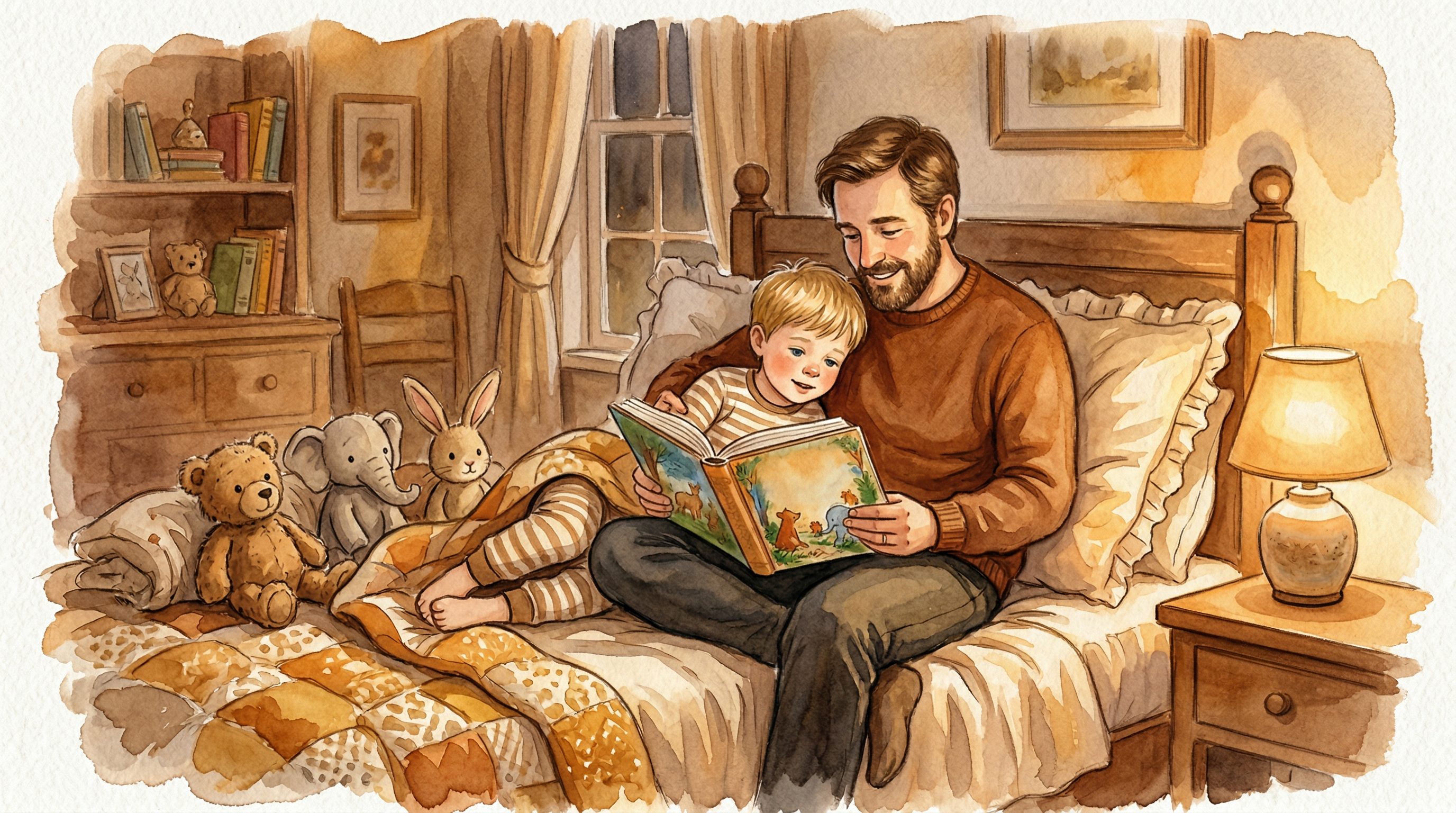
Why Divorced Dads Often Stop (Or Never Start)
There are a few reasons divorced dads tend to let the spiritual piece go quiet, and most of them make complete sense in the moment:
Guilt About the Environment
If you're the one who left, or the one who felt like you failed, it can feel hypocritical to open a devotional and talk to your kids about faith and faithfulness. Like you don't have standing. Like they'll see through it.
Here's the counterpoint: your kids don't need a perfect dad. They need a present one. And the dad who sits down after a hard year and says "I want to read something with you tonight" is doing something powerful precisely because it's not easy. The gospel is full of people who were a mess doing meaningful things. You're in good company.
Reduced Time
When you're only with your kids on certain nights, every moment feels loaded. You don't want to "waste" time on something that might feel routine when you could be doing something memorable. Devotionals can feel like an obligation when what you want is connection.
But here's what I'd push back on: a five-minute devotional at bedtime is connection. It's not a distraction from the relationship — it is the relationship. The rhythm of opening something, reading together, asking a question, listening to the answer — that's intimacy. That's the stuff your kids will remember.
Uncertainty About What to Say
Divorce raises hard theological questions, especially for kids. Why did God let this happen? Does God care about our family? What does the Bible say about divorce? You might feel unqualified to answer those questions, so you avoid the arena entirely.
You don't have to answer every question. You're allowed to say "I don't know." In fact, saying "I don't know, but I want to find out with you" is one of the most honest and connective things a dad can say to a child. It keeps the conversation open instead of closing it down.
Feeling Like a Hypocrite
Maybe your own faith took a hit through this. Maybe you're angry at God, or confused, or just numb. That's real. And leading a devotional when your own faith feels shaky can feel like performance.
But here's the truth: you don't have to be spiritually resolved to sit with your kid and read something. You're not leading a church service. You're a dad, sitting with a child who needs to hear true things, doing the best you can. The honesty in that — even unspoken — is its own kind of faithfulness.
How to Structure Devotional Time When You're the Part-Time Parent
Part-time doesn't mean half-hearted. Here's how to make it work:
Own Your Nights
Whatever nights you have with your kids — whether that's three nights a week, every other weekend, or something else — those are your nights to lead. Not to perform. Not to overcompensate. Just to do what a dad does: show up, be present, read something, pray if that's part of your practice.
Don't let the fact that you're not there every night convince you that what you do on the nights you are there doesn't matter. It matters more. Because your kids are counting the moments with you. Make them count.
Start Small
If devotionals haven't been part of your routine, don't try to build a full spiritual infrastructure overnight. Start with one night. Pick a series that fits your kids' ages. Sit down, read it, ask one question. That's it. Repeat it the next time you have them.
The Create Your Own tool at Hosted Devotions lets you build something tailored to exactly your situation — your kids' ages, what they're dealing with, what questions they're asking. If the pre-built library doesn't fit your circumstances, build something that does.
Keep It Separate From the Divorce
This is important: devotional time is not the place to process the divorce. It's not where you explain decisions, repair damage, or have the hard parenting conversations. It's a separate space — sacred, in the literal sense. Set apart. Your kids need at least one space that's not colored by everything that changed. Let the devotional be that space.

What to Read When You Don't Know Where to Start
If you've never done devotionals before — or if your old routine fell apart during the divorce — the question of where to start can feel paralyzing. Here's a practical path:
Start With Identity
Your kids' sense of who they are has been shaken. The most stabilizing devotional content in this season is anything that speaks to their intrinsic worth — that they are seen, known, and loved not because of their family structure or their behavior, but because of who God made them to be. Series like You Are My Son or You Are My Daughter were built for exactly this. Worth, unconditional. Identity, anchored.
Then Move to Big Feelings
Once you've established that foundation, give your kids a space to process what they're actually feeling. The Learning to Handle Big Feelings series addresses emotions that kids often carry in silence — grief, anger, fear, confusion. Naming those feelings through story is often more effective than direct conversation, because the story gives them a step of distance. They can engage the emotion through a character before they have to own it themselves.
Follow Their Lead
After a few nights, you'll notice what lands and what doesn't. What questions your kid asks. What passages make them go quiet in a good way. Trust that signal. A kid who leans in when you're reading is telling you something worth paying attention to.
When Your Kids Ask Hard Questions During Devotions
It's going to happen. You're in the middle of a passage about family, or love, or God's plans, and your kid looks up and asks something that cuts right to the center of what's happened: "Does God think divorce is bad?" or "Did God want us to be a different kind of family?"
Don't panic. Don't deflect. Try this:
"That's a really honest question. I'm glad you asked it. I think God cares a lot about families — all kinds of families. And I think He cares most about whether people love each other well. That's something I'm still working on. Can we keep reading and talk about it a little more after?"
Then actually come back to it. Don't bury it. Kids who get honest, imperfect, available answers from their dads are far better equipped than kids who got perfect answers that came with a closed door.
For the parenting side of navigating your child's emotional world through this — not just the devotional piece — read devotional for kids going through parents' divorce. It covers what children are processing beneath the surface and how to meet them there. And for the coordination side, co-parenting and faith addresses how to keep things consistent if your ex is also trying to maintain faith practices with the kids.
You Still Lead. Even Now.
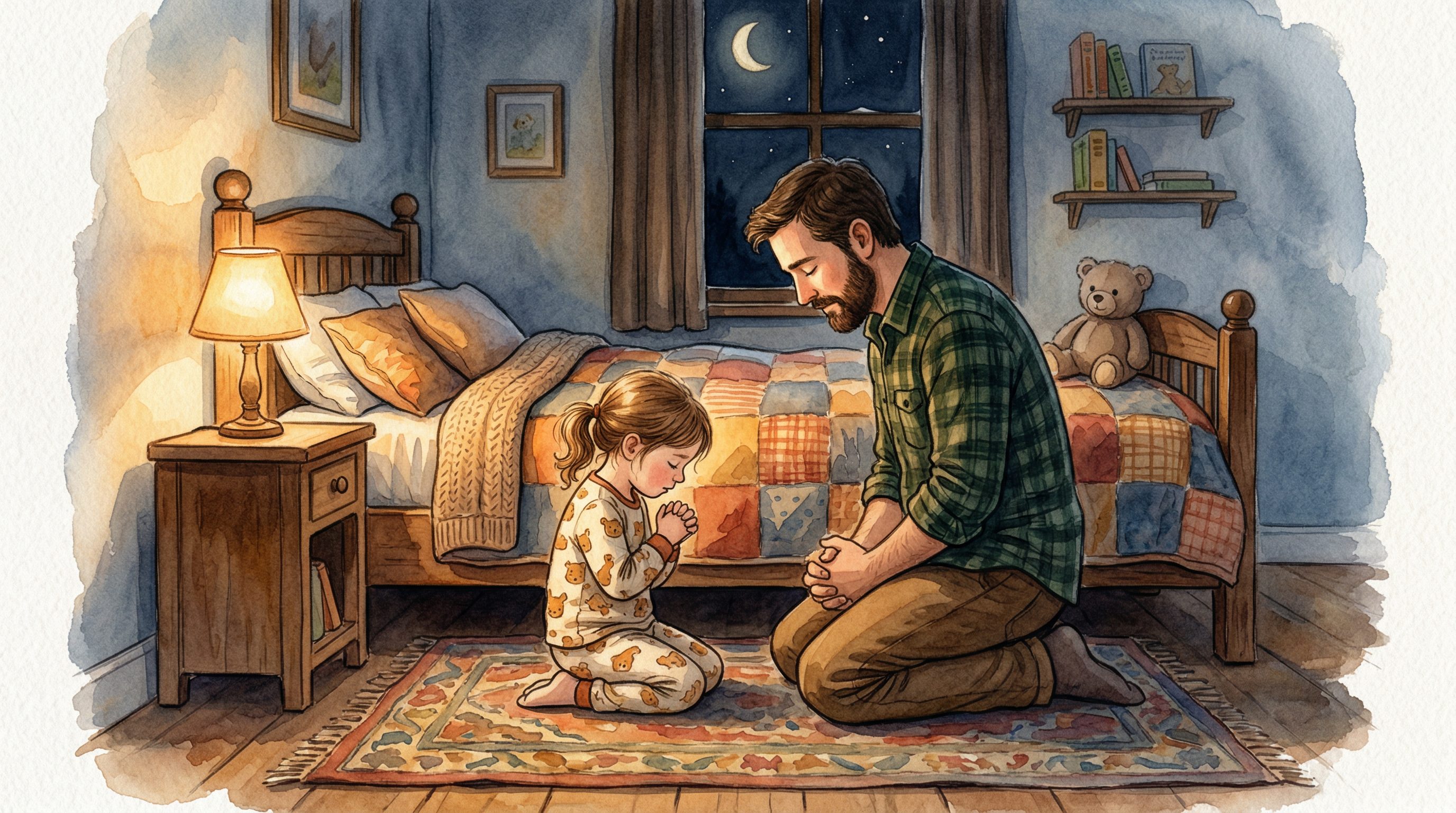
Spiritual leadership doesn't require a two-parent home. It requires a dad who decides to show up. And yes, it's harder when you're navigating your own grief, your own adjustment, your own rebuilding. But your kids need to see you doing hard things and not quitting. The devotional is one of those things.
Not because God needs you to do it. Because your kids need to see that you're still their dad — in the specific, intentional, I-sat-down-with-you-on-purpose way that fatherhood has always meant.
Also check out devotions for single dads for more on building a practice that works when the household structure is different from the standard parenting-book model. And family devotions after divorce covers how to think about the family piece specifically when the family looks different than it did.
Start With Where You Are, Not Where You Wish You Were
You don't need to have it together to start. You don't need to have resolved your own faith questions first. You don't need to wait until the custody situation is stable or the kids are adjusted or you feel like yourself again.
You can start tonight, from exactly where you are. A little uncertain. A little beat up. But still their dad. Still the one who sat down and said, "I want to read something with you."
That's enough. It always has been.
📖 Read This Tonight
Build a devotional that fits exactly your situation — your kids' ages, what they're carrying, the questions they're asking. You can create something tailored tonight.
Get Notified When New Series Drop
We add new devotional series regularly. Sign up to hear about them first.
Join the Community